Jesus Our Eternal High Priest

JOHN COPIC

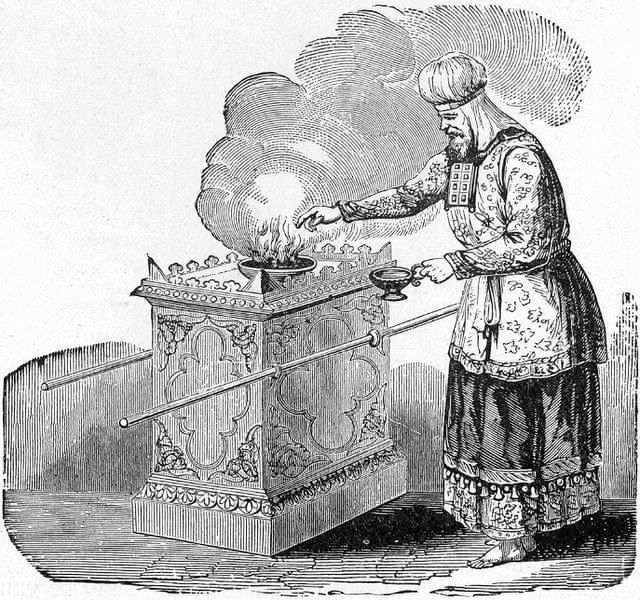
Old lithograph (1894) depicting the high priest offering incense on the altar.
The High Priest in Jerusalem
By Henry Davenport Northrop.
License: Public domain

In the Old Testament, the high priest held a very serious and dangerous role. Once a year, on the Day of Atonement, he entered the most holy place in the temple to offer sacrifices for his own sins, the sins of his family, and the sins of the people. This task could cost him his life if he failed to follow the exact instructions. The high priest had to be a man, capable of understanding human weakness, and he could not take the position on his own, he had to be appointed by God. His work showed the need for forgiveness and pointed to the larger plan of salvation.

Jesus Christ is now described as our great high priest. Unlike the priests of the Old Testament, He does not offer repeated sacrifices. His one sacrifice on the cross was enough to atone for the sins of all who trust Him. Because of this, Christians can now come boldly to God’s throne, knowing they will find mercy and grace in times of need. Our offerings to God, praise, worship, acts of kindness, and giving, are considered spiritual sacrifices, made acceptable through Christ.

Christ’s priesthood is unique because He was fully human and yet without sin. He experienced temptation and human struggles but remained perfect. This allows Him to understand our weaknesses and to intercede for us. He is both compassionate and powerful, able to save completely those who come to God through Him.

Copyright 2009 Kirk Ward Music Words: Isaac Watts Additional Chorus: Kirk Ward Music: Kirk Ward

The Old Testament high priest had to deal with his own sin before he could serve the people. Jesus, being sinless, perfectly fulfills all the requirements of a priest. He was appointed by God, not by human decision, and His priesthood is eternal, following the order of Melchizedek. This distinguishes Him from any human priest and ensures that His work will never need to be repeated.

Jesus’ earthly life showed His obedience, His suffering, and His compassion. He faced real struggles and sorrow, especially in Gethsemane, where He experienced deep anguish while carrying the sins of humanity. Even in suffering, He obeyed God fully. This experience qualifies Him to be a merciful and faithful high priest, able to intercede for those who trust Him.

Because of Jesus, believers have direct access to God. The veil of the temple, which once separated the people from God, is now removed. Christians no longer need a human mediator, because Christ is the eternal high priest who represents us before God. By trusting in Him, we can experience mercy, grace, and the hope of eternal life.

Through Jesus, the new covenant is complete. He has secured salvation, reconciled humanity to God, and provided a way for us to approach God freely. His priesthood, sacrifice, and intercession give believers confidence and hope for both this life and the life to come.

Therefore He is also able to save forever those who come to God through Him, since He always lives to make intercession for them.

Hebrews 7:25

Church firebombed in Jenin as Christmas celebrations resume

TEXAS GOSPEL VOLUNTEER

Arsonists damaged the Holy Redeemer Church in Jenin this week, along with attacks on a Christmas tree and the Nativity Grotto in the West Bank city. The Christmas tree was set ablaze by three Palestinians on Monday, drawing sharp condemnation from both local church leaders and Israeli officials.

Father Amer Jubran, pastor of the Holy Redeemer Church, condemned the attack in a Facebook post, describing it as a “deliberate and fabricated act carried out by outlaws.” He emphasized that the violence does not reflect authentic Palestinian or Christian culture, which he said is based on love, tolerance and coexistence. Jubran stressed that the incident does not represent the values of the people of Jenin or undermine communal unity.

Israel’s Foreign Ministry responded the following day, stating that under the Palestinian Authority there is “growing hostility towards Christians.” The ministry condemned the attacks on Christian sites and symbols, especially ahead of Christmas.

The attacks come as Christmas celebrations in Palestinian Authority-controlled areas have been subdued for the past two years due to the war in Gaza. Following a U.S.-brokered ceasefire, the Palestinian Authority allowed fuller Christmas celebrations this year. However, Christian residents of Beit Jala and Nablus are reportedly avoiding public celebrations due to fear of local Muslims.

Christmas in the Shadows: Millions of Christians Celebrate in Secret

JEFF TURNER

For millions of Canadians, Christmas is a public and joyful time. Streets are filled with lights, churches welcome everyone to services, and families gather freely. Around the world, however, there are Christians who experience Christmas very differently. In many countries, celebrating the birth of Jesus can lead to arrest, prison, or even death. As a result, countless believers are forced to celebrate Christmas in secret, if they can celebrate at all.

Those living in high-persecution areas often keep their Christmas joy hidden. Singing carols, decorating a tree, or attending church can be dangerous. For these believers, faith is something practiced quietly, behind closed doors, where safety comes before celebration.

In some countries, Christmas is completely banned. North Korea is one of the harshest examples. The government sees Christianity as a direct threat to its leadership. All Christmas worship and holiday displays are illegal, and even owning a Bible is considered a serious crime. Since 2016, citizens have been ordered to honour Kim Jong-suk, the dictator’s grandmother, who was born on December 24, instead of celebrating Christmas. Any attempt to recognize the birth of Jesus can result in severe punishment, including forced labour or worse.

In Somalia, public Christmas celebrations have been illegal since 2015. The country’s ministry of religion has instructed police and national security forces to actively stop Christmas events. Christians who attempt to gather openly face danger not only from authorities but also from extremist violence, making Christmas a time of fear rather than joy.

Other countries allow Christmas only under strict legal limits. In Brunei, public Christmas displays have been banned since 2014. The government says the ban is meant to protect Muslims from being influenced away from Islam. Christians are allowed to celebrate privately in homes or churches, but public celebrations are forbidden. Muslims who take part in Christmas activities, such as wearing Santa hats or joining festivities, can face up to five years in prison. It is also illegal for Christians to share their faith with Muslims.

In some places, Christmas is permitted only if the government tightly controls it. In China, celebrations are limited to government-approved churches and groups, and the rules vary by region. People under the age of 18 are legally banned from attending church services, including those held at Christmas. Churches are also pressured to include communist ideology in sermons and worship, reshaping religious messages to match state values.

In Iran, Christmas gatherings are allowed only in registered churches and approved areas. Unregistered house churches, especially those made up of converts from Islam, are often raided. In November 2025, two Christian converts were sentenced to two years in prison after authorities broke up a Christmas planning meeting. Church services are not allowed to be held in Farsi, the country’s main language. Instead, they must use minority languages such as Armenian or Assyrian, a rule designed to limit the spread of Christianity.

In other regions, the main threat comes not from laws but from violence. In northern Nigeria, Christian communities are frequently targeted by ISWAP, an extremist group linked to the Islamic State. Kidnappings and executions are common, especially around major Christian holidays. These attacks create constant fear and make public Christmas worship extremely dangerous.

Despite all of this, many Christians continue to mark Christmas in quiet and personal ways. Some meet secretly in small groups. Others pray alone in their homes. Many remember the meaning of Christmas without decorations, music, or public worship.

For Canadians, these stories are a reminder that freedoms often taken for granted. For millions around the world, Christmas still comes, but it arrives quietly, behind closed doors, and at great personal cost.

The Transformative Power of Jesus in Isaiah

JEFF TURNER

The biblical prophecy of Jesus Christ foretold in Isaiah 6:6-7 gives us a message of hope and divine purpose. At the heart of this prophecy lies a transformative understanding that God’s gift of salvation was not for His own benefit, but entirely for humanity’s redemption.

The prophecy from Isaiah highlights Jesus as a multifaceted divine figure, offering humanity exactly what it needs. His identity is defined by extraordinary qualities: Wonderful Counselor, Mighty God, Everlasting Father, and Prince of Peace. Each title represents a unique aspect of divine intervention designed to address human spiritual needs.

As a Wonderful Counselor, Jesus provides wisdom beyond human comprehension. His love transcends all limitations, demonstrated through unconditional grace that offers salvation not based on human merit, but on divine compassion. John 3:16 powerfully encapsulates this love: “For God so loved the world that He gave His only begotten son.”

The prophecy emphasizes that God’s strength is not just a rescue mechanism for moments of weakness, but a transformative power intended to elevate human potential. Jesus represents divine strength that enables individuals to accomplish purposes far beyond their own capabilities, inviting people to lean into a higher spiritual empowerment.

Ultimately, this prophecy reveals that God’s intervention through Jesus was a deliberate, selfless act of love. The phrase “unto us” repeatedly underscores that this divine gift was given not for divine benefit, but as an extraordinary expression of grace specifically designed for human restoration and hope.

The Journey of Hope in the Story of Emmanuel

JEFF TURNER

The story of Emmanuel is journey of hope, anticipation, and divine promise spanning thousands of years. Throughout centuries of waiting, the people of Israel held onto a belief in a coming Messiah who would bring redemption and hope.

The prophecy of Emmanuel, meaning “God with us,” was a promise of divine presence and salvation. Foretold by the prophet Isaiah 800 years before its fulfillment, this prophecy spoke of a virgin who would bear a son, a child destined to be more than a mere political leader. God’s plan extended far beyond the expectations of the time, promising a savior not just for Israel, but for all people.

The birth of Jesus was a humble yet extraordinary event. Born in Bethlehem, not in a royal palace but in a simple manger, this child represented a different kind of kingdom. Shepherds were the first to receive the miraculous announcement. This message wasn’t just for rulers, Shepherds and ordinary people received it. It was for everyone – the lowly and the great alike. The divine plan was meticulously orchestrated, with the child’s name and purpose predetermined before his conception.

The significance of Emmanuel goes beyond a historical moment. It represents God’s intimate involvement with humanity, a promise of hope and redemption. It is a testament to patient hope, divine planning, and the transformative power of God’s love.