Lauren Talley’s new single traces a path from a viral stadium moment to a song she hopes becomes a church anthem

TEXAS GOSPEL VOLUNTEER

There is a particular kind of creative spark that catches people off guard, arriving not in a recording studio or at a songwriter’s desk but through a phone screen at some unremarkable hour. For Lauren Talley, that moment came about three years ago, while watching a video online.

“I saw a YouTube video that completely changed how I look at life and ministry,” she says. “The Passion Conference, held in Atlanta, showed a moment where the worship leaders stopped singing, fell on their faces before the Lord, and the entire stadium was overcome by the presence of God. That video taught me to pursue His presence above all else.”

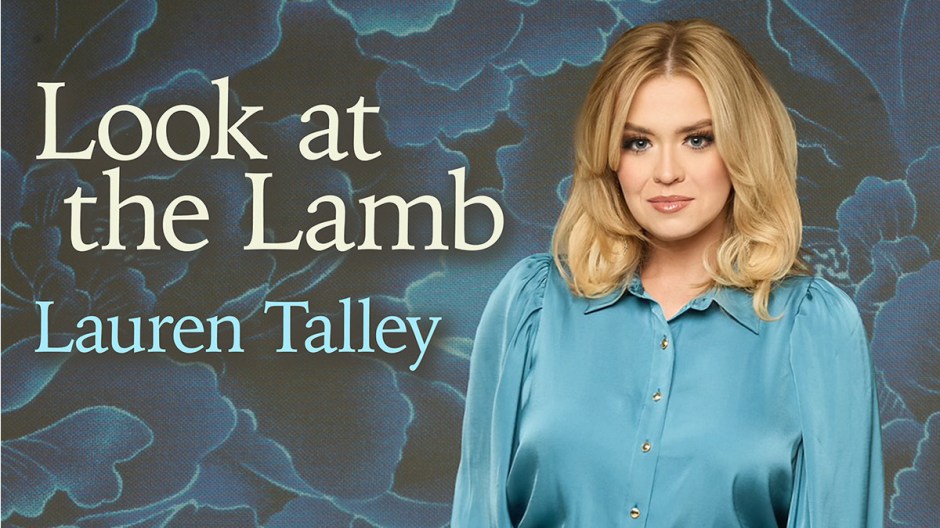
It is the kind of moment that is difficult to quantify, the sort of spiritual disruption that either fades quickly or rearranges something fundamental in a person. For Talley, it clearly did the latter. She carried what she had witnessed to Nashville songwriter Tony Wood, a veteran collaborator with credits stretching across the Christian music landscape, and the two built something out of it together. The result is “Look at the Lamb,” her new single for Horizon Records, which arrives with no small amount of intention behind it.

“Out of inspiration from watching that,” Talley says, “I took ‘Look At The Lamb’ to my friend Tony Wood, and together wrote what I think will be an anthem for the church for many years to come.”

That is a confident claim, but Talley is not a newcomer making bold pronouncements from the margins. She has spent the better part of her life inside gospel music, having sung her first solo at age two when, as family lore has it, she wandered onto the stage during one of her family’s concerts and announced she wanted to “thing.” The malapropism stuck. So did the instinct.

As a member of The Talleys, the family group she grew up performing with, she earned a Dove Award in 2015 for “Hidden Heroes” and contributed lead vocals to eleven number one hits. Her solo catalogue spans seven albums, including a 2017 release, “The Gospel,” that reached the top of Billboard’s southern gospel chart, and a 2019 pairing in which she released two full-length projects simultaneously. She holds an honorary doctorate in Worship Arts from John Wesley University and is a recognisable face to the considerable audience that follows the Gaither Homecoming concert and video series.

All of which is to say that when Talley speaks about writing an anthem for the church, there is context behind the ambition.

“Look at the Lamb” opens quietly, with Talley’s voice given room to breathe before the arrangement expands into something more ceremonial. The lyric is straightforward in its theology, inviting the listener to fix their attention on Christ rather than their own circumstances:

Look at the lamb, Heaven’s King Here with us, light from his face His great heart full of love Eyes filled with grace He has come to seek and save Isn’t Jesus so amazing Isn’t Jesus glorious He’s Messiah He is mercy He’s the only worthy one

The Scripture reading embedded in the track is drawn from the same passage read aloud during the Atlanta gathering that first moved Talley, and it is narrated by Gloria Gaither, the songwriter and author whose voice carries its own particular weight in this tradition. Talley describes her as “the incomparable Gloria Gaither,” a characterisation that will resonate with anyone who knows the breadth of Gaither’s influence across decades of Christian music.

The song sits comfortably within the worship genre’s current interest in returning to a kind of reverent simplicity, favouring a direct encounter with the sacred over stylistic complexity. Whether it achieves the anthem status Talley envisions will depend, as it always does, on whether congregations make it their own.

“I pray all else disappears as you ‘Look At The Lamb,'” she says.

Beyond recording, Talley maintains a busy schedule of solo concerts, women’s conference appearances, and studio work as a background vocalist and producer for other artists. She also works as a voice and performance coach for emerging talent, a role that positions her as something of a bridge between generations in a genre that values lineage.

She is, by her own accounting, also a committed Tennessee Volunteers fan who drinks sweet tea and makes time for family. The details are offered without irony. In her world, they are not incidental to the person she is; they are part of what makes the music mean what it does.

The Kramers add new song to Texas Gospel lineup, pointing listeners toward eternal hope

“And We Will” arrives as a stirring anthem of promise for the faithful

JEFF TURNER

Texas Gospel is thrilled to welcome a new addition to our music lineup: And We Will, a brand new song from The Kramers. Beginning this week, listeners tuning in will hear this anthem of faith woven into our daily broadcasts.

From its very first lines, And We Will anchors itself in the bedrock of Christian hope, the resurrection of Jesus Christ and the glorious future He has secured for all who believe. The Kramers have crafted a song that doesn’t shy away from life’s heartaches, but lifts every burden toward the light of eternity.

“We hold a promise with hands of faith / Of a glorious world to come / Where we will live someday / A guarantee of what will be / Fought by a risen Saviour’s blood / Sealed by an empty tomb of love.”

The song moves with a tenderness that will resonate deeply with anyone who has known grief, uncertainty, or longing. Its chorus builds into a bold, joyful declaration, an unshakeable confidence rooted not in circumstance, but in the unchanging character of God and the promises He has kept.

From the chorus

We will go home to a glorious place
Where the hallelujahs ring
We will behold His smiling face
In the sights we’ve never seen
We will declare He’s worthy
As His wonders are revealed
He promised we would meet Him there —
And we will.

Particularly beautiful is the song’s bridge, which paints an intimate portrait of Christ’s welcome in eternity. scarred hands wiping away tears and mending broken hearts, making room for all things new. It is an image drawn straight from the Scriptures, set to melody in a way that is both gentle and profound.

For those walking through seasons of waiting and weariness, the closing verses offer a word of encouragement that feels timely and true: “So, until that day we’re holding on / ’til we’re called away, or until He comes / This is the hope that gets us through.” It is a reminder that perseverance in faith is never without purpose.


Texas Gospel is an online Christian radio station in Prescott, ON, committed to sharing the Good News through music, 24 hours a day.

Church firebombed in Jenin as Christmas celebrations resume

TEXAS GOSPEL VOLUNTEER

Arsonists damaged the Holy Redeemer Church in Jenin this week, along with attacks on a Christmas tree and the Nativity Grotto in the West Bank city. The Christmas tree was set ablaze by three Palestinians on Monday, drawing sharp condemnation from both local church leaders and Israeli officials.

Father Amer Jubran, pastor of the Holy Redeemer Church, condemned the attack in a Facebook post, describing it as a “deliberate and fabricated act carried out by outlaws.” He emphasized that the violence does not reflect authentic Palestinian or Christian culture, which he said is based on love, tolerance and coexistence. Jubran stressed that the incident does not represent the values of the people of Jenin or undermine communal unity.

Israel’s Foreign Ministry responded the following day, stating that under the Palestinian Authority there is “growing hostility towards Christians.” The ministry condemned the attacks on Christian sites and symbols, especially ahead of Christmas.

The attacks come as Christmas celebrations in Palestinian Authority-controlled areas have been subdued for the past two years due to the war in Gaza. Following a U.S.-brokered ceasefire, the Palestinian Authority allowed fuller Christmas celebrations this year. However, Christian residents of Beit Jala and Nablus are reportedly avoiding public celebrations due to fear of local Muslims.

Christmas in the Shadows: Millions of Christians Celebrate in Secret

JEFF TURNER

For millions of Canadians, Christmas is a public and joyful time. Streets are filled with lights, churches welcome everyone to services, and families gather freely. Around the world, however, there are Christians who experience Christmas very differently. In many countries, celebrating the birth of Jesus can lead to arrest, prison, or even death. As a result, countless believers are forced to celebrate Christmas in secret, if they can celebrate at all.

Those living in high-persecution areas often keep their Christmas joy hidden. Singing carols, decorating a tree, or attending church can be dangerous. For these believers, faith is something practiced quietly, behind closed doors, where safety comes before celebration.

In some countries, Christmas is completely banned. North Korea is one of the harshest examples. The government sees Christianity as a direct threat to its leadership. All Christmas worship and holiday displays are illegal, and even owning a Bible is considered a serious crime. Since 2016, citizens have been ordered to honour Kim Jong-suk, the dictator’s grandmother, who was born on December 24, instead of celebrating Christmas. Any attempt to recognize the birth of Jesus can result in severe punishment, including forced labour or worse.

In Somalia, public Christmas celebrations have been illegal since 2015. The country’s ministry of religion has instructed police and national security forces to actively stop Christmas events. Christians who attempt to gather openly face danger not only from authorities but also from extremist violence, making Christmas a time of fear rather than joy.

Other countries allow Christmas only under strict legal limits. In Brunei, public Christmas displays have been banned since 2014. The government says the ban is meant to protect Muslims from being influenced away from Islam. Christians are allowed to celebrate privately in homes or churches, but public celebrations are forbidden. Muslims who take part in Christmas activities, such as wearing Santa hats or joining festivities, can face up to five years in prison. It is also illegal for Christians to share their faith with Muslims.

In some places, Christmas is permitted only if the government tightly controls it. In China, celebrations are limited to government-approved churches and groups, and the rules vary by region. People under the age of 18 are legally banned from attending church services, including those held at Christmas. Churches are also pressured to include communist ideology in sermons and worship, reshaping religious messages to match state values.

In Iran, Christmas gatherings are allowed only in registered churches and approved areas. Unregistered house churches, especially those made up of converts from Islam, are often raided. In November 2025, two Christian converts were sentenced to two years in prison after authorities broke up a Christmas planning meeting. Church services are not allowed to be held in Farsi, the country’s main language. Instead, they must use minority languages such as Armenian or Assyrian, a rule designed to limit the spread of Christianity.

In other regions, the main threat comes not from laws but from violence. In northern Nigeria, Christian communities are frequently targeted by ISWAP, an extremist group linked to the Islamic State. Kidnappings and executions are common, especially around major Christian holidays. These attacks create constant fear and make public Christmas worship extremely dangerous.

Despite all of this, many Christians continue to mark Christmas in quiet and personal ways. Some meet secretly in small groups. Others pray alone in their homes. Many remember the meaning of Christmas without decorations, music, or public worship.

For Canadians, these stories are a reminder that freedoms often taken for granted. For millions around the world, Christmas still comes, but it arrives quietly, behind closed doors, and at great personal cost.

New restrictions on items entering Nicaragua include Bibles

JEFF TURNER

A major international bus company has warned passengers about new items that are no longer allowed to enter Nicaragua, according to a report from CentroAmerica360. These rules come from instructions given by Nicaraguan authorities to transportation companies working across the region.

Along with items that have long been restricted, such as guns, knives, and food that can spoil, the list now includes drones, magazines, printed newspapers, and Bibles. This change has caused worry among travellers and groups that follow human rights conditions in the country.

Notices explaining the rules were posted at bus terminals in Costa Rica, where trips to Managua begin. The company said it is required to follow the rules shared by Nicaraguan officials. Staff at the terminals have been told to stop passengers who are carrying banned items or prevent them from boarding.

The restriction on Bibles has drawn special attention. While religious activity has faced growing limits in recent years, there has been no earlier case of sacred texts being blocked at the border. Many see this as a new step in the control of religious life.

Since 2018, religious freedom in Nicaragua has steadily weakened. Many Catholic priests have been arrested, sent into exile, or kept under close watch. Religious orders and groups have been forced to leave the country. Church leaders have reported that schools, care homes, radio stations, and other church services have been taken over or closed. Church bank accounts have also been shut down.

Evangelical churches have faced pressure as well. Several leaders have been arrested on claims of plotting against the state or mishandling funds. Churches and faith-based groups involved in community support have been closed or placed under government control.

The bus company did not explain the exact laws behind the new rules, but confirmed they were officially delivered by authorities. Passengers have shared concern about how wide these limits are, especially when it comes to printed material and religious items.

In earlier actions, the government banned professional cameras and filming tools. Travellers’ social media accounts have been checked, and content creators and journalists have been denied entry. These steps add to fears about tighter control over information and belief.