Mary Magdalene played a significant role among Jesus’ followers, and her sorrow at His crucifixion was deep. She had witnessed His unjust execution and mourned the loss of her beloved teacher. When she saw Him alive after the resurrection, her instinct was to reach out and hold on to Him. However, Jesus gently stopped her, saying, “Do not cling to Me, for I have not yet ascended to the Father” (John 20:17).
This instruction may seem unusual since other disciples, like Thomas, were invited to touch Jesus after His resurrection. However, the original language clarifies the meaning. Mary was not simply reaching out in recognition—she was trying to hold on to Jesus as if to keep Him from ever leaving again. The pain of His absence during His death had been overwhelming, and the thought of losing Him once more was unbearable.
Yet, Jesus was preparing her for a new reality. He would soon return to His Father, but He would not leave His followers alone. Instead, He would send the Holy Spirit, who would dwell permanently in the lives of all believers. Through the Holy Spirit, Mary Magdalene and every Christian after her would experience the continuous presence of Christ. As Romans 8:9 affirms, “If anyone does not have the Spirit of Christ, they do not belong to Christ.” His physical departure did not mean separation; rather, it ensured a deeper, unbroken connection between Him and His followers.
Have you ever felt pressured to follow certain religious practices, like fasting or observing special days, as if they were required to be truly faithful? The Apostle Paul addressed this issue in his letter to the Colossians. He warned believers not to let anyone control their worship by enforcing rules about festivals, specific diets, or Sabbath observance.
In the Old Testament, only one fast was commanded, and the New Testament does not require fasting for the church. Jewish traditions, such as dietary laws and the observance of Sabbaths, were part of the ceremonial system given to Israel. However, these rituals were set aside after Christ’s resurrection. From that point, believers began gathering on the first day of the week rather than observing the Jewish Sabbath. Additionally, dietary restrictions were lifted—God’s instruction to Peter in Acts was clear: “Rise, kill, and eat.”
Christian worship is not about following external rituals but about the condition of the heart. Jesus emphasized this in John 4:23-24, where He explained that true worshippers honour God in spirit and truth. What matters most is sincere devotion to God, not adherence to man-made religious expectations
Psalm 27:12 says, “Do not turn me over to the desire of my foes, for false witnesses rise up against me, spouting malicious accusations.”
What should you do when others speak lies about you? How should you respond when people try to bring you down? It can be painful when others slander you, and sometimes, defending yourself feels impossible. Seeking revenge might seem like the right response, but the Bible offers a different way.
Psalm 27 teaches us to turn to God in prayer. We can bring our troubles before Him, trusting that He sees everything. Instead of focusing on those who wish us harm, we should focus on God’s goodness. The very next verse promises that we “will see the goodness of the Lord in the land of the living” (Psalm 27:13). Even when others intend evil, God’s plan for us is one of blessing.
Eddie Crook began his career in 1961 as the pianist for The Tennesseans. That started a music career that included doing session work at RCA Studios in Nashville. In 1964, he joined The Plainsmen Quartet. He’s spent decades of his life as a part of southern gospel music, both on the stage and behind-the-scenes.
Mr. Crook tells us one of the highlights of his career was “Playing the Grand Ole Opry with Marty Robbins on Saturday night with everybody going.”
From 1967-1970, he played for “The Sego Brothers and Naomi” and went on to become the pianist for “The Happy Goodman Family.”
In 1977, Eddie Crook began efforts to propel other artists through The Eddie Crook Company. The record label put many groups on the map. Some of the groups who were with The Eddie Crook Company include The Crabb Family, Carroll Roberson, Issacs, Bishops, Perrys, Booth Brothers, Heirline, Dixie Melody Boys, Dixie Echoes, Wilburns, Palmetto State Quartet, Jimmie Davis, and many more.
Speaking about the groups through the years he said, We were in the right place at the right time. We were fortunate to work with them.”
Our congratulations to Eddie Crook, recipient of The Southern Gospel Music Guild’s Lifetime Achievement Award!
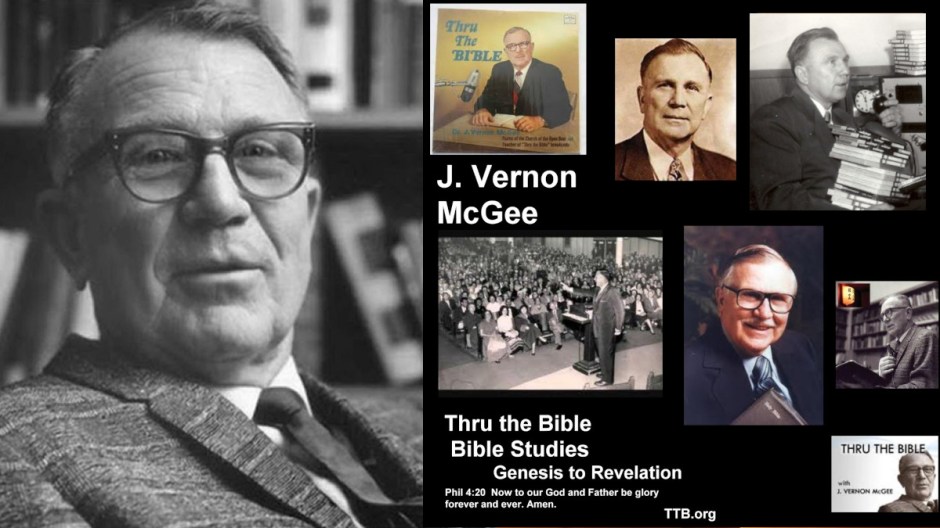
The audio on this video is the property of Thru the Bible. It is offered free of charge. If you wish to make a donation, do not send it to us. Visit http://www.ttb.org for information. The audio is attributed to Dr. J. Vernon McGee and Thru the Bible. Intellectual property rights are those of Thru the Bible. Please contact us if you feel our understanding of the terms of use are in error. Copyright information obtained from https://ttb.org/about/copyright-policy
In the 18th chapter of Matthew, Dr. McGee highlights several key aspects of the Kingdom of Heaven. He emphasizes that entering the kingdom requires conversion and becoming like little children. This isn’t about reverting to childish behavior but rather experiencing a new spiritual birth, akin to starting life anew as a child spiritually. Dr. McGee notes that the disciples’ concern about who is greatest in the kingdom is secondary to the primary importance of securing entrance through the new birth. He underscores the Lord’s teaching that unless one is converted and becomes as a little child, they shall not enter the Kingdom of Heaven.
Dr. McGee stresses the immense value God places on children, stating that the evangelization of children is a Divine imperative. He cites the Lord’s strong words against those who would offend or cause these little ones to stumble. McGee interprets the passage about angels beholding the Father’s face as indicating that when little ones die, their spirits go immediately to be with God because Jesus died for them. He emphasizes the responsibility of parents and the church towards children, lamenting societal trends that harm them. Dr. McGee connects the Lord’s teaching on children to the discussion on divorce, noting that the well-being of children should be a paramount consideration for Christian couples.
Moving into Matthew 19, Dr. McGee addresses the crucial topic of marriage and divorce. He explains that Jesus takes the Pharisees back to God’s original ideal for marriage: one man and one woman becoming one flesh. While the Mosaic Law permitted divorce due to the hardness of hearts, Dr. McGee highlights that Jesus provides a new principle, stating that the only scriptural ground for divorce is fornication (adultery). He clarifies that while believers may separate on other grounds, remarriage after divorce is only permissible for the innocent party in cases of adultery. Dr. McGee also touches on the topic of singleness, noting that some are uniquely suited for it, and the decision to marry or remain single is ultimately a personal one.
As the narrative progresses, Dr. McGee discusses the concept of true greatness in the Kingdom. He explains that it is found not in seeking exalted positions but in humbling oneself and becoming a servant. This is exemplified by Jesus himself, who came not to be ministered to but to minister and give his life as a ransom for many. Dr. McGee emphasizes that rewards in heaven are determined by faithfulness to the task God has given, regardless of how significant or prominent it may seem. He notes Peter’s question about reward and Jesus’ response about judging the tribes of Israel, highlighting that sacrifice for Christ’s sake will be rewarded.
In the later chapters, Dr. McGee addresses Jesus’ entry into Jerusalem and his interactions with the religious leaders. He distinguishes between the initial entry and the true triumphal entry at the second coming. Dr. McGee interprets the cursing of the fig tree as symbolic of Israel’s fruitless religious system. He highlights the confrontation between Jesus and the chief priests regarding his authority, noting how Jesus skillfully exposes their hypocrisy. Through the parable of the two sons and the wicked husbandmen, Dr. McGee emphasizes that outward religious profession without genuine obedience and fruit is insufficient. He concludes by underscoring the importance of recognizing oneself as a sinner and coming to Christ for salvation.



 Texas Gospel Canada Southern Gospel Radio