The Final Warning of Hebrews: Embracing Faith in Christ

JEFF TURNER

Many Christians wrestle with sin throughout their lives. At times, this fight leads to moments of deep sorrow, and even painful failure. Some passages in the Bible can feel especially heavy during these times—Hebrews 10:26 is one of them. It warns that if someone continues to sin willfully after knowing the truth, there is no longer a sacrifice that can take away those sins. Instead, what remains is the dreadful certainty of judgment and a consuming fire for those who stand against God.

This warning in Hebrews is not aimed at Christians who struggle and repent, but at a specific group: Jews who had heard the gospel, understood its message, and may have even agreed with it intellectually—but never truly committed to Christ. They were still holding on to their old religious practices, unwilling to let go and trust in Jesus fully.

The entire book of Hebrews urges these individuals to take that final step. The message is clear: once you know the truth about Jesus and still choose to walk away, there is no other path to forgiveness. There is no backup plan. Rejecting Christ means rejecting the only hope of salvation.

Jesus said, “I am the way, and the truth, and the life. No one comes to the Father except through me.” – John 14:6

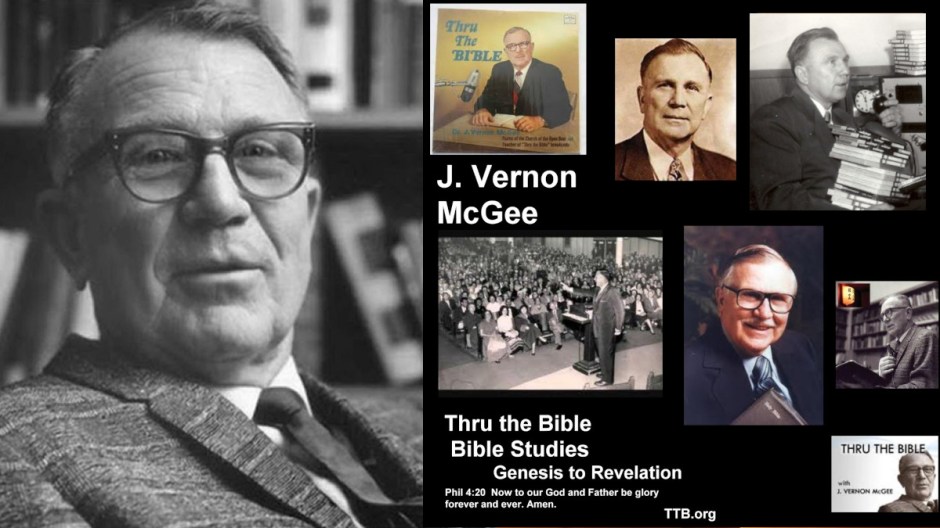
Dr. J. Vernon McGee: Mark 5-8

The audio on this video is the property of Thru the Bible. It is offered free of charge. If you wish to make a donation, do not send it to us. Visit http://www.ttb.org for information. The audio is attributed to Dr. J. Vernon McGee and Thru the Bible. Intellectual property rights are those of Thru the Bible. Please contact us if you feel our understanding of the terms of use are in error. Copyright information obtained from https://ttb.org/about/copyright-policy

Dr. J. Vernon McGee begins his sermon by highlighting the importance of the Gospel of Mark, which he describes as a gospel of action filled with miracles. He notes that Chapter 5 is particularly significant, featuring three outstanding miracles demonstrating the power of omnipotence: the casting out of demons from the man in Gadara, the healing of the woman with an issue of blood, and the raising of Jairus’s daughter. McGee delves into the account of the demon-possessed man, emphasizing his desperate condition of living among the tombs and possessing superhuman strength. He clarifies that the man, not the demons, worshiped Jesus, illustrating a struggle within the man’s being. The demons, upon being commanded by Jesus to leave, requested to be sent into a herd of swine, which then perished in the sea. McGee defends Jesus’s action, pointing out the Gadarines’ disregard for God’s law by engaging in pig farming. He further discusses several facts about demons, emphasizing their reality, their prevalence during Jesus’s ministry, their desire to indwell mankind, and Christ’s ultimate power over them.

Moving on, Dr. McGee discusses the healing of the woman with the issue of blood and the raising of Jairus’s daughter, both found in Mark 5. He points out the woman’s 12 years of suffering and her faith in touching Jesus’s garment to be healed, coinciding with the 12 years of Jairus’s daughter’s life. McGee underscores Jesus’s deliberate action in healing the woman before going to Jairus’s house, where he then raised the daughter from the dead with the Aramaic words “Talitha koum,” which McGee interprets as “Little lamb, wake up”. He emphasizes the practical nature of Jesus’s command to feed the girl after she was raised. McGee sees these miracles as demonstrations of Jesus’s power and his role as God’s servant who came to minister and give his life as a ransom.

Transitioning to Mark 6, McGee discusses Jesus’s return to Nazareth, where he was met with astonishment and offense by his own people who questioned his origins and were familiar with his family. McGee clarifies that this was likely Jesus’s second visit to Nazareth, contrasting it with the account in Luke 4 where no miracles were performed initially. He explains that the unbelief of the people in Nazareth limited Jesus’s ability to perform mighty works there, illustrating that faith is necessary to release God’s power. McGee then describes Jesus sending out the twelve disciples two by two, giving them power over unclean spirits and instructing them to travel lightly, focusing on their urgent mission to preach repentance. He also touches on Herod’s reaction to the spreading fame of Jesus, linking it to his guilt over the beheading of John the Baptist. The disciples later returned and reported their experiences, leading Jesus to take them to a deserted place to rest before the account of the feeding of the 5,000.

Finally, Dr. McGee addresses the confrontation between Jesus and the Pharisees and scribes who questioned his disciples’ traditions of washing hands before eating in Mark 7. Jesus rebukes their hypocrisy, quoting Isaiah and stating that their worship is in vain because they substitute the commandments of God with the traditions of men. He uses the example of the tradition of “Corban” to illustrate how they circumvented the commandment to honor one’s parents. McGee emphasizes that true defilement comes from within the heart of man, listing various evil thoughts and actions. He then discusses the healing of the deaf and dumb man in the Decapolis, noting Jesus’s unique method as aids to faith. McGee briefly touches on the feeding of the 4,000 in Mark 8, distinguishing it from the feeding of the 5,000 by several factors. He concludes with the healing of a blind man at Bethsaida in stages, using this as an analogy for spiritual sight, and Peter’s confession of faith in Jesus as the Christ. McGee underscores the importance of acknowledging and following Christ, urging listeners to examine their own faith and relationship with Him.

The Insufficiency of Good Works for Salvation

JEFF TURNER, JR.

Have you ever wondered how a person can truly be made right with God? Many believe that by doing good deeds, following religious customs, or adhering to a set of rules, they can earn God’s favor. However, the core message is that salvation is a gift, freely given by grace through faith alone, and not based on anything we do.

Think about Adam and Eve in the Garden of Eden. After they sinned, they tried to cover themselves with fig leaves. The scripture in Genesis chapter 3 describes this covering as “tophar,” meaning a self-made, insufficient covering. But God provided a different covering, using the skins of an animal. This covering is described with the Hebrew word “labash,” a full suit provided by God, pointing to a complete and divine covering.

The idea of covering sin is also seen with Noah, who used pitch to “kafar” or cover the ark. Similarly, on the Day of Atonement, the high priest would “kapor” or atone for sin. This highlights the need for a covering for sin. The ultimate covering, it is taught, is through the sacrifice of the “lamb of God who takes away the sins of the world”. Believing in this sacrifice is what “kafar” or covers you.

Consider Abraham, who was declared righteous by faith before he was circumcised. It says, “faith was credited to Abraham as righteousness”. This shows that righteousness comes through faith, not through rituals like circumcision. King David, who lived after the law was given and was circumcised, also spoke of the blessing of the person “to whom God credits righteousness apart from works”. It is written, “blessed are those whose lawless deeds have been forgiven, whose sins have been covered”.

The concept of “blessing” is often mentioned. In the Old Testament, blessing is connected with the presence and grace of God. Psalm 1 says the blessed person delights in the law of the Lord. In the New Testament, blessing is equated with salvation and being close to God.

In contrast, the attempts to earn God’s favor through our own efforts are described in stark terms. Isaiah 64:6 says, “all of us have become like one who is unclean. And all our righteous deeds are like filthy rags.” This imagery describes our attempts to cover our own sins through good works. Our efforts are insufficient and even offensive to God.

The salvation offered is not something to be earned or bought. It is like food your mother cooks for you. It would be an insult to try and pay for something freely given out of love. God’s salvation is not for sale; it is received by faith through grace. Trying to earn it through righteous acts is like offering “filthy rags”.

Religious rituals, such as circumcision, are also not the basis of salvation. Circumcision was a sign and a seal of the righteousness of the faith Abraham already had while he was uncircumcised. Similarly, baptism is a sign of being a follower of Jesus after salvation, not the means of salvation itself. The true seal of salvation in the New Testament is the indwelling of the Holy Spirit. Ephesians chapter 1 speaks of believers being “sealed with the Holy Spirit of promise”.

Finally, salvation is not achieved through following rules or laws. The law’s purpose is to show us our sin, like a mirror revealing a flaw. It cannot save us. The promise given to Abraham was through the righteousness of faith, before the law was given. If salvation were based on the law, then faith would be meaningless. The scripture says, “For this reason it is by faith, in order that it may be in accordance with grace, so that the promise will be guaranteed”. Our salvation is guaranteed because it is based on God’s grace and received through faith. This salvation is a past tense reality – we “have peace with God” and “have been justified”.

Instead of trying to work for salvation or relying on rituals and rules, the focus should be on receiving the free gift of God’s righteousness through faith in Jesus Christ. This is a guaranteed salvation, signed, sealed, and delivered.

The Shepherd Who Truly Cares

JEFF TURNER JR

Have you ever considered what it means to have a leader who genuinely cares for those they lead? Someone whose concern for your well-being surpasses their own? The scriptures speak of such a figure: Jesus, the Good Shepherd. We often look for leaders who prioritize our interests. If we sense a lack of care, our trust diminishes. However, the Good Shepherd operates differently.

The scriptures declare, “I am the door of the sheep. If anyone enters by me, he will be saved and will go in and out and find pasture” [John 10:9]. This might seem an unusual comparison. Imagine a sheep enclosure with a single point of entry. A shepherd might even sleep across this opening at night, effectively becoming the door, offering protection against threats and preventing the sheep from straying. In this way, Jesus represents the exclusive path to safety and provision. He is the one through whom we gain access to God’s care and security. Just as a gatekeeper recognizes the authentic shepherd, Jesus welcomes those who come to him.

The Good Shepherd is unlike those who might neglect or mistreat their flock. The scriptures contrast Jesus with leaders likened to “thieves and robbers” [John 10:1, 7]. Unlike these selfish individuals focused on their own gain, the Good Shepherd personally calls his own sheep by name and guides them out [John 10:3]. His sheep recognize his unique voice and follow him. Throughout the Old Testament, God’s people were frequently compared to sheep in need of a shepherd. The Good Shepherd fulfills this very need, offering consistent guidance and tender care.

What truly distinguishes the Good Shepherd is his profound willingness to sacrifice his own life for the sake of his sheep. “I am the good shepherd. The good shepherd lays down his life for the sheep” [John 10:11]. This is a powerful assertion. While someone merely hired to watch sheep might abandon them when danger approaches, the true shepherd, who owns and deeply loves his flock, will stand firm in the face of threat. Picture a shepherd bravely fighting off a wolf to protect his sheep, even at the risk of his own life. This illustrates the immeasurable love that Jesus possesses, a love that ultimately led him to die. This sacrifice was not accidental; it was his deliberate intention to overcome the enemies of his people. The scriptures explain, “He himself bore our sins in his body on the tree, that we might die to sin and live to righteousness. By his wounds you have been healed. For you were straying like sheep, but have now returned to the Shepherd and Overseer of your souls” [1 Peter 2:24-25].

The Good Shepherd’s care extends beyond a single group. “I have other sheep that are not of this fold. I must bring them also, and they will listen to my voice. So there will be one flock, one shepherd” [John 10:16]. This reveals that all who follow Jesus, regardless of their background, become part of his unified flock.

Jesus’ sacrifice was not the final chapter. “For this reason the Father loves me, because I lay down my life that I may take it up again. No one takes it from me, but I lay it down of my own accord. I have authority to lay it down, and I have authority to take it up again” [John 10:17-18]. Jesus possessed the inherent power to lay down his life and to take it up again, demonstrating his authority over death through his resurrection.

Just as sheep recognize the distinct call of their shepherd, those who belong to Jesus recognize his voice. Knowing and heeding the Good Shepherd’s voice is essential. Today, we primarily encounter his voice through his word, the scriptures. His voice offers guidance, comfort, and even necessary warnings.

The Good Shepherd leads his sheep not just to safety, but to “abundant life” [John 10:10]. This doesn’t merely refer to material wealth, but to a life that is spiritually rich, deeply satisfying, and overflowing with love, joy, peace, and forgiveness. Even amidst difficulties, this abundant life, found in a close relationship with Jesus, provides genuine fulfillment.

Because the Good Shepherd has unequivocally demonstrated his care through his selfless sacrifice and his triumph over death, we can place our complete trust in him. He is our protector, our provider, our leader, and our savior. Just as the familiar words declare, “The Lord is my shepherd; I shall not want,” if Jesus is your shepherd, you possess everything you truly need.

Are you listening for the voice of the Good Shepherd? Have you entered his flock? He calls you to come and experience the abundant life and unwavering care that only he can offer.

Before Abraham Was, I Am

JEFF TURNER

In the Bible, Jesus often had serious discussions with the religious leaders of his time. One of the most intense moments happened in John 8:58. Jesus said, “Before Abraham was, I am.” This statement made the Jewish leaders extremely angry, and they wanted to stone him. But why?

The reason is that Jesus was saying he is equal to God. The phrase “I am” is a special name of God. In the Old Testament, God used this name for himself. We see this in Exodus 3:14, when God spoke to Moses from the burning bush and said, “I AM WHO I AM.” This name shows that God is eternal—he has no beginning or end. He exists forever.

Jesus used this name many times. He said:

By saying “I am,” Jesus was making it clear that he is the same God who spoke to Moses, the God of the Old Testament. The Jewish leaders thought this was blasphemy—an offense against God—because they did not believe Jesus was telling the truth. To them, it was worse than cursing or denying God. This is why they wanted to kill him.

But Jesus was not lying. He truly is God. He is the eternal one, greater than Abraham, greater than Moses, and the same God who created the world. His words in John 8:58 are a powerful declaration of his divine nature.

Jesus was not just a good teacher or a prophet. He is the great “I AM”, the Lord of all, the Savior of the world.