
The Shepherd Who Truly Cares

JEFF TURNER JR

Have you ever considered what it means to have a leader who genuinely cares for those they lead? Someone whose concern for your well-being surpasses their own? The scriptures speak of such a figure: Jesus, the Good Shepherd. We often look for leaders who prioritize our interests. If we sense a lack of care, our trust diminishes. However, the Good Shepherd operates differently.

The scriptures declare, “I am the door of the sheep. If anyone enters by me, he will be saved and will go in and out and find pasture” [John 10:9]. This might seem an unusual comparison. Imagine a sheep enclosure with a single point of entry. A shepherd might even sleep across this opening at night, effectively becoming the door, offering protection against threats and preventing the sheep from straying. In this way, Jesus represents the exclusive path to safety and provision. He is the one through whom we gain access to God’s care and security. Just as a gatekeeper recognizes the authentic shepherd, Jesus welcomes those who come to him.

The Good Shepherd is unlike those who might neglect or mistreat their flock. The scriptures contrast Jesus with leaders likened to “thieves and robbers” [John 10:1, 7]. Unlike these selfish individuals focused on their own gain, the Good Shepherd personally calls his own sheep by name and guides them out [John 10:3]. His sheep recognize his unique voice and follow him. Throughout the Old Testament, God’s people were frequently compared to sheep in need of a shepherd. The Good Shepherd fulfills this very need, offering consistent guidance and tender care.

What truly distinguishes the Good Shepherd is his profound willingness to sacrifice his own life for the sake of his sheep. “I am the good shepherd. The good shepherd lays down his life for the sheep” [John 10:11]. This is a powerful assertion. While someone merely hired to watch sheep might abandon them when danger approaches, the true shepherd, who owns and deeply loves his flock, will stand firm in the face of threat. Picture a shepherd bravely fighting off a wolf to protect his sheep, even at the risk of his own life. This illustrates the immeasurable love that Jesus possesses, a love that ultimately led him to die. This sacrifice was not accidental; it was his deliberate intention to overcome the enemies of his people. The scriptures explain, “He himself bore our sins in his body on the tree, that we might die to sin and live to righteousness. By his wounds you have been healed. For you were straying like sheep, but have now returned to the Shepherd and Overseer of your souls” [1 Peter 2:24-25].

The Good Shepherd’s care extends beyond a single group. “I have other sheep that are not of this fold. I must bring them also, and they will listen to my voice. So there will be one flock, one shepherd” [John 10:16]. This reveals that all who follow Jesus, regardless of their background, become part of his unified flock.

Jesus’ sacrifice was not the final chapter. “For this reason the Father loves me, because I lay down my life that I may take it up again. No one takes it from me, but I lay it down of my own accord. I have authority to lay it down, and I have authority to take it up again” [John 10:17-18]. Jesus possessed the inherent power to lay down his life and to take it up again, demonstrating his authority over death through his resurrection.

Just as sheep recognize the distinct call of their shepherd, those who belong to Jesus recognize his voice. Knowing and heeding the Good Shepherd’s voice is essential. Today, we primarily encounter his voice through his word, the scriptures. His voice offers guidance, comfort, and even necessary warnings.

The Good Shepherd leads his sheep not just to safety, but to “abundant life” [John 10:10]. This doesn’t merely refer to material wealth, but to a life that is spiritually rich, deeply satisfying, and overflowing with love, joy, peace, and forgiveness. Even amidst difficulties, this abundant life, found in a close relationship with Jesus, provides genuine fulfillment.

Because the Good Shepherd has unequivocally demonstrated his care through his selfless sacrifice and his triumph over death, we can place our complete trust in him. He is our protector, our provider, our leader, and our savior. Just as the familiar words declare, “The Lord is my shepherd; I shall not want,” if Jesus is your shepherd, you possess everything you truly need.

Are you listening for the voice of the Good Shepherd? Have you entered his flock? He calls you to come and experience the abundant life and unwavering care that only he can offer.

Before Abraham Was, I Am

JEFF TURNER

In the Bible, Jesus often had serious discussions with the religious leaders of his time. One of the most intense moments happened in John 8:58. Jesus said, “Before Abraham was, I am.” This statement made the Jewish leaders extremely angry, and they wanted to stone him. But why?

The reason is that Jesus was saying he is equal to God. The phrase “I am” is a special name of God. In the Old Testament, God used this name for himself. We see this in Exodus 3:14, when God spoke to Moses from the burning bush and said, “I AM WHO I AM.” This name shows that God is eternal—he has no beginning or end. He exists forever.

Jesus used this name many times. He said:

By saying “I am,” Jesus was making it clear that he is the same God who spoke to Moses, the God of the Old Testament. The Jewish leaders thought this was blasphemy—an offense against God—because they did not believe Jesus was telling the truth. To them, it was worse than cursing or denying God. This is why they wanted to kill him.

But Jesus was not lying. He truly is God. He is the eternal one, greater than Abraham, greater than Moses, and the same God who created the world. His words in John 8:58 are a powerful declaration of his divine nature.

Jesus was not just a good teacher or a prophet. He is the great “I AM”, the Lord of all, the Savior of the world.

Federalism in Baptism: Insights and Differences

AARON BROADMAN

Covenant Baptist Theology, also known as Federalism, highlights the significance of federal heads within biblical covenants. The Abrahamic Covenant had Abraham as its federal head, the Mosaic Covenant had Moses, and the New Covenant has the Lord Jesus Christ. This understanding is foundational to the book of Hebrews, as well as Romans and Ephesians. There exist various views on Covenant Theology even among Baptists, with a primary distinction between some Baptists and Presbyterian brethren concerning the nature of the New Covenant. Some Presbyterians see one covenant with two administrations, but the New Covenant is truly new, flowing from the covenant of redemption. The Old Testament saints were saved by faith, trusting in God’s promise of a better day.

The faithful of the Old Testament, as noted in Hebrews 11:13-16, died in faith without having received the promises, but they saw them from afar and embraced them, desiring a heavenly country. Hebrews 11:39-40 affirms that these saints, though obtaining a good testimony through faith, did not receive the promise because God had provided something better for us. The recurring theme in Hebrews is the superiority of what is brought by Christ, as emphasized by the word “better.” Old Testament sacrifices could never take away sin, as Hebrews 10:1 declares that the law was a shadow of the good things to come, incapable of making its adherents perfect. The term “shadow” signifies that these sacrifices pointed to a greater reality. If they had been effective in removing sin, they would not have been continually offered; rather, they served as reminders of sin. The blood of bulls and goats could never take away sin. Hebrews 10:5-7, quoting Psalm 40, declares that God did not desire sacrifices and offerings but prepared a body for Christ to fulfill His will. Hebrews 10:9 states that He takes away the first to establish the second, and verse 10 confirms that believers have been sanctified through Christ’s offering once for all.

The Day of Atonement was an annual national cleansing rather than individual atonement. Hebrews contrasts the frequent sacrifices of the Old Testament with Christ’s singular, effective sacrifice. Christ entered not an earthly temple but heaven itself to appear before God for us. He did not offer Himself repeatedly as the high priest did annually, but at the end of the ages, He appeared once to put away sin by His sacrifice. As it is appointed for men to die once and then face judgment, so Christ was offered once to bear the sins of many, fulfilling Isaiah 53’s prophecy of the suffering servant. In Christ, our federal head, we are cleansed from all sin. The Abrahamic and Mosaic Covenants are seen as covenants of works, having stipulations, blessings, and cursings.

The Abrahamic Covenant is most akin to the New Covenant because of its emphasis on faith, yet it included circumcision as a sign. Genesis outlines the command for circumcision as the covenant sign. Unlike the Abrahamic and Mosaic covenants, the Davidic Covenant lacks a clear sign and federal head like Abraham or Moses. Instead, it points directly to Christ, the true and eternal King. The Davidic Covenant’s promise of an everlasting kingdom finds its fulfillment in Jesus, whose reign is eternal. While David is a symbol of the Messiah, Christ is the fulfillment. The Davidic Covenant focuses on a singular direction toward Christ, compared to the large populations associated with other covenants.

Abraham was justified by faith before he was circumcised. Romans 4 argues that Abraham’s faith was credited to him as righteousness prior to his circumcision, demonstrating that salvation has always been by faith. Genesis 15:6 affirms this truth, showing that righteousness came through belief in God’s promise. The Mosaic Covenant had the Ten Commandments and the law as its sign.

The New Covenant, based on the covenant of redemption, brings unparalleled blessings. Justification comes through Christ’s sacrifice. The old covenant obsolete. Hebrews affirms that Christ was offered once to bear the sins of many. Romans 5:1-2 assures believers of peace with God through faith, and the same writer declares there is no condemnation for those in Christ.

The supreme blessing of the New Covenant is the consummation of the new heavens and new earth, where believers will see the glory of God in the face of Christ. Psalm 16:11 speaks of the fullness of joy in God’s presence. The intermediate state is temporary as believers await their glorified bodies and the final fulfillment of God’s promises. The covenant of redemption between God and Christ is distinct from the New Covenant. As Charles Hodge notes, Christ is both a party in the covenant of redemption and the mediator of the New Covenant. In conclusion, these theological truths should lead to a deep appreciation of God’s redemptive work, stirring believers to live in obedience and hope, anticipating the glorious fulfillment of all His promises. May God grant understanding and application of these truths as His people seek to live faithfully in the present age.

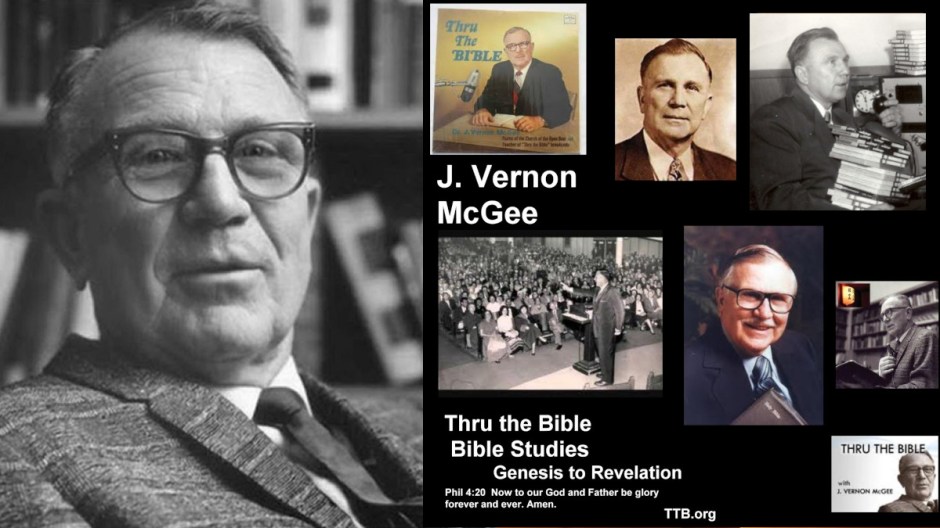
Dr. J. Vernon McGee: Mark 1

The audio on this video is the property of Thru the Bible. It is offered free of charge. If you wish to make a donation, do not send it to us. Visit http://www.ttb.org for information. The audio is attributed to Dr. J. Vernon McGee and Thru the Bible. Intellectual property rights are those of Thru the Bible.
Please contact us if you feel our understanding of the terms of use are in error.
Copyright information obtained from https://ttb.org/about/copyright-policy

Dr. J. Vernon McGee introduces the Gospel of Mark as chronologically the first Gospel written and emphasizes that its author, John Mark, was not an apostle but had close associations with key figures like Paul, Barnabas (his uncle), and Peter (his spiritual son). Mark’s Jewish name was John, and Mark was his Latin surname. His mother, Mary, was a prominent Christian in Jerusalem whose home served as a meeting place for the church. Mark initially accompanied Paul and Barnabas on their first missionary journey but turned back, causing a disagreement between Paul and Barnabas, with Barnabas later taking Mark to Cyprus. However, Mark eventually redeemed himself, becoming profitable for the ministry later in Paul’s life. Dr. McGee also notes the early church tradition, supported by figures like Papias, that Mark’s Gospel is essentially Peter’s account.

Dr. McGee explains that the Gospel of Mark was specifically written for the Romans, catering to the Roman mind which valued strength and action. He contrasts this with Matthew, written for the nation of Israel and the religious man; Luke, for the thinking man; and John, for the wretched man. The Romans, while bringing peace, justice, and order, did so through force, representing active human power and a tendency towards dictatorship. Mark presents Jesus not as the king (like in Matthew) but as God’s servant, a man of action, with “Flaming headlines” like “Jesus came” and “He is risen”. The style of Mark is described as brief, blunt, pertinent, pithy, and action-oriented, evident in the frequent use of the connective “and”. Unlike Matthew, Mark does not include a genealogy because Romans were more concerned with a servant’s ability to do the job than their lineage.

Moving into Mark chapter 1, Dr. McGee highlights the beginning of the Gospel, which focuses on Jesus’ coming into the world, his public ministry, death, and resurrection. He discusses John the Baptist as the messenger preparing the way for the Lord, baptizing not for the remission of sins but “unto the remission of sins,” preparing people for Jesus’ arrival. Jesus’ baptism by John in the Jordan River marked his identification with mankind, accompanied by the Trinity appearing with the Spirit descending like a dove and the Father’s voice declaring, “Thou art my beloved Son”. Immediately after, the Spirit drove Jesus into the wilderness for 40 days where he was tempted by Satan, alongside wild beasts, while angels ministered to him. Following John’s imprisonment, Jesus began his ministry in Galilee, preaching the gospel of God, calling his first disciples (Simon, Andrew, James, and John) to become “fishers of men”.

Dr. McGee describes a typical busy day in Jesus’ ministry in Capernaum, starting on the Sabbath where he taught with authority, astonishing the people. The first recorded miracle in Mark is the casting out of an unclean spirit in the synagogue, demonstrating Jesus’ power in the spiritual realm. This was followed by the healing of Simon’s mother-in-law who had a fever. That evening, the entire city gathered, and Jesus healed many who were sick and cast out demons, who recognized him. Despite his busy schedule, Jesus made time to pray early in the morning and then decided to move on to other towns to preach. The chapter concludes with the healing of a leper, emphasizing Jesus’ compassion as he touched and cleansed him. Jesus instructed the man to remain silent but to show himself to the priest according to Mosaic law; however, the man disobeyed and publicized his healing widely.

Defending the Gospel: Faith Alone in Christ

TEXAS GOSPEL VOLUNTEER

The gospel of Jesus Christ is of utmost importance, and getting it right is crucial. Many different versions of the gospel exist, but Scripture makes it clear that there is only one true gospel. In Paul’s letter to the Galatians, he strongly emphasizes the necessity of being faithful to the gospel he received through the revelation of Jesus Christ. He warns that deviating from the true gospel has eternal consequences. In Galatians 1:10-12, Paul makes it clear that his mission is not to please men but to serve Christ. The gospel he preached did not come from human teaching but directly from Jesus Christ. This divine origin underscores the authority and purity of the message of salvation.

The early church faced a significant controversy regarding the purity of the gospel. Paul and Barnabas had established churches in Galatia during their first missionary journey, but soon after, trouble arose. Satan always seeks to distort the truth, and certain men from Judea began teaching that Gentiles must be circumcised to be saved. Acts 14:25-28 records how Paul and Barnabas returned to Antioch and shared how God had opened the door of faith to the Gentiles. However, Acts 15:1 tells us that some men insisted that circumcision was necessary for salvation, leading to great distress among believers. The apostles and elders in Jerusalem gathered to address this issue. The Pharisees argued that Gentiles must follow the law of Moses, but Peter said that God had purified the hearts of the Gentiles by faith and that salvation is by grace alone. The Jerusalem Council concluded that Gentile believers were not bound by the Mosaic law for salvation, as stated in Acts 15:23-29. This declaration reaffirmed that salvation is by grace through faith in Christ alone.

Despite the clarity from the Jerusalem Council, Paul later received troubling news that the Galatians were turning away from the gospel of grace. The Judaizers had infiltrated the churches, discrediting Paul’s apostleship and promoting a false gospel that mixed grace with works. Paul immediately addressed this in Galatians 1:1-5, asserting his divine calling and emphasizing Christ’s sacrifice for sins. He expressed shock that the Galatians were so quickly embracing a different gospel, one that perverted the truth. Galatians 1:6-9 warns that anyone preaching another gospel, even an angel, should be accursed. This highlights the severe consequences of distorting the gospel message.

Understanding and defending the gospel is a responsibility of every believer. Some Christians today lack knowledge of their faith and cannot articulate the gospel clearly. Time is spent on worldly pursuits, but little effort is given to studying God’s Word. Investing in quality resources and spending time in Scripture is essential. A personal relationship with God requires more than just intellectual belief; it requires repentance and faith in Christ. A tragic reality is that some profess to be Christians yet cannot explain salvation. If one cannot explain how to be saved, how can they be sure they are saved? True conversion involves acknowledging sin, repenting, and trusting in Christ’s finished work on the cross. Salvation is not simply a ritual or an intellectual agreement; it is a desperate cry to God for mercy, leading to a transformed life.

False gospels abound, teaching that salvation is achieved by faith plus good works. Many believe that their good deeds contribute to their salvation, yet Scripture refutes this idea. Ephesians 2:8-9 says that salvation is a gift from God, not of works, so that no one can boast. Some teach that faith alone is insufficient, contradicting the clear teaching of Scripture. The Council of Trent anathematized those who hold to justification by faith alone, but Paul steadfastly proclaimed that justification is by grace alone through faith alone in Christ alone. Doesn’t adding works to the gospel imply that Christ’s sacrifice was not enough, which is a dangerous and false teaching?

The gospel of Jesus Christ is not to be compromised. Paul’s words serve as a warning against those who distort the truth. We must have the courage to stand firm in the true gospel, despite opposition. Evangelism and defending the faith will be met with resistance, but our confidence rests in the grace of God. Salvation is a free gift, and we must proclaim it rightly.