Trusting God When Facing False Accusations

JEFF TURNER

Psalm 27:12 says, “Do not turn me over to the desire of my foes, for false witnesses rise up against me, spouting malicious accusations.”

What should you do when others speak lies about you? How should you respond when people try to bring you down? It can be painful when others slander you, and sometimes, defending yourself feels impossible. Seeking revenge might seem like the right response, but the Bible offers a different way.

Psalm 27 teaches us to turn to God in prayer. We can bring our troubles before Him, trusting that He sees everything. Instead of focusing on those who wish us harm, we should focus on God’s goodness. The very next verse promises that we “will see the goodness of the Lord in the land of the living” (Psalm 27:13). Even when others intend evil, God’s plan for us is one of blessing.

A New Creation: The Promise of Heaven

JEFF TURNER

The Bible gives a powerful assurance about the future: God will create a completely new Heaven and Earth. In Revelation 21:5, we read, “He who was seated on the throne said, ‘Behold, I am making all things new.’ Also, he said, ‘Write this down, for these words are trustworthy and true.’” This promise is not just about fixing the broken world we know today. Instead, God will replace the old with something entirely fresh.

Many people imagine Heaven as a perfected version of life as we know it. However, Scripture makes it clear that the transformation will be far greater. The suffering and loss we experience now will no longer exist. The sea, often symbolic of chaos and separation in the Bible, will be removed. Pain and death will be erased forever.

Although we cannot fully grasp what this new creation will be like, we can trust in God’s wisdom and goodness. His power and love ensure that eternity will be both glorious and perfect—not only for His.

REF 21:1-5 NASB:
21 Then I saw a new heaven and a new earth; for the first heaven and the first earth passed away, and there is no longer any sea. 2 And I saw the holy city, new Jerusalem, coming down out of heaven from God, prepared as a bride adorned for her husband. 3 And I heard a loud voice from the throne, saying, “Behold, the tabernacle of God is among the people, and He will dwell among them, and they shall be His people, and God Himself will be among them, 4 and He will wipe away every tear from their eyes; and there will no longer be any death; there will no longer be any mourning, or crying, or pain; the first things have passed away.”
5 And He who sits on the throne said, “Behold, I am making all things new.” And He *said, “Write, for these words are faithful and true.”

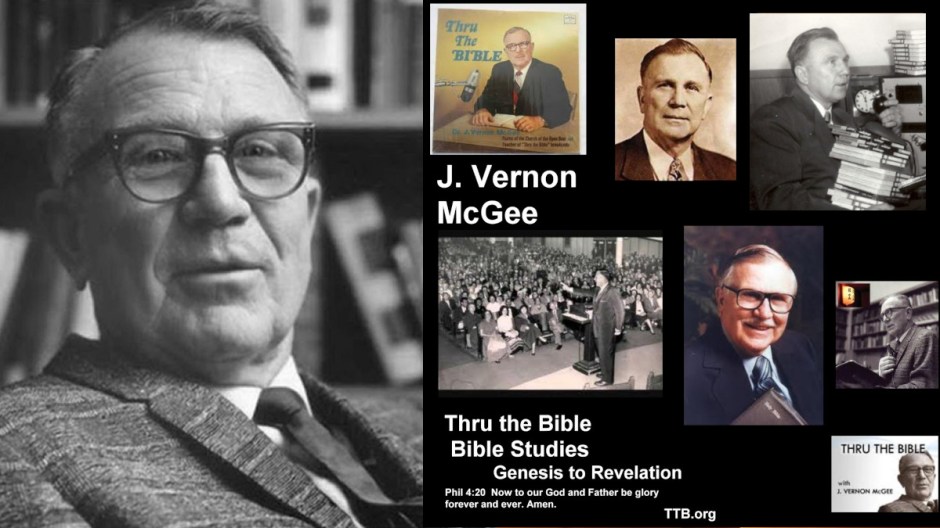
Thru the Bible: Matthew 18-21

POSTED BY TEXAS GOSPEL VOLUNTEER

The audio on this video is the property of Thru the Bible. It is offered free of charge. If you wish to make a donation, do not send it to us. Visit http://www.ttb.org for information. The audio is attributed to Dr. J. Vernon McGee and Thru the Bible. Intellectual property rights are those of Thru the Bible.
Please contact us if you feel our understanding of the terms of use are in error.
Copyright information obtained from https://ttb.org/about/copyright-policy

In the 18th chapter of Matthew, Dr. McGee highlights several key aspects of the Kingdom of Heaven. He emphasizes that entering the kingdom requires conversion and becoming like little children. This isn’t about reverting to childish behavior but rather experiencing a new spiritual birth, akin to starting life anew as a child spiritually. Dr. McGee notes that the disciples’ concern about who is greatest in the kingdom is secondary to the primary importance of securing entrance through the new birth. He underscores the Lord’s teaching that unless one is converted and becomes as a little child, they shall not enter the Kingdom of Heaven.

Dr. McGee stresses the immense value God places on children, stating that the evangelization of children is a Divine imperative. He cites the Lord’s strong words against those who would offend or cause these little ones to stumble. McGee interprets the passage about angels beholding the Father’s face as indicating that when little ones die, their spirits go immediately to be with God because Jesus died for them. He emphasizes the responsibility of parents and the church towards children, lamenting societal trends that harm them. Dr. McGee connects the Lord’s teaching on children to the discussion on divorce, noting that the well-being of children should be a paramount consideration for Christian couples.

Moving into Matthew 19, Dr. McGee addresses the crucial topic of marriage and divorce. He explains that Jesus takes the Pharisees back to God’s original ideal for marriage: one man and one woman becoming one flesh. While the Mosaic Law permitted divorce due to the hardness of hearts, Dr. McGee highlights that Jesus provides a new principle, stating that the only scriptural ground for divorce is fornication (adultery). He clarifies that while believers may separate on other grounds, remarriage after divorce is only permissible for the innocent party in cases of adultery. Dr. McGee also touches on the topic of singleness, noting that some are uniquely suited for it, and the decision to marry or remain single is ultimately a personal one.

As the narrative progresses, Dr. McGee discusses the concept of true greatness in the Kingdom. He explains that it is found not in seeking exalted positions but in humbling oneself and becoming a servant. This is exemplified by Jesus himself, who came not to be ministered to but to minister and give his life as a ransom for many. Dr. McGee emphasizes that rewards in heaven are determined by faithfulness to the task God has given, regardless of how significant or prominent it may seem. He notes Peter’s question about reward and Jesus’ response about judging the tribes of Israel, highlighting that sacrifice for Christ’s sake will be rewarded.

In the later chapters, Dr. McGee addresses Jesus’ entry into Jerusalem and his interactions with the religious leaders. He distinguishes between the initial entry and the true triumphal entry at the second coming. Dr. McGee interprets the cursing of the fig tree as symbolic of Israel’s fruitless religious system. He highlights the confrontation between Jesus and the chief priests regarding his authority, noting how Jesus skillfully exposes their hypocrisy. Through the parable of the two sons and the wicked husbandmen, Dr. McGee emphasizes that outward religious profession without genuine obedience and fruit is insufficient. He concludes by underscoring the importance of recognizing oneself as a sinner and coming to Christ for salvation.

Southbound Explores the Cleansing Waters of Forgiveness With “I Left It In The Water”

AMY TURNER

Southern Gospel trio Southbound has released their latest single, “I Left It In The Water”. The digital release happened 11 October following the renewal of their recording relationship with Daywind Records. The song addresses the concept of baptism as a symbolic act of spiritual cleansing and forgiveness, as reflected in its lyrics.

The lyrics of “I Left It In The Water” reference past mistakes and the idea of being absolved through baptism. It begins with acknowledging our past errors: “I had a past I carried so long. Didn’t get it all right. Got a lot of it wrong”. The act of baptism is described as a form of burial: “When they laid me down in that watery grave, came up without a trace. It was covered by grace”.

The central theme of the song is expressed in the repeated line, “I left it in the water”. This phrase is directly linked to the concept of forgiveness received during baptism: “when I was baptized. I left it in the water. Buried in the tide, my past was forgiven. That very hour, guilt, sin, and shame no longer remain cuz I left it in the water”. The lyrics suggest a complete separation from the past self: “If you look for old me, friend, don’t even buy Father, there’s just a headstone saying that man is gone. Cuz I left it in the water”.

Clint Brown of Southbound gave us some context for the song’s message. He said while some people may consider themselves saved, baptism holds a specific significance. Brown explained that “I Left It In The Water” offers an opportunity to communicate the meaning of baptism as representing “the cleansing uh power of God in your life”.

The release of this single coincided with Southbound’s renewed partnership with Daywind Records. Clint said the continued collaboration comes with the value of associating with experienced professionals in the industry and expressed his anticipation for their ongoing work together to “bring hope, help, and blessing through the songs we sing”.

Pathways to Deeper Faith: Engaging in Action and Experiencing Divine Power

TEXAS GOSPEL VOLUNTEER

EDITOR’S NOTE: This article contains positions that are not fully agreed upon among the staff at Texas Gospel. While we agree God’s Word is the final Word, we believe that sometimes His Word is misunderstood. If you have Biblical input, please leave it in the comments below. Be civil, and post anything in a spirit of unity and a desire to understand God’s will.

The journey of spiritual growth is a deeply personal one, often involving introspection and the cultivation of inner virtues. However, throughout history, another powerful dimension of this journey has been the active participation in demonstrating one’s beliefs and extending care to others. This approach suggests that a profound deepening of faith occurs not only through contemplation but also by stepping into the world and engaging in actions that reflect the very heart of one’s spiritual convictions.

From the earliest accounts, foundational ministry was characterized by tangible expressions of God’s compassion and power. It was not only a matter of proclaiming His message but also of demonstrating it through acts of healing and liberation. Luke chapter 4 tells us the announcement of ministry included bringing good news to the poor, proclaiming release to the captives, recovery of sight to the blind, and letting the oppressed go free, drawing from the prophecy of Isaiah chapter 61: 1-4. This historical precedent highlights the significance of both word and deed in the expression of faith.

Furthermore, the empowering and sending out of followers to continue this work shows us the importance of active engagement. Disciples were not only taught but also given authority and power to heal the sick and cast out demons, as seen in the commissioning of the twelve in Luke 9:1-6, Matthew 10:1-8, and Mark 6:7. This was further extended when seventy others were commissioned and sent out with similar instructions to heal and proclaim the nearness of the kingdom of God in Luke 10:1-9. These accounts reveal a model where active participation in ministry was central to the development of those who followed.

This shows us that spiritual growth is intertwined with doing the work of ministry. Engaging in practices such as praying for the sick and sharing the core message are not simply tasks but opportunities to witness. The joy experienced upon seeing positive outcomes, such as healing, further reinforces faith and deepens one’s connection to the divine, as evidenced by the return of the seventy who rejoiced that even demons submitted to them in the name of Jesus (Luke 10:17.)

A vital component of this dynamic approach is the recognition and reliance on the Holy Spirit as an empowering presence. The initial announcement of ministry was linked to the Spirit of the Lord being upon the one sent (Luke 4:18 quoting Isaiah 61:1). This concept extends to the idea that the provision of the Spirit and its work is for all generations, as suggested in Isaiah 59:21, which speaks of the Spirit and the words put in one’s mouth not departing. This empowering presence is seen as essential for carrying out the works of ministry effectively.

Through this active engagement in ministry, a deeper and more intimate relationship with the divine is often reported. The shared experiences, the reliance on what is believed to be divine power, and the witnessing of transformative events contribute to a strengthened bond. It becomes a reciprocal process where doing the work of faith leads to a greater knowing and understanding of the divine’s love and power in one’s own life I Corinthians 11:1 encourages imitation based on this relationship.

While personal devotion and inner reflection are valuable aspects of spiritual growth, the path of active participation in ministry, empowered by the Holy Spirit, offers a powerful and transformative dimension. By stepping out in faith and engaging in actions that reflect core spiritual beliefs, individuals can experience a deeper connection with the divine and witness the impact of their faith in tangible ways, leading to profound personal and spiritual development.