Seeing the Bigger Picture in Life’s Tapestry

TEXAS GOSPEL VOLUNTEER

Life can often feel like a collection of separate moments, some filled with joy and brightness, others with sadness and shadow. It can be difficult to understand how these different experiences fit together to form a larger story. This is the central theme in the song “A Lovely Tapestry” by Grammy-nominated and Dove Award-winning Christian music artist Mark Bishop.

Mark has been a recording artist and songwriter in Gospel music for more than forty years. His music often strives to help people see the bigness of God in everyday happenstance. His song “A Lovely Tapestry” explores the idea that our lives, with all their varied experiences, are like threads in a grand design created by God.

“Living one day at a time as we do we only see the individual threads of our lives and some days those threads are happy colors Reds and yellows and golds and then some days the threads are dark and shadowy blacks browns and grays And if it were up to us, we’d never have any dark days. That’s just human nature. We’d never visit those shadowy places There’d never be any rain. There’d never be any sadness But if God is creating a beautiful tapestry in our lives Then we kind of have to realize that the best artists use all the colors to paint a picture with depth and contrast and Shadow and light maybe in the end one of these days when we finally reach heaven God will reveal to us the masterpiece that he was creating in our lives and we’ll see a grand story,” Mark Bishop said.

The lyrics of the song paint a picture of everyday life. It tells the simple story of a man and woman: she sang soprano in the church choir, and he worked at the factory. They had two children and not much money, but their hearts were full. They fell in love, made a home, and experienced life’s blessings. The song describes ordinary moments like weekend fishing trips with their son and driving their daughter to ballet. Eventually, the song speaks of the passage of time, growing older, and the man giving his daughter away at her wedding.

The lyrics also touch upon the idea that we might not always understand the difficulties and sorrows we face. “We might not see the story that he’s weaving all the ups and downs all the joy All The Grieving”. However, the song suggests that these experiences, both good and bad, are part of a larger, beautiful design.

The song concludes with a hopeful vision of the afterlife. “When it’s all said and done and life is over will we see all the stories he was weaving all the plans for you and me when we get to heaven maybe he will say to me we made a lovely tapestry we made a lovely tapestry all the things we couldn’t see fit together perfectly we made a love the tapestry”. The idea is that when we reach heaven, God might reveal the complete picture of our lives, showing how all the individual threads came together to create a “lovely tapestry”. Even the dark and challenging times have a purpose in the overall masterpiece.

Through “A Lovely Tapestry,” Mark Bishop offers a message of faith and hope, and encouragement. We are all part of a beautiful and meaningful design. Just as an artist uses all colours to create a rich and complex painting, so too does God use all our experiences to weave a grand and lovely story.


Discover Steve Ladd’s Inspirational Song ‘Everyday Saints’

TEXAS GOSPEL VOLUNTEER

Steve Ladd is getting ready to release a new EP. Ladd shared that his part in the project is complete, and the background vocals, mixing, and mastering are currently being finalized. He also mentioned that they are trying to get a special guest for one of the songs, which he is excited about but cannot yet reveal.

Ladd’s previous album, “Come Up Clean,” featured Jason Crabb as a guest artist, something he is very proud of. This new EP will include a song titled “Everyday Saints”. The lyrics of “Everyday Saints” tell stories of ordinary people who demonstrate love and grace in their daily lives. One verse describes a veteran who volunteered for service and now helps others with practical needs. Another tells the story of a woman who takes care of foster babies. The song suggests that these everyday actions are examples of what Jesus would do. The lyrics emphasize that these individuals are not seeking recognition but are simply living out their faith.

Steve Ladd has a long history in Christian music. From a young age, growing up in Ohio as the son of an evangelist, he felt called to minister through song. He has been a part of acclaimed Christian music groups such as Gold City, The Anchormen, and Anthem Edition. For over ten years, Ladd has travelled both within Canada and internationally, sharing inspirational songs like “Come Sunday Morning,” “One More River,” and “Preach the Word”.

Professionally, Steve Ladd has received recognition, including being inducted into the Gospel Music Association Hall of Fame and receiving a “New Artist of the Year” nomination. His song with Jason Crabb reached Number One on the charts, and he has had seven Top 40 singles. His album “Come Up Clean” reached the Top 20 on the iTunes Christian music chart upon its release. Ladd has also been featured in significant Christian platforms such as the Gaither Homecoming Series and Trinity Broadcasting Network, and he appeared on National Public Radio. Notably, he was the featured vocalist with The Stamps Quartet on Alan Jackson’s Grammy-winning album “Precious Memories Volume II”. He has also toured with gospel music legend Michael English.

Reflecting on Steve Ladd’s talent, Michael English, a Grammy and Dove-winning Gospel Music Artist, said, “Steve’s a talented man with one of the greatest hearts I’ve known, and an even greater heart for Ministry”. This sentiment describes Ladd’s dedication to his music. His upcoming EP and the song “Everyday Saints” continue his journey of sharing messages of faith and encouragement through his songs.

Baritone Changes at Greater Vision: Who’s Filling In?

AMY TURNER

Several singers have filled in as baritone vocalist for Greater Vision this month. Isaac Hughes traveled with the group one weekend. Cody Shaneyfelt was out with them this past weekend, and Jim Brady filled in last week at Praisefest Branson.

Jon Epley, who had been with Greater Vision since 2017, announced his decision to leave the group in February 2025

These temporary arrangements allow Greater Vision to continue their scheduled performances while they seek a permanent replacement for the baritone position. The group’s founder, Gerald Wolfe, along with Rodney Griffin and Chris Allman, are actively searching for someone to fill the role permanently

Lifetime Achievement Award for Eddie Crook in Gospel Music

AMY TURNER

Last week The Southern Gospel Music Guild honored Eddie Crook with their lifetime achievement award.

Eddie Crook began his career in 1961 as the pianist for The Tennesseans. That started a music career that included doing session work at RCA Studios in Nashville. In 1964, he joined The Plainsmen Quartet. He’s spent decades of his life as a part of southern gospel music, both on the stage and behind-the-scenes.

Mr. Crook tells us one of the highlights of his career was
“Playing the Grand Ole Opry with Marty Robbins on Saturday night with everybody going.”

From 1967-1970, he played for “The Sego Brothers and Naomi” and went on to become the pianist for “The Happy Goodman Family.”

In 1977, Eddie Crook began efforts to propel other artists through The Eddie Crook Company. The record label put many groups on the map. Some of the groups who were with The Eddie Crook Company include The Crabb Family, Carroll Roberson, Issacs, Bishops, Perrys, Booth Brothers, Heirline, Dixie Melody Boys, Dixie Echoes, Wilburns, Palmetto State Quartet, Jimmie Davis, and many more.

Speaking about the groups through the years he said, We were in the right place at the right time. We were fortunate to work with them.”

Our congratulations to Eddie Crook, recipient of The Southern Gospel Music Guild’s Lifetime Achievement Award!

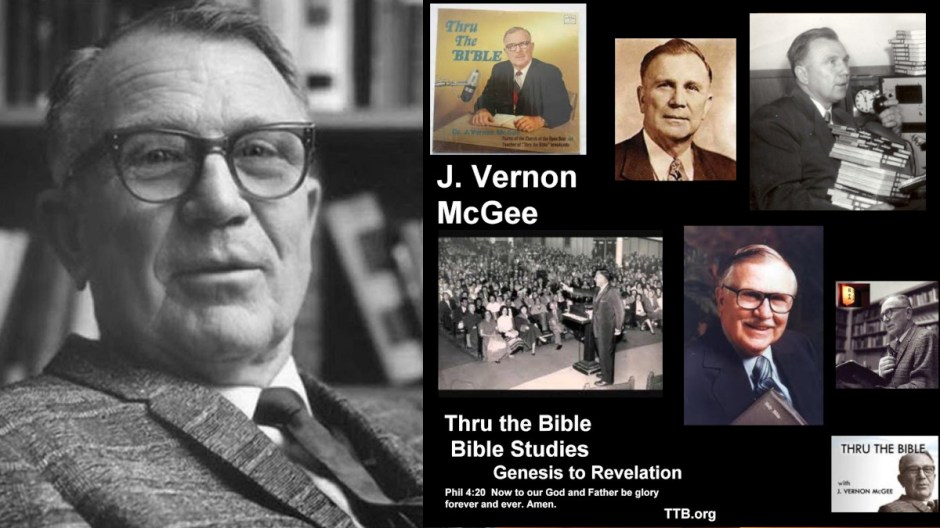
Thru the Bible: Matthew 18-21

POSTED BY TEXAS GOSPEL VOLUNTEER

The audio on this video is the property of Thru the Bible. It is offered free of charge. If you wish to make a donation, do not send it to us. Visit http://www.ttb.org for information. The audio is attributed to Dr. J. Vernon McGee and Thru the Bible. Intellectual property rights are those of Thru the Bible.
Please contact us if you feel our understanding of the terms of use are in error.
Copyright information obtained from https://ttb.org/about/copyright-policy

In the 18th chapter of Matthew, Dr. McGee highlights several key aspects of the Kingdom of Heaven. He emphasizes that entering the kingdom requires conversion and becoming like little children. This isn’t about reverting to childish behavior but rather experiencing a new spiritual birth, akin to starting life anew as a child spiritually. Dr. McGee notes that the disciples’ concern about who is greatest in the kingdom is secondary to the primary importance of securing entrance through the new birth. He underscores the Lord’s teaching that unless one is converted and becomes as a little child, they shall not enter the Kingdom of Heaven.

Dr. McGee stresses the immense value God places on children, stating that the evangelization of children is a Divine imperative. He cites the Lord’s strong words against those who would offend or cause these little ones to stumble. McGee interprets the passage about angels beholding the Father’s face as indicating that when little ones die, their spirits go immediately to be with God because Jesus died for them. He emphasizes the responsibility of parents and the church towards children, lamenting societal trends that harm them. Dr. McGee connects the Lord’s teaching on children to the discussion on divorce, noting that the well-being of children should be a paramount consideration for Christian couples.

Moving into Matthew 19, Dr. McGee addresses the crucial topic of marriage and divorce. He explains that Jesus takes the Pharisees back to God’s original ideal for marriage: one man and one woman becoming one flesh. While the Mosaic Law permitted divorce due to the hardness of hearts, Dr. McGee highlights that Jesus provides a new principle, stating that the only scriptural ground for divorce is fornication (adultery). He clarifies that while believers may separate on other grounds, remarriage after divorce is only permissible for the innocent party in cases of adultery. Dr. McGee also touches on the topic of singleness, noting that some are uniquely suited for it, and the decision to marry or remain single is ultimately a personal one.

As the narrative progresses, Dr. McGee discusses the concept of true greatness in the Kingdom. He explains that it is found not in seeking exalted positions but in humbling oneself and becoming a servant. This is exemplified by Jesus himself, who came not to be ministered to but to minister and give his life as a ransom for many. Dr. McGee emphasizes that rewards in heaven are determined by faithfulness to the task God has given, regardless of how significant or prominent it may seem. He notes Peter’s question about reward and Jesus’ response about judging the tribes of Israel, highlighting that sacrifice for Christ’s sake will be rewarded.

In the later chapters, Dr. McGee addresses Jesus’ entry into Jerusalem and his interactions with the religious leaders. He distinguishes between the initial entry and the true triumphal entry at the second coming. Dr. McGee interprets the cursing of the fig tree as symbolic of Israel’s fruitless religious system. He highlights the confrontation between Jesus and the chief priests regarding his authority, noting how Jesus skillfully exposes their hypocrisy. Through the parable of the two sons and the wicked husbandmen, Dr. McGee emphasizes that outward religious profession without genuine obedience and fruit is insufficient. He concludes by underscoring the importance of recognizing oneself as a sinner and coming to Christ for salvation.