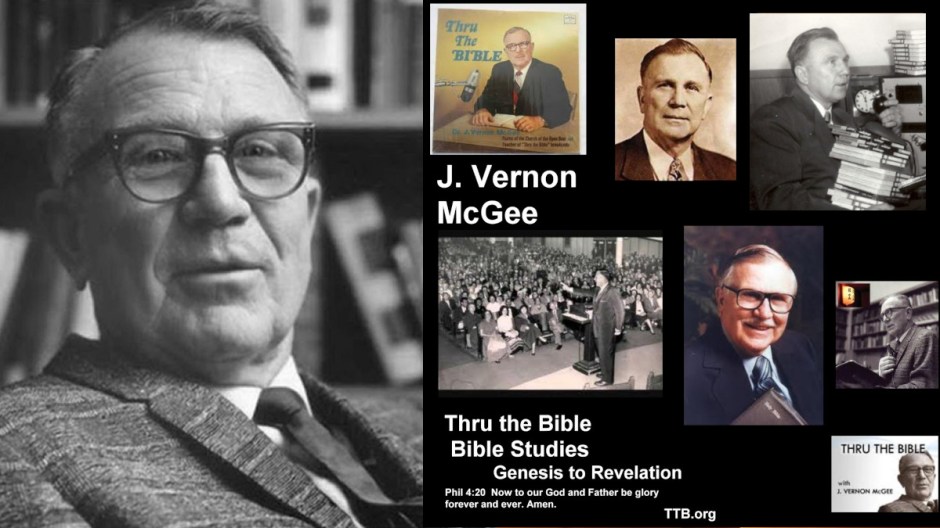
Dr. J. Vernon McGee – Matthew 1

The audio on this video is the property of Thru the Bible. It is offered free of charge. If you wish to make a donation, do not send it to us. Visit http://www.ttb.org for information. The audio is attributed to Dr. J. Vernon McGee and Thru the Bible. Intellectual property rights are those of Thru the Bible.
Please contact us if you feel our understanding of the terms of use are in error.
Copyright information obtained from https://ttb.org/about/copyright-policy

Dr. McGee’s message in this excerpt from his discourse on the Gospel of Matthew begins by underscoring the vital importance of understanding the approximately 400-year intertestamental period between the Old and New Testaments. During this time of divine silence, significant global shifts occurred, witnessing the decline of the Medo-Persian and Egyptian empires and the rise of Greece under Alexander the Great, who even visited Jerusalem. Subsequently, the Roman Empire emerged as the dominant world power by the time the New Testament opens. Internally, Judea underwent a radical transformation, with new cultural norms, institutions, and organizations developing, giving rise to the Jewish parties mentioned in the New Testament, such as the Pharisees (defenders of Jewish tradition and nationalists), the Sadducees (wealthy, liberal in theology, and opposed to tradition), the scribes (legal experts focused on the letter of the law), and the Herodians (political opportunists). Dr. McGee emphasizes that understanding this historical context is crucial for appreciating the New Testament.

He then turns his attention to the Gospel of Matthew, stating that it was written primarily for the nation of Israel, a religious people, and possibly was first penned in Hebrew. He considers Matthew a key book that bridges the Old Testament and the New, gathering numerous Old Testament prophecies and showing their fulfillment in Jesus Christ. A central theme in Matthew is the Kingdom of Heaven, an expression unique to this Gospel, which Dr. McGee defines as the reign of the heavens over the Earth, clearly distinguishing it from the church. The genealogy that opens Matthew’s Gospel is deemed a profoundly important document, establishing Jesus’ lineage from Abraham, which places him within the chosen nation, and from David, which gives him the legal claim to the throne. This genealogy was a matter of public record and its accuracy was not challenged in early times.

Dr. McGee draws a significant parallel between the “book of the generation of Adam” in Genesis and “the book of the generation of Jesus Christ” in Matthew, highlighting that while entrance into Adam’s family is by natural birth, entry into Christ’s family occurs through the New Birth by faith in Christ. He also points out the remarkable inclusion of four women—Tamar, Rahab, Ruth, and Bathsheba—and Gentiles in Jesus’ genealogy, which was unconventional for the time, suggesting themes of sin, faith, grace, and God’s redemptive purposes. He explains the seemingly broken pattern in verse 16, where it states “Jacob begat Joseph the husband of Mary, of whom was born Jesus,” clarifying that while Joseph provides the legal title to David’s throne (being in the line of David through Solomon), he was not Jesus’ biological father due to the curse on Jeconiah’s line; Mary, also of the lineage of David (through Nathan), was the one who bore Jesus.

A cornerstone of Dr. McGee’s message is the Virgin Birth of Jesus Christ. He emphasizes that Matthew explicitly teaches that Joseph was not Jesus’ father and sees this as the fulfillment of the prophecy in Isaiah 7:14: “Behold, a virgin shall be with child and shall bring forth a son, and they shall call his name Emmanuel“. He strongly criticizes liberal interpretations that attempt to translate the Hebrew word alma and the Greek word parthenos as “young woman” instead of “virgin,” arguing that the Septuagint translation by Hebrew scholars clearly understood it to mean virgin. Dr. McGee underscores the profound significance of the name Emmanuel, meaning “God with us,” asserting that Jesus can only be the Savior (Jesus) because he is Emmanuel through the Virgin Birth. He firmly believes that while one might initially come to Christ without fully understanding the Virgin Birth, a true child of God will not ultimately deny this foundational doctrine.

The audio on this video is the property of Thru the Bible. It is offered free of charge. If you wish to make a donation, do not send it to us. Visit http://www.ttb.org for information. The audio is attributed to Dr. J. Vernon McGee and Thru the Bible. Intellectual property rights are those of Thru the Bible.
Please contact us if you feel our understanding of the terms of use are in error.
Copyright information obtained from https://ttb.org/about/copyright-policy


Sharing the Gospel: A Call to Action

TEXAS GOSPEL VOLUNTEER

Some believe that sharing the gospel is best done by waiting for opportunities that God provides. Others emphasize a more proactive approach, inspired by Jesus’ words in Matthew 28:19-20: “Go therefore and make disciples of all nations.” This call to action suggests no boundaries—every method and place can be used to spread the good news.

Evangelism can take many forms: speaking with neighbours, engaging in street or classroom discussions, building friendships, or even sharing faith in competitive or challenging environments. The key is to consistently proclaim the message of Christ wherever we are.

However, the method of sharing is less important than the message itself. It’s vital to ensure that the gospel is communicated truthfully and accurately. Becoming a follower of Christ involves more than a simple prayer; it requires recognizing one’s sin, turning to Jesus in repentance, and fully committing to Him as Lord and Master. This transformation brings deep joy and purpose to the believer’s life, as seen in Romans 6:22: “But now that you have been set free from sin and have become slaves of God, the benefit you reap leads to holiness, and the result is eternal life.”

Evangelism is an urgent mission for every believer. It’s a call to both action and truth, ensuring that the life-changing message of Christ reaches all.

Man Pleads Guilty to Hate Crime in Arson Case Targeting U.S. Congregation

TEXAS GOSPEL STAFF

Kevin Colantonio, 34, of Rhode Island. has agreed to plead guilty to a hate crime for setting fires at a predominantly Black church earlier this year, federal prosecutors announced. The plea deal includes admitting to arson motivated by racial bias and an additional offence committed while in custody.

Colantonio’s crimes occurred in February, targeting Shiloh Gospel Temple in North Providence. Court documents reveal that he used gasoline to ignite multiple fires around the church’s exterior shortly after midnight on February 11. The North Providence Police and Fire Departments quickly extinguished the flames, preventing significant damage.

As part of the plea deal, Colantonio admitted to selecting the church specifically because of the race, colour, religion, or ethnicity of its congregants, who are predominantly Black. This admission classifies the arson as a hate crime, carrying enhanced penalties under federal law.

While detained at Wyatt Detention Facility in March, Colantonio committed another serious offence. According to prosecutors, he threw a mixture of faeces and urine at a correctional officer delivering his breakfast.

The potential consequences of Colantonio’s actions are significant. He faces a minimum prison sentence of five years and a maximum of 56 years, along with a possible $1 million fine and three years of supervised release. A hearing is scheduled for January 7 at the Rhode Island U.S. District Court in Providence.

U.S. Attorney Zachary Cunha highlighted the importance of the case as part of ongoing civil rights enforcement efforts. Cunha stated that the final sentence would be determined by a federal judge, with recommendations from his office and the probation department.

The arson at Shiloh Gospel Temple, which was unoccupied at the time, left the congregation deeply affected. For many Christians, places of worship represent sanctuaries for prayer, community, and spiritual growth. Targeting such spaces for violence not only damages property but also disrupts the sense of security and unity that churches provide to their members.

Navigating Challenging Truths in Jesus Teachings

JEFF TURNER

A driver found himself frustrated by slow-moving snow plows, which doubled his travel time. Initially annoyed, he soon realized that these plows were ensuring his safe passage home, much like how we often resist the very things meant to guide and protect us in life. Doesn’t this make a good metaphor for the spiritual journey many undertake when confronted with the teachings of Jesus, particularly those found in John 6. Here, Jesus presents himself as the bread of life, claiming that those who come to him will never hunger or thirst again, emphasizing that he offers not just physical sustenance but eternal life.

As crowds flocked to Jesus seeking material blessings after witnessing his miracles, he redirected their focus to deeper spiritual truths. He urged them not to labor for food that perishes but for the food that endures to eternal life. In this context, Jesus’ assertion that he is the living bread from heaven becomes a pivotal point of contention among his followers. Many found his words difficult to accept, expressing confusion and offense at the notion of consuming his flesh and blood—a teaching that seemed scandalous and hard to grasp. This reaction shows us that Jesus’ teachings often requires grappling with discomfort and confronting our own preconceptions.

Jesus recognizes this struggle within his disciples and addresses their doubts directly, asking if they are offended by his words. He challenges them to consider the implications of his divine origin and the necessity of spiritual rebirth. His insistence that “the Spirit gives life; the flesh is no help at all” underscores that human efforts alone cannot attain salvation or spiritual fulfillment. Instead, it is through divine grace and the work of the Holy Spirit that one can truly live.

The disciples’ struggle reflects a broader human tendency to recoil from challenging truths, especially when they clash with personal beliefs or societal norms. Jesus’ teachings can provoke discomfort, yet they also offer hope and a path to eternal life for those willing to embrace them. Ultimately, Jesus invites us to confront our own hearts when faced with difficult truths, reminding us that true life comes from him alone.

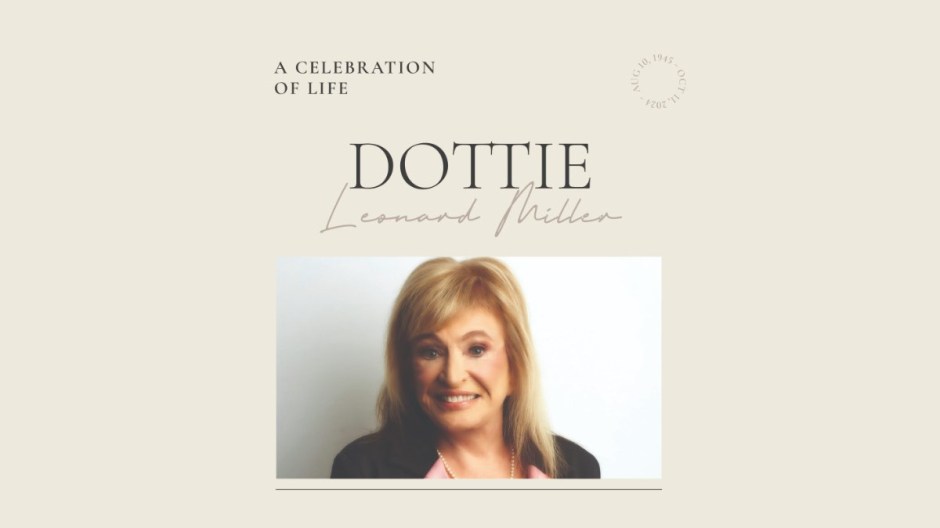
Dottie Leonard Miller’s Legacy Celebrated in Memorial Service

AMY TURNER

The founder of New Day and Daywind, Dottie Leonard Miller, was honored last Monday evening during a celebration of her life, bringing together many artists whose careers she influenced. The memorial service featured performances by several prominent gospel music groups, including Brian Free & Assurance, Greater Vision, Karen Peck & New River, and Autumn Nelon Streetman.

Billy Blackwood of The Blackwood Brothers, who maintained a close relationship with the Leonard family, shared meaningful insights about Miller’s impact on the gospel music industry. “Dottie’s vision was a magnet, and her passion drew artists to her vision,” Blackwood reflected. “Practically, everyone here today is a testimony to the reality of that vision.”

Miller’s influence extended far beyond the business aspects of the music industry. As Blackwood noted, “She collected friends and artists who would match her vision for spreading the gospel. And because she faithfully followed her calling, millions of songs in Christian products have touched lives around the world.”

Her dedication to spreading the gospel message through music created a lasting impact. “Her legacy is a testament to her determination, her faith, and her deep commitment to spread the message of the gospel,” Blackwood concluded.