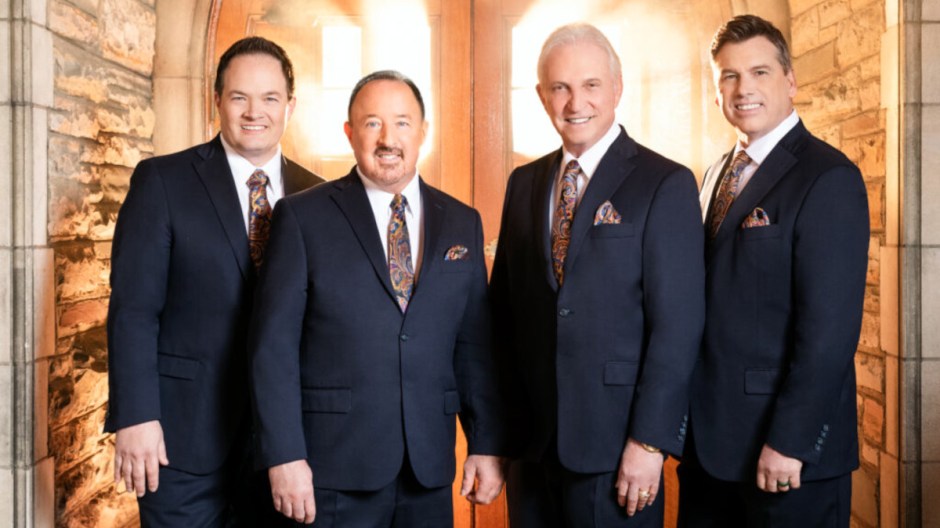
The Guardians recently had to change their plans due to severe weather. They were set to perform in Hartford, Alabama on March 15th, but the event was cancelled because of the weather. The group shared a message on their website, saying, “We’re praying for all of those in the path of the storm. Stay weather alert!”.
Despite this setback, The Guardians are continuing with their planned tour and are working to get their music played on the radio. Their new song “Kick Up My Heels and Sing“ has a positive message at a time we all need to hear something positive.
Provided to YouTube by Daywind Records Kick Up My Heels and Sing · The Guardians Kick Up My Heels and Sing ℗ 2025 Daywind Records Released on: 2025-01-31 Main Artist: The Guardians Producer: John Darin Rowsey Lyricist: John Darin Rowsey Composer: John Darin Rowsey Lyricist: Rodney Griffin Composer: Rodney Griffin Arranger: Wayne Haun
Pat Barker, who sings the bass part for The Guardians, believes that “the world today really needs something happy!”. He further explained his thoughts behind the song, stating, “It’s just it’s happy don’t we need happy right now we need happy it’s it’s quartet singing all the way around it sounds like the guardians it sounds like a quartet and yes that is me singing the bass many people have asked um yes that’s me we didn’t have to hire somebody in for this one,” he said. This highlights the group’s intention to spread joy through their music, especially during difficult times.
The lyrics of “Kick Up My Heels and Sing,” talk about a “Happy Feeling burst into a song”. It emphasizes the idea that “every day is brand new Mercy walking on the King’s Highway there is Joy on this journey every filled with grace”. The lyrics also encourage listeners to “lift up my voice kick up my heels and sing” and express gratitude for blessings received, as in “can’t stop Count the blessing he gives me”. The feeling of joy and anticipation for good things to come is evident in the lines “I’ve got too many Victory just waiting down the road I’m dancing in advance I’ve got to let it show”. Even when facing challenges, the song suggests that “no one is with me can’t stop counting the blessings He gives me.
Mary Magdalene played a significant role among Jesus’ followers, and her sorrow at His crucifixion was deep. She had witnessed His unjust execution and mourned the loss of her beloved teacher. When she saw Him alive after the resurrection, her instinct was to reach out and hold on to Him. However, Jesus gently stopped her, saying, “Do not cling to Me, for I have not yet ascended to the Father” (John 20:17).
This instruction may seem unusual since other disciples, like Thomas, were invited to touch Jesus after His resurrection. However, the original language clarifies the meaning. Mary was not simply reaching out in recognition—she was trying to hold on to Jesus as if to keep Him from ever leaving again. The pain of His absence during His death had been overwhelming, and the thought of losing Him once more was unbearable.
Yet, Jesus was preparing her for a new reality. He would soon return to His Father, but He would not leave His followers alone. Instead, He would send the Holy Spirit, who would dwell permanently in the lives of all believers. Through the Holy Spirit, Mary Magdalene and every Christian after her would experience the continuous presence of Christ. As Romans 8:9 affirms, “If anyone does not have the Spirit of Christ, they do not belong to Christ.” His physical departure did not mean separation; rather, it ensured a deeper, unbroken connection between Him and His followers.
Psalm 27:12 says, “Do not turn me over to the desire of my foes, for false witnesses rise up against me, spouting malicious accusations.”
What should you do when others speak lies about you? How should you respond when people try to bring you down? It can be painful when others slander you, and sometimes, defending yourself feels impossible. Seeking revenge might seem like the right response, but the Bible offers a different way.
Psalm 27 teaches us to turn to God in prayer. We can bring our troubles before Him, trusting that He sees everything. Instead of focusing on those who wish us harm, we should focus on God’s goodness. The very next verse promises that we “will see the goodness of the Lord in the land of the living” (Psalm 27:13). Even when others intend evil, God’s plan for us is one of blessing.
The Bible gives a powerful assurance about the future: God will create a completely new Heaven and Earth. In Revelation 21:5, we read, “He who was seated on the throne said, ‘Behold, I am making all things new.’ Also, he said, ‘Write this down, for these words are trustworthy and true.’” This promise is not just about fixing the broken world we know today. Instead, God will replace the old with something entirely fresh.
Many people imagine Heaven as a perfected version of life as we know it. However, Scripture makes it clear that the transformation will be far greater. The suffering and loss we experience now will no longer exist. The sea, often symbolic of chaos and separation in the Bible, will be removed. Pain and death will be erased forever.
Although we cannot fully grasp what this new creation will be like, we can trust in God’s wisdom and goodness. His power and love ensure that eternity will be both glorious and perfect—not only for His.
REF 21:1-5 NASB: 21 Then I saw a new heaven and a new earth; for the first heaven and the first earth passed away, and there is no longer any sea. 2 And I saw the holy city, new Jerusalem, coming down out of heaven from God, prepared as a bride adorned for her husband. 3 And I heard a loud voice from the throne, saying, “Behold, the tabernacle of God is among the people, and He will dwell among them, and they shall be His people, and God Himself will be among them, 4 and He will wipe away every tear from their eyes; and there will no longer be any death; there will no longer be any mourning, or crying, or pain; the first things have passed away.” 5 And He who sits on the throne said, “Behold, I am making all things new.” And He *said, “Write, for these words are faithful and true.”
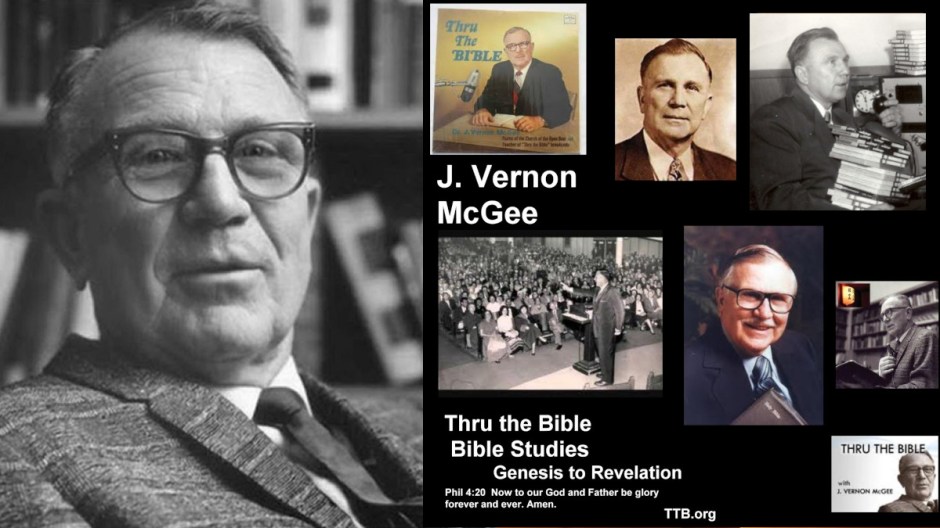
The audio on this video is the property of Thru the Bible. It is offered free of charge. If you wish to make a donation, do not send it to us. Visit http://www.ttb.org for information. The audio is attributed to Dr. J. Vernon McGee and Thru the Bible. Intellectual property rights are those of Thru the Bible. Please contact us if you feel our understanding of the terms of use are in error. Copyright information obtained from https://ttb.org/about/copyright-policy
In the 18th chapter of Matthew, Dr. McGee highlights several key aspects of the Kingdom of Heaven. He emphasizes that entering the kingdom requires conversion and becoming like little children. This isn’t about reverting to childish behavior but rather experiencing a new spiritual birth, akin to starting life anew as a child spiritually. Dr. McGee notes that the disciples’ concern about who is greatest in the kingdom is secondary to the primary importance of securing entrance through the new birth. He underscores the Lord’s teaching that unless one is converted and becomes as a little child, they shall not enter the Kingdom of Heaven.
Dr. McGee stresses the immense value God places on children, stating that the evangelization of children is a Divine imperative. He cites the Lord’s strong words against those who would offend or cause these little ones to stumble. McGee interprets the passage about angels beholding the Father’s face as indicating that when little ones die, their spirits go immediately to be with God because Jesus died for them. He emphasizes the responsibility of parents and the church towards children, lamenting societal trends that harm them. Dr. McGee connects the Lord’s teaching on children to the discussion on divorce, noting that the well-being of children should be a paramount consideration for Christian couples.
Moving into Matthew 19, Dr. McGee addresses the crucial topic of marriage and divorce. He explains that Jesus takes the Pharisees back to God’s original ideal for marriage: one man and one woman becoming one flesh. While the Mosaic Law permitted divorce due to the hardness of hearts, Dr. McGee highlights that Jesus provides a new principle, stating that the only scriptural ground for divorce is fornication (adultery). He clarifies that while believers may separate on other grounds, remarriage after divorce is only permissible for the innocent party in cases of adultery. Dr. McGee also touches on the topic of singleness, noting that some are uniquely suited for it, and the decision to marry or remain single is ultimately a personal one.
As the narrative progresses, Dr. McGee discusses the concept of true greatness in the Kingdom. He explains that it is found not in seeking exalted positions but in humbling oneself and becoming a servant. This is exemplified by Jesus himself, who came not to be ministered to but to minister and give his life as a ransom for many. Dr. McGee emphasizes that rewards in heaven are determined by faithfulness to the task God has given, regardless of how significant or prominent it may seem. He notes Peter’s question about reward and Jesus’ response about judging the tribes of Israel, highlighting that sacrifice for Christ’s sake will be rewarded.
In the later chapters, Dr. McGee addresses Jesus’ entry into Jerusalem and his interactions with the religious leaders. He distinguishes between the initial entry and the true triumphal entry at the second coming. Dr. McGee interprets the cursing of the fig tree as symbolic of Israel’s fruitless religious system. He highlights the confrontation between Jesus and the chief priests regarding his authority, noting how Jesus skillfully exposes their hypocrisy. Through the parable of the two sons and the wicked husbandmen, Dr. McGee emphasizes that outward religious profession without genuine obedience and fruit is insufficient. He concludes by underscoring the importance of recognizing oneself as a sinner and coming to Christ for salvation.



 Texas Gospel Canada Southern Gospel Radio