Mercy That Never Grows Old

AMY TURNER

Lamentations tells us that the love of the Lord does not come to an end and that His mercy is renewed every morning. His faithfulness is steady and sure.

People often look for God to do something unusual or to give a brand-new experience. We imagine that He might reveal something never seen before. But God often works in a different way. He does not need to invent something new each day to show His power. Instead, He may give us what is familiar, and make it fresh.

Each sunrise brings with it the reminder of His mercy. It is not a new kind of mercy, but it never grows weak or worn out. What He gives today is as full and alive as it was yesterday.

Jesus Christ is the same yesterday and today, and forever.

Hebrews 13:8

Chinese police detain more than 100 house church members in six-day crackdown

WEI ZHANG, SPECIAL FOR TEXAS GOSPEL

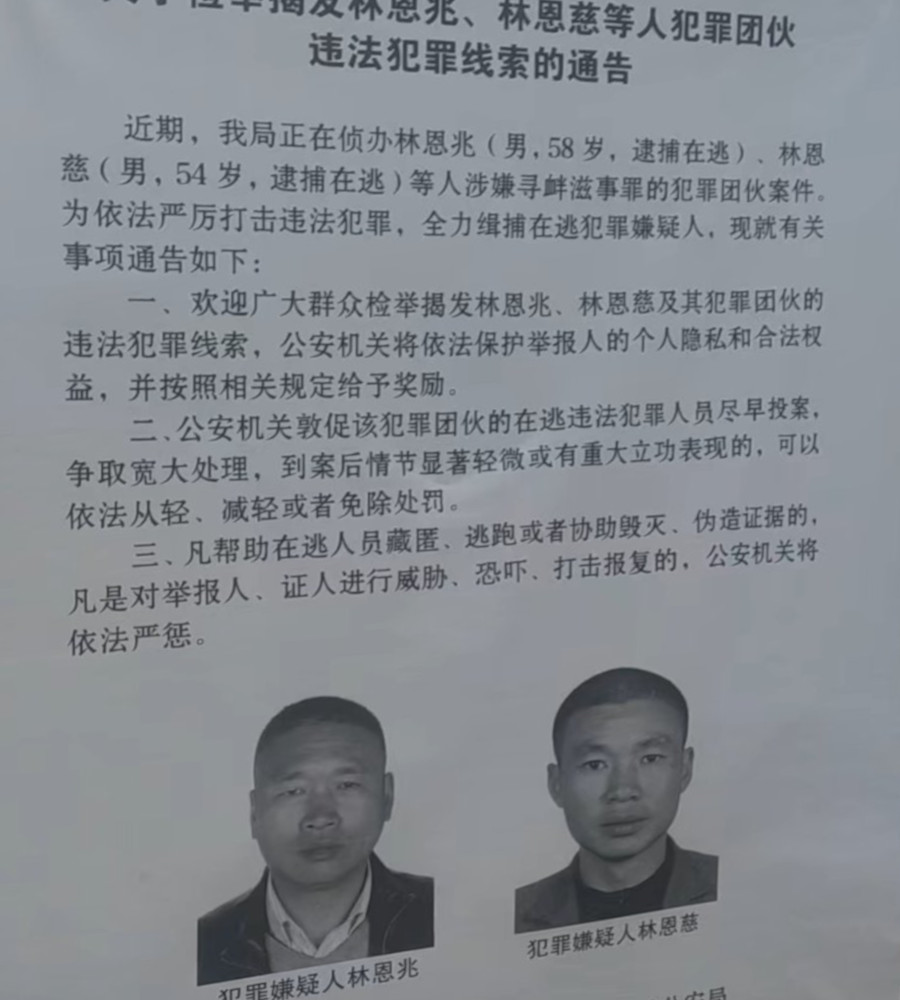
More than 100 house church members were reportedly detained and arrested during a six-day police operation in Taishun County, Wenzhou City, Zhejiang Province, according to reports from local witnesses. The crackdown took place between December 13 and December 18.

Reports describe an ongoing campaign by Chinese authorities targeting members of unregistered house churches in the region, with witnesses sharing accounts through social media and other networks.

During the operation, witnesses reported seeing multiple police checkpoints and roving patrols throughout the area. Authorities reportedly posted notices offering cash rewards for the capture of house church leaders and asked the public to provide information leading to arrests of Christians. Monetary rewards were specifically offered for information related to Christians accused of disputing land seizures and the removal of Christian symbols and crosses, according to the reports.

The crackdown followed months of reported tension between local authorities and house church leaders. Authorities had reportedly been enforcing the removal of Christian symbols, including crosses, while simultaneously seeking to install Communist symbols in churches. A new government-driven education policy was also reportedly being enforced in churches during this period.

The operation specifically targeted house churches not affiliated with state-sanctioned religious organisations, including the Catholic Patriotic Association and the Three-Self Patriotic Movement. These state-led religious institutions are characterised in reports as serving government messaging purposes. The Chinese government, which is led and controlled by the Chinese Communist Party, reportedly views Christianity as a threat to state authority, according to the report.

Peter’s call to Leave the nets behind

JEFF TURNER

After Peter denied knowing Jesus three times, he was filled with grief. Later, after the resurrection, Jesus met him by the sea for a meal of fish. During that meeting, Jesus asked, “Simon, son of John, do you love me more than these?”

The “these” likely referred to Peter’s old life. I’m speaking of his boat, nets, and fishing work. Jesus had told Peter to wait for Him in Galilee, but instead, Peter returned to fishing. His feelings of failure may have led him back to what was familiar.

By asking this question, Was Jesus challenging Peter to put his love for Him above his old way of life? He called Peter to leave fishing and devote himself to caring for God’s people. Three times Jesus repeated the question, and each time Peter answered, Jesus replied with a command to “feed my sheep” or “feed my lambs.”

This was not only a moment of restoration but also a clear call into ministry.

He said to him the third time, “Simon, son of John, do you love Me?” Peter was hurt because He said to him the third time, “Do you love Me?” And he said to Him, “Lord, You know all things; You know that I love You.” Jesus said to him, “Tend My sheep.

John 21:17

Church firebombed in Jenin as Christmas celebrations resume

TEXAS GOSPEL VOLUNTEER

Arsonists damaged the Holy Redeemer Church in Jenin this week, along with attacks on a Christmas tree and the Nativity Grotto in the West Bank city. The Christmas tree was set ablaze by three Palestinians on Monday, drawing sharp condemnation from both local church leaders and Israeli officials.

Father Amer Jubran, pastor of the Holy Redeemer Church, condemned the attack in a Facebook post, describing it as a “deliberate and fabricated act carried out by outlaws.” He emphasized that the violence does not reflect authentic Palestinian or Christian culture, which he said is based on love, tolerance and coexistence. Jubran stressed that the incident does not represent the values of the people of Jenin or undermine communal unity.

Israel’s Foreign Ministry responded the following day, stating that under the Palestinian Authority there is “growing hostility towards Christians.” The ministry condemned the attacks on Christian sites and symbols, especially ahead of Christmas.

The attacks come as Christmas celebrations in Palestinian Authority-controlled areas have been subdued for the past two years due to the war in Gaza. Following a U.S.-brokered ceasefire, the Palestinian Authority allowed fuller Christmas celebrations this year. However, Christian residents of Beit Jala and Nablus are reportedly avoiding public celebrations due to fear of local Muslims.

Hope and Belonging in the Christmas Story

AMY TURNER

In the heart of the Christmas story lies a message of hope and belonging. Jesus came not just as a distant savior, but as a family-maker, bridging the gap between humanity and God.

Our world is fundamentally broken – a home fractured by sin and separation. Yet Christ’s arrival offers a radical restoration, transforming our understanding of family and belonging. Through his incarnation, Jesus becomes fully human, experiencing our struggles and limitations, with a divine purpose of reconnecting us to God.

The theological core of this narrative centers on adoption and redemption. Jesus enters human experience to defeat the powers of death and darkness, offering humanity a new familial identity. We are no longer outsiders or enemies, but beloved children invited into God’s own family. This invitation transcends biological relationships, creating bonds deeper than blood – a spiritual kinship that outlasts earthly limitations.Christ’s journey from heavenly throne to humble manger represents the ultimate act of solidarity.

He descends not as a distant ruler, but as a brother, experiencing human vulnerability to ultimately rescue humanity. By becoming like us, he opens a pathway home – not just to a physical place, but to restored relationship with God.

The invitation remains open: to believe in this transformative love, to accept the new family Christ offers, and to journey towards a hope that redefines what it means to truly be home. In Jesus, we discover a belonging that heals, restores, and gives eternal purpose.