In the Bible, Jesus often had serious discussions with the religious leaders of his time. One of the most intense moments happened in John 8:58. Jesus said, “Before Abraham was, I am.” This statement made the Jewish leaders extremely angry, and they wanted to stone him. But why?
The reason is that Jesus was saying he is equal to God. The phrase “I am” is a special name of God. In the Old Testament, God used this name for himself. We see this in Exodus 3:14, when God spoke to Moses from the burning bush and said, “I AM WHO I AM.” This name shows that God is eternal—he has no beginning or end. He exists forever.
Jesus used this name many times. He said:
“I am the way, the truth, and the life.” (John 14:6)
By saying “I am,” Jesus was making it clear that he is the same God who spoke to Moses, the God of the Old Testament. The Jewish leaders thought this was blasphemy—an offense against God—because they did not believe Jesus was telling the truth. To them, it was worse than cursing or denying God. This is why they wanted to kill him.
But Jesus was not lying. He truly is God. He is the eternal one, greater than Abraham, greater than Moses, and the same God who created the world. His words in John 8:58 are a powerful declaration of his divine nature.
Jesus was not just a good teacher or a prophet. He is the great “I AM”, the Lord of all, the Savior of the world.
Kristen Bearfield is a multifaceted artist whose life is deeply intertwined with music and communication. Raised in the Appalachian Mountains, Kristen grew up surrounded by the rich sounds of gospel, bluegrass, and country music. Her musical journey began at a young age, singing her first solo in church at just three years old. Encouraged by her family to follow her passion, Kristen pursued formal education in music, studying at Liberty University and graduating from East Tennessee State University.
Her musical roots run deep, with influential figures like her great uncle Clarence “Tater” Tate—who played bass and fiddle for bluegrass legend Bill Monroe—shaping her path. Over the years, Kristen has collaborated with renowned artists such as Jimmy Fortune, The Zac Brown Band, Rosemary Siemens, Emily Ann Roberts, and Darin & Brooke Aldridge. Her talent has taken her to prestigious stages including The Grand Ole Opry at The Ryman, The Country Music Hall of Fame, MerleFest, and the IBMA World of Bluegrass.
Songwriters: Kenna Turner West / Sonya Isaacs Yeary / Becky Isaacs Bowman Album: Straight From The Heart
Kristen tours full-time as a member of HighRoad, an all-female band known for acoustic harmonies. HighRoad has been together for eight years and earned a GRAMMY nomination in 2019. In 2023, they were named AGM Female Group of the Year. Their latest song, There’s A River, continues to showcase their unique sound.
In addition to her musical career, Kristen plays a vital role in the International Bluegrass Music Association (IBMA) as part of its communications team. Reflecting on this dual role during an interview, Kristen shared: “Managing our public relations and communications … came at a time when we weren’t touring as much during COVID. I’ve always loved the organization … it really just felt like the right move at the time.” She added that while touring full-time again with HighRoad keeps her busy, she remains grateful for her work with IBMA and the network it provides.
Kristen’s dedication to music and communication exemplifies her ability to balance multiple roles while staying true to her roots. Whether performing on stage or working behind the scenes at IBMA, Kristen continues to make significant contributions to the world of bluegrass and gospel music.
A well-known passage on salvation, Ephesians 2:8-9, says, “For by grace you have been saved through faith, and that not of yourselves; it is the gift of God.” This makes it clear that we cannot do anything to earn our salvation. Since salvation is a gift from God, some people might wonder if it can also be taken away.
To answer this, we need to see if the Bible says there are things that would cause God to take away salvation. The answer is no. There is nowhere in the Holy Scripture that says God would remove our salvation under any circumstances. In fact, the opposite is true. Romans 8 asks, “Who shall separate us from the love of Christ? Shall tribulation, or distress, or persecution, or famine, or nakedness, or peril, or sword?” It continues by stating the firm belief that nothing “neither death nor life, nor angels nor principalities nor powers, nor things present nor things to come, nor height nor depth, nor any other created thing, shall be able to separate us from the love of God which is in Christ Jesus our Lord”.
Nothing can separate us from God’s love once we have received salvation as a gift through faith. Perhaps a better question is have you asked God for the faith that leads to salvation? Consider Matthew 7:21-23 says, “Not everyone who says to Me, ‘Lord, Lord,’ will enter the kingdom of heaven, but the one who does the will of My Father who is in heaven will enter. Many will say to Me on that day, ‘Lord, Lord, did we not prophesy in Your name, and in Your name cast out demons, and in Your name perform many miracles?’ And then I will declare to them, ‘I never knew you; leave Me, you who practice lawlessness.’
Covenant Baptist Theology, also known as Federalism, highlights the significance of federal heads within biblical covenants. The Abrahamic Covenant had Abraham as its federal head, the Mosaic Covenant had Moses, and the New Covenant has the Lord Jesus Christ. This understanding is foundational to the book of Hebrews, as well as Romans and Ephesians. There exist various views on Covenant Theology even among Baptists, with a primary distinction between some Baptists and Presbyterian brethren concerning the nature of the New Covenant. Some Presbyterians see one covenant with two administrations, but the New Covenant is truly new, flowing from the covenant of redemption. The Old Testament saints were saved by faith, trusting in God’s promise of a better day.
The faithful of the Old Testament, as noted in Hebrews 11:13-16, died in faith without having received the promises, but they saw them from afar and embraced them, desiring a heavenly country. Hebrews 11:39-40 affirms that these saints, though obtaining a good testimony through faith, did not receive the promise because God had provided something better for us. The recurring theme in Hebrews is the superiority of what is brought by Christ, as emphasized by the word “better.” Old Testament sacrifices could never take away sin, as Hebrews 10:1 declares that the law was a shadow of the good things to come, incapable of making its adherents perfect. The term “shadow” signifies that these sacrifices pointed to a greater reality. If they had been effective in removing sin, they would not have been continually offered; rather, they served as reminders of sin. The blood of bulls and goats could never take away sin. Hebrews 10:5-7, quoting Psalm 40, declares that God did not desire sacrifices and offerings but prepared a body for Christ to fulfill His will. Hebrews 10:9 states that He takes away the first to establish the second, and verse 10 confirms that believers have been sanctified through Christ’s offering once for all.
The Day of Atonement was an annual national cleansing rather than individual atonement. Hebrews contrasts the frequent sacrifices of the Old Testament with Christ’s singular, effective sacrifice. Christ entered not an earthly temple but heaven itself to appear before God for us. He did not offer Himself repeatedly as the high priest did annually, but at the end of the ages, He appeared once to put away sin by His sacrifice. As it is appointed for men to die once and then face judgment, so Christ was offered once to bear the sins of many, fulfilling Isaiah 53’s prophecy of the suffering servant. In Christ, our federal head, we are cleansed from all sin. The Abrahamic and Mosaic Covenants are seen as covenants of works, having stipulations, blessings, and cursings.
The Abrahamic Covenant is most akin to the New Covenant because of its emphasis on faith, yet it included circumcision as a sign. Genesis outlines the command for circumcision as the covenant sign. Unlike the Abrahamic and Mosaic covenants, the Davidic Covenant lacks a clear sign and federal head like Abraham or Moses. Instead, it points directly to Christ, the true and eternal King. The Davidic Covenant’s promise of an everlasting kingdom finds its fulfillment in Jesus, whose reign is eternal. While David is a symbol of the Messiah, Christ is the fulfillment. The Davidic Covenant focuses on a singular direction toward Christ, compared to the large populations associated with other covenants.
Abraham was justified by faith before he was circumcised. Romans 4 argues that Abraham’s faith was credited to him as righteousness prior to his circumcision, demonstrating that salvation has always been by faith. Genesis 15:6 affirms this truth, showing that righteousness came through belief in God’s promise. The Mosaic Covenant had the Ten Commandments and the law as its sign.
The New Covenant, based on the covenant of redemption, brings unparalleled blessings. Justification comes through Christ’s sacrifice. The old covenant obsolete. Hebrews affirms that Christ was offered once to bear the sins of many. Romans 5:1-2 assures believers of peace with God through faith, and the same writer declares there is no condemnation for those in Christ.
The supreme blessing of the New Covenant is the consummation of the new heavens and new earth, where believers will see the glory of God in the face of Christ. Psalm 16:11 speaks of the fullness of joy in God’s presence. The intermediate state is temporary as believers await their glorified bodies and the final fulfillment of God’s promises. The covenant of redemption between God and Christ is distinct from the New Covenant. As Charles Hodge notes, Christ is both a party in the covenant of redemption and the mediator of the New Covenant. In conclusion, these theological truths should lead to a deep appreciation of God’s redemptive work, stirring believers to live in obedience and hope, anticipating the glorious fulfillment of all His promises. May God grant understanding and application of these truths as His people seek to live faithfully in the present age.
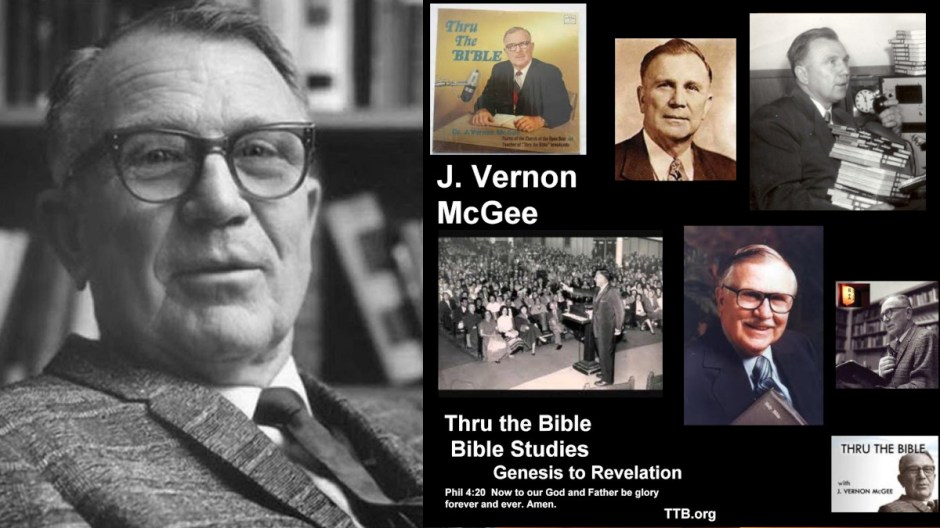
The audio on this video is the property of Thru the Bible. It is offered free of charge. If you wish to make a donation, do not send it to us. Visit http://www.ttb.org for information. The audio is attributed to Dr. J. Vernon McGee and Thru the Bible. Intellectual property rights are those of Thru the Bible. Please contact us if you feel our understanding of the terms of use are in error. Copyright information obtained from https://ttb.org/about/copyright-policy
Dr. J. Vernon McGee introduces the Gospel of Mark as chronologically the first Gospel written and emphasizes that its author, John Mark, was not an apostle but had close associations with key figures like Paul, Barnabas (his uncle), and Peter (his spiritual son). Mark’s Jewish name was John, and Mark was his Latin surname. His mother, Mary, was a prominent Christian in Jerusalem whose home served as a meeting place for the church. Mark initially accompanied Paul and Barnabas on their first missionary journey but turned back, causing a disagreement between Paul and Barnabas, with Barnabas later taking Mark to Cyprus. However, Mark eventually redeemed himself, becoming profitable for the ministry later in Paul’s life. Dr. McGee also notes the early church tradition, supported by figures like Papias, that Mark’s Gospel is essentially Peter’s account.
Dr. McGee explains that the Gospel of Mark was specifically written for the Romans, catering to the Roman mind which valued strength and action. He contrasts this with Matthew, written for the nation of Israel and the religious man; Luke, for the thinking man; and John, for the wretched man. The Romans, while bringing peace, justice, and order, did so through force, representing active human power and a tendency towards dictatorship. Mark presents Jesus not as the king (like in Matthew) but as God’s servant, a man of action, with “Flaming headlines” like “Jesus came” and “He is risen”. The style of Mark is described as brief, blunt, pertinent, pithy, and action-oriented, evident in the frequent use of the connective “and”. Unlike Matthew, Mark does not include a genealogy because Romans were more concerned with a servant’s ability to do the job than their lineage.
Moving into Mark chapter 1, Dr. McGee highlights the beginning of the Gospel, which focuses on Jesus’ coming into the world, his public ministry, death, and resurrection. He discusses John the Baptist as the messenger preparing the way for the Lord, baptizing not for the remission of sins but “unto the remission of sins,” preparing people for Jesus’ arrival. Jesus’ baptism by John in the Jordan River marked his identification with mankind, accompanied by the Trinity appearing with the Spirit descending like a dove and the Father’s voice declaring, “Thou art my beloved Son”. Immediately after, the Spirit drove Jesus into the wilderness for 40 days where he was tempted by Satan, alongside wild beasts, while angels ministered to him. Following John’s imprisonment, Jesus began his ministry in Galilee, preaching the gospel of God, calling his first disciples (Simon, Andrew, James, and John) to become “fishers of men”.
Dr. McGee describes a typical busy day in Jesus’ ministry in Capernaum, starting on the Sabbath where he taught with authority, astonishing the people. The first recorded miracle in Mark is the casting out of an unclean spirit in the synagogue, demonstrating Jesus’ power in the spiritual realm. This was followed by the healing of Simon’s mother-in-law who had a fever. That evening, the entire city gathered, and Jesus healed many who were sick and cast out demons, who recognized him. Despite his busy schedule, Jesus made time to pray early in the morning and then decided to move on to other towns to preach. The chapter concludes with the healing of a leper, emphasizing Jesus’ compassion as he touched and cleansed him. Jesus instructed the man to remain silent but to show himself to the priest according to Mosaic law; however, the man disobeyed and publicized his healing widely.