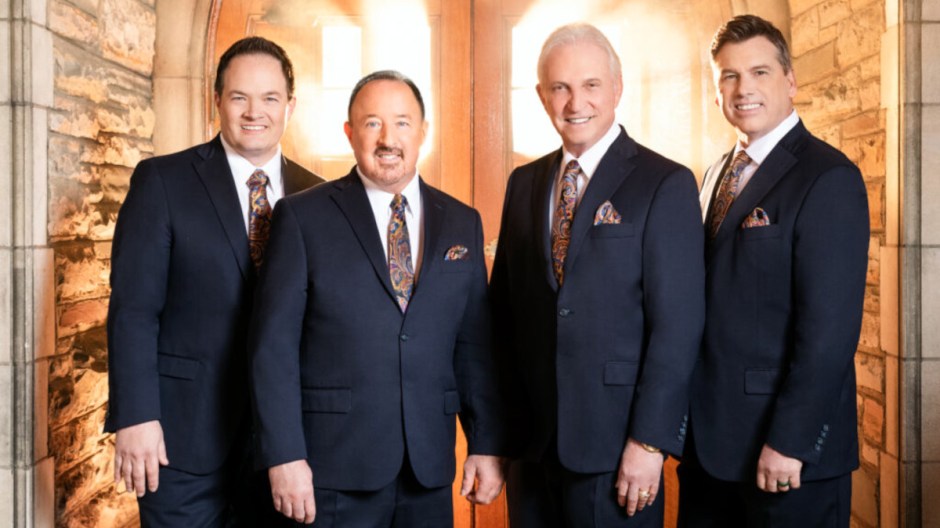
Southbound Explores the Cleansing Waters of Forgiveness With “I Left It In The Water”

AMY TURNER

Southern Gospel trio Southbound has released their latest single, “I Left It In The Water”. The digital release happened 11 October following the renewal of their recording relationship with Daywind Records. The song addresses the concept of baptism as a symbolic act of spiritual cleansing and forgiveness, as reflected in its lyrics.

The lyrics of “I Left It In The Water” reference past mistakes and the idea of being absolved through baptism. It begins with acknowledging our past errors: “I had a past I carried so long. Didn’t get it all right. Got a lot of it wrong”. The act of baptism is described as a form of burial: “When they laid me down in that watery grave, came up without a trace. It was covered by grace”.

The central theme of the song is expressed in the repeated line, “I left it in the water”. This phrase is directly linked to the concept of forgiveness received during baptism: “when I was baptized. I left it in the water. Buried in the tide, my past was forgiven. That very hour, guilt, sin, and shame no longer remain cuz I left it in the water”. The lyrics suggest a complete separation from the past self: “If you look for old me, friend, don’t even buy Father, there’s just a headstone saying that man is gone. Cuz I left it in the water”.

Clint Brown of Southbound gave us some context for the song’s message. He said while some people may consider themselves saved, baptism holds a specific significance. Brown explained that “I Left It In The Water” offers an opportunity to communicate the meaning of baptism as representing “the cleansing uh power of God in your life”.

The release of this single coincided with Southbound’s renewed partnership with Daywind Records. Clint said the continued collaboration comes with the value of associating with experienced professionals in the industry and expressed his anticipation for their ongoing work together to “bring hope, help, and blessing through the songs we sing”.

Pathways to Deeper Faith: Engaging in Action and Experiencing Divine Power

TEXAS GOSPEL VOLUNTEER

EDITOR’S NOTE: This article contains positions that are not fully agreed upon among the staff at Texas Gospel. While we agree God’s Word is the final Word, we believe that sometimes His Word is misunderstood. If you have Biblical input, please leave it in the comments below. Be civil, and post anything in a spirit of unity and a desire to understand God’s will.

The journey of spiritual growth is a deeply personal one, often involving introspection and the cultivation of inner virtues. However, throughout history, another powerful dimension of this journey has been the active participation in demonstrating one’s beliefs and extending care to others. This approach suggests that a profound deepening of faith occurs not only through contemplation but also by stepping into the world and engaging in actions that reflect the very heart of one’s spiritual convictions.

From the earliest accounts, foundational ministry was characterized by tangible expressions of God’s compassion and power. It was not only a matter of proclaiming His message but also of demonstrating it through acts of healing and liberation. Luke chapter 4 tells us the announcement of ministry included bringing good news to the poor, proclaiming release to the captives, recovery of sight to the blind, and letting the oppressed go free, drawing from the prophecy of Isaiah chapter 61: 1-4. This historical precedent highlights the significance of both word and deed in the expression of faith.

Furthermore, the empowering and sending out of followers to continue this work shows us the importance of active engagement. Disciples were not only taught but also given authority and power to heal the sick and cast out demons, as seen in the commissioning of the twelve in Luke 9:1-6, Matthew 10:1-8, and Mark 6:7. This was further extended when seventy others were commissioned and sent out with similar instructions to heal and proclaim the nearness of the kingdom of God in Luke 10:1-9. These accounts reveal a model where active participation in ministry was central to the development of those who followed.

This shows us that spiritual growth is intertwined with doing the work of ministry. Engaging in practices such as praying for the sick and sharing the core message are not simply tasks but opportunities to witness. The joy experienced upon seeing positive outcomes, such as healing, further reinforces faith and deepens one’s connection to the divine, as evidenced by the return of the seventy who rejoiced that even demons submitted to them in the name of Jesus (Luke 10:17.)

A vital component of this dynamic approach is the recognition and reliance on the Holy Spirit as an empowering presence. The initial announcement of ministry was linked to the Spirit of the Lord being upon the one sent (Luke 4:18 quoting Isaiah 61:1). This concept extends to the idea that the provision of the Spirit and its work is for all generations, as suggested in Isaiah 59:21, which speaks of the Spirit and the words put in one’s mouth not departing. This empowering presence is seen as essential for carrying out the works of ministry effectively.

Through this active engagement in ministry, a deeper and more intimate relationship with the divine is often reported. The shared experiences, the reliance on what is believed to be divine power, and the witnessing of transformative events contribute to a strengthened bond. It becomes a reciprocal process where doing the work of faith leads to a greater knowing and understanding of the divine’s love and power in one’s own life I Corinthians 11:1 encourages imitation based on this relationship.

While personal devotion and inner reflection are valuable aspects of spiritual growth, the path of active participation in ministry, empowered by the Holy Spirit, offers a powerful and transformative dimension. By stepping out in faith and engaging in actions that reflect core spiritual beliefs, individuals can experience a deeper connection with the divine and witness the impact of their faith in tangible ways, leading to profound personal and spiritual development.

Mark Bishop Celebrates a New Kind of Love with “Grandkids”

JEFF TURNER

Mark Bishop, a well-respected figure in Southern Gospel music, has released a new song called “Grandkids”. This is his first new music with Sonlite Records since his album “Home” from last year. The song is a heartfelt tribute to the special experience of having grandchildren.

Before he became a grandfather, Bishop heard many people say that the love for a grandchild was unlike any other. He remembers thinking, “‘wait… I love my wife and my daughters as much as I could love anyone… so it’s like that right?’ They said, ‘no… it’s a whole new love.’ I immediately dismissed it, thinking, ‘yeah, right.'”. However, Bishop now understands this unique bond, saying, “But it turns out that they were right”. He explains that “It really is a whole new love,” and “that ‘new’ love… that’s what this song is about”.

The song “Grandkids” starts with a piano melody that appears before each part. The first verse and chorus feature Bishop’s voice accompanied by gentle finger-picked guitar. As the song progresses, more instruments and harmonies are added, but they never become too loud, keeping the focus on Bishop’s personal delivery. The lyrics describe simple and joyful moments like “Chasing butterflies without a hope of catching one” and “Holding onto little hands, wading in the creek”. It also paints pictures of “Sitting on the front porch swing… falling fast asleep”. The song is meant to bring joy to anyone who has grandchildren or looks forward to having them.

Mark Bishop has had a long and successful career in Gospel music, spanning forty years in 2024. He is a Grammy-nominated and Dove Award-winning artist. Before his solo career, Bishop was part of the family group The Bishops from 1984 to 2001, along with his father and brother. The Bishops were popular, appearing on television shows like TNN’s Nashville Now and The Grand Ole Opry. They had many successful songs and received numerous awards.

Many of The Bishops’ well-known songs were written by Mark Bishop. He continues to be a busy songwriter, creating music for his own albums and for other artists in the genre. After The Bishops retired, Mark started his solo career in 2001 and continued to have chart-topping songs. He was recognized as “Soloist of the Year” at the Singing News Fan Awards in 2005. His album “Beautiful Day” was nominated for a GRAMMY Award in 2020. In 2022, he received the “J.D. Sumner Living Legend Award”. Through his music, Mark Bishop aims to help people see the importance of God in their everyday lives. With “Grandkids,” he shares a deeply personal experience of love and joy.

A New Chapter Begins for The Guardians

JEFF TURNER

The southern gospel quartet known as The Guardians is about to enter a new phase in their journey. Dean Hickman, who has led the group for a long time, has announced that John Darin Rowsey will become the new owner on April 1.

(The Guardians) Dean Hickman is a founding member of The Guardians. 

Dean Hickman reflected on the beginnings of The Guardians. He remembered a call in 1987 from Del Yurick, asking if he could help with some shows in Michigan with Del’s sons, the Yurick brothers. Dean then contacted his friend Harold Patrick, with whom he had previously sung as the Centuries. As Dean recalled, “So I called my buddy Harold Patrick and we had been singing as the centuries, but then we shut down So I said Harold, you still on the bus? He said yeah, I said let’s go up and help him So we did a few dates and then people started calling us and we said wait a minute. We can’t be the Yurick brothers So And it got together in 1988 and said, ‘Oh, let’s go ahead and see where God wants to take this.'”.

This led to the formation of The Guardian’s Quartet in 1988. Dean Hickman explained that they “always sang meaty songs, just loved to minister” as a regional group.

(The Guardians) John Darin Rowsey

Over the years, The Guardians faced changes. Harold Patrick passed away in 2001. Homer Fry, who had sung with the Gospel Harmony Boys, joined the group and stayed until 2012. Dean noted that both Harold and Homer continued to sing shortly before their deaths. John Darin Rowsey joined The Guardians in 2012, and Homer Fry passed away in 2014.

Dean Hickman recognized the potential of the group with John Rowsey. He said, “And then we did a CD and I called John. I said, ‘John, we’ve got blend. You know, maybe God’s wanting to take this somewhere.'”. Dean also shared his philosophy on leadership: “And when you don’t care who gets the credit for done it’s easy you know you get put people in great spots you give them in power you stand back you don’t you don’t need to really do anything just stand back and let them do it”.

Today, The Guardians consist of John Darin Rowsey, Pat Barker, Scott Mullins, and Paul Lancaster. Occasionally, founding member Dean Hickman still joins them on stage. They are known for their unique sound and tight harmony, and their main goal is to share the gospel through their music.

The Guardians have been blessed with three Dove Award nominations, multiple #1 songs, and Fan Awards. Their commitment as a group is to glorify Jesus Christ, and their guiding principle is John the Baptist’s words: “He must increase but I must decrease”. With the upcoming ownership transition, The Guardians are looking forward to continuing their ministry in southern gospel music. Dean Hickman has been involved in southern gospel music for over 60 years.