
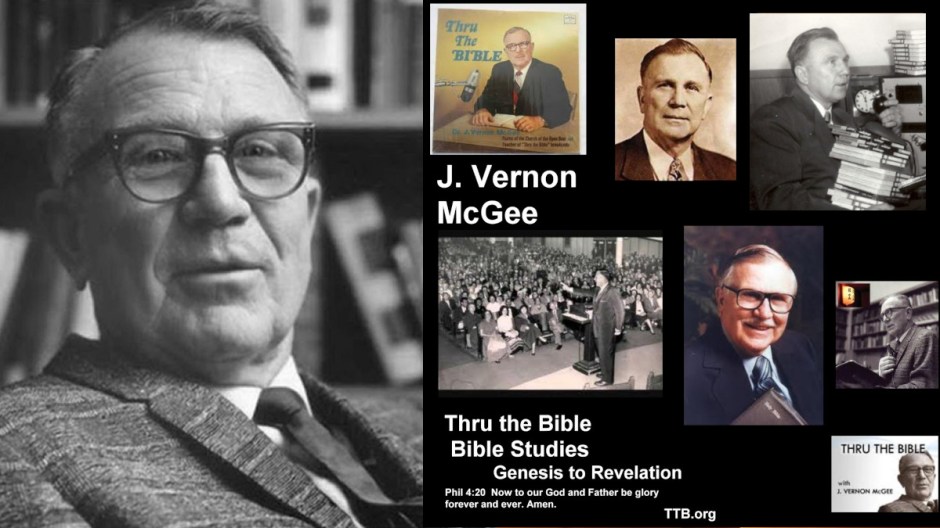
In his sermon on Mark chapters 9 through 11, Dr. McGee begins by examining the Transfiguration in Mark 9, highlighting Mark’s detailed account and suggesting it reveals Christ’s perfect humanity rather than primarily his deity, which is John’s focus. He connects this event to Peter’s later testimony as an eyewitness of Christ’s power and coming. Dr. McGee explains Jesus taking Peter, James, and John to the mountain, not as favoritism, but perhaps due to their spiritual immaturity. The appearance of Moses and Elijah signifies the law and the prophets testifying to Jesus. Despite this glory, the disciples fail to cast out a demon at the foot of the mountain, illustrating the contrast between heavenly glory and earthly struggles. Dr. McGee emphasizes that the Transfiguration itself doesn’t save; it points towards the necessity of Christ’s death and resurrection.
Continuing in Mark 9, Dr. McGee interprets the disciples’ failure as a reflection of the church’s present-day ineffectiveness in a world he describes as troubled and even “demon possessed”. He criticizes the church for engaging in various activities while neglecting the primary task of bringing people to Jesus. Jesus’ rebuke of a “faithless generation” and his statement “bring him unto me” are central to this point. The disciples’ subsequent inability to cast out the demon is attributed to a lack of prayer. Dr. McGee also touches upon Jesus’ second announcement of his death and resurrection, the disciples’ misunderstanding and argument about greatness, and Jesus’ teaching against a sectarian spirit after John forbids an outsider from casting out demons in Jesus’ name. He notes Jesus’ stern warning against offending little ones and his direct teaching about hell.
Moving into Mark 10, Dr. McGee discusses marriage and divorce, noting the Pharisees’ attempt to entrap Jesus. Jesus shifts the focus from divorce back to God’s original design for marriage as a union of one flesh created at the beginning. He explains that divorce was permitted due to the “hardness of your heart” but was not God’s ideal. Dr. McGee addresses adultery in the context of remarriage and clarifies why Mark’s account of divorce differs slightly from Matthew’s, considering Mark’s Roman audience. He then examines the blessing of the little children, highlighting their importance and suggesting adults should embrace a childlike faith. The encounter with the Rich Young Ruler is analyzed as an example of someone relying on outward obedience to the law while lacking a true relationship with God, hindered by his wealth. Jesus’ teaching on the difficulty for the rich to enter the kingdom is explained, emphasizing that salvation comes through God, not human effort or riches.
Finally, in Mark 10 and 11, Dr. McGee addresses Jesus’ final journey to Jerusalem, including his repeated predictions of his death and resurrection. He interprets James and John’s request for positions of power and Jesus’ response about those places being prepared by God. The core of Jesus’ mission is emphasized: to minister and give his life as a ransom for many. Dr. McGee briefly mentions the healing of blind Bartimaeus. Transitioning to Mark 11, he describes Jesus’ public entry into Jerusalem as a presentation of himself as the Messiah, which ultimately led to rejection. He suggests this entry occurred over three days and was not a triumphal procession in the worldly sense. The cursing of the fig tree is interpreted as a symbol of Israel’s fruitless religious outward appearance. The cleansing of the temple is depicted as Jesus purging a corrupt religious system. This event leads to a discourse on the power of prayer through faith in God, clarifying that this power is for spiritual strength rather than literal miracles, and emphasizing the importance of forgiveness. The sermon concludes with Jesus’ skillful handling of the chief priests and elders who question his authority, using a counter-question about John the Baptist to silence them.
 Texas Gospel Canada Southern Gospel Radio