Mark Bishop’s New Song Highlights the Blessing of Grandchildren, and he has released a new music video celebrating the joy of grandchildren. His song, titled Grandkids, reflects on the deep and unique love that comes with being a grandparent.
Bishop recalls that before he experienced this love firsthand, many people told him there was nothing like it. At first, he was skeptical, believing that his love for his wife and daughters was as strong as love could be. However, when his first grandchild was born, he realized that it was, in fact, a new kind of love. His song captures this feeling, expressing gratitude for the blessing that grandchildren bring into a family. One of the lyrics states, “God’s had a lot of great ideas, but the one I think I love the most, has to be grandkids.”
The music video for Grandkids features clips sent in by fans, showcasing moments between grandparents and their grandchildren. Bishop wanted to include real-life experiences in the video to reflect the emotions behind the song.
Sonlite Records 2025
Mark Bishop’s Legacy in Gospel Music
Mark has been a prominent name in Christian music for forty years. A Grammy-nominated and Dove Award-winning artist, he has been writing and recording songs that inspire believers worldwide. He lives in east-central Kentucky with his wife, Carolyn.
His career began in 1984 with The Bishops, a family group he formed with his father and brother. Over seventeen years, they recorded numerous songs that became well known in the Gospel music industry. They were featured on television programs such as Nashville Now, Crook and Chase, The Grand Ole Opry, and The Bill Gaither Homecoming series. The group achieved multiple chart-topping songs and industry awards.
Mark wrote many of the group’s well-loved songs and continues to write music for other Christian artists. His solo career, which began after the family group retired in 2001, has been equally successful. He was named “Soloist of the Year” at the Singing News Fan Awards in 2005, and his 2020 album Beautiful Day was a Grammy nominee for Best Roots Gospel Album. In 2022, he received the J.D. Sumner Living Legend Award from SGN Scoops Magazine.
A Message for Christian Families
For Christians, songs like Grandkids serve as reminders of the blessings that God provides through family. The song emphasizes the joy that comes from seeing the next generation grow and learn. It also highlights the special role grandparents play in sharing wisdom and faith with their grandchildren.
As families continue to navigate the challenges of modern life, music like Bishop’s offers encouragement and a reason to reflect on the importance of faith and love.
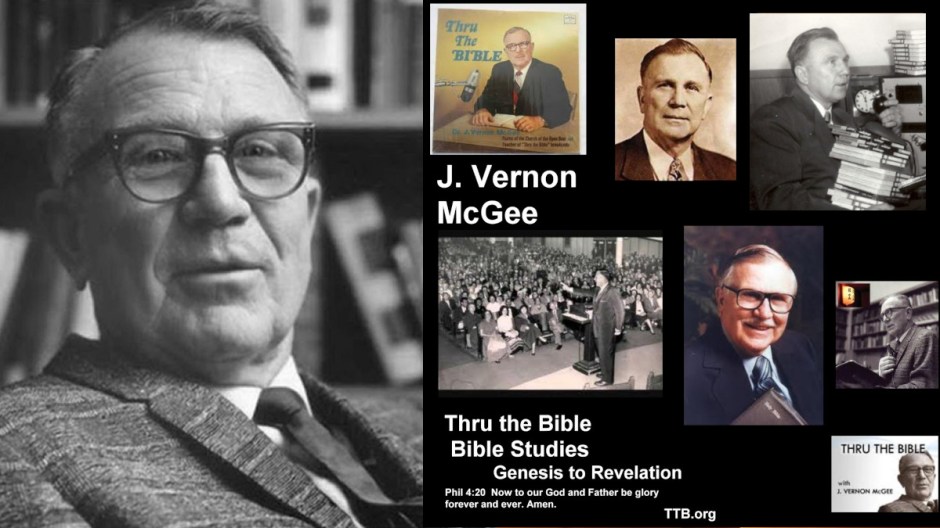
Matthew 25-28 – The audio on this video is the property of Thru the Bible. It is offered free of charge. If you wish to make a donation, do not send it to us. Visit http://www.ttb.org for information. The audio is attributed to Dr. J. Vernon McGee and Thru the Bible. Intellectual property rights are those of Thru the Bible. Please contact us if you feel our understanding of the terms of use are in error. Copyright information obtained from https://ttb.org/about/copyright-policy
Dr. McGee’s sermon covers Matthew chapters 25 through 28, focusing on his interpretations of the parables, the events leading to the crucifixion, the crucifixion itself, and the resurrection of Jesus Christ.
In chapter 25, Dr. McGee discusses the parable of the ten virgins. He refutes the idea of a partial Rapture based on this parable, stating that he believes every believer will be taken in the Rapture by God’s grace, not merit. He argues that the ten virgins refer to the nation of Israel, not the church. He also touches upon the parable of the talents, emphasizing the principle of using whatever gifts God has given until Christ’s return. Dr. McGee then interprets the Judgment of the Nations in Matthew 25 as occurring during the Great Tribulation, where nations will be judged based on their treatment of Christ’s brethren (the 144,000 sealed messengers). He believes the terms “sheep” and “goats” refer to ethnic groups or nations, not individual lost or saved people.
Moving into chapter 26, Dr. McGee narrates the events leading up to Jesus’s crucifixion. He highlights Jesus’s repeated predictions of his death during the Passover. He describes the anointing of Jesus at Bethany by a woman (identified as Mary in John’s Gospel), emphasizing the significance of her act as an anticipation of his burial. He recounts Judas’s betrayal for 30 pieces of silver and the institution of the Lord’s Supper during the Passover meal. Dr. McGee also discusses Jesus’s prediction of Peter’s denial and the events in the Garden of Gethsemane, where he believes Jesus won the victory over the horror of bearing the sins of the world. He continues with the betrayal by Judas, the arrest of Jesus, and his trial before Caiaphas and the Sanhedrin, including Peter’s denial.
Chapter 27 details the crucifixion of Jesus. Dr. McGee mentions Judas’s remorse and suicide after Jesus’s condemnation. He recounts Jesus’s trial before Pontius Pilate, the crowd’s choice of Barabbas over Jesus, and Pilate’s reluctant decision to have Jesus crucified. He describes the mockery and suffering Jesus endured at the hands of the Roman soldiers before his crucifixion. Dr. McGee notes that the Gospel writers do not give graphic details of the crucifixion itself, suggesting a divine reverence for this event. He highlights the supernatural events that occurred at Jesus’s death, including the tearing of the temple veil from top to bottom (symbolizing open access to God) and the earthquake. He also mentions the burial of Jesus by Joseph of Arimathea and Nicodemus. The chapter concludes with the sealing of the tomb and the setting of a guard by the chief priests and Pharisees who remembered Jesus’s prediction of his resurrection.
Finally, chapter 28 focuses on the resurrection of Jesus and the Great Commission. Dr. McGee emphasizes that the death and resurrection of Christ are the two great pillars of the Gospel. He describes the women coming to the tomb, the earthquake, the angel rolling back the stone, and the angel’s announcement that Jesus had risen. He recounts Jesus’s appearances to the women and later to the eleven disciples in Galilee. Dr. McGee then discusses the Great Commission in Matthew 28:19-20, seeing it as having an application for today, as well as a future fulfillment during the Great Tribulation and the Millennium. He notes the omission of the Ascension in Matthew’s Gospel, suggesting it is because Matthew focuses on the kingdom being upon the Earth and the King remaining. Dr. McGee concludes by affirming that Jesus was born a king, lived as a king, died a king, rose again a king, and will return as the King of Kings and Lord of Lords.
The audio on this video is the property of Thru the Bible. It is offered free of charge. If you wish to make a donation, do not send it to us. Visit http://www.ttb.org for information. The audio is attributed to Dr. J. Vernon McGee and Thru the Bible. Intellectual property rights are those of Thru the Bible. Please contact us if you feel our understanding of the terms of use are in error. Copyright information obtained from https://ttb.org/about/copyright-policy
Dr. McGee’s sermon covers Matthew chapters 22 through 24, starting with the verbal clash between Jesus and the religious rulers. Chapter 22 begins with the parable of the king who made a marriage feast for his son. This parable is a continuation of Jesus’ answer to the chief priests and elders and parallels the parables in Matthew 13, focusing on how and why the current age began. The king sends servants to call those who were bidden (the lost sheep of the House of Israel), but they refused to come. He sent other servants, but the invited guests made light of it, going to their farms and merchandise, while others mistreated and killed the servants. In response, the king sent his armies to destroy the murderers and their city, which Dr. McGee believes is a reference to the destruction of Jerusalem in 70 AD. Then, the invitation goes out to everyone found on the highways, both good and bad, and the wedding is furnished with guests. However, a man without a wedding garment (the righteousness of Christ, essential for salvation) is found, bound, and cast into outer darkness, illustrating that while many are called, few are chosen and must come on the king’s terms.
Following this, the religious leaders launch their final attack on Jesus. First, the Herodians question him about paying tribute to Caesar, a political trick to trap him. Jesus, perceiving their wickedness, calls them hypocrites and uses their own coin to state, “Render therefore unto Caesar the things which are Caesar’s, and unto God the things that are God’s,” marvelously answering their question without falling into their trap. Next, the Sadducees, who deny the resurrection, question him about a woman married to seven brothers. Jesus responds that they err by not knowing the Scriptures nor the power of God, stating that in the resurrection, people neither marry nor are given in marriage but are like the angels. He further proves the resurrection by quoting God as saying, “I am the God of Abraham, the God of Isaac, and the God of Jacob,” asserting that God is not the God of the dead but of the living. This silences the Sadducees. Finally, the Pharisees, after hearing that Jesus silenced the Sadducees, gather together and ask him which is the great commandment in the law. Jesus answers, “Thou shalt love the Lord thy God with all thy heart, and with all thy soul, and with all thy mind. This is the first and great commandment. And the second is like unto it, Thou shalt love thy neighbor as thyself. On these two commandments hang all the law and the prophets”. Then, Jesus questions the Pharisees about the Christ, asking whose son he is. They reply, “The Son of David”. Jesus then asks how David, in the Spirit, calls him Lord (Psalm 110:1), highlighting the impossibility of David calling his natural son Lord, implying a supernatural birth. No one is able to answer him, ending the verbal clash.
Chapter 23 marks Jesus’ denouncement of the scribes and Pharisees and his weeping over Jerusalem. He warns the multitude against the scribes and Pharisees who sit in Moses’ seat but do not practice what they preach. He pronounces a series of “woes” upon them, calling them hypocrites for binding heavy burdens on others, doing their works to be seen, loving titles and recognition, and shutting up the Kingdom of Heaven. He criticizes their outward piety and inward corruption, comparing them to whitewashed sepulchers full of dead men’s bones. He also rebukes their meticulous tithing of insignificant items while neglecting the weightier matters of the law: judgment, mercy, and faith. Dr. McGee emphasizes the harshness of Jesus’ language, contrasting it with the liberal conception of a gentle Jesus. Jesus condemns their rejection of the prophets and foretells the persecution of those he will send. He concludes this chapter with a lament over Jerusalem’s rejection of him.
Chapter 24 begins the Olivet Discourse, where Jesus’ disciples ask him privately three questions: when will the temple be destroyed, what will be the sign of his coming, and what will be the sign of the end of the age. Dr. McGee states that the destruction of the temple (fulfilled in 70 AD) is primarily addressed in Luke’s Gospel. Matthew focuses on the signs of his coming and the end of the age, which relate to his coming to establish his kingdom, not the church. Jesus warns them to “take heed that no man deceive you,” as many will come in his name saying, “I am Christ,” and will deceive many. He speaks of wars and rumors of wars, but these are not the sign of the end. Nation will rise against nation, and there will be famines, pestilences, and earthquakes, which are the beginning of sorrows. Dr. McGee believes they are currently in the age leading up to the Great Tribulation. He then discusses the Great Tribulation period, during which the nation Israel will be afflicted and hated by all nations. False prophets will arise, and iniquity will abound. He clarifies that the gospel of the Kingdom will be preached in all the world as a witness before the end comes, distinguishing it from the gospel of grace preached today. The sign of the end will be the “abomination of desolation” standing in the Holy Place. Those in Judea are instructed to flee to the mountains. This period will be a time of great tribulation, unprecedented in history. False Christs and false prophets will perform great signs and wonders, but believers should not be deceived. The coming of the Son of Man will be like lightning, visible to all. Following the tribulation, the sun will be darkened, the moon will not give its light, and the stars will fall from heaven. The sign of the Son of Man will appear in heaven, and all the tribes of the earth will mourn when they see him coming in the clouds with power and great glory. He will send his angels to gather his elect (the nation Israel).
Jesus then gives the parable of the fig tree, which Dr. McGee interprets as the nation Israel. When the fig tree’s branch becomes tender and puts forth leaves, it indicates that summer is near. Similarly, when they see all these signs, they will know that his coming is near. Jesus states, “Verily I say unto you, this generation shall not pass, till all these things be fulfilled,” which Dr. McGee believes could refer to the Jewish race or the generation living at that time. He emphasizes that heaven and earth will pass away, but Jesus’ words will not. However, the specific day and hour are unknown, not even to the angels, but only to the Father. Jesus compares his coming to the days of Noah, where people were eating, drinking, marrying, and giving in marriage until the flood came and took them all away. The phrase “two in the field; the one shall be taken, and the other left” refers to judgment, not the Rapture of the church; the wicked will be taken away in judgment, and the others will be left to enter the millennial kingdom. Therefore, they are to “watch,” a watching characterized by fear and anxiety in that day, unlike the comforting hope of believers watching for the Lord’s return today. The sermon concludes with a call to be ready, as the Son of Man will come at an unexpected hour, and to live in light of the fact that everyone will stand in the presence of Christ to give an account.
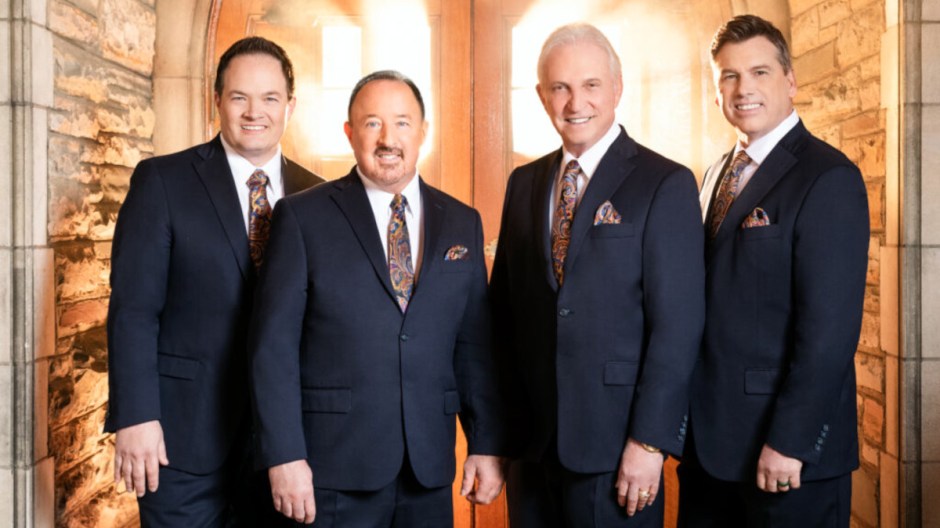
The Guardians recently had to change their plans due to severe weather. They were set to perform in Hartford, Alabama on March 15th, but the event was cancelled because of the weather. The group shared a message on their website, saying, “We’re praying for all of those in the path of the storm. Stay weather alert!”.
Despite this setback, The Guardians are continuing with their planned tour and are working to get their music played on the radio. Their new song “Kick Up My Heels and Sing“ has a positive message at a time we all need to hear something positive.
Provided to YouTube by Daywind Records Kick Up My Heels and Sing · The Guardians Kick Up My Heels and Sing ℗ 2025 Daywind Records Released on: 2025-01-31 Main Artist: The Guardians Producer: John Darin Rowsey Lyricist: John Darin Rowsey Composer: John Darin Rowsey Lyricist: Rodney Griffin Composer: Rodney Griffin Arranger: Wayne Haun
Pat Barker, who sings the bass part for The Guardians, believes that “the world today really needs something happy!”. He further explained his thoughts behind the song, stating, “It’s just it’s happy don’t we need happy right now we need happy it’s it’s quartet singing all the way around it sounds like the guardians it sounds like a quartet and yes that is me singing the bass many people have asked um yes that’s me we didn’t have to hire somebody in for this one,” he said. This highlights the group’s intention to spread joy through their music, especially during difficult times.
The lyrics of “Kick Up My Heels and Sing,” talk about a “Happy Feeling burst into a song”. It emphasizes the idea that “every day is brand new Mercy walking on the King’s Highway there is Joy on this journey every filled with grace”. The lyrics also encourage listeners to “lift up my voice kick up my heels and sing” and express gratitude for blessings received, as in “can’t stop Count the blessing he gives me”. The feeling of joy and anticipation for good things to come is evident in the lines “I’ve got too many Victory just waiting down the road I’m dancing in advance I’ve got to let it show”. Even when facing challenges, the song suggests that “no one is with me can’t stop counting the blessings He gives me.
The Bible gives a powerful assurance about the future: God will create a completely new Heaven and Earth. In Revelation 21:5, we read, “He who was seated on the throne said, ‘Behold, I am making all things new.’ Also, he said, ‘Write this down, for these words are trustworthy and true.’” This promise is not just about fixing the broken world we know today. Instead, God will replace the old with something entirely fresh.
Many people imagine Heaven as a perfected version of life as we know it. However, Scripture makes it clear that the transformation will be far greater. The suffering and loss we experience now will no longer exist. The sea, often symbolic of chaos and separation in the Bible, will be removed. Pain and death will be erased forever.
Although we cannot fully grasp what this new creation will be like, we can trust in God’s wisdom and goodness. His power and love ensure that eternity will be both glorious and perfect—not only for His.
REF 21:1-5 NASB: 21 Then I saw a new heaven and a new earth; for the first heaven and the first earth passed away, and there is no longer any sea. 2 And I saw the holy city, new Jerusalem, coming down out of heaven from God, prepared as a bride adorned for her husband. 3 And I heard a loud voice from the throne, saying, “Behold, the tabernacle of God is among the people, and He will dwell among them, and they shall be His people, and God Himself will be among them, 4 and He will wipe away every tear from their eyes; and there will no longer be any death; there will no longer be any mourning, or crying, or pain; the first things have passed away.” 5 And He who sits on the throne said, “Behold, I am making all things new.” And He *said, “Write, for these words are faithful and true.”



 Texas Gospel Canada Southern Gospel Radio