
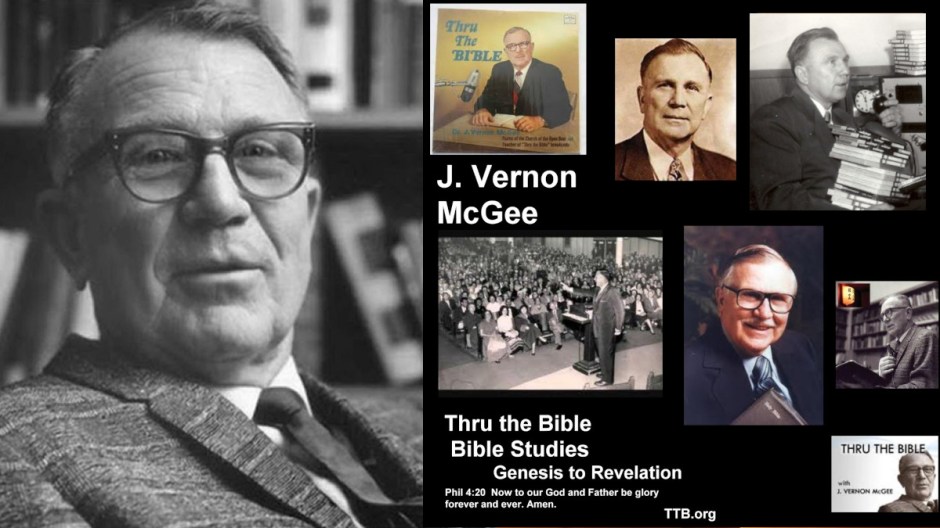
Thru the Bible: Matthew 8-10

POSTED BY TEXAS GOSPEL VOLUNTEER

The audio on this video is the property of Thru the Bible. It is offered free of charge. If you wish to make a donation, do not send it to us. Visit http://www.ttb.org for information. The audio is attributed to Dr. J. Vernon McGee and Thru the Bible. Intellectual property rights are those of Thru the bible. Copyright information obtained from https://ttb.org/about/copyright-policy

In Matthew chapter 8, following the high ethical standards presented in the Sermon on the Mount, Matthew introduces a series of miracles performed by Jesus. These miracles are not presented in chronological order but rather in a logical sequence to demonstrate that the King who gave the ethic also possesses the power to enable its accomplishment. Dr. McGee emphasizes that just as believers today can do nothing without Christ, these miracles reveal Jesus’ divine power. The chapter begins with Jesus descending from the mountain, followed by great multitudes, and proceeds to narrate six miracles showcasing his power over various realms.

The miracles in Matthew 8 illustrate Jesus’ comprehensive authority. He heals a leper through touch, signifying his power over human disease. He heals the Centurion’s servant from a distance, demonstrating his authority without physical contact and marveling at the Centurion’s faith. Jesus then heals Peter’s mother-in-law by touching her and casts out demons, moving into the supernatural realm. He further demonstrates his power over nature by stilling a storm. Finally, he casts out demons from two men, highlighting his authority over the spiritual realm and a particularly difficult case. These miracles are presented to show the multifaceted power of the King.

Moving into Matthew chapter 9, the theme of Jesus’ power continues with six more recorded miracles. Upon returning to Capernaum, Jesus heals a paralytic, notably connecting the healing with the forgiveness of his sins, a power exclusive to God. Matthew himself is called to be a disciple, and Jesus associates with publicans and sinners, emphasizing his mission to call the sick rather than the righteous. The chapter also includes the healing of a woman with a twelve-year issue of blood after she touched his garment, and the raising of a ruler’s daughter from the dead, marking the first instance of Jesus raising someone from death in the Gospels. Additionally, he heals two blind men and a dumb man possessed by a demon, further displaying his widespread healing power.

In Matthew chapter 10, having demonstrated his power through these twelve miracles, Jesus commissions his twelve disciples, now referred to as apostles, to go to the nation of Israel and preach the gospel of the Kingdom. He gives them authority over unclean spirits to cast them out and to heal all kinds of sickness and disease, providing them with the same credentials he possessed. Their specific mission is directed towards “the lost sheep of the house of Israel,” and they are instructed to heal the sick, cleanse the lepers, raise the dead, and cast out demons freely. Dr. McGee emphasizes that these instructions were specific to that time and mission to Israel, not necessarily a direct mandate for all Christians today.

While the specific instructions given to the apostles in Matthew 10 were for a particular context, Dr. McGee points out that the chapter also contains general principles applicable to all believers. Jesus warns them of coming persecution, instructing them to be wise as serpents and harmless as doves. He tells them not to fear those who can kill the body but rather fear God. He assures them of God’s care and the importance of confessing him before men. The chapter concludes with a call for total commitment and the promise of reward for those who receive his messengers. Dr. McGee encourages listeners to interpret these instructions within their historical context while still recognizing the enduring spiritual truths they contain.

Why don’t Christian prayers empty hospitals?

Floyd Rogers

Why don’t Christian prayers empty hospital wards?

The ninth chapter of Matthew begins with verses that tell of Jesus healing a paralyzed man. Matthew says people brought the man to Jesus. Other Gospels record him being lowered through roof to Jesus.  Matthew also tells of other healings.  I believe the context of Matthew tells us why we read of healings.  I also believe there are many biblical reasons why prayer doesn’t lead to empty hospital wards.

Let’s lay out the context of Matthew.  The Book of Matthew was written by a Jewish tax collector for a Jewish audience to convince them that Jesus is the King of the Jews.  Matthew writes down things that Jesus did to fulfill prophecy.  The ā€œfulfill prophecyā€ part is very important. We know Matthew’s purpose because of the number of times he wrote that Jesus did something to fulfil that which was spoken by the prophet. The Old Testament prophets said that the Messiah will heal. Matthew’s premise is that Jesus did things to fulfill what was written by the prophet.  Do you know any prophecies that are not fulfilled unless a hospital ward is emptied?

One could debate if Jesus healed people solely to fulfill prophecy; that is, solely to show that he had the power to forgive sin and heal.  I’m not sold on the idea that it is an either/or situation. It seems more likely that it’s a little of both and one of the reasons we don’t see hospital wards emptied today. At this point it’s important for me to stipulate I am extrapolating from scripture. I might be wrong in my extrapolation and am open to anyone who has scriptural reasons to argue differently.  With this as my preface I suggest that we should consider that James tells us that our prayers will go unanswered if we ask for things simply because we want them. And even Jesus prayed in the garden before his execution, ā€œFather, if You are willing, remove this cup from Meā€¦ā€ but stipulated, ā€œā€¦yet not My will, but Yours be done.ā€ Jesus didn’t assume he needed to be delivered because otherwise he would die. He acknowledged that God’s will is more important.

Let’s reflect back on Matthew’s account of the man’s healing mentioned above.  It says, ā€œAnd seeing their faith, Jesus said to the man who was paralyzed, ā€˜Take courage, son; your sins are forgiven.ā€™ā€ When those around him had thoughts that Jesus had blasphemed in saying this, Matthew says Jesus healed the man, ā€œā€¦so that you may know that the Son of Man has authority on earth to forgive sins.ā€  The man who was healed had faith as did the people who brought him to Jesus.  His healing is part of a book that records Jesus’ actions that fulfill prophecy.  His healing was part of God’s purpose. I’m not implying that suffering fulfills God’s purpose. Suffering is the result of a world made corrupt through rejection of God.

There are things in this world I find unboreable. For me it involves watching my kids when they suffer knowing sometimes there is no way for me to help them. Jesus asked that he not have to go through the suffering on the cross, but he was executed anyway to fulfill God’s plan. Just as his suffering was the result of sin and the corruption it causes, so too is the suffering we all experience while in this temporary life on earth. I think our prayers are often more about changing us than they are about changing the world around us.

What are your thoughts?