In the Old Testament, the phrase “Thus saith the Lord” appears 222 times, especially in the writings of the prophets. These words carried God’s message to His people, often calling them back from straying into harmful ways. The prophets delivered God’s correction, urging His people to return to the path of life and avoid the dangers of the wrong road.
Isn’t it true that we all lose our way at times? Each of us needs guidance and correction. Scripture shines a light on the wrong choices we make and redirects us to the right path. It helps protect us as we walk forward, ensuring we stay on solid ground.
God’s voice should never be ignored or taken lightly. It is a voice full of grace, working to repair what is broken and restore what has been lost. As Proverbs 3:12 reminds us, “For whom the Lord loves He disciplines, Just as a father disciplines the son in whom he delights.” His words guide us not out of anger, but out of deep love and a desire to see us thrive.
Let us listen to His voice, embracing its call to life and renewal.
In recent years, society has experienced a significant spiritual shift. This change mirrors the pattern described in the Bible, particularly in the book of Romans. As evolution becomes the prevailing worldview and people live as if God doesn’t exist, society has embraced behaviours that the Bible considers sinful.
The apostle Paul’s words in Romans 1 seem eerily relevant to our current situation. He describes a society where God “gave them over” to their sinful desires. This phrase, originally a legal term, signifies divine judgment on nations that reject God’s truth.
The progression of this judgment follows a clear pattern:
Sexual immorality becomes widespread
Immorality is embraced and celebrated
A “reprobate mind” takes hold, where people can no longer discern right from wrong
Sadly, these stages are evident in society today. From the normalization of sexual promiscuity to the widespread acceptance of immorality, and the celebration of increasingly depraved behaviours, the parallels are striking.
Romans 1:28 states, “And since they did not see fit to acknowledge God, God gave them up to a debased mind to do what ought not to be done.” This verse encapsulates the current state of affairs, where moral relativism reigns and biblical values are scorned.
In light of this sobering reality, Christians are called to pray fervently for a spiritual revival. Only through a return to the gospel can the nation hope to reverse this downward spiral and experience God’s grace once more.
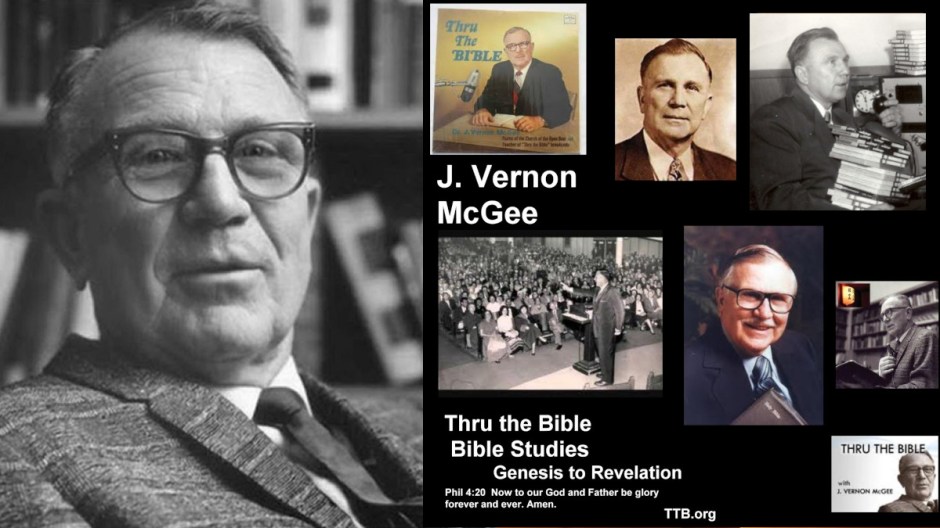
The audio on this video is the property of Thru the Bible. It is offered free of charge. If you wish to make a donation, do not send it to us. Visit http://www.ttb.org for information. The audio is attributed to Dr. J. Vernon McGee and Thru the Bible. Intellectual property rights are those of Thru the Bible. Please contact us if you feel our understanding of the terms of use are in error. Copyright information obtained from https://ttb.org/about/copyright-policy
Dr. J. Vernon McGee in his exposition of Matthew 5-7, known as the Sermon on the Mount, emphasizes its significance while clarifying its proper interpretation. He notes that while excerpts appear in other gospels, Matthew provides the most extensive account. McGee believes Jesus likely repeated these teachings on multiple occasions. He highlights two contrasting and erroneous viewpoints on the Sermon: the “far left” liberal theologians who consider it the entirety of the gospel and the only crucial part of Scripture, sometimes even reducing it to the Golden Rule, and the “far right” hyper-dispensationalists who dismiss it as irrelevant to believers today.
McGee firmly states that the Sermon on the Mount is not the Christian Gospel. He contrasts it with Paul’s declaration of the gospel in Corinthians, which centers on Christ’s death for our sins, His burial, and His resurrection according to the Scriptures. These foundational elements of the Christian faith are absent from the Sermon on the Mount. Treating the Sermon as the gospel leads to hypocrisy because its ethical standards are impossibly high for unregenerate individuals to achieve. McGee argues that proclaiming to live by the Sermon while failing to do so creates hypocrites within the church.
He explains that the ermon on the Mount presents law lifted to its highest degree, even exceeding the demands of the Old Testament law. For instance, Jesus redefines murder as including anger towards a brother and adultery as including lustful looking. According to McGee, if one honestly examines the Sermon, they will realize their inability to measure up to its standards and recognize their need for a savior.
Furthermore, McGee clarifies that the modus operandi for Christian living in the present age is not found within the Sermon on the Mount. While it provides high ethical standards that are not contrary to Christian living and indeed express the mind of Christ, it lacks the dynamic power of the indwelling Holy Spirit, which is essential for believers to live righteously. The Sermon offers the ethic, but the Holy Spirit provides the power to live it out.
McGee posits that the primary purpose of the Sermon on the Mount is to set forth the law of the Kingdom of Heaven. He identifies Matthew’s Gospel as presenting Jesus as the King, and the Sermon as the King’s manifesto or the platform of the Prince of Peace. He believes this law will find its full fruition during the Millennium when Christ returns to Earth to rule, enforcing every word of it. While it is for us to learn and understand today, it is not fully in effect in the current age.
Despite this, McGee emphasizes that Christians who acknowledge Jesus as Lord should not despise the Sermon but seek to understand and apply its principles in light of other Scriptures, recognizing they can only obey through the power of the Holy Spirit. He notes that the Sermon on the Mount can bring conviction to the hearts of men, revealing their sinfulness and their falling short of God’s glory. It reveals Christ’s deeper definitions of sin, like murder and adultery of the heart.
McGee then delves into specific aspects of the Sermon. The Beatitudes describe the characteristics of the citizens of the Kingdom, such as being poor in spirit, mourning, and meek. He stresses that these are states of being, not achieved through human effort but produced by the Spirit of God. He points out that some of these promises, like the meek inheriting the earth, are not currently being fulfilled, indicating their future application in the Kingdom.
In chapters 6, McGee discusses the externalities of religion – giving of alms, prayer, and fasting – emphasizing that these should be done sincerely and privately as acts of devotion to God, not for public recognition or praise. He criticizes ostentatious displays of piety, noting that those who seek human glory have already received their reward. He considers the Lord’s Prayer a model prayer, offering guidance on how to pray with sincerity and simplicity, but cautions against its rote recitation, especially when its specific petitions don’t align with one’s present circumstances. He also addresses the topic of money, urging believers to invest in eternal treasures by supporting the Lord’s work. He touches on anxiety about material needs, encouraging trust in God’s provision while still exercising wisdom.
Chapter 7 addresses judging others, cautioning against harsh and condemning judgment of inward motives. However, McGee clarifies that this doesn’t forbid discerning fruits and judging wrong actions. He uses the analogy of a speck in a brother’s eye versus a log in one’s own to illustrate the hypocrisy of focusing on others’ minor faults while ignoring one’s own significant shortcomings. He also discusses the principle of not casting pearls before swine, implying a need for discernment in sharing spiritual truths. McGee highlights the importance of prayer in understanding how to interact with others and emphasizes the Golden Rule as a principle to operate by, within the broader context of seeking God’s will. He contrasts the straight and narrow way to life with the wide path to destruction and warns against false prophets, who are to be known by their fruits. He concludes by reiterating that not everyone who claims to follow Jesus will enter the Kingdom, but only those who do the will of the Father. True discipleship involves building one’s life on the rock foundation of Christ.
In a concluding summary, McGee explains that God governs mankind through three great systems: the Mosaic Law, which revealed sin; the present age of Grace, where salvation is by faith in Christ and believers live by the power of the Holy Spirit; and the future Kingdom, where the law of the Sermon on the Mount will be enforced by Christ. He stresses that salvation today is solely through faith in Christ’s death and resurrection not by adherence to any law, including the Sermon on the Mount. The human heart is the fundamental problem, requiring regeneration by God. The Christian life in this age is characterized by the fruit of the Spirit, not by striving to keep a code of conduct through human effort. The Sermon on the Mount, therefore, serves to highlight our spiritual inadequacy and drive us to seek salvation and the enabling power of the Holy Spirit in Jesus Christ.
In discussions about the Second Coming, many focus on tribulation, war, and judgment. However, a crucial aspect often overlooked is deception. Jesus himself emphasized the prevalence of mass deception in the end times, particularly in Matthew 24. He cautioned his followers to be vigilant, stating, “Take heed that no man deceive you” (NASB).
This warning raises questions about the vulnerability of true believers to misleading influences. While it’s possible for Christians to be temporarily led astray, especially those new to the faith, the Bible assures us that those who genuinely belong to Christ will not be permanently deceived. The Apostle Paul addresses this issue in Ephesians 4:14, comparing new believers to children who can be easily swayed by false teachings. This underscores the importance of spiritual growth and maturity in resisting deception.
Looking ahead to the future, Matthew 24 describes a time of intense deception. However, it also offers reassurance that God will protect His chosen ones by limiting the duration of this deceptive period. This divine intervention prevents even the elect from being hopelessly misled.
In our present day, the Holy Spirit plays a crucial role in safeguarding believers against deception. This protection extends into the future, where God’s constraining power will continue to shield His people from ultimate deception.
As we navigate these challenging times, it’s essential for believers to remain grounded in their faith, grow in spiritual maturity, and trust in God’s protective care.
A driver found himself frustrated by slow-moving snow plows, which doubled his travel time. Initially annoyed, he soon realized that these plows were ensuring his safe passage home, much like how we often resist the very things meant to guide and protect us in life. Doesn’t this make a good metaphor for the spiritual journey many undertake when confronted with the teachings of Jesus, particularly those found in John 6. Here, Jesus presents himself as the bread of life, claiming that those who come to him will never hunger or thirst again, emphasizing that he offers not just physical sustenance but eternal life.
As crowds flocked to Jesus seeking material blessings after witnessing his miracles, he redirected their focus to deeper spiritual truths. He urged them not to labor for food that perishes but for the food that endures to eternal life. In this context, Jesus’ assertion that he is the living bread from heaven becomes a pivotal point of contention among his followers. Many found his words difficult to accept, expressing confusion and offense at the notion of consuming his flesh and blood—a teaching that seemed scandalous and hard to grasp. This reaction shows us that Jesus’ teachings often requires grappling with discomfort and confronting our own preconceptions.
Jesus recognizes this struggle within his disciples and addresses their doubts directly, asking if they are offended by his words. He challenges them to consider the implications of his divine origin and the necessity of spiritual rebirth. His insistence that “the Spirit gives life; the flesh is no help at all” underscores that human efforts alone cannot attain salvation or spiritual fulfillment. Instead, it is through divine grace and the work of the Holy Spirit that one can truly live.
The disciples’ struggle reflects a broader human tendency to recoil from challenging truths, especially when they clash with personal beliefs or societal norms. Jesus’ teachings can provoke discomfort, yet they also offer hope and a path to eternal life for those willing to embrace them. Ultimately, Jesus invites us to confront our own hearts when faced with difficult truths, reminding us that true life comes from him alone.




 Texas Gospel Canada Southern Gospel Radio