Shame can be emotionally and spiritually crippling, distorting one’s self-perception and beliefs about God, potentially leading to self-condemnation and a sense of permanent probation. Acknowledging the presence of sin is essential in addressing shame.
Instead of focusing on the faults of others, we should look inward, recognize the need for mercy and grace, and drop the metaphorical stones.
1 John 1:9 tells us, “If we confess our sins, he is faithful and just to forgive us our sins and to cleanse us from all unrighteousness”.
The message of release from condemnation offers hope and transformation through faith in Jesus. It does not excuse sin but calls for repentance and a changed life empowered by the Spirit of God.
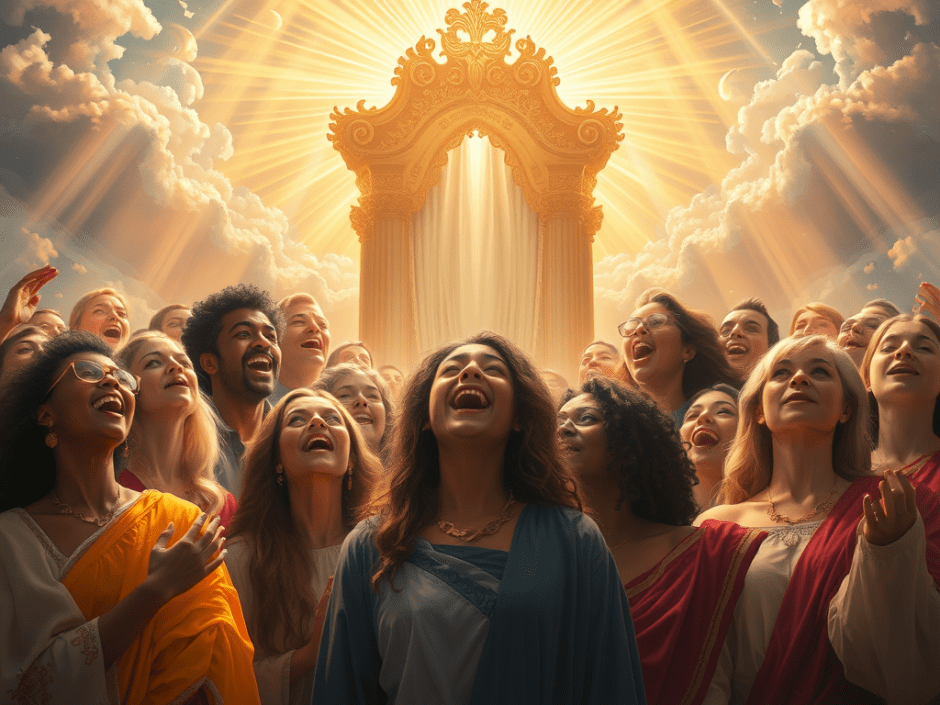
Heaven will be filled with music unlike anything we have ever heard. Revelation 14:3 tells us that the 144,000 will sing a new song before God’s throne, a song that no one else can learn. This special hymn will belong only to those who have been saved, a melody shaped by their redemption.
This song will not be a repeat of earthly hymns but something completely new, a testimony of salvation. Its words will declare the victory of the redeemed, telling the story of how God rescued them. Voices will rise in perfect harmony, filling eternity with endless praise to the Father, Son, and Holy Spirit.
This song will be so beautiful that even the angels will long to join in, but only those who have experienced salvation will be able to sing it. It will be a song of triumph, echoing beyond time itself. What a joy it will be to lift our voices in worship, celebrating forever the love and mercy of God!
As Psalm 96:1 reminds us, “Sing to the Lord a new song; sing to the Lord, all the earth.” In heaven, that new song will never end.
The Bible tells us in Hebrews 8:8that, “The days are coming,” says the Lord, “when I will establish a new covenant with the house of Israel and the house of Judah.” This new promise would be unlike the first, one that would last forever.
Imagine purchasing a car with a seven-year warranty. During those years, you feel secure, knowing that any issue is covered. As the warranty nears its end, the dealer calls to offer you a free lifetime warranty—an agreement far better than the first. Who would refuse such a generous offer?
Similarly, the old covenant served its purpose, but it was only temporary. Through Jesus, God brought a new covenant that is eternal, unchanging, and available to everyone. This promise, sealed by Christ’s blood, offers complete assurance and peace.
As believers, we are called to trust in this everlasting covenant. Just as the old gave way to the new, God’s promise in Jesus is far greater, providing a lasting relationship with Him.
“For this reason, Christ is the mediator of a new covenant” (Hebrews 9:15)—a promise we can rely on forever.
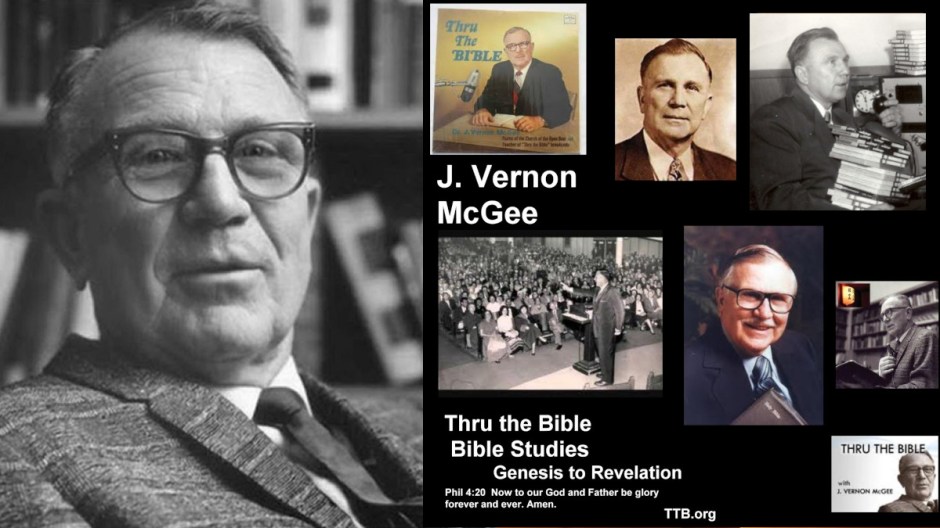
The audio on this video is the property of Thru the Bible. It is offered free of charge. If you wish to make a donation, do not send it to us. Visit http://www.ttb.org for information. The audio is attributed to Dr. J. Vernon McGee and Thru the Bible. Intellectual property rights are those of Thru the Bible. Please contact us if you feel our understanding of the terms of use are in error. Copyright information obtained from https://ttb.org/about/copyright-policy
In Matthew chapter 14, Dr. McGee begins by discussing Herod’s reaction to the fame of Jesus, believing him to be John the Baptist risen from the dead. Herod’s superstitious nature and guilt over the beheading of John are highlighted. The circumstances surrounding John’s death, influenced by Herodias and her daughter, are recounted as a “sadistic sad sorted sorry account”. Following this, the narrative shifts to Jesus withdrawing and then performing the miracle of feeding the 5,000. This miracle is emphasized as being recorded in all four gospels, highlighting its importance. The disciples’ initial suggestion to send the multitude away contrasts with Jesus’ command to feed them.
Dr. McGee then details the event of Jesus walking on the water, which occurs after he sends the multitude away to pray. The disciples’ fear at seeing him, believing him to be a spirit, is mentioned. Peter’s attempt to walk on water and his subsequent sinking when he loses focus on Jesus are described, emphasizing the importance of keeping one’s eyes on the Lord. The disciples’ eventual worship of Jesus as the Son of God after the wind ceases is noted. The speaker then transitions to Jesus healing multitudes in the land of Gennesaret.
A significant portion of the discussion revolves around Jesus’ confrontation with the scribes and Pharisees who questioned his disciples about not washing their hands before eating. Jesus rebukes them for prioritizing their traditions over the commandments of God, using the example of honoring parents. He accuses them of hypocrisy, quoting Isaiah to highlight the disparity between their outward actions and inward hearts. Jesus clarifies that it is not what goes into the mouth that defiles a man, but what comes out of the mouth, proceeding from the heart, listing evils such as evil thoughts, murders, adulteries, etc.. This confrontation is described as the real break between Jesus and the religious leaders.
Dr. McGee then delves into the Transfiguration of Jesus in Matthew 17. This event is presented as a vision shown to Peter, James, and John, where Jesus’ face shone like the sun, and Moses and Elijah appeared talking with him. The speaker emphasizes that the Transfiguration sets forth the perfect humanity of Christ and the hope of humanity for future glorification. God the Father’s voice from the cloud declaring, “This is my beloved Son, in whom I am well pleased; hear ye him,” is highlighted as God’s ultimate testimony and the final authority. The disciples’ fearful reaction and Jesus’ reassuring touch are mentioned, culminating in them seeing “no man save Jesus only”.
Finally, Dr. McGee covers the healing of a demon-possessed boy that the disciples were unable to cure due to their unbelief. Jesus’ powerful rebuke of the demon and the subsequent healing are described as the “worst case” he dealt with. Jesus reiterates his impending betrayal, death, and resurrection to his disciples, who react with sorrow. The chapter concludes with the incident of the tribute money, where Jesus instructs Peter to catch a fish containing the necessary coin, demonstrating his power and provision. The speaker concludes by noting that the disciples were slow to believe and understand, and that Jesus is patient with believers today.
The book of Acts gives a remarkable account of the day of Pentecost in chapter 2. This event marked a pivotal moment in history when God sent His Spirit in an extraordinary way. The apostles boldly proclaimed God’s message, and the world around them paid attention. Some people today suggest that every church gathering should aim to recreate such experiences. But is that expectation realistic given the unique context of Pentecost? And how should this passage influence the church now?
Pentecost was an exceptional, one-time event. It was not intended to set a recurring pattern for Christian worship. The Holy Spirit visibly descended like tongues of fire, and the apostles spoke in real, identifiable languages—not meaningless sounds but known languages that people understood in their native tongues. Acts 2 makes it clear that this miraculous sign served a distinct purpose: to demonstrate the Spirit’s arrival and signal the beginning of the church.
Similar events occurred later in Acts, such as among the Gentiles in chapter 8 and followers of John the Baptist. These moments introduced different groups into the church but were not meant to define the regular Christian experience. These miraculous signs were God’s way of confirming His work during that unique time in history.
While Christians today may not witness such dramatic signs, the message of Pentecost remains vital. It reminds us that God’s Spirit empowers His church to proclaim the gospel to all nations. As Paul wrote, “For in one Spirit we were all baptised into one body” (1 Corinthians 12:13). The church’s focus should be on living out this unity and sharing God’s word, not on seeking miraculous signs as a norm.