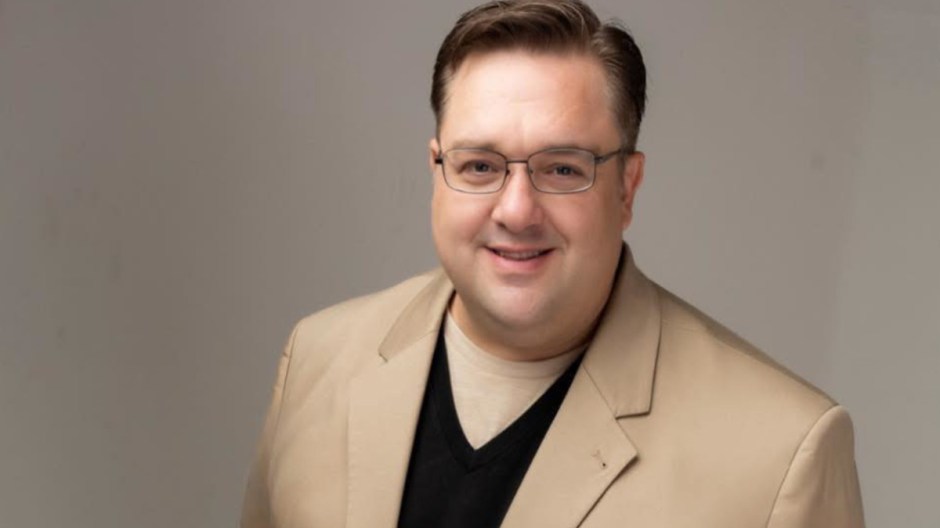
Eighteen Mile shares new song about Biblical story and personal faith

TEXAS GOSPEL VOLUNTEER

Mountain Home Music Company artist Eighteen Mile has released their second single after finding success with their first release. The young five-member group put out “Above The Clouds” in September, and that song has reached the top of the Bluegrass Today Gospel chart multiple times. Now they have followed up with “What Mercy Means.”

Carson Aaron, who plays multiple instruments for the band, wrote the new song and performs the lead vocals. He said the song came from thinking about a story in the book of Exodus, chapter 34, where Moses went up Mount Sinai to meet with God.

What Mercy Means â„— 2025 Mountain Home Music Company Released on: 2025-11-14

Aaron explained that the Bible describes the mountain as dark and frightening during that meeting. The text mentions earthquakes and thunder happening because God was present there. He wanted his song to express the contrast between a powerful and holy God meeting with a person who is not holy.

The song connects that ancient story to Aaron’s own life. He said that as a person who has sinned, he deserves punishment when standing before a holy God. However, he experiences mercy from God each morning instead.

The song features musical work from fiddler Savannah Aaron, who plays a thoughtful melody line. Sometimes she plays alone, and other times banjo player Jack Ritter joins her with quieter accompaniment. Ritter and Emily Guy provide harmonies that support the chorus Aaron wrote.
Andy Leftwich produced “What Mercy Means,” just as he did with the previous single. Leftwich is known for his work playing fiddle and mandolin. The song fits within the tradition of bluegrass gospel music that has been popular for many years.

People can now listen to “What Mercy Means” on streaming services. The song is available in Dolby Atmos spatial audio format on Apple Music, Amazon Music, TIDAL and throughout the day on Texas Gospel Canada.

The Rogers Family affirms the Lord’s eternal presence, power with “He’s Still God”

SPECIAL HORIZON & SONLITE RECORDS

Arden, North Carolina (September 26, 2025) — For their Horizon Records debut, The Rogers Family have chosen a rollicking affirmation of the Lord’s eternal presence and power that exemplifies the group’s respect for the Southern Gospel tradition — and their mastery of the genre’s signature harmonizing.

“We’re so excited to officially release our brand new single, ‘He’s Still God,'” enthuses Rebekah Shields, who takes the lead through most of the song. “This upbeat and joyful song has quickly become one of our favorites to sing, and we pray it becomes an encouragement to you as well. No matter what life brings, it’s a powerful reminder that He’s still God… and He’s still on the throne!”

Kicked off with an interchange between legendary studio multi-instrumentalist David Johnson’s fiddle and the piano of the family’s mother, Kim Shields, “He’s Still God” features the group’s own creative arrangement. Its first verse is sung by the trio of youngsters — Rebekah, Samuel and Hannah Shields — but another verse follows as Rebekah takes the lead, and as the song progresses, the shape of the chorus is repeatedly recast, with different voices emerging to take the lead and offer the triumphant lyric:

He’s still God (He’s still God), who rolled back the troubled water
He’s still God (He’s still God) and He’s still in control
He’s still God (He’s still God) though the world may be raging
He’s still God (He’s still God) He can calm your troubled soul
When it seems (when it seems that) that you have been defeated
Speak His name (Speak His name) and you are not alone
He’s ever listening (He’s ever listening) for the cry of His children
He’s still God (He’s still God) and He’s still on the throne

With its snappy call-and-response, down home feeling and intricately intertwined voices, “He’s Still God” offers both a memorable listening experience and, for those who have not yet heard them, an outstanding introduction to The Rogers Family.

No One Knows the Day or Hour, yet another Prediction About the Rapture

DAVID INGRAM

You don’t see my name on the website too often. Mostly because so many others are better at saying things that need to be said. But today, I’ll make an exception.

Matthew 24:36 makes it clear that no one knows the day or the hour of Christ’s return. Matthew says that not the angels in heaven, nor even the Son, but only the Father. This truth is a direct warning against those who claim to predict the timing of the Second Coming. I realize that some don’t use the word “rapture” because it’s not in the Bible. I think we all know it refers to Jesus’ return, so let’s hold that debate for another day.

When a South African pastor, Joshua Mhlakela, insists that the Rapture will take place on September 23 or 24, 2025, he places himself in direct contradiction to the very words of Jesus. Any attempt to put a date on such an event is not only speculative but also unbiblical, since Scripture emphasizes readiness at all times, not countdowns to a specific day.

Mhlakela’s so-called “divine prophecy,” shared on YouTube and in his interview with Centtwinz TV, reveals a troubling pattern: presenting certainty where the Bible gives none. Scripture consistently reminds believers to be watchful and prepared because Christ’s return will come suddenly and unexpectedly, “like a thief in the night” (1 Thessalonians 5:2). By fixing a date, Mhlakela misleads his audience into placing their hope in his personal claim instead of in the sure promises of God. This not only undermines biblical authority but risks damaging faith when his prediction inevitably fails, as all such predictions have in the past.

The responsibility of every preacher is to point people to Christ and His Word, not to their own revelations. In Matthew 24, Jesus stresses the importance of faithfulness, watchfulness, and endurance, not of prediction-making. By claiming to know what the Bible says cannot be known, Mhlakela shifts attention away from the gospel and onto himself.

Could Jesus come back today or tomorrow? Of course! Does Mhlakela have a prophecy from God? Well, the verse above says no one knows the day or hour. Mhlakela says he’s narrowed it down to two days. This is something we’ve heard from many mislead preachers in the past including Edgar Whisenant back in the 1980’s and Harold Camping in the 1990’s.

Christians are urged to measure every teaching against Scripture and to reject messages that contradict its clear truths. Isn’t the call of Christ not to chase dates but to live faithfully and expectantly every day, ready for His return at any moment?

Dr. James Dobson, Influential Christian Leader and Founder of Focus on the Family, Dies at 89

TEXAS GOSPEL STAFF

Dr. James Dobson, one of the most influential Christian leaders of the past half-century and founder of Focus on the Family, died Thursday morning, August 21, 2025, at the age of 89. His passing was announced by the Dr. James Dobson Family Institute (JDFI).

A psychologist by training, Dobson dedicated his life to strengthening marriages, guiding parents, and defending biblical values, championing the family as the cornerstone of society. Through decades of broadcasting, writing, and public advocacy, he became a towering voice in American evangelicalism and a driving force behind the rise of conservative Christian engagement in politics.

Dobson founded Focus on the Family in Arcadia, California, in 1977, before relocating its headquarters to Colorado Springs, Colorado, in 1991. The move helped establish Colorado Springs as a hub for evangelical ministries and influence. Under his leadership, the organization grew into one of the largest evangelical ministries in the world.

At its height, the Focus on the Family daily radio program aired on more than 4,000 stations across North America and reached audiences in over 160 countries, translated into 27 languages. The show became one of the most widely heard faith-based broadcasts globally.

Dobson’s impact extended beyond the church into the halls of power. A significant figure in the 1980s movement to integrate conservative Christian ideals into American politics, he advised or counseled five U.S. presidents: Ronald Reagan, George H. W. Bush, George W. Bush, Bill Clinton, and Donald Trump. In 1985, he interviewed President Reagan in the Oval Office, and during the Trump administration, he served on the Evangelical Executive Advisory Board.

In addition to Focus on the Family, Dobson helped establish the Family Research Council in the early 1980s, a Christian think tank that remains influential in policy debates on faith and family.

Dobson authored more than 70 books, many of which became staples in Christian homes. His bestsellers included The New Dare to Discipline and When God Doesn’t Make Sense. His work earned him recognition as a New York Times best-selling author and induction into the National Radio Hall of Fame.

Even after stepping away from Focus on the Family in 2010, Dobson continued his mission through the Dr. James Dobson Family Institute (JDFI), where he hosted Family Talk. The nationally syndicated program airs on 1,500 stations and reaches more than half a million listeners weekly, ensuring that his voice continued to influence new generations.

Dr. Dobson is survived by his wife of 64 years, Shirley, their children Danae and Ryan, daughter-in-law Laura, and two grandchildren.

Islamist Terrorists Massacre Christians in Congo and Nigeria Amid Growing Wave of Violence

William Desjardins

On July 27, Islamist terrorists carried out a brutal massacre at a church in the Eastern Democratic Republic of Congo (DRC), killing at least 49 Christians who had gathered for worship. The attackers, jihadists allied with the Islamic State, struck during a Silver Jubilee celebration where worshipers had come from surrounding villages to pray for security and peace. Instead, the congregation faced unimaginable violence, as attackers stormed the church wielding machetes. Witnesses report that Christians who attempted to flee were hunted down and killed, while others were beheaded inside the sanctuary. Most of the victims were Catholic believers, cut down in the middle of a service meant to reaffirm their hope and faith.

The violence was carried out by members of the Islamist Allied Democratic Forces (ADF), a Uganda-rooted rebel group long recognized as one of the region’s deadliest militias. The ADF, which has pledged allegiance to the Islamic State, has intensified attacks on Christians in the DRC as part of its broader effort to establish a caliphate under strict Islamic law. In this latest massacre, nine children were reportedly decapitated, and several others were abducted, underlining the group’s deliberate targeting of the most vulnerable. Pope Leo XIV issued a strong condemnation of the killings, denouncing the atrocity as a brutal violation of human dignity and a direct assault on the Christian faithful.

The aftermath of the massacre in Komanda village was devastating. The U.N. peacekeeping mission, MONUSCO, was forced to deploy earth-digging machinery to create a mass grave for the victims, as the death toll overwhelmed local resources. Many of those buried had already sought refuge in Komanda after surviving attacks in other regions, only to be slaughtered once again. Henrietta Blyth, CEO of Open Doors UK and Ireland, described the situation as a “crisis of biblical proportions” and a “silent slaughter” where women and children are increasingly targeted. Reports from Open Doors further highlight that more than 80 villagers, mostly Christians, were killed in other attacks across the region in July alone. Despite the scale of violence, local sources revealed that no arrests have been made, leaving survivors fearful of another imminent attack.

The crisis in the DRC mirrors escalating Islamist violence against Christians in Nigeria. On August 4, Muslim Fulani herdsmen killed a Christian woman in Plateau state, part of a broader campaign that has seen entire Christian villages depopulated and repopulated by Fulani militants. Boko Haram, another militant Islamist sect, has long declared its intent to impose strict Muslim law in Nigeria and vowed to “cleanse the north of Christianity.” Despite these threats, the Nigerian government has urged Christians not to be alarmed, assuring them of protection. However, the persistent violence and the absence of adequate security responses have left many believers skeptical and fearful.

Leaders within Nigeria’s Christian community have begun urging believers to take responsibility for their own protection. Ayo Oritsejafor, leader of the Christian Association of Nigeria, called on Christians to take appropriate action in safeguarding themselves from further attacks. This comes against the backdrop of staggering losses: more than 4,000 Christians have been killed in Nigeria in the past year alone. With Islamist groups across central Africa pushing for control of Christian-majority regions, the plight of believers in both the DRC and Nigeria underscores a growing humanitarian and spiritual crisis—one where faith communities are caught in the crosshairs of violent extremism, with limited assurances of safety from the governments meant to protect them.