Jesus Our Eternal High Priest

JOHN COPIC

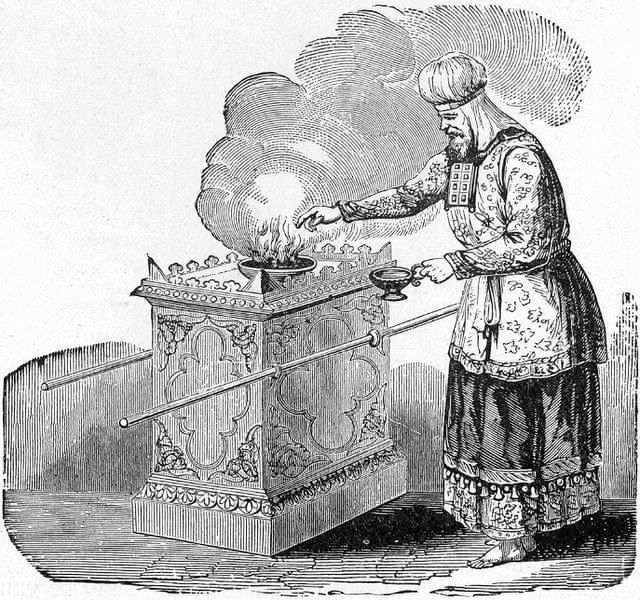
Old lithograph (1894) depicting the high priest offering incense on the altar.
The High Priest in Jerusalem
By Henry Davenport Northrop.
License: Public domain

In the Old Testament, the high priest held a very serious and dangerous role. Once a year, on the Day of Atonement, he entered the most holy place in the temple to offer sacrifices for his own sins, the sins of his family, and the sins of the people. This task could cost him his life if he failed to follow the exact instructions. The high priest had to be a man, capable of understanding human weakness, and he could not take the position on his own, he had to be appointed by God. His work showed the need for forgiveness and pointed to the larger plan of salvation.

Jesus Christ is now described as our great high priest. Unlike the priests of the Old Testament, He does not offer repeated sacrifices. His one sacrifice on the cross was enough to atone for the sins of all who trust Him. Because of this, Christians can now come boldly to God’s throne, knowing they will find mercy and grace in times of need. Our offerings to God, praise, worship, acts of kindness, and giving, are considered spiritual sacrifices, made acceptable through Christ.

Christ’s priesthood is unique because He was fully human and yet without sin. He experienced temptation and human struggles but remained perfect. This allows Him to understand our weaknesses and to intercede for us. He is both compassionate and powerful, able to save completely those who come to God through Him.

Copyright 2009 Kirk Ward Music Words: Isaac Watts Additional Chorus: Kirk Ward Music: Kirk Ward

The Old Testament high priest had to deal with his own sin before he could serve the people. Jesus, being sinless, perfectly fulfills all the requirements of a priest. He was appointed by God, not by human decision, and His priesthood is eternal, following the order of Melchizedek. This distinguishes Him from any human priest and ensures that His work will never need to be repeated.

Jesus’ earthly life showed His obedience, His suffering, and His compassion. He faced real struggles and sorrow, especially in Gethsemane, where He experienced deep anguish while carrying the sins of humanity. Even in suffering, He obeyed God fully. This experience qualifies Him to be a merciful and faithful high priest, able to intercede for those who trust Him.

Because of Jesus, believers have direct access to God. The veil of the temple, which once separated the people from God, is now removed. Christians no longer need a human mediator, because Christ is the eternal high priest who represents us before God. By trusting in Him, we can experience mercy, grace, and the hope of eternal life.

Through Jesus, the new covenant is complete. He has secured salvation, reconciled humanity to God, and provided a way for us to approach God freely. His priesthood, sacrifice, and intercession give believers confidence and hope for both this life and the life to come.

Therefore He is also able to save forever those who come to God through Him, since He always lives to make intercession for them.

Hebrews 7:25

A call to pursue holiness in the new year

JEFF TURNER

When a new year begins, people take time off work to celebrate. They gather with loved ones for meals and write down goals that most will forget about later. For Christians wanting to focus their hearts on what matters most in the coming year, there is an important question to consider. What does God want for His people?

I believe God desires holiness for those who follow Him. He wants His people to grow in purity and become more like Christ. This is not just one priority among many. It is the central reason God gave believers the Holy Spirit.

Church leaders are given their role to feed and nurture God’s people toward this same goal. The apostle Paul wrote with deep emotion about his longing to see believers mature in their faith. He told one church he wanted to present them to Christ as a pure bride. He told another group that he felt like he was in labor pains, waiting for Christ to be fully formed in them. These were not casual wishes. They came from the core of his spiritual concern.

Shouldn’t every Christian pray for holiness in their own life and in the lives of other believers?

The Steady Gift of Hope

CHERYL QUIGG

Hope can appear in quiet and simple ways. It can rise in moments when nothing else seems certain. Here’s a short story as an illustration. Two men were out at sea when one of them was thrown overboard. Alone in the dark water with no life jacket and no way to call for help, he had every reason to believe he would not survive. Yet he found a small idea to hold on to. He used his boots as makeshift flotation devices and waited. Hours later, after long searching, rescuers found him alive. What kept him going was a faint but stubborn belief that help could still come.

A lot of us know this kind of waiting. Hope can be a flicker of light when everything feels heavy. Now, in the season leading to Christmas, many people reflect on hope in a deeper way. This time teaches that hope is not only an emotion but also a promise. It connects the past, the present, and what is still ahead.

A well-known account from the first chapter of Luke shows how hope can come to people who have waited for years. Zachariah and Elizabeth lived faithfully, yet they carried the pain of not having children. They were older now, long past the age when change seemed possible. Still, they lived with steady devotion. Then, on an ordinary day, everything changed. A message came announcing that their long prayers had been heard. They would have a son, and his life would prepare people for the work of the Lord.

Their story reminds us that hope does not expire. It may take time before it becomes clear. It often grows slowly, shaped by patience. Many generations before them had longed for God to complete his promise. People faced times of peace and times of struggle. Yet through all of this, the promise of a coming Saviour stayed alive.

Prophets spoke of this future. They described a child who would bring peace and justice, one who would carry the very presence of God. These words carried forward through hundreds of years.

When the message finally came to Zachariah, it renewed the hope that people had held onto for generations. Though he struggled to believe at first, the news spread quickly among the people. Their waiting was not wasted. Their hope was not empty.

Today many people still wrestle with hard questions. What does hope mean in illness, broken relationships, financial strain, or deep loss? What does hope offer when answers do not come quickly? The message at the heart of this season is that hope is not based on perfect circumstances. It is rooted in the presence of God, who stays near in the darkest places.

Scripture shows that God meets people in their fear, pain, and loneliness. There are moments when hope feels far away. Many people sit quietly with fears they never speak aloud. But hope is still offered. It comes through Jesus, who entered this world not simply to inspire, but to save. He came to restore what sin has broken and to bring life that does not end. The hope he gives does not depend on how strong we feel. It depends on who he is.

For those who have never placed their trust in him, hope begins by receiving what he offers.

The Promise of Eternal Satisfaction

AMY TURNER

Revelation 21:6-7 shares a promise of hope for those who trust in God. It speaks of God as the Alpha and the Omega — the One who holds both the beginning and the end. To those who are thirsty, He offers the water of life freely, and those who remain faithful will inherit this blessing. God will call them His own, and they will belong to Him.

Life often leaves people feeling empty or disappointed, but for believers, this is not the end of the story. While struggles and unmet hopes may be part of life on earth, eternity holds something far better. God promises a future where every longing will be fulfilled, and where the soul will find lasting peace.

but whoever drinks of the water that I will give him shall never be thirsty; but the water that I will give him will become in him a fountain of water springing up to eternal life.”

John 4:14

Joe Mullins’ ‘Even Better When You Listen’: A Gospel Reflection

JEFF TURNER

Joe Mullins & The Radio Ramblers have released “Even Better When You Listen” as part of their new project, “Thankful and Blessed”. This marks the second release from a collection of Gospel and sacred songs.

The lyrics of “Even Better When You Listen” convey a message centered on the importance of listening to God in prayer. The song opens by telling the listener that going to God in prayer is a blessing and emphasizes the constant presence of God when his name is called in faith. The lyrics go further into what it means to pray, that it should be a “two-way conversation”.

Provided to YouTube by The Orchard Enterprises Even Better When You Listen · Joe Mullins & the Radio Ramblers · Rick Lang · Mark BonDurant Even Better When You Listen ℗ 2025 Billy Blue Records Released on: 2025-01-03 Producer: Joe Mullins and The Radio Ramblers Mixing Engineer, Mastering Engineer: Chris Latham

The core message is in the repeated lines, “It’s good to talk to Jesus. It’s even better when you listen. You can hear the Holy Spirit. If you just pay attention, make the choice to hear his voice. Find out what you’ve been missing.” While vocalizing prayers and concerns is valuable, actively listening for divine guidance is presented as an even more profound aspect of faith. The lyrics encourage listeners to “stop what you’re doing” and “walk out all the noise” to allow “the holy words of Jesus” to fill their hearts.

The tune then asks us to consider that God holds the answers to what individuals seek, but understanding His plan requires giving Him “time to speak.” The repetition of the chorus reinforces the central theme of actively listening to perceive the Holy Spirit’s voice. The outro includes direct exhortations to listeners, urging “children listen,” “brother listen,” and “sister listen”.

The new project, “Thankful and Blessed,” includes a version of “I Am Blessed” and a new song, “Lord I’m Thankful,” alongside eight other new compositions.

Listen for “Even Better When You Listen” throughout the day on Texas Gospel Canada!

“This is the confidence which we have before Him, that, if we ask anything according to His will, He hears us” (1 John 5:14, NASB).