From age 11 to the Dove Award, John Darin Rowsey’s long road

AMY TURNER

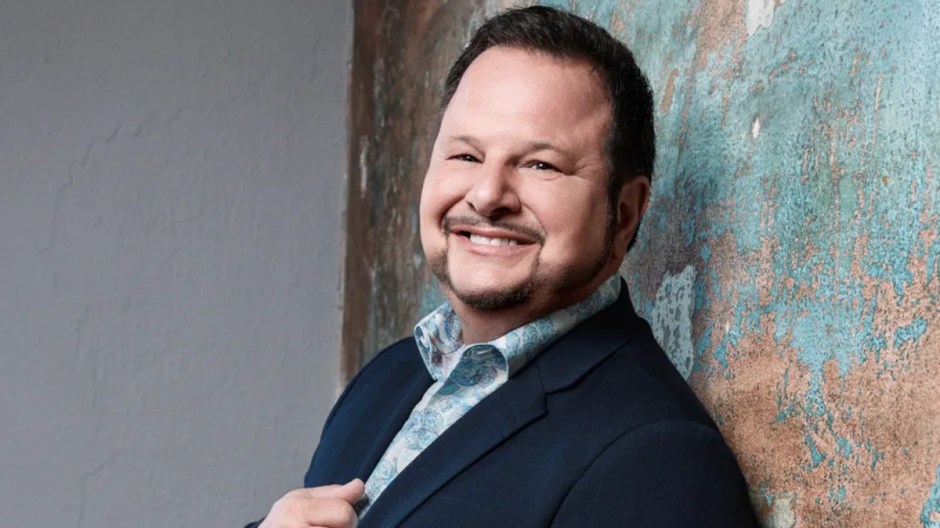
John Darin Rowsey may not have set out to become one of southern gospel’s most reliable hitmakers. He just wanted to sing, starting at age 11, back before he had any sense of what a career in this business would eventually ask of him.

That early stage time turned into decades of work. He joined New Journey in 1985, spent time with Karen Peck & New River starting in 2000, and in 2012 landed with The Guardians, where he now writes and arranges most of the group’s material. The songs kept climbing the southern gospel charts, the hits kept stacking up, and eventually a Dove Award showed up to confirm what fans already knew. Somewhere along the way, “prolific” stopped feeling like an exaggeration and started feeling like the plain truth.

Ask him about his influences and the names come easily. Dottie Rambo sits at the top of the list, and Rowsey doesn’t hesitate when explaining why: “probably would be at the top of my list because of the different styles and how much emotion she can pack in a lyric.” Bill and Gloria Gaither shaped him too, along with Ronnie Henson. These are the names you’d expect from a southern gospel songwriter of his generation, the kind of lineage that gets name checked in liner notes and interviews alike.

But the deepest influence wasn’t a songwriter at all. It was his pastor, Chuck Lawrence, the man Rowsey calls the one who “took me under his wing and mentored me.” Lawrence wasn’t interested in easy praise. He didn’t pat Rowsey on the head and send him on his way. Instead, as Rowsey remembers it, Lawrence “would not just say, oh, that’s a good kid” and let it go. He pushed back, offered notes, passed along lessons picked up from Nashville, and stuck with the process long enough to actually shape it. “He grew the tree,” Rowsey says, a line that lands with the kind of quiet weight you only get from real gratitude.

That mentorship model, someone taking the time to actually develop a young talent rather than just encourage it, is baked into how Rowsey approaches his own writing now. He’s not just filling southern gospel radio with his own songs; he’s collaborating, including on The Guardians’ current single “I know you,” co-written with Rodney Griffin. It’s another entry in a catalog that just keeps growing, proof that the tree Chuck Lawrence planted decades ago is still very much bearing fruit.

How a preacher’s one-liner became the Kingdom Heirs’ new single

TEXAS GOSPEL VOLUNTEER

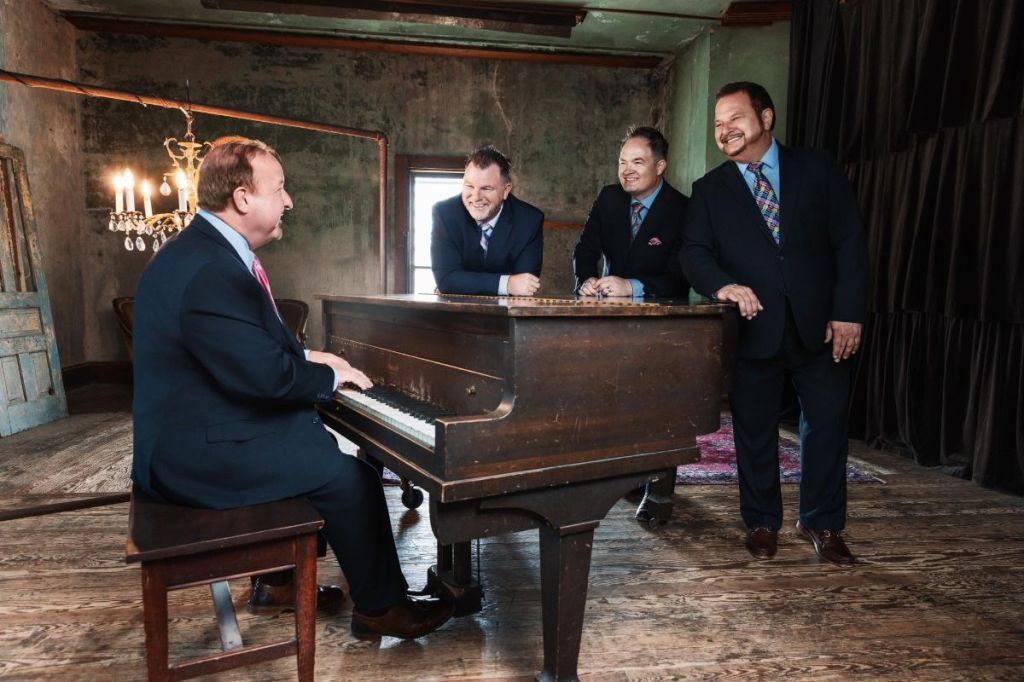
The Kingdom Heirs are back with their first new music since 2024’s No better time, and this one comes swinging. The Sonlite Records quartet, longtime Southern Gospel favorites out of the mountains of East Tennessee, just released “Jesus never met a sinner (that he couldn’t save),” an up-tempo, unpredictable number that grew out of a single line overheard in a small church in North Augusta, Georgia.

The song’s writer, and the group’s drummer, Dennis Murphy, remembers the exact moment it hit him. “This song was inspired by a quote from Pastor C.T. Townsend when we sang at his church,” Murphy says. “As he was introducing us, he simply told the congregation, ‘Jesus never met a sinner that He couldn’t save.’ It instantly tweaked my songwriter brain, and I was obsessed for the remainder of the service.”

He laughs about it now, sort of. “It’s a blessing and a distraction,” Murphy adds, “but I’ve learned to live with it. I began to build around this great quote as the Lord delivered the words.” He’s not alone in that habit, he suspects. “I’m sure this happens with other songwriters who hear a sermon and then begin to focus on a ‘nugget of gold’ from the preacher.”

The result, produced by Roger Talley, opens with snappy guitar and keyboard work before lead singer Chris Bryant takes over, his voice riding a propulsive drum line courtesy of studio veteran Tony Creasman. Murphy calls it fitting for the group’s sound: “I believe everyone will enjoy this up-tempo, unpredictable, and energetic tune,” he says, adding that Bryant “delivers an amazing fast-paced lead as the remainder of the quartet add incredible harmonies.”

That’s putting it mildly once the full quartet crashes into the chorus, four voices locking in behind a message that’s been the group’s calling card for over four decades: no one is too far gone.

Dollywood regulars know that message well. The Kingdom Heirs first started singing at what was then Silver Dollar City back in 1982, and when the park rebranded in 1986, the group became its resident gospel act, a role they still hold today. This year, both the Kingdom Heirs and Dollywood are marking more than 40 years in the family entertainment business, a milestone that says as much about the group’s staying power as any new single could.

Paul Lancaster ties the knot | The Guardians tenor on grief, guarded love, and letting his boys lead the way

TEXAS GOSPEL CANADA VOLUNTEER

Paul Lancaster has spent decades building a career on trust: trust in his voice, trust in the groups that shaped him, and trust in the audiences who followed him from Alabama church stages to the biggest platforms in gospel music. Now he’s added another kind of trust to the list, the kind that comes with a wedding ring.

The Guardians tenor has married Greta, the woman he calls a blessing that arrived when he least expected it. Their story began in 2021, not long after Lancaster lost his wife, Michelle. Neither of them was looking for love. “She came into my life in 21, just a few months after Michelle had passed. I wasn’t looking for anybody, and neither was she,” Lancaster said. “God put us together. My mother-in-law had a lot to do with, my mother-in-law and God had a lot to do with putting us together.”

For a man who’d built his whole life around family, the stakes of a new relationship weren’t small. Lancaster’s sons came first, and he wasn’t willing to risk their wellbeing on a decision made out of loneliness rather than clarity. “I wanted somebody, because sometimes out of loneliness, you can make the wrong decision, and I did not want to do that,” he said. “I’ve seen somebody out of loneliness will make the wrong decision. It can divide the family because it’s not good for you. The people that love you can see it. Maybe you can’t because loneliness won’t let you see it, right? But this was not the case.”

That caution paid off. Greta didn’t just win Lancaster over, she won his boys over too, and for him, that mattered as much as anything. “My family, my boys love her, which that had to be a deal,” he said. “I was very guarded about that because my boys were first. They were my responsibility. But God has blessed us. She has brought us even together and closer. The boys love her.”

It’s a fittingly quiet, faith-centered turn for a singer whose career has been anything but quiet. Lancaster came up singing locally in Alabama before landing on some of gospel music’s biggest stages, first catching wider attention through the Gaither Homecoming videos during his run with Mullins & Company. From there he moved through some of the genre’s most storied lineups, including the Nelons, the Martins, and the Booth Brothers, building a reputation as a tenor who could slot into any group and make it better.

That reputation is exactly why the Guardians came calling at the start of 2023, bringing Lancaster on full time to fill the tenor position during Dean’s absence. By the group’s own account, the fit exceeded expectations. His voice found its place in the blend, and so, it seems, did the rest of him: the guarded father, the grieving widower, and now, the newly married man who found love again on his own terms.

The living room floor where Paul Lancaster found gospel music

Long before he was standing on stage with The Guardians, Paul Lancaster was a kid parked on his living room carpet, working his way through his mother’s record collection one album and eight track at a time.

“I sat in front of there and just pulling out albums and eight tracks,” Lancaster remembers, half laughing at himself. “I know that dates me a lot.”

That collection was sprawling and unpredictable. You could jump from Elvis to a Sunday morning quartet without warning. Lancaster wore out one particular Elvis eight track, drawn especially to the gospel side of the King’s catalog. “I loved the rhythmic singing of Walk Them Golden Stairs and Josh Fit the Battle,” he says. “Oh, it’s good stuff.”

From there, the collection opened into what Lancaster calls Jesus Music of the Air: Andrae Crouch, Sammy Hall, Don Francisco, names that shaped a generation of Southern gospel and contemporary Christian sound alike. For a kid on a living room floor, it was less a genre than a whole world.

Then there was the album he avoided entirely.

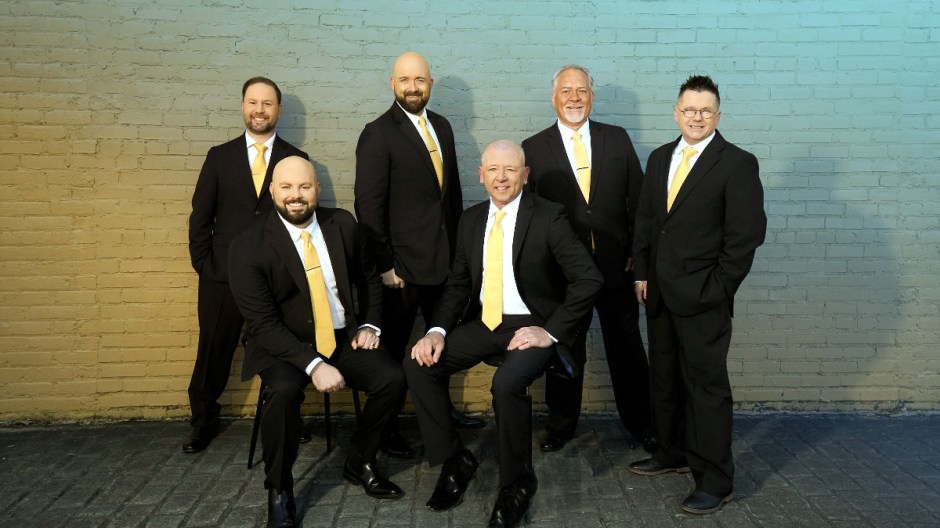
Southern gospel group The Guardians promotional photo. (Photo courtesy Daywind Records)

Tucked into his mother’s collection was a record by Jerry and the Goffs, its title alone enough to spook a young Lancaster: “God’s Gonna Get You for That.” He steered clear of it for years. “As a kid, I kind of shied away with it for a while until I listened to it, and it was really good, you know,” he says now, the fear replaced by fondness.

Looking back, Lancaster frames those afternoons as something close to formative, not because any single song set him on a path, but because of the sheer range of what he was hearing. “Those were a lot of good memories of sitting on my living room floor at home and listening to just a lot of different things from the day,” he says.

What actually set the hook came a few years later, when Lancaster was ten years old and saw Gold City Quartet perform live for the first time. “Then I was hooked for sure,” he says simply. No embellishment needed. That was the night the music stopped being something he listened to and became something he wanted to do.

Decades on, Lancaster sings alongside John Darin Rowsey, Pat Barker and Dale Forbes as The Guardians, a quartet built on tight harmony and a shared commitment to the gospel that shaped all of their childhoods in one form or another. The group has picked up three Dove Award nominations and multiple number one songs along the way, occasionally welcoming founding member Dean Hickman back to the stage, a man with more than 60 years in gospel music behind him.

Their newest single, “I Know You,” feels like a natural extension of the records that filled Lancaster’s childhood living room, songs built to be sung loud and mean it. The chorus lands with the plainspoken conviction Lancaster grew up on: “But I know you and who you are is holy. Who you are is mighty. Everything that I could never be. Who you are is faithful, merciful, and able. The righteous one that meets my every need. Who you are is great and worthy of all praise. With an empty grave to prove it all was true.”

It is not hard to hear an eight track kid in that chorus, still sitting on the floor, still pulling one more record off the shelf.

Mark Bishop is still writing songs about second chances

AMY TURNER

Mark Bishop knows something about second chances, and it comes through in every corner of Where Do Blessings Come From?, the singer-songwriter’s new project for Sonlite Records. “This album, if it has a theme, seems to be about recognizing the good in life,” Bishop says, describing a record built around healing and hope rather than nostalgia for what’s already passed.

That distinction matters to him. Bishop isn’t interested in looking backward. The songs here argue, again and again, that the best is still ahead: joy that hasn’t arrived yet, peace that’s still being written. One standout track leans into a simple, defiant promise, that no matter how far gone someone feels their happiness is, there’s more waiting for them. It’s a small idea stated plainly, but Bishop sells it with the conviction of someone who’s lived it.

“God gives us hope,” he says. “This world most often promises much more than it can deliver. But God promises our greatest joy is yet to be experienced.”

The focus track, “Over and over again,” takes a different approach, tracing familiar Biblical figures (David, Daniel, the Exodus story) as evidence for a larger pattern: a God who shows up, repeatedly, across generations. The chorus hammers that repetition home, turning history into reassurance.

Between the half dozen singles that have carried Bishop through the better part of 2025, starting with “Grandkids,” and the newer material rounding out the collection, the record moves fluidly between the domestic and the divine. It’s a range that’s become something of a signature for him, and it’s part of why Where Do Blessings Come From? plays less like a collection of singles and more like a sustained argument.

For Bishop, that argument starts at the very beginning. “There was no love before God,” he says, “just an empty void.” In his telling, creation wasn’t only the physical world, it was the invention of an entire emotional register: love, peace, joy, all of it as new then as the mountains and the seas.

Blessings, in Bishop’s framing, are the residue of that act. “Little nods and kisses from an eternal plane,” he calls them, artifacts of a love too large for heaven to fully hold, occasionally spilling down into ordinary life.

It’s a big theological claim wrapped in an unpretentious package, which is very much the point. Bishop has built a career writing songs that carry weight without ever sounding heavy, and Where Do Blessings Come From? keeps that streak alive. Ask him where the title comes from, and the answer loops back to something close to a thesis statement: “The God who created you, that’s where your blessings come from.”