Christians in Pakistan: A Crisis of Persecution and Protection

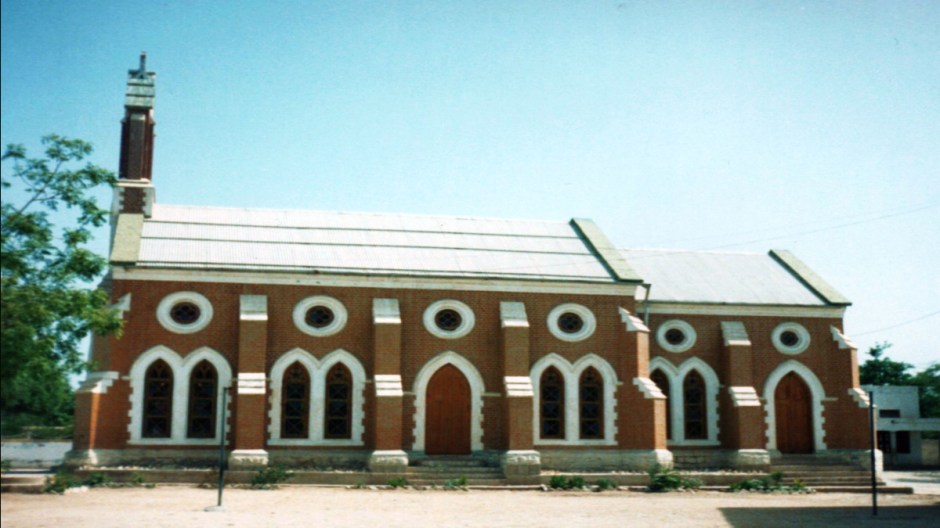
(Photo credit: Francis Hannaway/ St. Mary’s Catholic Church, Sukkur, Pakistan, July 31, 1992. Creative Commons.)

WILLIAM DESJARDINS

Pakistan’s 4.5 million Christians and other religious minorities face an unprecedented crisis of persecution, systemic discrimination, and legal vulnerability that has reached alarming new heights in recent years. Ranked eighth on the Open Doors World Watch List, Pakistan represents one of the most dangerous places in the world to be a Christian, with minorities comprising less than 4% of the population yet bearing a disproportionate burden of violence and injustice.
At the heart of the persecution lies Pakistan’s controversial blasphemy laws, which carry the death penalty and have become weaponized tools of exploitation and intimidation. A groundbreaking confidential police report titled “The Blasphemy Business” has exposed the dark reality behind many blasphemy accusations: criminal networks systematically targeting young people for financial gain.

These sophisticated scams involve fake social media accounts that lure young men into conversations containing blasphemous content, creating elaborate traps that have ensnared over 450 victims since 2021, according to Pakistan’s Human Rights Commission. Once trapped, families face devastating choices—pay substantial bribes to police to drop charges or watch their loved ones face potential death sentences. Lawyers representing affected families have documented not only arrests and disappearances but also evidence of torture in police custody.

The blasphemy laws serve purposes far beyond their stated religious protection mandate. They have become instruments for land grabs, targeting business rivals, and criminal extortion. Though death sentences are rarely carried out, accusations frequently trigger mob violence and extrajudicial killings that claim lives with disturbing regularity.

A rare glimmer of hope emerged when Justice Ishaq Khan of Islamabad’s High Court ordered the government to investigate the abuse of blasphemy laws, prompted by the revealing police report. However, this hope was swiftly crushed by intense backlash from religious extremist groups. Members of the Tehreek-e-Labbaik Pakistan party publicly attacked the court ruling, while lawyers from the Jamiat Ulema-e-Islam party challenged the order in court. By July 24, Justice Khan’s order was suspended amid fears that hostility could turn violent.

This pattern reflects Pakistan’s troubled history with blasphemy law reform. Historically, any attempt to modify or investigate these laws has been quickly shut down by violent protests from radical Islamic groups, creating a climate where even judicial review becomes impossible.
The situation deteriorated dramatically in 2024, with the Centre for Social Justice reporting a record 344 new blasphemy cases—the highest number in Pakistan’s history. At least 10 individuals accused of blasphemy were extrajudicially killed by individuals or violent mobs during the same year, highlighting the deadly consequences of these accusations.

Christians bear a particularly heavy burden under this system. Despite comprising only 1.8% of Pakistan’s population, roughly a quarter of all blasphemy accusations target Christians. This disproportionate targeting reflects deeper systemic discrimination that permeates Pakistani society and institutions.

The human cost of this persecution becomes clear through individual cases. In June 2024, an elderly man was killed by mob violence after being accused of desecrating the Quran, demonstrating how quickly accusations can turn fatal. The case of Anwar Kenneth illustrates the system’s cruel inefficiency: the 72-year-old Christian spent 23 years on death row after being sentenced to death in 2002 for sending allegedly blasphemous letters. Only in June 2025 did Pakistan’s Supreme Court finally acquit him, ruling that “a person of unsound mind could not be held liable for such a crime.”

The Jaranwala incident in August 2023 exemplifies how blasphemy accusations can trigger community-wide violence. When Pervaiz Masih was accused of writing blasphemous content, violent riots erupted that destroyed at least 20 churches and forcibly displaced hundreds of Christians. On April 18, 2025, Masih was sentenced to death, but the damage to the Christian community had already been done.

Perhaps most troubling is the impact on minority children, as documented in a new report by Pakistan’s National Commission on the Rights of the Child (NCRC). The report, titled “Situation Analysis of Children from Minority Religions in Pakistan,” reveals severe challenges including forced conversion, child marriages, and child labor affecting minority children, particularly from Christian and Hindu communities.

Between April 2023 and December 2024, the NCRC received 27 complaints related to the oppression of minority children, including abduction, murder, forced conversion, and underage marriages. Punjab province, Pakistan’s most populous region, reported the highest number of violence cases against minority children (40%) from January 2022 to September 2024, with 547 Christian victims, 32 Hindus, two Ahmadis, two Sikhs, and 99 others.

The discrimination extends into Pakistan’s educational system, where minority children face multiple forms of marginalization. The Single National Curriculum mandates Islamic religious education with no alternatives for minority students to study their own faiths, effectively infringing on religious freedom and hindering academic progress. Minority students report feeling uncomfortable sharing their religious identities, viewing them as inferior markers that lead to mockery from majority-religion classmates and even encouragement to convert.

Economic exploitation compounds these educational challenges. Many minority households remain trapped in cycles of bonded labor, particularly in brick kilns and agriculture, where entire families, including children, work under cruel conditions. This economic vulnerability makes families more susceptible to various forms of exploitation and abuse.

Forced religious conversions and marriages of Christian and Hindu girls to older Muslim men persist as major human rights violations. Despite legal protections on paper, institutional biases, public pressure, and inadequate law enforcement allow these practices to continue unchecked. These forced conversions often serve to legitimize what would otherwise be recognized as kidnapping and sexual assault.

The persecution occurs within a constitutional framework that explicitly limits religious freedom. Pakistan’s constitution restricts the right to free speech to maintain “the glory of Islam,” creating a legal environment where minority rights are subordinated to religious considerations from the outset.

NCRC Chairperson Ayesha Raza Farooq, working in collaboration with UNICEF, emphasizes that millions of children continue to fall through protection gaps due to fragmented efforts, lack of coordination, and limited political will. The NCRC has urged the government to strengthen legal protections, expand social safety nets, create inclusive education policies, and adopt specific measures to counter child and bonded labor, as well as forced religious conversions.

NCRC Minorities Member Pirbhu Lal Satyani states bluntly that children from religious minorities are among the most marginalized in Pakistani society, facing stigma, stereotyping, and structural exclusion that begins in childhood and continues throughout their lives.

The police report exposing “The Blasphemy Business” has opened new territory in Pakistan’s debate over blasphemy laws, revealing uncomfortable truths for the political establishment about the country’s human rights crisis and the extreme vulnerability of its minorities. However, the swift suspension of judicial review attempts demonstrates the powerful forces aligned against reform.

For Pakistan’s minorities, particularly its 4.5 million Christians, each day brings fresh uncertainty. The combination of weaponized blasphemy laws, systematic discrimination, economic exploitation, and social marginalization creates an environment where basic human dignity remains elusive. Without significant political will to confront extremist groups and implement meaningful reforms, Pakistan’s minorities will continue to live under the shadow of persecution, their children growing up in a society that treats their very existence as somehow lesser and their faith as inherently suspect.
The international community watches as Pakistan struggles with this fundamental test of its commitment to human rights and religious freedom. The outcome will determine not only the fate of millions of vulnerable citizens but also Pakistan’s standing as a nation capable of protecting all its people, regardless of their faith.

Genocide Against Christians Escalates Across Africa

WILLIAM DESJARDINS

In the shadows of international headlines, an escalating campaign of violence is unfolding across several African nations, where radical Islamic groups are targeting Christian communities. In Mozambique’s northern Cabo Delgado province, the Islamic State Mozambique Province (ISMP), an ISIS affiliate, has taken responsibility for a series of attacks, including beheadings, village raids, and the burning of churches and homes. Between July 20 and 28, ISMP militants reportedly killed at least nine Christians, beheaded others, and displaced over 46,000 people. Nearly 60% of the victims were children according to the U.N. Office for the Coordination of Humanitarian Affairs.

On July 24, ISMP fighters attacked a Christian village in Chiure district, killing one and setting multiple homes ablaze. Four days later, they claimed responsibility for the capture and beheading of two Christians, releasing 20 propaganda photos through jihadist channels boasting of their attacks. The images, verified by the Middle East Media Research Institute (MEMRI), reveal scenes of mutilated victims, torched churches, and militants standing triumphantly over the corpses of what they call “infidel militias.” MEMRI Vice President Alberto Miguel Fernandez described the unfolding crisis as a “silent genocide” driven by deep anti-Christian hatred, lamenting the lack of attention from the international community.

Mozambique isn’t alone. The Democratic Republic of Congo (DRC) has seen similarly heinous violence at the hands of the ISIS-aligned Allied Democratic Forces (ADF). On July 27, ADF operatives opened fire at a Catholic church in the Christian village of Komanda, killing 45 people, including nine children, and setting fire to homes and businesses. Earlier in the month, the same group slaughtered 43 worshipers during a church service. These acts of terror are part of a broader ISIS strategy to establish a caliphate across Africa through decentralized, cell-based warfare—a shift from the group’s earlier land-occupying tactics in Iraq and Syria.

Despite mounting death tolls and mass displacements, global leaders have remained largely silent. Fernandez warns that ISIS-aligned groups are now in a position to destabilize multiple African nations simultaneously, posing a long-term threat not only to regional security but to global interests. While countries like Rwanda have deployed forces to assist Mozambique, the international response remains fragmented and insufficient. As ISIS continues to expand its ideological and operational reach, Christian communities across Mozambique, the DRC, and Nigeria live under the constant threat of slaughter, their suffering too often overlooked in a world consumed by other headlines.

Church Members in India Fear Attending Worship after Assault

Morning Star News

NEW DELHI (Morning Star News) – Hindu extremists in central India on June 8 ransacked a church’s worship building, burned Bibles and assaulted every member, causing one to lose consciousness, sources said.

In Chhattisgarh state’s Dhamtari District, the Hindu nationalists attacked during the independent Penial Prayer Fellowship’s worship service in Borsi village, said Pastor Wakish Sahu, who leads the church along with his 57-year-old father, Mannohan Sahu.

“They forcibly entered the church, disrupted the worship service and were carrying wooden rods and shouting slogans like ‘Jai Shri Ram’ [Hail lord Rama],” Pastor Wakish Sahu told Morning Star News.

Threatening the Christians, the attackers told them to stop gathering for worship, he said. They broke all chairs, fans and musical instruments, then collected all Christian literature along with the Bibles and burned them.

Taking hold of Pastor Mannohan Sahu, they beat him with wooden rods, slapped his face repeatedly, struck his head with wooden sticks and kicked him, Pastor Wakish Sahu said.

“My father was being beaten up, and during this time blows landed near his ear, and he lost his consciousness,” he said. “The assaulters, probably scared that he was dead or going to die from the beating, called for a glass of water and forced it in his mouth.”

Pastor Mannohan Sahu sustained injuries over all his body, especially on the head, ear, chest, hands and back.

The assailants beat all 15 members present that day, including Pastor Wakish Sahu’s mother when she tried to intervene and save her husband; her hands and head were injured in the process.

“Two women and five men sustained severe injuries and had to be taken to the hospital for treatment,” said Pastor Wakish Sahu.

Only five to seven of the assailants were from the village, the others being outsiders the pastor said he “had never seen before.”

Pastor Wakish Sahu registered a detailed complaint at the Maganlodh police station, but officers did not register a formal complaint as they indicated they would investigate first. At this writing, however, no formal complaint has been registered.

“Since the attack, the believers have stopped coming for worship as they are too scared, and understandably so; but our family members, around 10 of us, still worship at the same time,” Pastor Wakish Sahu said. “We have decided that we will not give in to fear.”

Under the Hindu Radar

This was not the first time the church has been attacked.

A mob of Hindu extremists in June 2024 attacked his church in a similar way, threatening all those present and telling them to stop attending worship services, the pastor said.

“Since then, our congregation of close to 50 people had reduced to 15, and since the latest attack, nobody [outside his family] is coming to church for fear of being assaulted,” Pastor Wakish Sahu said.

After the attack last year, Dhamtari Christian leaders had submitted a memorandum to authorities, including the District Collector of Dhamtari.

“Police have been patrolling every Sunday since last year,” the pastor said. “They usually come inside to check if any persons from nearby villages are in attendance, because they maintain that only people from our village should be present in our services. They have warned time and again that no one from other villages should be found in our midst.”

During police visits, after confirming attendance they usually take photos before leaving, he added.

Congregation members stopped coming also from fear of being targeted by anti-Christian groups.

“Many of them have told us that they will attend worship in other churches in nearby areas or in the city but are afraid of attending worship services at our church because of fear of violence and the police,” the pastor said. “However, they do not understand that even city churches have not been spared.”

On the morning of June 8, the patrolling police who visited the church again asked if anyone from outside the village was attending and left. When the ensuing assault was underway, officers arrived and told the assailants to leave.

“It was very surprising that the police just told them, ‘It is enough,’ and they all just walked away,” Pastor Wakish Sahu said. “It appears that it was all in the knowledge of the police even before they attacked us.”

When he and other Christian leaders went to submit a formal complaint at the police station, the Hindu extremists were waiting outside to attack them again. The pastor requested police protection, and officers agreed to drop them halfway to their home.

“When the police were driving us back, the Hindu mob was following the police vehicle,” he said. “They came after us for a mile and then took a detour.”

He later learned the Hindu mob following them had gone to another Christian house in the area and vandalized and burned it, he said.

Another congregation in Dhamtari, Elohim Church, endured an intrusion by members of the Hindu nationalist Bajrang Dal on Sunday (June 29), said Pastor Alok Majumdar.

“The Hindu extremists entered the church while the service was going on and disrupted it by loudly singing Hindu religious hymns,” Pastor Majumdar told Morning Star News. “Subsequently, the police arrived and dispersed the Bajrang Dal members.”

Officers took an informal complaint, but it has not yet been formalized. No physical violence or vandalism was reported.

The same day, Hindu extremists disrupted the worship service of another church in the district, located in Gopal Puri about 10 miles from Pastor Majumdar’s church. Its pastor, Thanu Ram, was unavailable to confirm the incident but it was cited by both Pastor Majumdar and Pastor Wakish Sahu.

Before attacking Pastor Majumdar’s church, the same day Hindu extremists went to Pastor Rekha Mahilanh’s church on the way to Majumdar’s church. Extremists found a 21-year-old man outside the building who was attending church for the first time and assaulted him. They then searched for the church pastor. Pastor Mahilanh stepped forward and revealed that she was the pastor, and she and all other women of the church confronted the extremists.

“The Hindu extremists discreetly used some kind of a spray on some of the women,” Pastor Mahilanh told Morning Star News.

In the end, due to the women’s determination, the extremists left and proceeded to Pastor Alok Majumdar’s church.

Pastor Mahilanh did not report the matter to the police.

Pastor Raju Verghese, also in Dhamtari District, Pastor Majumdar and the Rev. Diamond Phillius, president of the Dhamtari Christian Forum, submitted a memorandum to the collector’s office on Tuesday (July 1) highlighting the rise in attacks against area churches and appealing for action.

Pastor Verghese told Morning Star News that the district collector, Avinash Mishra, was busy in a meeting, so he received the memorandum from them and said that he would take it up with them later.

Christian support organization Open Doors ranks India 11th on its 2025 World Watch List of countries where Christians face the most severe persecution. India stood at 31st place in 2013 but has steadily fallen in the rankings since Narendra Modi came to power as prime minister.

Religious rights advocates point to the hostile tone of the National Democratic Alliance government, led by the Hindu nationalist Bharatiya Janata Party, which they say has emboldened Hindu extremists in India since Modi took power in May 2014.

If you would like to help persecuted Christians, visit https://morningstarnews.org/resources/aid-agencies/ for a list of organizations that can orient you on how to get involved.

If you or your organization would like to help enable Morning Star News to continue raising awareness of persecuted Christians worldwide with original-content reporting, please consider collaborating at https://morningstarnews.org/donate/?

Š 2025 Morning Star News. Articles/photos may be reprinted with credit to Morning Star News. https://morningstarnews.org

Tweet: https://twitter.com/morningstarnewz/

Facebook: https://www.facebook.com/MorningStarNews

Morning Star News is a 501(c)(3) non-profit corporation that relies solely on contributions to offer original news reports of persecuted Christians. By providing reliable news on the suffering church, Morning Star News’ mission is to empower those in the free world to help and to encourage persecuted Christians that they are not forgotten or alone. For free subscription, contact editor@morningstarnews.org; to make tax-deductible donations, visit https://morningstarnews.org/donate/? or send check to Morning Star News, 34281 Doheny Park Rd., # 7022, Capistrano Beach, CA 92624, USA.


Southern Baptist Convention Calls for Overturn of Same-Sex Marriage Ruling, Reinforces Traditional Christian Teachings

STAFF/VOLUNTEER

At its recent annual meeting in Dallas, the Southern Baptist Convention (SBC) approved a resolution asking for the repeal of the 2015 United States Supreme Court decision that legalized same-sex marriage. The resolution was one of several passed by delegates, each designed to reaffirm conservative Christian beliefs about family, gender, and marriage.

The resolution is titled “On restoring moral clarity through God’s design for gender, marriage, and the family.” It is presented as a theological statement, expressing specific views about the created order, marriage, abortion, fertility, family structure, gender identity, sexual orientation, free speech, and miscarriage. A key part of the resolution urges the rejection of court rulings that deny the biological categories of male and female.

Baptist News Global, a U.S.-based religious news outlet, reported that resolutions passed by the Convention are nonbinding. This means they are statements reflecting the beliefs of those in attendance at a particular meeting, rather than enforceable policies. However, the same report noted that there have been growing calls to treat these resolutions as tools for shaping doctrinal positions and influencing political discussions within the denomination and beyond.

Along with the resolution on same-sex marriage, the Convention also adopted statements addressing other social concerns. These included resolutions on the dangers associated with sports betting, a call to ban pornography, and a declaration against the use of abortion pills.

For Christians, especially within Southern Baptist communities, these resolutions reflect ongoing efforts to maintain traditional teachings about family and moral life. The Convention’s position on these issues continues to influence how churches under its banner address topics related to marriage, sexuality, and personal conduct.

While these resolutions do not hold legal authority, they signal the Convention’s continued commitment to specific interpretations of Christian doctrine. These positions may shape conversations in churches, schools, and other religious settings in Canada, particularly among Christians who share similar theological beliefs.

The SBC has seen a larger movement among conservative Christian groups to respond to changes in legal and cultural attitudes toward gender, marriage, and family.

India: Arunachal Pradesh to Enforce Religious Conversion Law Amid Rising Concerns

TEXAS GOSPEL VOLUNTEER

Authorities in Arunachal Pradesh plan to enforce a decades-old law restricting religious conversions, following a court directive requiring its implementation by March. The Arunachal Pradesh Freedom of Religion Act, passed in 1978, was originally intended to prevent conversions by force or fraudulent means. However, strong opposition from local legislators and Christian organizations had previously prevented the law from being enforced. The recent decision to implement the law has raised concerns among religious groups about potential restrictions on religious freedom.

Christianity has grown significantly in Arunachal Pradesh since the late 1960s, despite past instances of persecution. Between 1968 and 1974, government actions included arrests, destruction of churches, and restrictions on religious gatherings. By the 1970s, Christianity had expanded enough to prompt legal and social opposition, including violent crackdowns and new laws aimed at limiting conversions. Despite these measures, the number of Christians in the state continued to rise, making it one of the largest religious groups in the region today.

The enforcement of the conversion law comes as Hindutva organizations have gained influence in the region. These groups have worked to formalize and promote indigenous faiths, framing them as cultural alternatives to Christianity. Schools, prayer centers, and religious texts have been introduced to reinforce traditional beliefs, and there have been reports of Christian gatherings being disrupted. The government, which had previously considered repealing the law, has now shifted toward enforcing it, in line with the growing influence of nationalist groups.

Legal and religious organizations have raised concerns that the enforcement of the law could lead to renewed restrictions on religious activities. Past incidents in the region have included government scrutiny of religious practices, as well as limitations on the construction of new places of worship. Reports indicate that religious gatherings have already faced opposition in certain areas, suggesting that implementation of the law may result in increased monitoring and regulation of religious activities.

Christian groups in the state are organizing protests and legal challenges in response to the decision. A demonstration is planned for early March, coinciding with discussions on the law in the state assembly. Organizations advocating for religious freedom argue that the enforcement of the law could lead to further restrictions, despite constitutional protections guaranteeing the right to practice and propagate religion. The outcome of these legal and political efforts remains uncertain as the deadline for enforcement approaches.