Every person is equipped with a conscience, an inner moral filter meant to help distinguish right from wrong. The degree to which scripture has shaped that conscience directly affects how reliable its guidance will be.
Not all consciences are equally trustworthy. Ongoing, unchecked involvement in wrongdoing can dull or harden a person’s moral sense over time. The common advice to simply “follow your conscience” falls short as a standalone principle.
The only safe approach is to test the conscience against scripture itself, asking honestly whether a particular choice aligns with what God has said. Conscience left unchecked and unrefined by biblical truth can lead to serious errors in judgment.
For the word of God is living and active, and sharper than any two-edged sword, even penetrating as far as the division of soul and spirit, of both joints and marrow, and able to judge the thoughts and intentions of the heart.
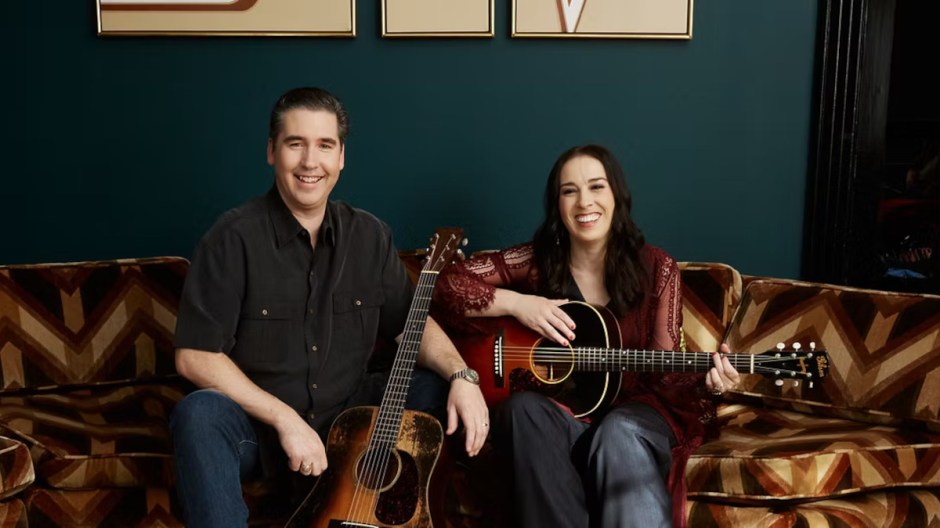
Two years after losing their mother, Karen Peck Gooch and Susan Peck Jackson have turned grief into melody. The sisters and the rest of Karen Peck & New River just released “Mama Knows,” a song built from a single, ordinary moment that became something larger.
The story starts with an azalea tree. Their mother, Myrtle Sue Tench, planted it years ago in her front yard, and it grew into something towering, something people noticed. Every spring it bloomed bright pink, and every spring Mrs. Tench photographed it, often posing beside it herself. The tree became a kind of ritual, a marker of the season, a reason to step outside and pay attention.
This year, the ritual continued without her. Their sister Sandra sent a text to Karen and Susan: mama’s tree is blooming. That was it, nothing more, but it landed differently than any ordinary garden update. “I thought, oh, I bet mama, if she could say anything to me right now, she would say, oh, these flowers are so beautiful, and they smell so, so beautiful,” Karen recalls.
That imagined sentence, equal parts loss and comfort, became the emotional core of “Mama Knows.” The song doesn’t try to explain grief so much as sit inside it, the way a blooming tree can hold a person’s memory without saying a word.
For Karen and Susan, music has become the language for what’s hard to say out loud. Their mother is gone, but the tree still blooms, the pictures still get taken, and now there’s a song to go along with them.
Provided to YouTube by The Orchard Enterprises Mama Knows · Karen Peck & New River · Karen Peck · Kenna West · Don Poythress Good Answers ℗ 2025 Daywind Records
Words have weight, and some words carry the weight of the entire universe. When Jesus stood in the midst of the Jewish leaders in John chapter 8 and said, “Before Abraham was, I am,” he was not being careless with his phrasing. He was making a claim so direct, so utterly unambiguous in its implications, that his listeners immediately reached for stones. They understood exactly what he meant.
To hear those words as a Jewish man or woman in first-century Jerusalem was to hear them against the backdrop of centuries of scripture. You would know Exodus chapter 3, where Moses at the burning bush asks God for his name, and God replies: “I am who I am.” You would know the repeated declarations in Isaiah where God says, “I am he.” The phrase carries the idea of self-existent, eternal, present-tense being, the God who simply is, without beginning, without end. That was the name, the signature of the divine identity.
And Jesus loved to use it. He said, “I am the way, the truth, and the life.” He said, “I am the good shepherd.” He said, “I am the vine.” He said, “I am the light of the world.” Each of these declarations was more than a statement of function; it was a declaration of identity. He was consistently and deliberately placing himself within the category that belonged only to Yahweh, the God of Israel, the God of Abraham and Isaac and Jacob, the Lord of all creation.
To the religious leaders of his day, this was the ultimate blasphemy. It was worse than cursing God, worse than denying him, worse than any form of irreverence. And so they picked up stones.
But here is the thing: they were right that such a claim would be the most monstrous of blasphemies, if it were not true. The only way in which Jesus’s “I am” statements are not the ravings of a megalomaniac is if he is actually who he claimed to be. The evidence he offered them, his words, his works, his resurrection, his entire life, all of it points toward the same staggering conclusion: it was not blasphemy, because it was true.
In the beginning was the Word, and the Word was with God, and the Word was God. He was in the beginning with God. All things came into being through Him, and apart from Him not even one thing came into being that has come into being. In Him was life, and the life was the Light of mankind. And the Light shines in the darkness, and the darkness did not grasp it.
Darin & Brooke Aldridge have spent their career singing about faith, family and home, but on their new album “Soul Condition,” out now on Billy Blue Records, they went looking for something a little more specific: the sound of where they actually come from.
The eleven-track record marks the duo’s 11th studio album and brings in some serious bluegrass and gospel firepower, with Grand Ole Opry members Sonya Isaacs and Becky Isaacs of The Isaacs joining alongside GRAMMY winner Jason Crabb. But for Darin Aldridge, the album’s emotional center didn’t come from a Nashville studio. It came from a small church in Avery County, North Carolina.
“Speaking of our heritage back in western North Carolina, we got to go up to my uncle’s church that he’s pastored at now in Linville Falls, North Carolina,” Aldridge says. He and Brooke called in family for the occasion, pulling together as many aunts, uncles and cousins as could make it on short notice. “We called a bunch of our aunts and uncles and cousins that we could get together in one afternoon,” he recalls. “And we all come to that little community church and sang several hymns that day.”
The session had the feel of a family reunion as much as a recording date. Aldridge played guitar, his cousin Tommy and his mother took turns on piano, and Brooke’s parents rounded out the room. “I played a little guitar. My cousin Tommy played piano and my mom played piano. Brooke’s mom and dad were there,” he says, before turning to his wife to confirm the memory. “Wasn’t it, Brooke?”
The goal was simple: capture one of the songs from Soul Condition sung by an actual family choir, voices that had known each other, and those hymns, for generations.
For Brooke Aldridge, the afternoon delivered more than they expected. “It turned out so very special in that little church there,” she says, “and I think it’ll give people a good taste of where we come from and how we were raised.” That, she adds, is exactly what she and Darin set out to do with the record. “That’s exactly what we were trying to capture in Soul Condition.”
Life’s storms can either strengthen a believer or lead them away from God’s purpose, depending on how they respond. Difficult seasons have the potential to build faith, wisdom, peace, and devotion when placed in God’s hands.
Some challenges leave believers stronger than before. Through hardship, God can produce greater understanding, deeper commitment, and a renewed sense of joy. Those who trust Him during trials often discover a greater confidence that they are walking in His will.
Think of it this way: The outcome of a storm is often connected to the response given to it, making faith and obedience especially important during difficult times.
Consider it all joy, my brothers and sisters, when you encounter various trials, knowing that the testing of your faith produces endurance. And let endurance have its perfect result, so that you may be perfect and complete, lacking in nothing.