Why Tribute Quartet’s new mountain song rolls away instead of climbing

AMY TURNER

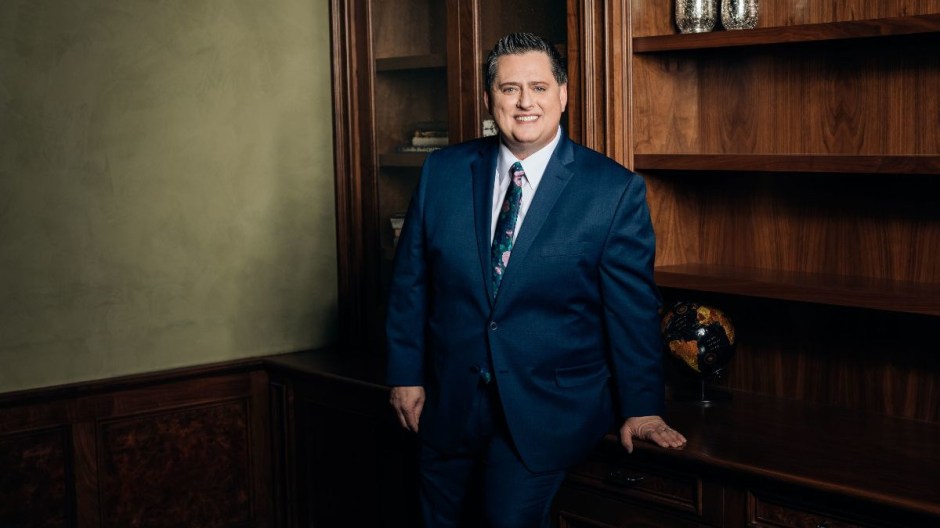
There’s something every songwriter chases: the instant a familiar story turns sideways and suddenly means something new. For Tribute Quartet’s Josh Singletary, that came while thinking about the stone in front of Jesus’s tomb, and just how little that stone actually mattered.

The group already has a mountain in its catalog of songs. “Halfway Up the Mountain” climbed to number one on the Singing News chart, the kind of song that becomes a signature. So when Tribute Quartet went looking for another mountain image, Singletary knew comparisons were inevitable. He also knew the new song had almost nothing in common with the old one.

“The great thing about this song, compared to Halfway Up the Mountain, is just the concept of it was a stone that rolled away,” Singletary explains. “It was a stone that was in front of the tomb. It could have been a mountain in front of the whole of that tomb, and it wouldn’t have mattered. It still would have moved.”

Provided to YouTube by Daywind Records
It Could Have Been A Mountain · Tribute Quartet
Forever
â„— 2026 Daywind Records
Released on: 2026-01-30

That idea became “It Could Have Been a Mountain,” a title that flips the usual mountain metaphor on its head. Where “Halfway Up the Mountain” is about the climb, the new song is about the size of the obstacle not mattering at all. Scale a mile high, seal it shut, do whatever you want to it; the resurrection happens anyway. The lyrics lean hard into that contrast, pairing images of the tomb sealed and guarded with the plain fact that none of it held. The hook repeats like a testimony being worked out in real time: it could have been a mountain, but it still rolled away.

There’s also a second layer built into the song, one that pulls the story out of scripture and into the pews. Verses about facing “a night” where “hope is failing,” about feeling “buried in your fear,” turn the empty tomb into a template for whatever mountain a listener happens to be carrying. It’s a familiar move in southern gospel writing, taking a doctrinal moment and making it personal, but Singletary’s framing gives it a sharper edge than most: the size of your mountain was never really the point.

Singletary himself is something of a study in scale versus substance. He was born in Raiford, Florida, a town small enough that it barely shows up on a map, and there’s nothing small about what he’s built since. As Tribute Quartet’s baritone and pianist, he’s also become one of the genre’s steadier utility players, working as an arranger, producer, and studio musician on projects well outside his own group’s output. He now lives in Lebanon, Tennessee, with his wife, Kahlie, and their dog, Hovie, close enough to Nashville’s session rooms to keep that side of his career humming alongside the road schedule.

That dual life, road quartet member and behind-the-scenes producer, tends to show up in the songs he helps shape. “It Could Have Been a Mountain” has the structural instincts of someone who thinks about arrangement as much as message: a repeated hook built for a room to sing back, a bridge that widens the story from history to personal application, an ending that just keeps rolling the phrase away until it feels less like a chorus and more like a release.

Whether it reaches the chart peak “Halfway Up the Mountain” did remains to be seen. But for Singletary, the comparison was never really the goal. The whole point of the new song is that the mountain, and the number attached to it, was never the thing that mattered.
Gary Casto on faith, gospel music, and the project nobody believed in

AMY TURNER

After forty years in the industry, Gary Casto still lights up when he talks about gospel music.

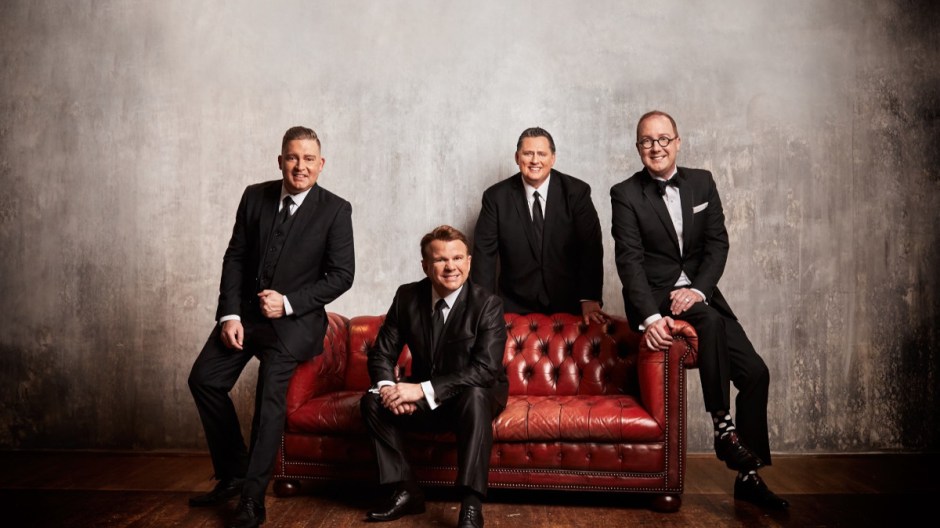
Since 2006, Tribute Quartet, Casto alongside Josh Singletary, Gus Gaches, and Ian Owens, has built a reputation as one of southern gospel’s most reliable forces: a multi-Dove-nominated, award-winning act that’s managed to stay both beloved and dynamic in a genre that doesn’t always reward both at once. Now they’re back in the studio, kicking off work on their fourth Quartet Tribute project, having just wrapped a song selection session with longtime producer Gerald Wolfe.

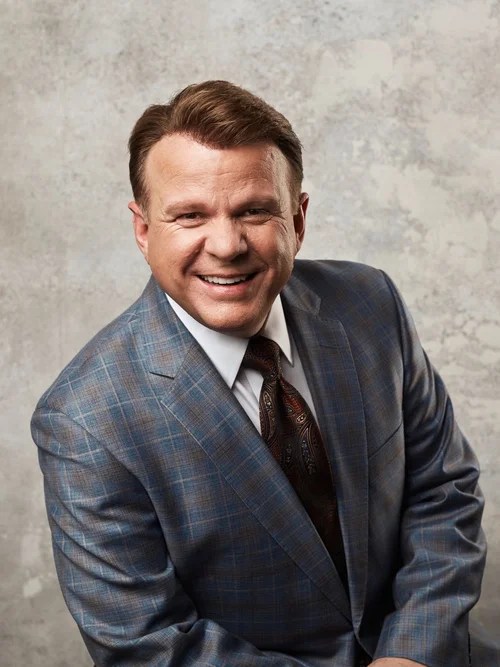
Gary Casto (tributequartet.com)

Casto, a West Virginia native who’s spent decades in nearly every corner of gospel music, is the group’s manager and lead vocalist, and he’s the one who dreamed up the Quartet Tribute concept in the first place. It wasn’t an easy sell.

“I try to always pick the right songs,” Casto says. “You know, when we started doing the quartet series, several folks told me, industry leaders says, that’s a great idea, but you’ll never be able to mix those songs in with your national projects. There’s no way.”

He wasn’t deterred. If anything, the skepticism lit something in him. “I love a challenge,” he says. “And I just said, Lord, we’ve got to do this. And we do it nightly.”

That stubborn faith has paid off. Tribute Quartet has spent years proving that classic and contemporary material can share a setlist without friction, that southern gospel audiences don’t need to choose between nostalgia and novelty; they want both, often in the same evening. It’s a small rebellion against the industry’s instinct to keep things tidy and categorized, and it’s worked because Casto refused to back down when people told him it wouldn’t.

As the group dives into its fourth installment in the series, that same restless mix of reverence and reinvention is driving them forward: music built to feel timely without losing its center, relevant to the moment without forgetting what brought the audience there in the first place. For Tribute Quartet, the mission underneath the music hasn’t moved an inch, even as everything around it keeps shifting.

Tribute Quartet Revisits a Fan Favorite with “Come On Let’s Go To That Land”

JEFF TURNER

Since their formation in 2006, Tribute Quartet has made a significant impact on Southern Gospel music, receiving multiple Dove Award nominations along the way. The group, composed of Gary Casto, Josh Singletary, Gus Gaches, and Ian Owens, has built a reputation for their tight harmonies and energetic performances.

Over the years, they’ve continued to honor the traditional sounds of gospel with their Quartet Tribute series. With three volumes under their belt, the group decided to revisit one of their earlier works for their latest radio single. The song, “Come On Let’s Go To That Land,” from Quartet Tribute, Volume 1, has made a fresh return to the airwaves.

Gus Gaches explained the decision to recut the track, sharing how much the song has resonated with the group and their audiences. “We’ve always loved that song. And when we decided that Ian and I were going to go back in and do the vocals on the Quartet Tribute Volume One project, it was one of the ones that we were the most excited about because it just always resonated live.”

The quartet had been performing the song live with Ian Owens, and the response was undeniable. “Once we got the recut, we were like, goodness, people need to hear this,” said Gaches. “And sure enough, we started playing it… and people… begin [saying], ‘Oh my goodness, there’s such an energy with that.’”

The excitement surrounding the track has only grown since its release as a radio single. “We’re excited about it—letting everybody hear it and experience what we’ve known for a while now,” Gaches said. “It’s great.”

Tribute Quartet’s decision to revisit “Come On Let’s Go To That Land” is a testament to the timeless power of gospel music and their ongoing passion for sharing it with their listeners.

Tribute Quartet Earns GMA Dove Award Nomination for “Quartet Tribute, Volume 3”

JEFF TURNER

Tribute Quartet has been honored with a nomination for the prestigious GMA Dove Award in the Southern Gospel Album of the Year category for their acclaimed project, “Quartet Tribute, Volume 3.” This nomination highlights the group’s commitment to preserving the legacy of Southern Gospel music while bringing it to contemporary audiences.

The current hit single from the nominated album, “He Pilots My Ship,” has resonated deeply with fans, showcasing the group’s exceptional vocal harmonies and heartfelt performances. This song, along with the rest of the album, pays homage to the quartets that have significantly influenced Southern Gospel music.

Gary Casto, the lead singer of Tribute Quartet, expressed the group’s excitement and gratitude for the nomination. “We are truly excited to find out that we have been nominated for a Dove Award for Southern Gospel Album of the Year,” Casto said. Reflecting on the origins of the Tribute Quartet series, he added, “Several years ago, Gerald Wolf had the idea of us going into the studio and paying tribute to all the quartets that paved the road for folks like Tribute. To be able to bring some of those classic songs back to life and take ’em to the folks night after night is a great honor.”

Casto also emphasized the significance of this recognition, stating, “Once again, I can truly say on behalf of Tribute Quartet, we count it a great honor to be nominated for a Dove Award for Southern Gospel Album of the Year.” The group’s dedication to their craft and reverence for the history of Southern Gospel music is evident in every track of “Quartet Tribute, Volume 3.”

As the anticipation builds for the GMA Dove Awards, Tribute Quartet’s nomination stands as a testament to their talent, hard work, and the enduring appeal of Southern Gospel music. Fans and newcomers alike can look forward to more inspiring performances from this remarkable group.

Tribute Quartet records modern version of a 1950’s classic.

JEFF TURNER (WITH INFO & PHOTO FROM DAYWIND RECORDS)

(Gus Gaches photo courtesy Daywind Records)

To say the Tribute Quartet’s latest single, “Not My Will” is a classic southern gospel song may be an understatement. The oldest recording of the song we have in our library is an album from 1958 on GBS records titled, The Florida Boys Quartet and Their 11th Anniversary Album. The writer according to the label on the decades-old disk is Arthur Smith.

Tribute’s Gus Gaches mentioned the Florida Boys as he described the song, but says his group did something a little different from other versions.

“One of the reasons we did the song Not My Will was because of all of our familiarity with the Florida Boys cut. But one of the things we decided to do differently than most of the versions we had heard was to include a second verse.”

Gus said the new recording wasn’t just about the music.

“We just thought that the lyric was so strong in that second verse that we just didn’t want to do it without having that there. And I’m so glad that we did it because it’s such a great lyric.”

The song is included on Tribute’s “Quartet Tribute” project released last year with the single released to radio this year.

Listen for Not My Will on Texas Gospel Canada!