Mark Trammell Reflects on 50 Years in Ministry with New Project

JEFF TURNER

The Mark Trammell Quartet‘s latest project marks a milestone in southern gospel music. Celebrating Mark Trammell’s 50 years of singing Southern Gospel, the album revisits some of the most remarkable songs from his career. These songs familiar to long-time fans while also introducing new audiences to the tradition of southern gospel.

Provided to YouTube by TuneCore Can He Could He Would He · Mark Trammell Quartet Can He Could He Would He ℗ 2025 Crimson Road Productions Released on: 2025-01-01 Auto-generated by YouTube.

Mark Trammell shared his thoughts on the appeal of these classic songs. “There’s some great, great, great stuff back there in that day that we’re still gleaning from that today’s world thinks it’s brand new music. It’s not, it’s just 50, 60, 70 years old, that’s all,” he explained.

For Trammell, the value of revisiting these older songs is twofold. He appreciates the opportunity to perform music he knows deeply and believes in its ability to connect with people across generations. “The great part about that to me is I don’t have to learn new music as much. I can still sing songs that I know and I have lived long enough that we’re singing them and recording some of them again,” he said.

The project not only honours the legacy of Mark Trammell’s contributions to southern gospel music but is also a bridge between generations. With songs that have stood the test of time, the album celebrates both the past and the future of the genre.

Trammell says he is continually amazed by the response his ministry receives. “Here we are, a new generation that has so much to choose from and depict from when it comes to ‘entertainment’ or ‘ministry,’ and somehow I’m still in shock when people show up to hear us,” he added.
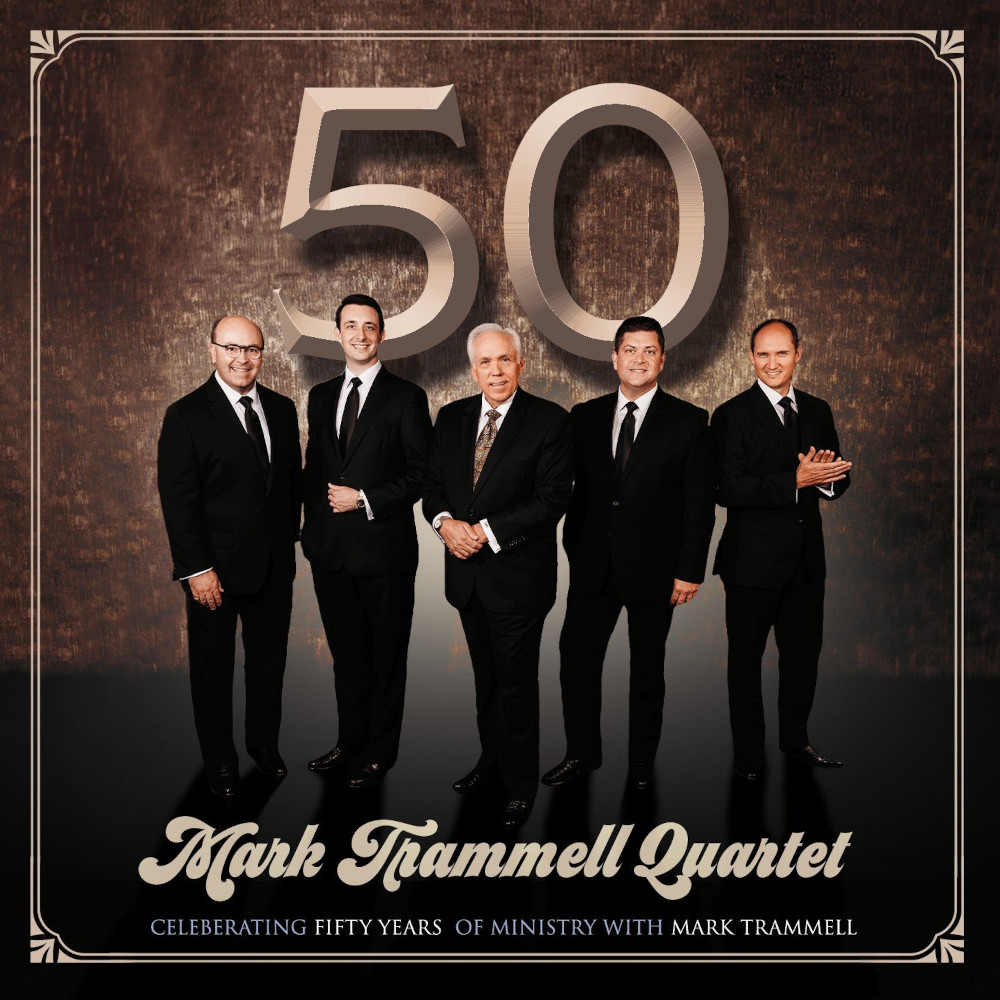
TRACK LIST OF THE 50 CD:

  1. Can He, Could He, Would He
  2. Dig A Little Deeper
  3. For What Earthly Reason
  4. Meet Me Over On The Other Side
  5. Too Much To Gain To Lose
  6. Pray
  7. Heavenly Parade
  8. Amazing Grace
  9. This Old House
  10. Does Jesus Care

“Remember the Blood” – A Song of Redemption and Sacrifice

TEXAS GOSPEL VOLUNTEER

Exodus Southern Gospel‘s new song, Remember the Blood, was added to our airplay list this week. This title track from the Remember the Blood project draws inspiration from 1 Peter 1:18-19.

The verse reads, “Knowing that you were not redeemed with perishable things like silver or gold from your futile way of life inherited from your forefathers, but with precious blood, as of a lamb unblemished and spotless, the blood of Christ.” This tells us of the sacrificial nature of Jesus’ death on the cross and emphasizes that humanity’s redemption and the forgiveness of sins were not bought with worldly possessions but with the precious blood of Christ.

The song is co-written by Sandy Bloemer and Susan Brady. Susan expressed the song’s essence with deep personal conviction: “What a way to begin this new year REMEMBERING, His precious Blood! As one of Christ’s recipients, I can comment firsthand!”

Brady also reflected on the significance of Jesus’ words at the Last Supper: “At the Last Supper with His disciples, Jesus said to them, ‘Do this in REMEMBRANCE of me! Remember, My body that was broken (torn) for you! Remember my Blood, The cup of the New Testament which is shed for the remission of sins! The contents of that cup represented His blood and would soon be given for the sake of every soul to be redeemed.’”

Remember the Blood invites listeners to reflect on the foundational truths of their faith. It challenges believers to consider the incredible sacrifice of Jesus Christ and to live in gratitude for the redemption offered through His blood.

Listen for Remember the Blood throughout the day on Texas Gospel Canada!

A New Covenant That Lasts Forever

TEXAS GOSPEL VOLUNTEER

The Bible tells us in Hebrews 8:8 that, “The days are coming,” says the Lord, “when I will establish a new covenant with the house of Israel and the house of Judah.” This new promise would be unlike the first, one that would last forever.

Imagine purchasing a car with a seven-year warranty. During those years, you feel secure, knowing that any issue is covered. As the warranty nears its end, the dealer calls to offer you a free lifetime warranty—an agreement far better than the first. Who would refuse such a generous offer?

Similarly, the old covenant served its purpose, but it was only temporary. Through Jesus, God brought a new covenant that is eternal, unchanging, and available to everyone. This promise, sealed by Christ’s blood, offers complete assurance and peace.

As believers, we are called to trust in this everlasting covenant. Just as the old gave way to the new, God’s promise in Jesus is far greater, providing a lasting relationship with Him.

“For this reason, Christ is the mediator of a new covenant” (Hebrews 9:15)—a promise we can rely on forever.

Triumphant Quartet’s Big Ole Stone is a Symbol of Hope and Victory

JEFF TURNER

Mark, chapter 16, verses 5-6, recounts a pivotal moment in Christian history. It tells of the women who went to the tomb of Jesus, carrying spices to anoint his body. Instead of finding him there, they were greeted by an angel who said, “He is not here, for he has risen, just like he said. Come, see the place where the Lord was lying.”

This declaration is central to the Christian faith. It signifies the fulfillment of Jesus’ promise to rise from the dead, proving his power over sin and death. The empty tomb has become a symbol of hope and victory for all who believe in Jesus as their saviour.

Sean Barber, Lead Singer courtesy triumphantquartet.com

This powerful message is echoed in the song “Big Ole Stone” by Triumphant Quartet. Sean Barber, a member of the group, describes the essence of the song: “You know, if you believe that that grave is no longer full, that it’s empty, and that stone’s been rolled away, man, just lift your hands in victory. You’ve got hope. There’s better days coming. And this is your victory. And that’s the song in a nutshell.”

The song, featured on the group’s God is Listening CD, has resonated deeply with listeners. Its message of triumph and hope is reflected in its current standing as the number 9 song on the Texas Gospel Canada Top 30 list for this month.

For believers, the empty tomb is more than a historical moment—it is a reminder that victory is possible through faith. As Sean Barber says, “You’ve got hope. There’s better days coming.” This truth continues to inspire and uplift, bringing the message of Easter into the hearts of many.

Big Ole Stone (Victory) · Triumphant Quartet God Is Listening ℗ 2024 StowTown Records, LLC Released on: 2024-06-07

Mark 16 NASB: “When the Sabbath was over, Mary Magdalene, Mary the mother of James, and Salome bought spices so that they might come and anoint Him. And very early on the first day of the week, they came to the tomb when the sun had risen. They were saying to one another, “Who will roll away the stone from the entrance of the tomb for us?” And looking up, they noticed that the stone had been rolled away; for it was extremely large. And entering the tomb, they saw a young man sitting at the right, wearing a white robe; and they were amazed. But he said to them, “Do not be amazed; you are looking for Jesus the Nazarene, who has been crucified. He has risen; He is not here; see, here is the place where they laid Him. But go, tell His disciples and Peter, ‘He is going ahead of you to Galilee; there you will see Him, just as He told you.’” And they went out and fled from the tomb, for trembling and astonishment had gripped them; and they said nothing to anyone, for they were afraid.

Now after He had risen early on the first day of the week, He first appeared to Mary Magdalene, from whom He had cast out seven demons. She went and reported to those who had been with Him, while they were mourning and weeping. And when they heard that He was alive and had been seen by her, they refused to believe it.

Now after that, He appeared in a different form to two of them while they were walking along on their way to the country. And they went away and reported it to the rest, but they did not believe them, either.” – NASB

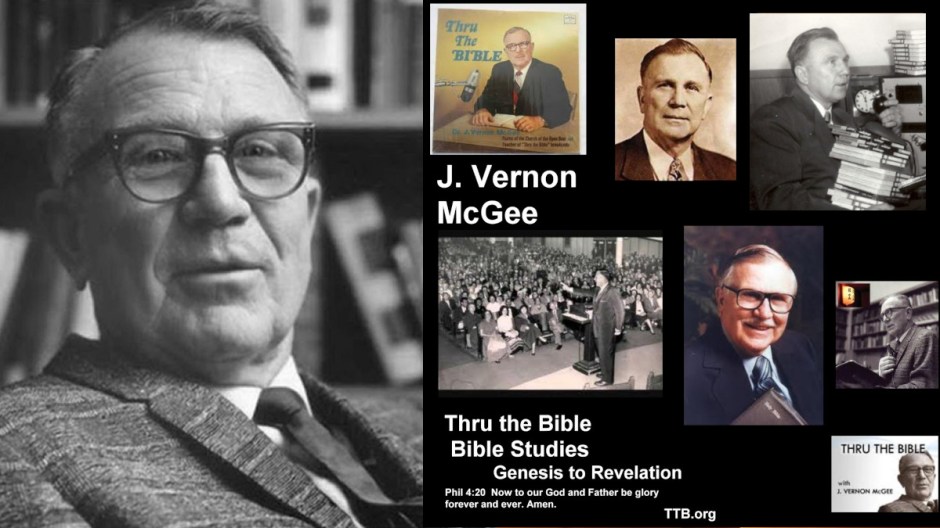
Thru the Bible: Matthew 14-17

The audio on this video is the property of Thru the Bible. It is offered free of charge. If you wish to make a donation, do not send it to us. Visit http://www.ttb.org for information. The audio is attributed to Dr. J. Vernon McGee and Thru the Bible. Intellectual property rights are those of Thru the Bible.
Please contact us if you feel our understanding of the terms of use are in error.
Copyright information obtained from https://ttb.org/about/copyright-policy

In Matthew chapter 14, Dr. McGee begins by discussing Herod’s reaction to the fame of Jesus, believing him to be John the Baptist risen from the dead. Herod’s superstitious nature and guilt over the beheading of John are highlighted. The circumstances surrounding John’s death, influenced by Herodias and her daughter, are recounted as a “sadistic sad sorted sorry account”. Following this, the narrative shifts to Jesus withdrawing and then performing the miracle of feeding the 5,000. This miracle is emphasized as being recorded in all four gospels, highlighting its importance. The disciples’ initial suggestion to send the multitude away contrasts with Jesus’ command to feed them.

Dr. McGee then details the event of Jesus walking on the water, which occurs after he sends the multitude away to pray. The disciples’ fear at seeing him, believing him to be a spirit, is mentioned. Peter’s attempt to walk on water and his subsequent sinking when he loses focus on Jesus are described, emphasizing the importance of keeping one’s eyes on the Lord. The disciples’ eventual worship of Jesus as the Son of God after the wind ceases is noted. The speaker then transitions to Jesus healing multitudes in the land of Gennesaret.

A significant portion of the discussion revolves around Jesus’ confrontation with the scribes and Pharisees who questioned his disciples about not washing their hands before eating. Jesus rebukes them for prioritizing their traditions over the commandments of God, using the example of honoring parents. He accuses them of hypocrisy, quoting Isaiah to highlight the disparity between their outward actions and inward hearts. Jesus clarifies that it is not what goes into the mouth that defiles a man, but what comes out of the mouth, proceeding from the heart, listing evils such as evil thoughts, murders, adulteries, etc.. This confrontation is described as the real break between Jesus and the religious leaders.

Dr. McGee then delves into the Transfiguration of Jesus in Matthew 17. This event is presented as a vision shown to Peter, James, and John, where Jesus’ face shone like the sun, and Moses and Elijah appeared talking with him. The speaker emphasizes that the Transfiguration sets forth the perfect humanity of Christ and the hope of humanity for future glorification. God the Father’s voice from the cloud declaring, “This is my beloved Son, in whom I am well pleased; hear ye him,” is highlighted as God’s ultimate testimony and the final authority. The disciples’ fearful reaction and Jesus’ reassuring touch are mentioned, culminating in them seeing “no man save Jesus only”.

Finally, Dr. McGee covers the healing of a demon-possessed boy that the disciples were unable to cure due to their unbelief. Jesus’ powerful rebuke of the demon and the subsequent healing are described as the “worst case” he dealt with. Jesus reiterates his impending betrayal, death, and resurrection to his disciples, who react with sorrow. The chapter concludes with the incident of the tribute money, where Jesus instructs Peter to catch a fish containing the necessary coin, demonstrating his power and provision. The speaker concludes by noting that the disciples were slow to believe and understand, and that Jesus is patient with believers today.