In the Gospel of Luke, ten men suffering from leprosy called out to Jesus for mercy. Jesus told them to go and show themselves to the priests, and as they walked away, they were healed. Their skin was restored, their pain was gone, and their bodies were made whole again. Yet only one of the ten turned back. He came to Jesus, shouting praise to God and falling at His feet in deep gratitude.
Consider how often people receive blessings without stopping to give thanks. The nine who walked away were healed in body but forgot to show appreciation. The one who returned understood that thankfulness matters as much as the gift itself.
In our daily lives, we receive countless blessings. We have health, food, work, friends, and moments of peace. Yet we sometimes rush ahead, forgetting to acknowledge the source of these good things. Even a small word of thanks, a short prayer, or an act of kindness can show that we recognize what we’ve been given. Gratitude should not be occasional; it should be a way of living.
Let’s not disappoint the One who gives so freely. Take time to turn back, as the healed man did, and say, “Thank you.”
in everything give thanks; for this is the will of God for you in Christ Jesus.
Loving one another is not something that comes easily. It might seem natural at first glance. Consider, a baby often shows affection for their parents without being taught. But that kind of love is instinctive and emotional. The kind of love the Bible speaks about goes much deeper. It is not about feelings, but about choosing to give of ourselves for the good of others. That kind of love does not come naturally. Our natural instinct is to look out for ourselves, but true love must be learned and practiced.
We learn to love by seeing it lived out. Many of us can point to people who have shown us what love looks like. But for believers, the perfect example and teacher of love is Jesus Christ. He not only tells us to love but shows us exactly how.
In John 15, Jesus speaks to His disciples on the night before His death. He tells them, “This is my commandment, that you love one another as I have loved you.” This message is so important that He repeats it more than once. When someone repeats a truth often, it means it matters deeply. Jesus wanted His followers to truly understand love, to know it, live it, and share it. The command to love others sums up everything He asks of us. It is not a suggestion or a passing thought; it is the heart of His teaching.
Jesus shows that love through sacrifice. He says, “Greater love has no one than this, that someone lay down his life for his friends.” Jesus spoke these words knowing He was about to die for those He loved. The truest form of love is to give up something valuable for someone else, and nothing is more valuable than life itself. His death was not just an act of kindness, it was a substitution. He took our place, dying the death we deserved so that we could live.
That love was not meant to stop at the cross. It calls us to follow His example. Most of us will never have to give up our lives for another person, but we are all called to give up our pride, comfort, and self-interest for the sake of others. Loving well always costs something. It may cost time, patience, energy, or forgiveness. Each act of love involves a small sacrifice of self.
Jesus also shows His love by calling us His friends. He says, “No longer do I call you servants… but I have called you friends.” This is a rare and beautiful truth. Many religions picture their gods as distant and demanding. But Jesus draws close. He shares His heart and plans with us. He lets us in. Real friendship involves honesty and trust, and Jesus offers both. He knows us completely yet still welcomes us near.
If Jesus calls us friends, we should treat others with that same care and faithfulness. True friendship means being honest, patient, and steady. It means staying when things are hard and being a safe person for others to trust.
Jesus also reminds us that we did not choose Him, He chose us. His love begins with Him, not us. He is the source of every good thing we have: our faith, our growth, our fruitfulness. He gives life like a vine gives life to its branches. Any good we produce comes from His power working through us. Because of this, we can never take pride in our place in His kingdom. Instead, we thank Him for choosing and equipping us to live with love.
Finally, Jesus loves us as our Lord. He is both our friend and our ruler. His commands are not meant to restrict us but to guide us toward what is good. In a world often marked by anger, division, and pride, this kind of love stands out. On our own, love fails. But in Christ, love grows strong and steady.
Beloved, if God so loved us, we also ought to love one another.
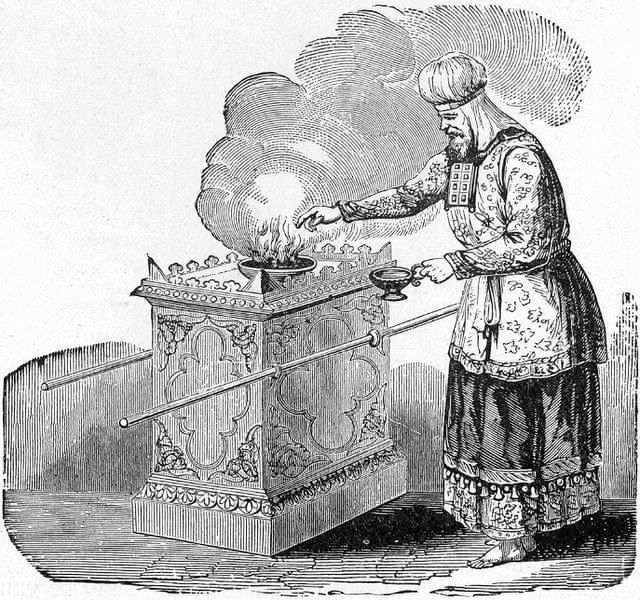
Old lithograph (1894) depicting the high priest offering incense on the altar. The High Priest in Jerusalem By Henry Davenport Northrop. License: Public domain
In the Old Testament, the high priest held a very serious and dangerous role. Once a year, on the Day of Atonement, he entered the most holy place in the temple to offer sacrifices for his own sins, the sins of his family, and the sins of the people. This task could cost him his life if he failed to follow the exact instructions. The high priest had to be a man, capable of understanding human weakness, and he could not take the position on his own, he had to be appointed by God. His work showed the need for forgiveness and pointed to the larger plan of salvation.
Jesus Christ is now described as our great high priest. Unlike the priests of the Old Testament, He does not offer repeated sacrifices. His one sacrifice on the cross was enough to atone for the sins of all who trust Him. Because of this, Christians can now come boldly to God’s throne, knowing they will find mercy and grace in times of need. Our offerings to God, praise, worship, acts of kindness, and giving, are considered spiritual sacrifices, made acceptable through Christ.
Copyright 2009 Kirk Ward Music Words: Isaac Watts Additional Chorus: Kirk Ward Music: Kirk Ward
The Old Testament high priest had to deal with his own sin before he could serve the people. Jesus, being sinless, perfectly fulfills all the requirements of a priest. He was appointed by God, not by human decision, and His priesthood is eternal, following the order of Melchizedek. This distinguishes Him from any human priest and ensures that His work will never need to be repeated.
Jesus’ earthly life showed His obedience, His suffering, and His compassion. He faced real struggles and sorrow, especially in Gethsemane, where He experienced deep anguish while carrying the sins of humanity. Even in suffering, He obeyed God fully. This experience qualifies Him to be a merciful and faithful high priest, able to intercede for those who trust Him.
Because of Jesus, believers have direct access to God. The veil of the temple, which once separated the people from God, is now removed. Christians no longer need a human mediator, because Christ is the eternal high priest who represents us before God. By trusting in Him, we can experience mercy, grace, and the hope of eternal life.
Through Jesus, the new covenant is complete. He has secured salvation, reconciled humanity to God, and provided a way for us to approach God freely. His priesthood, sacrifice, and intercession give believers confidence and hope for both this life and the life to come.
Therefore He is also able to save forever those who come to God through Him, since He always lives to make intercession for them.
The Bible tells us in Ephesians 4:24 that we are called to live as a new person, created to reflect God’s own holiness and goodness. This is not something we can achieve on our own. God has made us right with Him through Jesus, and our new self is His work, given to us through grace.
From the earliest pages of Scripture, the story of humanity is marked by conflict. I’m not speaking of a conflict between nations or powers, but between good and evil. When God told the serpent in the garden that there would be hostility between his offspring and the offspring of the woman, He was declaring both a curse and a promise. Evil would remain active in the world, but hope would come through a Redeemer who would crush the serpent’s power. This struggle between righteousness and wickedness has continued throughout all history and continues in every life today.
The book of Psalms, particularly Psalm 37, offers wisdom for people who find themselves in the middle of this conflict. I understand it to teach that the righteous and the wicked live side by side, yet their paths lead to very different ends. While the wicked often appear strong, confident, and successful, their prosperity is temporary. God reminds His people not to envy or worry about them. Their success will fade like grass under the sun. Those who trust in God, however, will endure and inherit peace that cannot be taken away.
For those who are mistreated or abused, Psalm 37 offers comfort and courage. God is not distant; He is involved in the details of our lives. He upholds the righteous and does not abandon them. Even when it seems that wrongdoers are in control, their power is brief. God’s justice may not always come immediately, but it always comes. The Lord upholds His people, protects their reputation, and brings truth to light in His time.
The psalm also gives guidance for how to live while waiting for God to act. The righteous are told to keep doing good, to turn away from evil, and to stay faithful. They are to be patient and calm, not taking revenge or giving in to hatred. God promises that the meek, those who trust quietly in Him, will inherit lasting peace. The righteous may have little compared to the wealthy wicked, but what they have is blessed and secure because God sustains it.
The passage makes a strong contrast between the two sides. The wicked borrow and do not repay, but the righteous are generous. The wicked seek to destroy, but the righteous seek to bless. The Lord loves justice and will not forsake those who belong to Him. Even when trials come, He provides for His people and keeps their steps steady.
This promise was fulfilled most perfectly in Jesus Christ. He was wronged by evil men, yet He did not return evil for evil. Instead, He entrusted Himself to God, who raised Him from death and gave Him victory. Through Him, every believer can find safety and hope. Those who trust in Christ stand on the side of the righteous. Those who reject Him stand with the wicked.
Do not be overcome by evil, but overcome evil with good.



 Texas Gospel Canada Southern Gospel Radio