
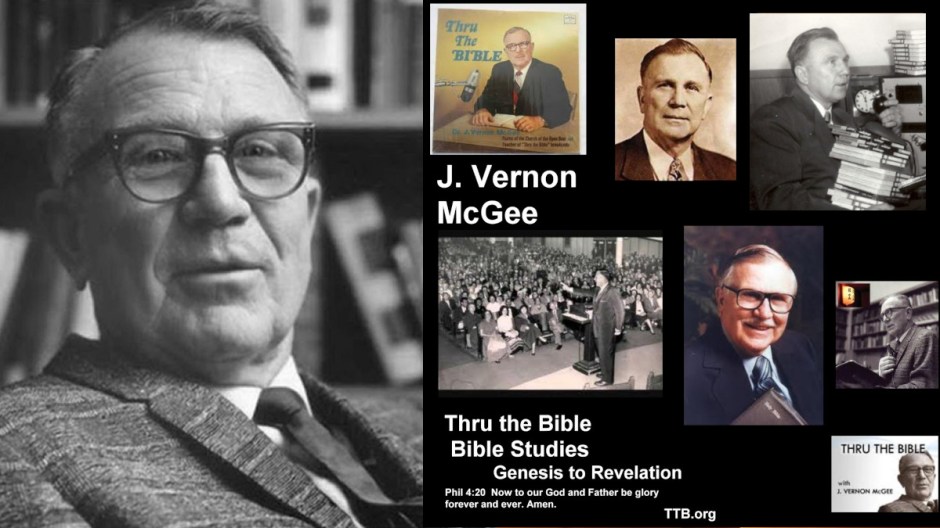
Dr. J. Vernon McGee begins his sermon by highlighting the importance of the Gospel of Mark, which he describes as a gospel of action filled with miracles. He notes that Chapter 5 is particularly significant, featuring three outstanding miracles demonstrating the power of omnipotence: the casting out of demons from the man in Gadara, the healing of the woman with an issue of blood, and the raising of Jairus’s daughter. McGee delves into the account of the demon-possessed man, emphasizing his desperate condition of living among the tombs and possessing superhuman strength. He clarifies that the man, not the demons, worshiped Jesus, illustrating a struggle within the man’s being. The demons, upon being commanded by Jesus to leave, requested to be sent into a herd of swine, which then perished in the sea. McGee defends Jesus’s action, pointing out the Gadarines’ disregard for God’s law by engaging in pig farming. He further discusses several facts about demons, emphasizing their reality, their prevalence during Jesus’s ministry, their desire to indwell mankind, and Christ’s ultimate power over them.
Moving on, Dr. McGee discusses the healing of the woman with the issue of blood and the raising of Jairus’s daughter, both found in Mark 5. He points out the woman’s 12 years of suffering and her faith in touching Jesus’s garment to be healed, coinciding with the 12 years of Jairus’s daughter’s life. McGee underscores Jesus’s deliberate action in healing the woman before going to Jairus’s house, where he then raised the daughter from the dead with the Aramaic words “Talitha koum,” which McGee interprets as “Little lamb, wake up”. He emphasizes the practical nature of Jesus’s command to feed the girl after she was raised. McGee sees these miracles as demonstrations of Jesus’s power and his role as God’s servant who came to minister and give his life as a ransom.
Transitioning to Mark 6, McGee discusses Jesus’s return to Nazareth, where he was met with astonishment and offense by his own people who questioned his origins and were familiar with his family. McGee clarifies that this was likely Jesus’s second visit to Nazareth, contrasting it with the account in Luke 4 where no miracles were performed initially. He explains that the unbelief of the people in Nazareth limited Jesus’s ability to perform mighty works there, illustrating that faith is necessary to release God’s power. McGee then describes Jesus sending out the twelve disciples two by two, giving them power over unclean spirits and instructing them to travel lightly, focusing on their urgent mission to preach repentance. He also touches on Herod’s reaction to the spreading fame of Jesus, linking it to his guilt over the beheading of John the Baptist. The disciples later returned and reported their experiences, leading Jesus to take them to a deserted place to rest before the account of the feeding of the 5,000.
Finally, Dr. McGee addresses the confrontation between Jesus and the Pharisees and scribes who questioned his disciples’ traditions of washing hands before eating in Mark 7. Jesus rebukes their hypocrisy, quoting Isaiah and stating that their worship is in vain because they substitute the commandments of God with the traditions of men. He uses the example of the tradition of “Corban” to illustrate how they circumvented the commandment to honor one’s parents. McGee emphasizes that true defilement comes from within the heart of man, listing various evil thoughts and actions. He then discusses the healing of the deaf and dumb man in the Decapolis, noting Jesus’s unique method as aids to faith. McGee briefly touches on the feeding of the 4,000 in Mark 8, distinguishing it from the feeding of the 5,000 by several factors. He concludes with the healing of a blind man at Bethsaida in stages, using this as an analogy for spiritual sight, and Peter’s confession of faith in Jesus as the Christ. McGee underscores the importance of acknowledging and following Christ, urging listeners to examine their own faith and relationship with Him.
 Texas Gospel Canada Southern Gospel Radio