Heaven will be filled with music unlike anything we have ever heard. Revelation 14:3 tells us that the 144,000 will sing a new song before God’s throne, a song that no one else can learn. This special hymn will belong only to those who have been saved, a melody shaped by their redemption.
This song will not be a repeat of earthly hymns but something completely new, a testimony of salvation. Its words will declare the victory of the redeemed, telling the story of how God rescued them. Voices will rise in perfect harmony, filling eternity with endless praise to the Father, Son, and Holy Spirit.
This song will be so beautiful that even the angels will long to join in, but only those who have experienced salvation will be able to sing it. It will be a song of triumph, echoing beyond time itself. What a joy it will be to lift our voices in worship, celebrating forever the love and mercy of God!
As Psalm 96:1 reminds us, “Sing to the Lord a new song; sing to the Lord, all the earth.” In heaven, that new song will never end.
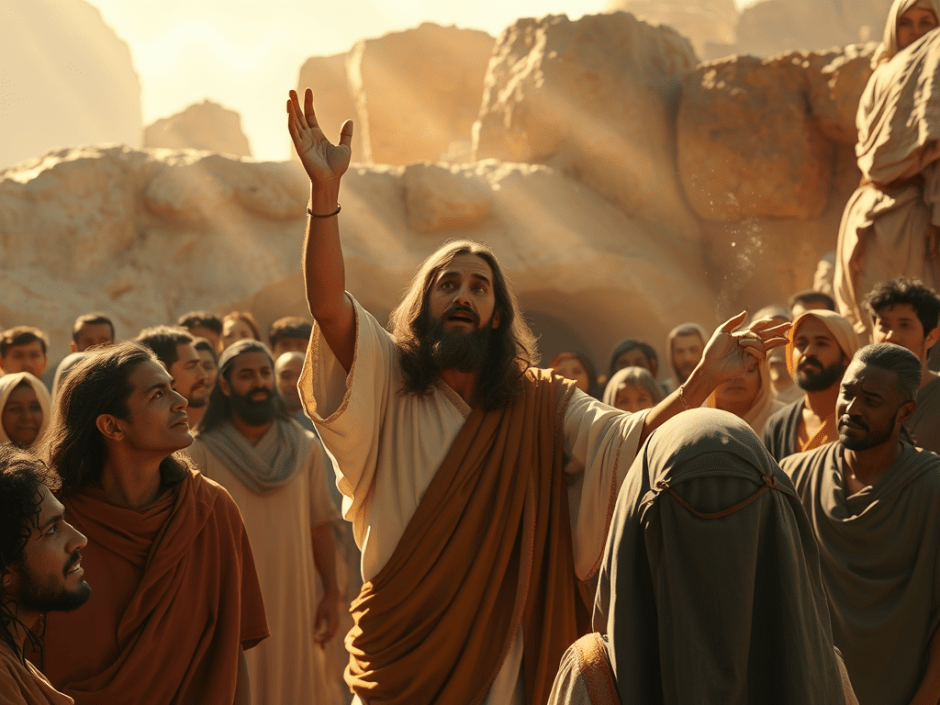
When reading the Gospels, have you ever imagined witnessing Jesus’ miracles in person? While this might seem incredible, it’s essential to consider the gravity of such an experience. According to Jesus, seeing His works and responding wrongly brought severe consequences. In John 15:24, Jesus said, “If I had not done among them the works which no one else did, they would not have sin. But now they have both seen and hated both Me and My Father.” This statement reveals a profound truth about accountability.
Those who saw Jesus’ miracles and still rejected Him bore a heavier burden of sin—not because they were free of sin beforehand, but because they chose to reject the clear evidence of His divine mission. Jesus was not saying they were sinless by nature; Scripture makes it clear that all humanity is inherently sinful. Instead, He referred to the specific sin of rejecting Him, which carries the most severe consequences.
The book of Hebrews warns about the punishment for those who hear the Gospel, understand its message, and reject it. It says the person who tramples on the blood of Christ faces a greater judgment (Hebrews 10:29). In this light, rejecting the Gospel after fully understanding it is far more dangerous than never hearing it at all. While all who reject God will face eternal separation from Him, the punishment is greater for those who knowingly turned away after being exposed to the truth.
This is a sobering reminder of the responsibility that comes with hearing and understanding the Gospel. Doesn’t the mean believers should have an urgency to respond to Christ with faith and obedience?
The sixth commandment, found in Exodus 20:13, states, “You shall not murder.” The original Hebrew word, ratsach, refers specifically to acts of homicide, making it clear that this is not a general prohibition against all forms of killing. For instance, this commandment is not meant to advocate vegetarianism or reject capital punishment outright.
Scripture teaches that every human being is made in God’s image (Genesis 1:27). This means human life holds unique value and must be treated with the utmost respect. The sixth commandment goes beyond physical acts of violence—it also speaks to the condition of the heart. It condemns murder, suicide, abortion, and even hatred toward others. Jesus expanded on this in Matthew 5:21-22, emphasizing that harbouring anger against someone can be just as serious as the act of murder.
Believers are called to reflect God’s love by rejecting hatred and embracing compassion. As followers of Christ, we are instructed to cherish life, seek peace, and build each other up in love.
The Bible tells us in Hebrews 8:8that, “The days are coming,” says the Lord, “when I will establish a new covenant with the house of Israel and the house of Judah.” This new promise would be unlike the first, one that would last forever.
Imagine purchasing a car with a seven-year warranty. During those years, you feel secure, knowing that any issue is covered. As the warranty nears its end, the dealer calls to offer you a free lifetime warranty—an agreement far better than the first. Who would refuse such a generous offer?
Similarly, the old covenant served its purpose, but it was only temporary. Through Jesus, God brought a new covenant that is eternal, unchanging, and available to everyone. This promise, sealed by Christ’s blood, offers complete assurance and peace.
As believers, we are called to trust in this everlasting covenant. Just as the old gave way to the new, God’s promise in Jesus is far greater, providing a lasting relationship with Him.
“For this reason, Christ is the mediator of a new covenant” (Hebrews 9:15)—a promise we can rely on forever.
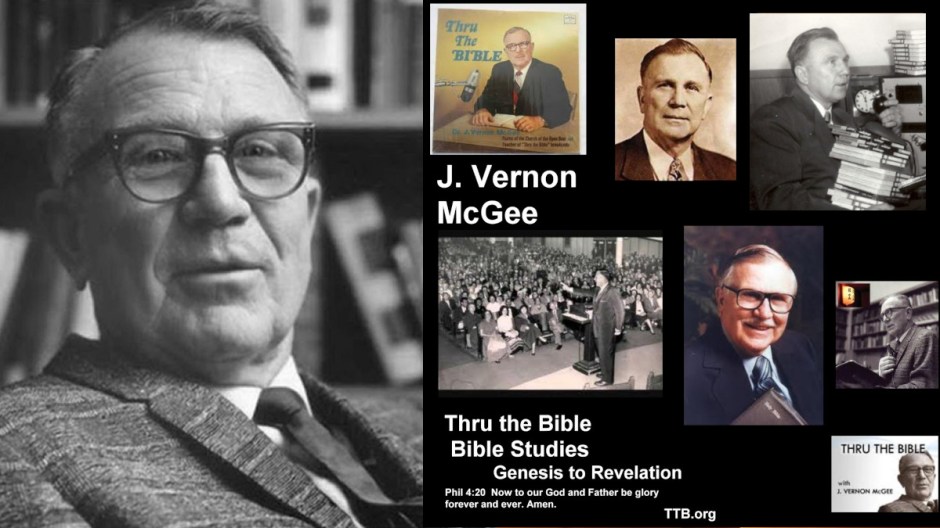
The audio on this video is the property of Thru the Bible. It is offered free of charge. If you wish to make a donation, do not send it to us. Visit http://www.ttb.org for information. The audio is attributed to Dr. J. Vernon McGee and Thru the Bible. Intellectual property rights are those of Thru the Bible. Please contact us if you feel our understanding of the terms of use are in error. Copyright information obtained from https://ttb.org/about/copyright-policy
In Matthew chapter 14, Dr. McGee begins by discussing Herod’s reaction to the fame of Jesus, believing him to be John the Baptist risen from the dead. Herod’s superstitious nature and guilt over the beheading of John are highlighted. The circumstances surrounding John’s death, influenced by Herodias and her daughter, are recounted as a “sadistic sad sorted sorry account”. Following this, the narrative shifts to Jesus withdrawing and then performing the miracle of feeding the 5,000. This miracle is emphasized as being recorded in all four gospels, highlighting its importance. The disciples’ initial suggestion to send the multitude away contrasts with Jesus’ command to feed them.
Dr. McGee then details the event of Jesus walking on the water, which occurs after he sends the multitude away to pray. The disciples’ fear at seeing him, believing him to be a spirit, is mentioned. Peter’s attempt to walk on water and his subsequent sinking when he loses focus on Jesus are described, emphasizing the importance of keeping one’s eyes on the Lord. The disciples’ eventual worship of Jesus as the Son of God after the wind ceases is noted. The speaker then transitions to Jesus healing multitudes in the land of Gennesaret.
A significant portion of the discussion revolves around Jesus’ confrontation with the scribes and Pharisees who questioned his disciples about not washing their hands before eating. Jesus rebukes them for prioritizing their traditions over the commandments of God, using the example of honoring parents. He accuses them of hypocrisy, quoting Isaiah to highlight the disparity between their outward actions and inward hearts. Jesus clarifies that it is not what goes into the mouth that defiles a man, but what comes out of the mouth, proceeding from the heart, listing evils such as evil thoughts, murders, adulteries, etc.. This confrontation is described as the real break between Jesus and the religious leaders.
Dr. McGee then delves into the Transfiguration of Jesus in Matthew 17. This event is presented as a vision shown to Peter, James, and John, where Jesus’ face shone like the sun, and Moses and Elijah appeared talking with him. The speaker emphasizes that the Transfiguration sets forth the perfect humanity of Christ and the hope of humanity for future glorification. God the Father’s voice from the cloud declaring, “This is my beloved Son, in whom I am well pleased; hear ye him,” is highlighted as God’s ultimate testimony and the final authority. The disciples’ fearful reaction and Jesus’ reassuring touch are mentioned, culminating in them seeing “no man save Jesus only”.
Finally, Dr. McGee covers the healing of a demon-possessed boy that the disciples were unable to cure due to their unbelief. Jesus’ powerful rebuke of the demon and the subsequent healing are described as the “worst case” he dealt with. Jesus reiterates his impending betrayal, death, and resurrection to his disciples, who react with sorrow. The chapter concludes with the incident of the tribute money, where Jesus instructs Peter to catch a fish containing the necessary coin, demonstrating his power and provision. The speaker concludes by noting that the disciples were slow to believe and understand, and that Jesus is patient with believers today.




 Texas Gospel Canada Southern Gospel Radio