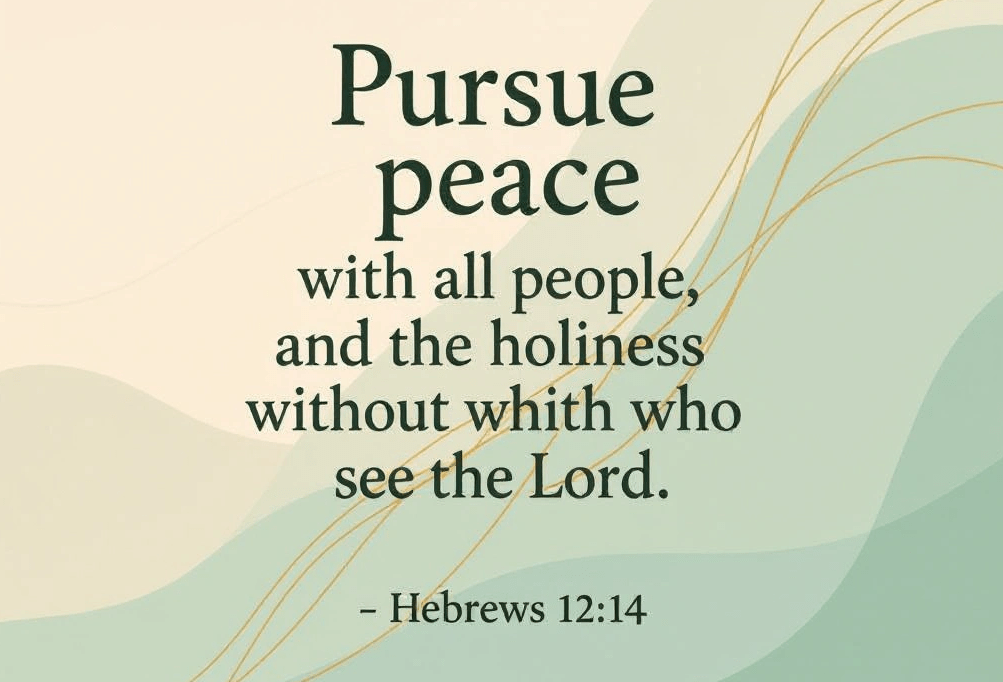
Living with grace in a community of imperfect people

NELSON NOLAND

Life in community often reveals how easily people disagree, even about small matters. Many conflicts come from personal habits, background, or old convictions that feel important but are not matters of right and wrong. When people hold tightly to these non-essential issues, frustration and criticism grow. Yet unity depends on how we treat one another when we see things differently.
Ephesians 4:2-3 with all humility and gentleness, with patience, bearing with one another in love, being diligent to keep the unity of the Spirit in the bond of peace. IRS Images, 2025

A person’s past shapes how they see certain choices. Some people feel strong freedom in areas that others find uncomfortable. One person may feel free to enjoy certain foods or activities, while another avoids them because of past experiences or a sensitive conscience. Neither person is better than the other. Both are learning and growing, and both belong to God.

Trouble comes when one side looks down on the other. The person who feels free may see the cautious person as overly strict. The cautious person may view the other as careless or worldly. When this happens, pride, fear, and criticism begin to replace love. But God does not build unity through rules or pressure. He builds unity through grace.

Grace reminds us that none of us came to God because we were good. We were welcomed through mercy. If God can accept imperfect people, then we can accept one another. No one matures overnight. Some struggles last years. God keeps working on each person, leading them at the right pace. Because of this, no believer has the right to treat another as inferior or to act as if they are the judge of someone else’s progress.

Have thine own way, Lord!
Have thine own way!
Thou art the potter,
I am the clay.
Mold me and make me
after thy will,
while I am waiting,
yielded and still.

We also remember that every believer answers to God, not to us. Each person lives before the Lord, and the Lord is the one who helps them stand firm. God is the master, not other people. He sees the whole story, the wounds, the habits, the fears, and the victories. When we try to control someone else’s growth, we forget that God is already doing the work.

Everything a believer does, whether eating certain foods, following certain traditions, or avoiding them, is acceptable when it is done with a clear conscience and a desire to honour Christ. What makes an action meaningful is not the thing itself, but whether it is offered to the Lord. This keeps us from policing each other. Instead of asking, “Are they doing it the way I prefer?” we ask, “Does this help them honour Christ in their own walk?”

We belong to God because Christ died and rose again. He is Lord over every believer, whether young in faith or mature. He leads both the strong and the weak. Remembering this changes how we see disagreements. When Christ’s glory is our focus, small arguments fade. His cross and resurrection make our personal preferences seem small and temporary.

Sometimes loving others means limiting our own freedoms. A mature believer may choose not to do something harmless to them personally if it would discourage someone who is still healing or learning. That kind of love sends a powerful message. It shows that people matter more than preferences.
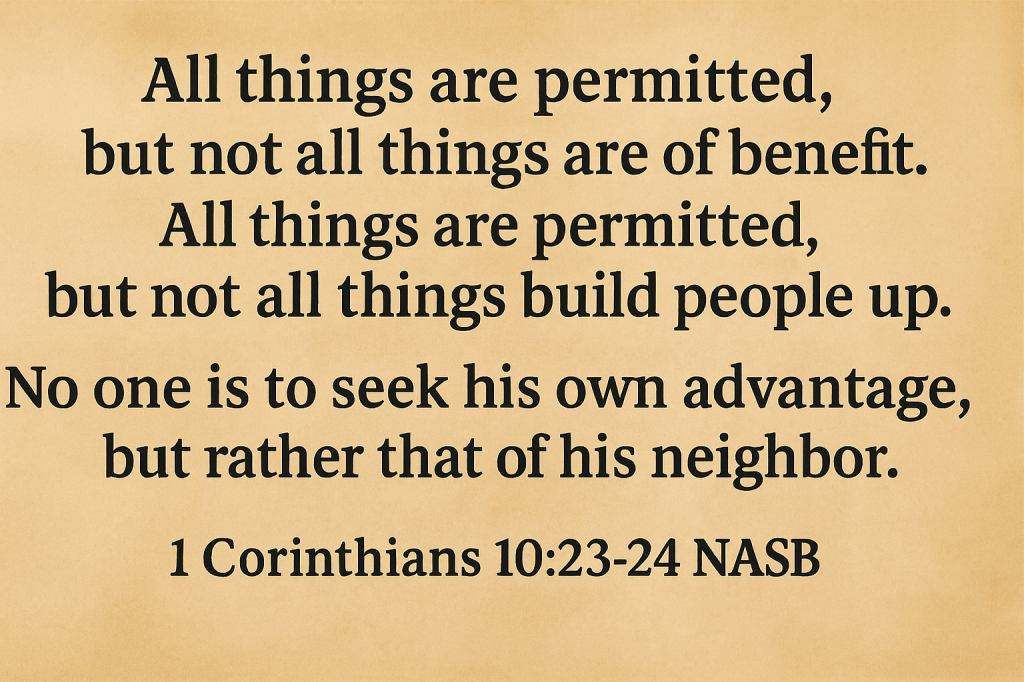
Families, churches, and communities all include people who need extra patience. God often surrounds us with those who stretch us, not by accident, but for our growth. Unity is not built through winning arguments. It is built through humility, patience, and a willingness to care more about people than about being right in non-essential matters.

When we focus on what is central, Christ’s grace, his death, his resurrection, and his work in people’s lives, then we stop majoring in the minors. We choose peace over pride. We choose to let others grow at God’s pace. And we choose to treat each other the way God has treated us: with kindness, patience, and room to grow.

Therefore, accept one another, just as Christ also accepted us, for the glory of God.

Romans 15:7
A Path Guided by the Good Shepherd

CHERYL QUIGG

Life can feel uncertain. We move forward with plans and hopes, yet much lies outside our control. Circumstances shift, fears rise, and the actions of others affect our days in ways we never expected. In the middle of this, faith points to a steady guide who knows every need long before we recognize it ourselves.

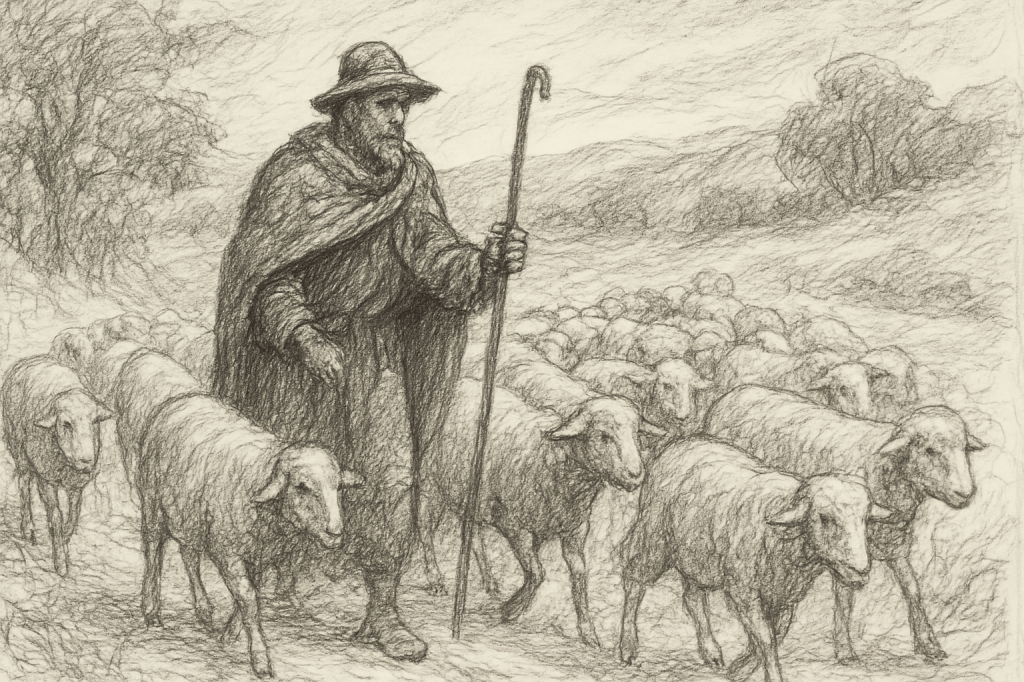
A shepherd guiding his sheep. IRS Images, 2025.

Scripture describes this guide as a shepherd who is both personal and powerful. He is not distant or detached. He understands human weakness because He has walked among us. He knows our doubts, our temptations, and the difference between what we want and what we need. His care is intentional. He leads toward hope, toward rest, and toward life that does not end.

Psalm 23 paints a picture of this care. It shows people as sheep because we are dependent, vulnerable, and unable to find safe ground without help. The words remind us that the comfort described in the psalm is not automatic. It comes only when we allow ourselves to be led. The promise of green pastures, quiet waters, protection in dark valleys, and a home with God is for those who choose to follow.

Savior, like a shepherd lead us,
Much we need Thy tender care;
In Thy pleasant pastures feed us,
For our use Thy folds prepare:
Blessèd Jesus, blessèd Jesus,
Thou hast bought us, Thine we are;
Blessèd Jesus, blessèd Jesus,
Thou hast bought us, Thine we are.

Trust is at the heart of this picture. The shepherd goes ahead to prepare what is needed. Places of rest do not appear by chance. Peace is not earned through effort. These gifts come from the shepherd who provides freely and fully. When the psalm says, “I shall not want,” it is not boasting. It is confidence that the shepherd’s care is enough.

This care continues even when we wander. Like sheep that settle into unsafe places, people often rest in things that do not help. We chase comfort that leaves us stuck or exhausted. The shepherd restores, not by improving what is broken, but by giving new life. He lifts those who have fallen, steadies those who panic, and brings back those who drift.

Guidance is another part of His work. Sheep cannot find safe paths on their own. They need direction to avoid empty ground and to reach places where they can grow. In the same way, people need help to walk in what is right. Sometimes the path is straight; other times it curves in ways we do not expect. Yet the shepherd leads with purpose, shaping character through both the easy moments and the difficult ones.

Safety is also promised. The psalm speaks of the valley of the shadow of death—a place where danger is real. Still, the shepherd is present. His rod protects from harm, and His staff guides with steady care. These tools show both His authority and His closeness. Even in fear, the follower is not abandoned.

IRS Images, 2025

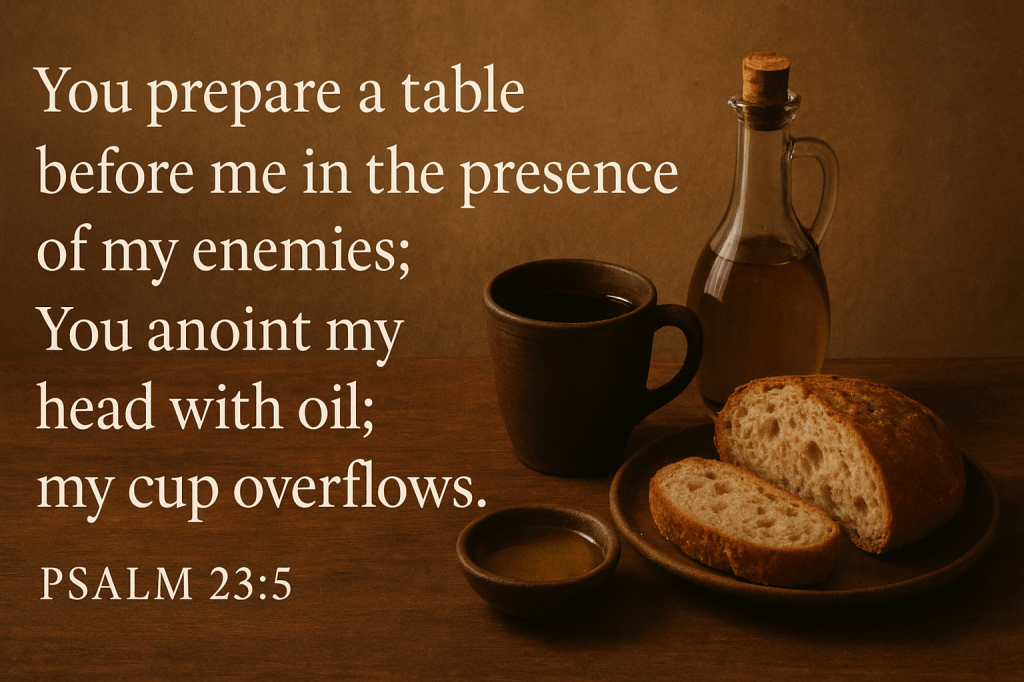
The psalm then shifts from the journey to the destination. The shepherd prepares a place of honour and healing. Every need is met. Oil soothes what is wounded. A full cup answers every thirst. Goodness and mercy do not fade but stay close through every season. The path does not lead into emptiness; it leads home. The promise is not just help for this life but a place with God forever.

The question remains: are we willing to be led? To trust the one who knows the way? To rest in His care, accept His correction, and walk where He directs? The psalm invites us to answer with openness and to follow with confidence that we will be carried, restored, guided, protected, and welcomed home.

My sheep listen to My voice, and I know them, and they follow Me;

John 10:27

A Promise That Holds the World Together

WILLIAM KILLIAN

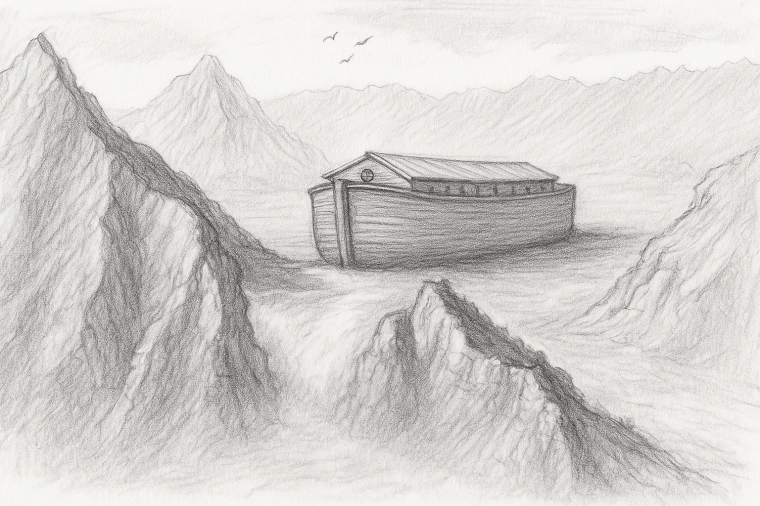
The Ark of Noah, IRS Images, 2025

The account of the great flood describes a moment when human wrongdoing had grown so heavy that the world was washed clean. Only one family and a collection of animals survived by God’s care. When the waters finally lowered and dry land appeared again, the first act recorded after leaving the ark was an act of worship. God accepted this offering and chose, in mercy, to restrain judgment in a new way. What followed was a promise that still shapes life today.

God spoke of an agreement that would stand for all ages. It was not negotiated, nor was it uncertain. God simply declared it. This commitment covered every living thing: people, animals, and the earth itself. The message was repeated many times so there would be no confusion. After seeing destruction on such a scale, people would need reassurance. Fear can linger even after danger passes, and deep wounds can make trust hard to rebuild. God answered that fear with steady words of protection.

Great is thy faithfulness, O God, my Father;
There is no shadow of turning with thee.
Thou changest not, thy compassions, they fail not;
As thou hast been, thou forever wilt be.

The heart of the promise is clear. Never again would the world be destroyed by a flood. The earth would continue its seasons, its rhythm of cold and warmth, planting and harvest, daylight and darkness. Life would go forward, even though human nature had not changed. The same human heart that had once filled the world with violence still struggled with wrongdoing. Yet God chose patience and mercy instead of repeating the judgment that had wiped out nearly all life.

With this promise came responsibilities for people. Human life was to be honoured because people carry the image of God. Violence was to be restrained. Animal life was to be treated with respect. Families were to grow, and the earth was to be filled. These expectations reminded people that, even in a broken world, life has value and purpose.

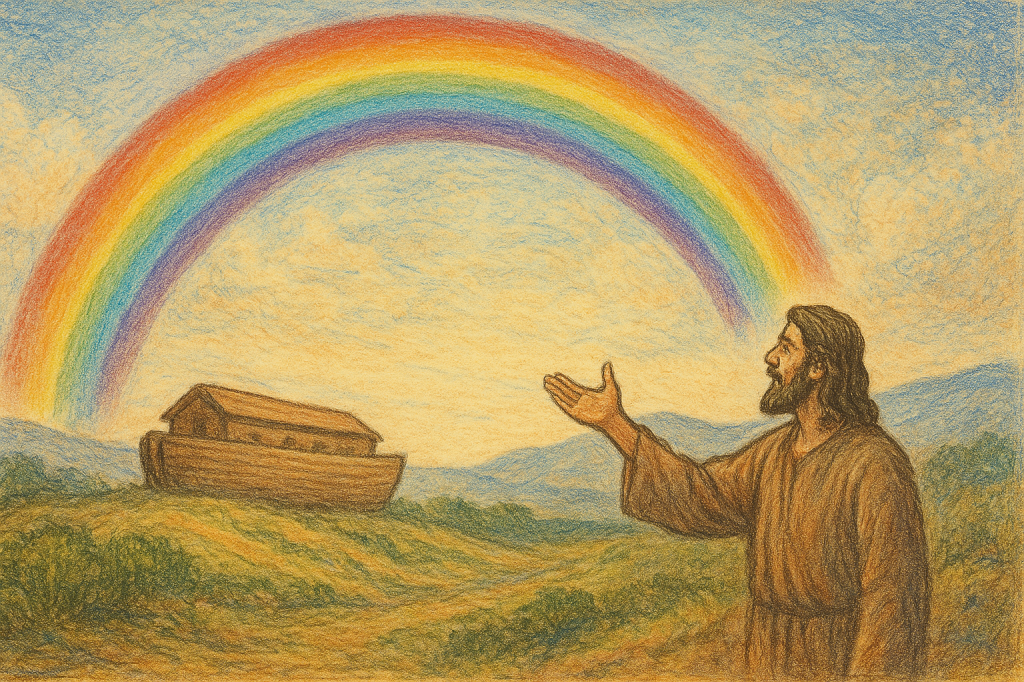
Along with his words, God placed a sign in the sky. The rainbow, shaped like a warrior’s bow set aside, showed that God had chosen peace. It did not suggest that people would suddenly become innocent or harmless. Instead, it showed that God would hold back the judgment that could rightly fall again. The rainbow would remind people of mercy, but the passage also says it served as a reminder to God—not because God forgets, but to help human beings understand the certainty of his promise.

The rainbow stands as God’s enduring promise of mercy, reminding the world that He will preserve creation and faithfully keep His covenant. IRS Images, 2025

Each time a rainbow appears, it quietly declares that life continues by mercy. It reminds us that we live because God is patient and kind, not because we have earned safety. It invites humility. It invites gratitude.

This promise also protects the world long enough for God’s saving plan to unfold. From the earliest chapters of Scripture, there was a promise that someone would come to break the power of evil and bring hope to sinners. The world could not be destroyed again before that promise was fulfilled. That is why this covenant matters even now. It preserves creation until the work of rescue is complete.

In the larger story, another figure succeeds where the first humans failed. Jesus Christ lived with perfect faithfulness, offered himself for the sins of others, and rose again. Through him, God brings people back to himself. Those who trust him are reshaped into his likeness and carry his goodness into ordinary places. In this way, the world slowly fills with the knowledge of God.

But the covenant with Noah also carries a warning. God will never again judge the world by a flood, but the promise does not cancel all future judgment. Another day will come when wrongdoing is dealt with fully. The first judgment came by water; the final one will not. That is why shelter is needed. As the ark once held Noah’s family safe, Christ now offers safety to anyone who comes to him in faith. Those who trust him do not face judgment, because he has already carried it for them.

The rainbow, then, is not only a sign of peace but also a call to remember mercy and to seek the One who provides lasting rescue.

Therefore, having been justified by faith, we have peace with God through our Lord Jesus Christ,

Romans 5:1

The Life Shaped by the Spirit

RICHARD CORDER

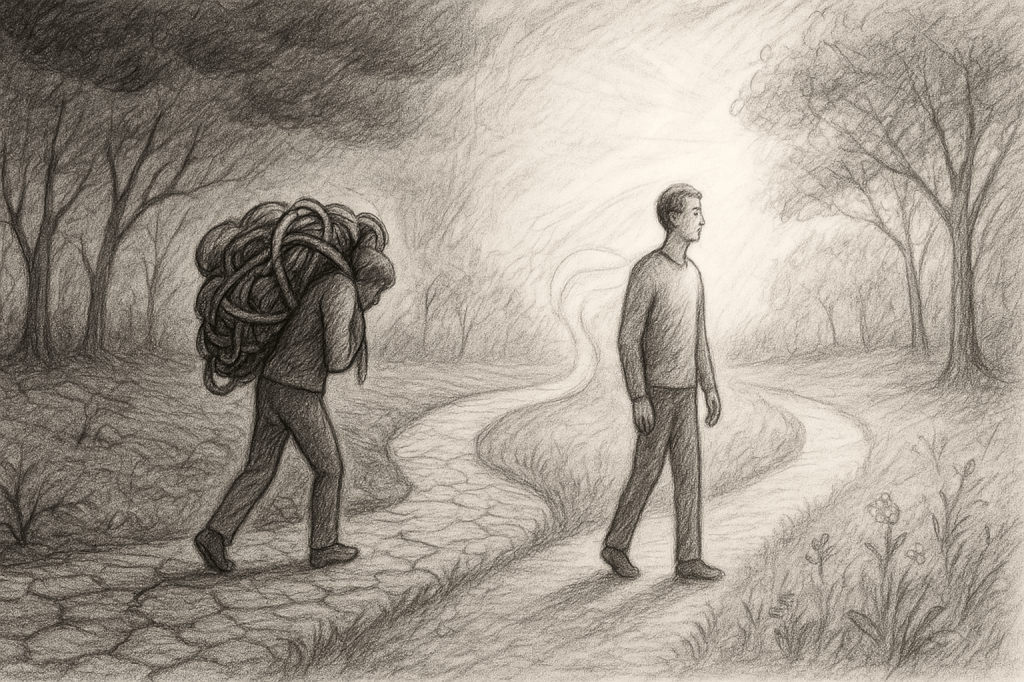
Have you ever seen someone trying to build a life with God through rules or by trusting their own efforts? Their effort leads to pressure, fear, or a sense of never doing enough. The message of the gospel is different. It teaches that new life comes through the Spirit of God, not through human effort. The Spirit changes the heart, gives new desires, and leads a person into a way of living that the old nature cannot produce.

Relying on the law for salvation is a burden no one can carry. IRS Images, 2025

Some early believers struggled with this truth. They were taught that faith in Christ was not enough, and that they also needed to follow the laws of Moses to be accepted by God. They were told that salvation depended on certain rituals, dietary rules, and old covenant practices. These teachers believed that people needed to become Jewish before they could truly belong to Christ. But this idea weakened the message of the gospel and placed a heavy burden on those who were new in the faith.

The teaching of Scripture sheds light on this. No one is made right with God by following the law. The law shows the standard of God, but it also shows how far people fall short. No person has ever kept the law perfectly. Because of this, the law cannot save. Instead, it reveals the need for a Saviour.

Christ lived the life no one else could live. He fulfilled every requirement of the law. His obedience was complete, and his sacrifice was without fault. At the cross he paid for sin fully, taking the judgment that should have fallen on others. His obedience and his sacrifice together form the basis of salvation. When a person places faith in Christ, his righteousness is counted to them. Nothing needs to be added to it. To trust Christ and then add human effort as a safeguard takes away from the finished work he has already done.

At the cross, at the cross Where I first saw the light, And the burden of my heart rolled away, It was there by faith I received my sight, And now I am happy all the day!

Once a person trusts in Christ, the Holy Spirit enters that life. His presence is not noisy or dramatic, but his effect is real. The Spirit brings change in desires, change in direction, and a new hunger for the things of God. Old habits lose their appeal. Sin becomes heavier on the conscience. The heart begins to want what God wants. This is not something a person can create by force. It is the work of God within.

Walking in the Spirit means living in step with this new direction. It means letting the Spirit guide choices, attitudes, and daily actions. A person cannot do this if they ignore the word of God, because the Spirit uses the word to teach, correct, and shape the heart. To be filled with the Spirit is closely tied to being filled with Scripture. Time in the word, prayer, and disciplined devotion strengthens the inner life and helps the believer stay alert to God’s leading.

Holiness does not happen without effort. It grows as a person builds habits that point the heart toward God: steady reading of Scripture, faithful prayer, worship, time with other believers, and the practice of obedience in ordinary moments. The Spirit uses all of these things to form character and sharpen spiritual understanding. When mistakes or sins occur, the Spirit brings conviction, and repentance restores the heart again.

There is a constant tension between the old nature and the new work of the Spirit. The flesh pulls one way while the Spirit pulls another. This conflict is normal for the believer. It is a sign that the Spirit is present. The way to resist the pull of the flesh is not through rigid self-effort but through walking closely with the Spirit. When the Spirit leads, the power of the flesh weakens. When the flesh is ignored, the Spirit’s influence becomes stronger.

A life guided by the Spirit is not passive. It is a daily choice to give God the first place rather than the leftovers of time or energy. It is a life that seeks to please God not out of fear but out of gratitude for what Christ has already done. The Spirit makes this possible. He strengthens, comforts, teaches, and directs. He keeps the believer moving toward holiness and keeps the heart anchored in the truth that salvation rests on Christ alone.

If we live by the Spirit, let’s follow the Spirit as well.

Galatians 5:25

Investing in what lasts

DARYL VAUGHN

Everyone loves receiving gifts. There’s something meaningful about knowing someone cared enough to think of us and offer a token of their affection. Yet the greatest gift ever offered remains unopened by many: the gift of salvation through Jesus Christ. This gift becomes real only when it is accepted, and eternal life works the same way. Some people never open this gift simply because they have never understood it. This is why followers of Christ continue to share God’s message, helping others see that Christ offers life that never ends.

Gifts on a table. IRS Images, 2025

Followers of Christ are called to invest in things that matter beyond this world. The work of faith is intentional. Strong families of faith and solid friendships do not appear by chance. They grow when people pray for each other, support one another, and live in obedience to God. Scripture tells believers to carry each other’s burdens and to encourage one another toward good works—not to earn salvation, but because salvation has already been given.

This same commitment shapes the whole faith community. When people give their time, their abilities, and their resources to honour Christ, they strengthen the body of believers and leave a legacy for those who follow. Reaching others is part of this work. Every neighbourhood holds people from many backgrounds, and all of them need to hear who Jesus is. God’s desire is for every person to be born again, and obedience to Him means welcoming others and inviting them to know His love.

Prayer and Scripture are vital in this investment. Time with God each day guides the heart and strengthens faith. Reading the Bible with prayer invites the Holy Spirit to reveal what God wants us to understand. Even a short passage can shape the day when it is read with attention and followed with prayer.

Jesus taught that earthly treasures fade, but treasures stored in heaven cannot be lost. When believers give and serve, they are not simply supporting tasks or buildings. They are investing in people, in families, and in eternity.

The question before each believer is simple: Where are you investing? The returns on earthly treasures are temporary, but the returns on kingdom investment last forever.

Set your minds on the things that are above, not on the things that are on earth.

Colossians 3:2