
Exploring the Message of “The God You Are”: A Reflection on Surrender, Faith, and Identity in God

STEVE MORGAN

When Sound Street was searching for music for their project Good Seed in 2023, lead vocalist Jaylie Vanderslice recalls that the group was looking for songs with a personal connection—songs that moved listeners on a deeper level. That search led them to “The God You Are,” written by Adina Bowman, Wendy Ferguson, and Rhonda Fry.

“In 2023, when we were searching for new songs to put on our new project at the time, Good Seed, we were searching for songs that I could relate to and I could really connect with,” Vanderslice shared. “And we weren’t having much luck until Adina Bowman sent us a song… from the moment that I heard the intro I fell in love with it and it was ‘The God You Are.’”

Now performed by Southbound, “The God You Are” continues to carry the emotional weight that Vanderslice described. The lyrics are centered on surrendering personal control, affirming God’s attributes, and aligning one’s will with divine purpose. The bridge—highlighted by Vanderslice as her favorite section—reads:

“The God of salvation, of mercy and grace,
The God of all power, you’re still God today.”

These lines enforce the song’s central message: the enduring and unchanging nature of God’s power, mercy, and authority. In the broader context of the song, this declaration follows a personal plea for help, beginning with uncertainty and vulnerability:

“I know you can do what no one else can do.
And I know that you can see just what I’m going through.
So why do I still fight this fight alone
When I should know by now that I can’t make it on my own?”

There is a struggle between human instinct for self-reliance and the spiritual call to trust. The words acknowledges God’s omnipotence and insight, but still confesses to wrestling with the need for control. The chorus follows with a deliberate act of surrender:

“So give me faith to step out of the way.
Surrender my whole life enough to say
I lay it all here at your feet.
I trust with all my heart,
Believing you to be the God you are.”

This is both a prayer and a declaration, shifting from uncertainty to resolve. It marks a turning point in the song—an active decision to yield to divine authority. It underscores a recurring theme in Southern Gospel music: that of personal transformation through trust in a higher power.

The song closes by repeating its key affirmation: “Believing you to be the God you are.”

Vanderslice’s reflection on singing the bridge—particularly her emotional response. “The God of salvation, like he saved me and he’s saved people who thought that they’re too far gone,” she said. “But you’re never too far gone for God.”

Ricky Carden Marks 34 Years with The Down East Boys

JEFF TURNER

This May, Ricky Carden will celebrate 34 years with The Down East Boys. His long journey in gospel music began when he was just 19 years old. The group became the second stop in what would grow into a lifelong career.

Carden recalls how it all started, crediting one man in particular for changing his path.

“Our ANR guy for Sunlight Records, Greg Bentley, and he’s the reason I’m in this mess,” said Carden.

He met Bentley through a well-known gospel group called the Hoppers. They gave Carden his first real taste of life on the road.

“I started at 19, of course I met Greg through a group called the Hoppers that everybody knows and they allow me to go on the road with him some just to see what it was all about,” he said. “I loved the music and wanted to be a part of it but didn’t really know a lot about it or how. I just sang it in church.”

Carden shared how Claude Hopper, a member of the group, quickly put him to work.

“Of course if you know Claude, Claude will put you to work,” he said. “He put me on the road and we’re unloading equipment, we’re doing all this stuff, and he just called me up one night.”

That call led to more time singing on stage with the Hoppers over the course of a year. Around that time, Greg Bentley joined The Down East Boys.

“A year later, and I had graduated high school, and he called and said, ‘We need a lead singer. I think you can do it,'” Carden recalled. “I didn’t know if I could or not, but I certainly wanted the chance.”

Just a few weeks later, he was on the bus with the group. That moment became the start of something lasting.

“And I’ve been here ever since. So 34 years in May,” he said.

Through hard work and a love for gospel music, Ricky Carden turned a single opportunity into a lifelong commitment. His story is one of faith, music, and perseverance—rooted in a moment that changed everything.

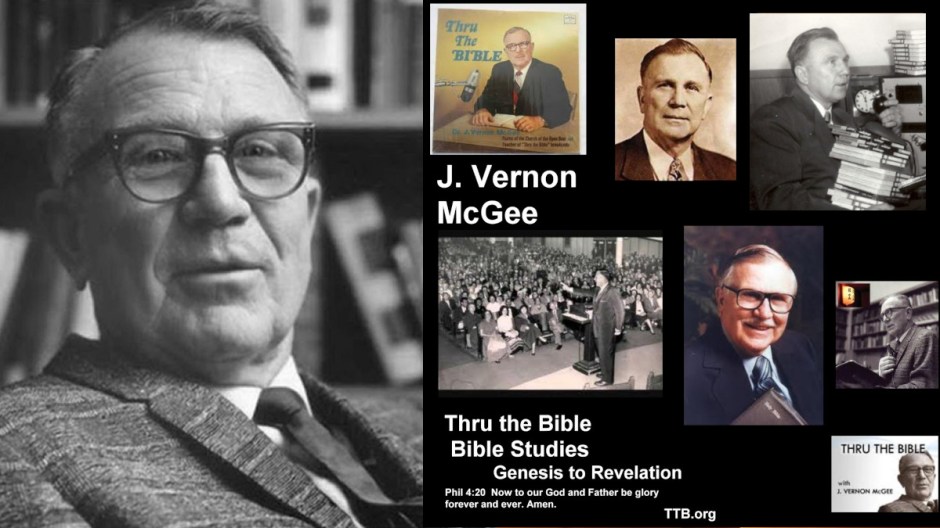
Dr. J. Vernon McGee: Mark 2-4

The audio on this video is the property of Thru the Bible. It is offered free of charge. If you wish to make a donation, do not send it to us. Visit http://www.ttb.org for information. The audio is attributed to Dr. J. Vernon McGee and Thru the Bible. Intellectual property rights are those of Thru the Bible.
Please contact us if you feel our understanding of the terms of use are in error.
Copyright information obtained from https://ttb.org/about/copyright-policy

Dr. McGee begins his exposition of Mark chapter 2 by highlighting its connection to chapter 1, emphasizing the connective word “and” that binds the narrative. He notes Jesus’ return to Capernaum after some days, reiterating that Capernaum became the central location for the Lord’s three-year earthly ministry. The reason for Jesus’ prior withdrawal was the disobedience of the healed leper, who spread news of his healing against Jesus’ wishes, leading to overwhelming crowds that hindered Jesus’ spiritual work. Dr. McGee expresses his concern about the modern overemphasis on miracles like healing and tongues, arguing that the primary focus should be on preaching the gospel of salvation through Christ’s death on the cross. Upon his return, it was noised that Jesus was in “the house,” which Dr. McGee identifies as likely Simon Peter’s house mentioned at the end of chapter 1.

The narrative then shifts to the arrival of a paralytic carried by four men, who, unable to enter the crowded house, uncovered the roof and lowered him before Jesus. Seeing their faith, Jesus declared to the sick man, “Son, thy sins be forgiven thee”. Dr. McGee clarifies that while salvation comes through individual faith, it was the faith of these stretcher bearers that brought the paralytic to a place where he could encounter Jesus and hear these words. This act of forgiveness provoked criticism from certain scribes who reasoned in their hearts that only God could forgive sins. Jesus, perceiving their thoughts, challenged their reasoning and then, to demonstrate his authority to forgive sins, commanded the paralytic to arise, take up his bed, and walk, which he immediately did, astonishing the onlookers.

Following this, Dr. McGee recounts Jesus’ calling of Levi (Matthew), a publican, to be a disciple. He notes the subsequent dinner hosted by Levi, attended by many publicans and sinners, which drew criticism from the scribes and Pharisees. Jesus responded to their criticism by stating that healthy people do not need a physician, but the sick do, clarifying that he came to call sinners to repentance, not those who considered themselves righteous. The topic of fasting also arises, as John’s disciples and the Pharisees were fasting while Jesus’ disciples were not. Jesus used the analogy of the bridegroom’s presence and the metaphors of old and new garments and wine skins to illustrate that his ministry represented something new, a break from the old system, rather than a mere continuation or improvement of it.

Dr. McGee then addresses two Sabbath controversies: the disciples plucking grain in the fields and Jesus healing a man with a withered hand in the synagogue. The Pharisees accused the disciples of breaking the Sabbath by harvesting grain, but Dr. McGee explains that their actions were within the bounds of the law, which permitted plucking grain by hand. Jesus defended his disciples by referencing David’s actions and declaring that “the Sabbath was made for man, and not man for the Sabbath” and that the Son of Man is Lord also of the Sabbath. In the synagogue, Jesus healed a man with a withered hand, knowing that the religious leaders were watching to accuse him. He challenged them on whether it was lawful to do good or evil on the Sabbath, and despite their silence, he healed the man, leading to the religious rulers plotting his destruction. Subsequently, Jesus withdrew with his disciples, and the crowds followed him from various regions. He then chose the twelve apostles, emphasizing his sovereign choice in this matter.

In the latter part of the sermon, Dr. McGee discusses the unpardonable sin, which occurred when the scribes accused Jesus of casting out demons by the power of Beelzebub, attributing the work of the Holy Spirit to Satan. He clarifies that this specific act of rejecting the direct testimony of both the Son and the Holy Spirit cannot be committed today in the same way. Jesus’ interaction with his physical family is also mentioned, where he emphasized that those who do the will of God are his true mother, brother, and sister. Finally, Dr. McGee introduces chapter 4 and the parables, noting that even Mark’s presentation of parables emphasizes action. He touches on the parable of the sower, the candle, the unique parable of the growing seed, and the mustard seed, explaining their significance in understanding the kingdom of God and the reception of the word. The sermon concludes with the miracle of Jesus stilling the storm, highlighting his power over nature and the disciples’ awe and fear in response.

Texas Gospel Canada Top 30 – April 2025

DAVID INGRAM

Welcome to the Texas Gospel Canada Top 30 Songs of April 2025! This list is meticulously compiled based on the actual number of plays each song received in the previous month (March.) The Texas Gospel Top 30 is proudly submitted to top Southern Gospel publications including The Singing News and SGNScoops.

1 Bigger On The Inside – Legacy Five – StowTown/Provident-Sony
2 My Name’s Already There Inspirations Horizon/Crossroads
3 I Remember Lost – Poet Voices – StowTown/Provident-Sony
4 God Won’t – Nelons (featuring Autumn Nelon Streetman) – Daywind/New Day
5 The Hour I First Believed – PromisedLand Quartet – StowTown/Provident-Sony
6 That’s What Faith Looks Like – Karen Peck & New River – Daywind/New Day
7 God Has Heard Your Cry – Taylors – StowTown/Provident-Sony
8 If Not For Christ – Whisnants – Independent
9 I’d Rather Hear Preachin’ – Greater Vision – Daywind/New Day
10 Can He, Could He, Would He – Mark Trammell Quartet – Crimson Road
11 I Just Stopped By On My Way Home – Kingsmen – Horizon/Crossroads
12 Life Giving Us Life – Peach Goldman – StowTown/Provident-Sony
13 We Still Believe – Hyssongs – ARS/New Day
14 God Has A Way Of Workin’ It Out – Chronicle – ARS/New Day
15 Everyday Saints – Steve Ladd – Big Picture Records/New Day
16 None But Jesus – Erwins – StowTown/Provident-Sony
17 Sunshine On A Cloudy Day – Jeff & Sheri Easter – Gaither Music/Capitol Christian
18 Golgotha’s Call – Bibletones – Independent
19 More Than You Know – Tim Livingston – Diamond Mill Music
20 There’s A River – High Road – New Day Records/New Day
21 Come On Let’s Go To That Land – Tribute Quartet – Daywind/New Day
22 What Are You Waiting For – Tim Menzies (with The Isaacs) – ARS/New Day
23 Jesus Walked In – Joseph Habedank – Daywind/New Day
24 Rock Bottom – 11th Hour – Sonlite/Crossroads
25 Grateful For The Gospel – Brian Free & Assurance – Daywind/New Day
26 Nothing the blood can’t cover – The Chitans – Crossroads
27 The Good, Bad And The Ugly – Justified Quartet – Big Picture Records/New Day
28 Big Ole Stone (Victory) – Triumphant Quartet – StowTown/Provident-Sony
29 By Grace- Lore Family – Horizon/Crossroads
30 Things We Cannot Change – LeFevre Quartet – New Day Records/New Day

The Guardians Quartet Welcomes New Leadership as Dean Hickman Steps Down

JEFF TURNER

On April 1st, The Guardians Quartet entered a new chapter as ownership of the group officially transferred from Dean Hickman to John Darin Rowsey. After many years at the helm, Hickman has expressed confidence in the future of the group.

“I’m just so so blessed that we we’ve had these opportunities and have done so well,” said Hickman, reflecting on his time with the Quartet. “Our guys today—you know, with Pat Barker there to helm running the road, uh, John Rousey with his fabulous songwriting and arrangements, Mark Hale with a great production he does in all of our concerts, Tony driving the bus with me for 35 years—so thank you Lord for your blessings in my life. Thank you.”

John Darin Rowsey, who is already well known for his musical talents and arrangements, now takes on a leadership role with the group. The Guardians Quartet continues to be made up of Rowsey, Scott Mullins, Paul Lancaster, and Pat Barker.

Dean Hickman expressed strong support for the team now carrying the group forward. He said, “Our guys today… [are] doing so well,” and added that he believes the group is “in good hands.”

With the transition complete, fans of The Guardians Quartet can expect the same dedication to excellence, both on and off the stage, under Rowsey’s new leadership.