

He was a sweetheart of a man’: the gospel project that brings personal memories of Elvis to life

AMY TURNER

His voice sold millions of records, his name still sells out tribute concerts, and his gospel recordings remain some of the most emotionally raw performances in American music history. But to Billy Blackwood, Elvis Presley was something simpler, and more human, than any of that.

“He was just the kind of guy, honestly, it was hard not to love him,” Blackwood recalled. “He was just a sweet man, just a gentle, real, loving man.”

It is that personal dimension, the Elvis who existed in small rooms with a handful of people rather than on stadium stages, that gives a new collaborative recording project its particular weight. Ronnie Booth, one of gospel music’s most respected voices, has joined forces with the Blackwood Brothers Quartet for “Together: Gospel Tribute to the King,” a collection built around the sacred songs that shaped Elvis Presley’s faith and defined his spiritual identity.

Billy Blackwood, who sings baritone and has worked as a songwriter throughout his career, is one of the few people still active in gospel music who knew Presley personally. He was the younger son of James Blackwood, the quartet’s longtime leader and public face, and those family connections placed him in rooms where Elvis was simply himself.

“When you’re in a room this size and there’s eight or 10 people around, you get to know what somebody’s like when you have enough exposure,” Blackwood said. “I think his life and his thinking, maybe his heart got really corrupted by what the world had to offer. But my gosh, I just loved him. He was a sweetheart of a man.”

The Blackwood Brothers Quartet was not merely a successful singing group. For nearly a century, it has functioned as something closer to an institution. Founded in 1934 by brothers Roy, Doyle, and James, along with Roy’s son R.W., the quartet began building a following during an era when gospel music was still finding its place in the broader American cultural landscape.

The early decades were not without tragedy. In the late 1950s, Roy and Doyle retired from the road, and in 1954 R.W. was killed in a plane crash, a loss that shook the gospel world. James Blackwood, however, rebuilt. Under his leadership, the quartet assembled a new lineup of singers and took their music far beyond the American South. They performed in all fifty United States and every Canadian province. They carried their sound to Great Britain, across Europe, into the Middle East and Northern Africa, south to South Africa, and across Asia to Japan, Taiwan, Thailand, South Korea, Hong Kong, and the Philippines. By almost any measure, they became the best-known name in gospel music history.

James Blackwood died in 2002, but the tradition he built did not end with him. His sons, Jimmy (James Jr.) and Billy, carried the work forward. More recently, Jimmy retired after 49 years on the road, leaving Billy as the keeper of a legacy that now spans more than eight decades.

Elvis Presley’s relationship with gospel music was not a publicity exercise. He grew up in Assembly of God churches in Mississippi and Tennessee, singing hymns long before he ever walked into a recording studio. The Blackwood Brothers were part of that world, and young Elvis was part of their audience. That connection eventually grew into something more personal, and Billy Blackwood’s recollections of Presley carry the kind of detail that only comes from genuine proximity; not the carefully managed image of a superstar, but a man who could sit comfortably in a small group and show his actual nature.

Blackwood’s tenderness in describing Presley is matched by an honesty about the pressures that made his later life so complicated. The faith, he suggests, was always real, even when everything around it was not.

One track from the project, “Put your hand in the hand,” is currently in rotation on Texas Gospel now. For Ronnie Booth and the Blackwood Brothers, the album represents something beyond a conventional tribute; it is a recording made by people who carry a direct connection to gospel music’s most storied era, honouring a performer whose faith, whatever its complications, was entirely genuine. For Billy Blackwood, that faith was the truest thing he ever saw in Elvis Presley, and it is clearly the part of him he remembers best.

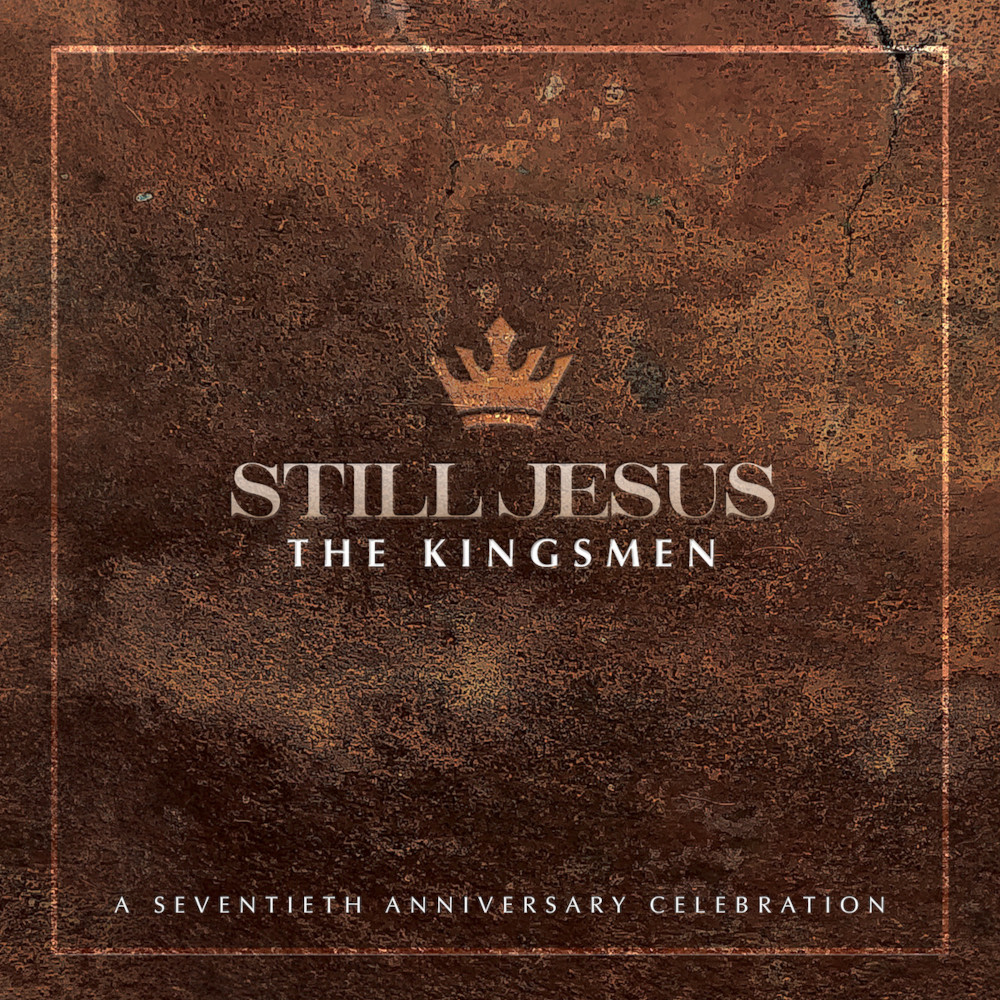
The Kingsmen mark 70 years with an album that looks back and forward at once

AMY TURNER

Seven decades is a long time for any musical act to remain not just active, but relevant. For the Kingsmen, a southern gospel quartet whose roots stretch back to the mid-1950s, that longevity is both the subject and the occasion for their upcoming album, “Still Jesus,” due July 10 on Horizon Records.

Subtitled “A Seventieth Anniversary Celebration,” the record draws from multiple eras of the group’s history, weaving together vault recordings, newly arranged older material, and five original songs written specifically for this project. It is a broad undertaking, and one the band approached with deliberate care.

“We have always been diligent to honour our Kingsmen roots,” said guitarist Alan Kendall, “but those exact same roots also tell us that the Kingsmen have always been a forward-thinking group.” That tension between preservation and progress shapes the album’s structure. Some tracks pull from the catalogue, updated in arrangement but faithful in spirit. Others were unfamiliar to the band entirely, including a song written by Squire Parsons in 1989 that the group had never previously recorded.

The material spans a considerable sonic range. “I’ll Live Again” represents the group’s more traditional sound, while “I Forgive Your Sin” and “When Sunday Morning Dawned” feature expansive orchestration. Country-inflected tracks like “That Very Moment” and “I Stand Upon The Rock of Ages” broaden the palette further.

Songwriters contributing new material include Ronny Hinson, Kenna Turner West, Joseph Habedank, Lee Black, and Rachel McCutcheon, each of whom has had charting success in the gospel genre.

The album closes with what Kendall describes as the most iconic song in the group’s history, “Is That the Old Ship of Zion,” performed by a 19-member Kingsmen Alumni Choir drawn from across the group’s seven-decade lifespan.

Brandon Reese, who manages the group and plays drums, frames the project in terms of both family legacy and personal faith. His father, Ray Dean Reese, is a legendary figure in southern gospel music, and the younger Reese has been integral in steering the Kingsmen through recent years. “Most importantly, it is my prayer that you hear something in this album that helps you in your every day walk,” he said, “because no matter the issue, the answer is Still Jesus.”

The album is available for pre-save ahead of its July release.

What are spiritual gifts and how do they work in the church today?

JEFF TURNER

Every believer receives a gift from the Holy Spirit. It is not earned, but given with purpose. As 1 Corinthians 12:7 reminds us, the Spirit’s work in each person is meant to benefit others. No one is left out, and no gift is meant to be kept to oneself.

Passages like Romans 12 and 1 Corinthians 12 describe gifts such as teaching, serving, giving, leadership, and faith. Rather than fitting neatly into one category, most people find their gifting is a blend of several of these , expressed in a way that’s uniquely their own.

These gifts aren’t given for personal recognition. Their purpose is always outward: to strengthen and support the body of Christ as a whole.

Discovering your gift doesn’t have to be complicated. As you continue to serve faithfully, the shape of your gift becomes clearer over time. The goal isn’t a perfect definition, it’s availability and a willing heart. When each person offers what they’ve been given, the whole community grows stronger together.

As each one has received a special gift, employ it in serving one another as good stewards of the multifaceted grace of God.

1 Peter 4:10

A warning about turning away from the truth

JEFF TURNER

Hebrews 10:26 may trouble Christians who struggle with sin and fear its warning applies to them. It doesn’t. But understanding why requires knowing who it was written for.

The book of Hebrews addresses Jewish people connected to the early church who had heard and intellectually accepted the gospel but never truly embraced it. They remained loyal to their old religious system. The entire letter urges them toward one thing: stop hesitating and fully trust Christ.

The “sinning” in verse 26 isn’t about everyday failure or moral weakness. It describes a sustained, deliberate rejection of Christ, choosing to turn away from His death and resurrection after knowing what they mean. This matters because Christ’s sacrifice is the only provision for sin that exists. Reject it, and nothing else covers you. What remains is judgment.

This is the warning’s point: the gospel demands more than intellectual agreement. It requires trust and commitment. For the person who has genuinely received Christ, this passage isn’t a threat, it’s a reminder of what’s at stake for those still holding back.

Jesus said to him, “I am the way, and the truth, and the life; no one comes to the Father except through Me.

John 14:6

Why Jesus Told Mary Not to Hold On

TEXAS GOSPEL VOLUNTEER

Mary Magdalene had watched Jesus die. She knew he had done nothing wrong, and yet she stood by as he was killed. That kind of loss leaves a mark that goes deep. So when she saw him again after the resurrection, her reaction was not simply surprise or joy. It was the response of someone who had already lost him once and could not bear the thought of losing him again.

In John 20, Jesus said to her, “Do not cling to me, for I have not yet returned to the Father.” At first, this seems like a hard thing to say to someone who had been so faithful to him. Other followers touched Jesus after the resurrection without any such warning. Thomas was even invited to reach out and touch his wounds. So why was Mary’s situation different?

The answer lies in what she was actually doing. The word used in the original Greek text points to more than a simple touch. It describes holding on, clinging, refusing to let go. Mary was not merely reaching out to confirm that Jesus was real. She was trying to keep him from leaving.

But holding on was not going to be possible. Jesus had not returned simply to resume life as it had been before. He was on his way back to the Father, and his physical presence among them was coming to an end.

Jesus had promised that after he left, he would send the Holy Spirit. That Spirit would not visit from time to time or appear briefly and then vanish. He would take up a permanent place inside every person who believed. Mary Magdalene, along with every follower who came after her, would carry the presence of Christ within her from that point on.

The Holy Spirit is described as the Spirit of Christ himself. This means that what Mary feared losing, the closeness, the presence, the relationship, would not be gone at all. It would simply change form.

However, you are not in the flesh but in the Spirit, if indeed the Spirit of God dwells in you. But if anyone does not have the Spirit of Christ, he does not belong to Him.

Romans 8:9