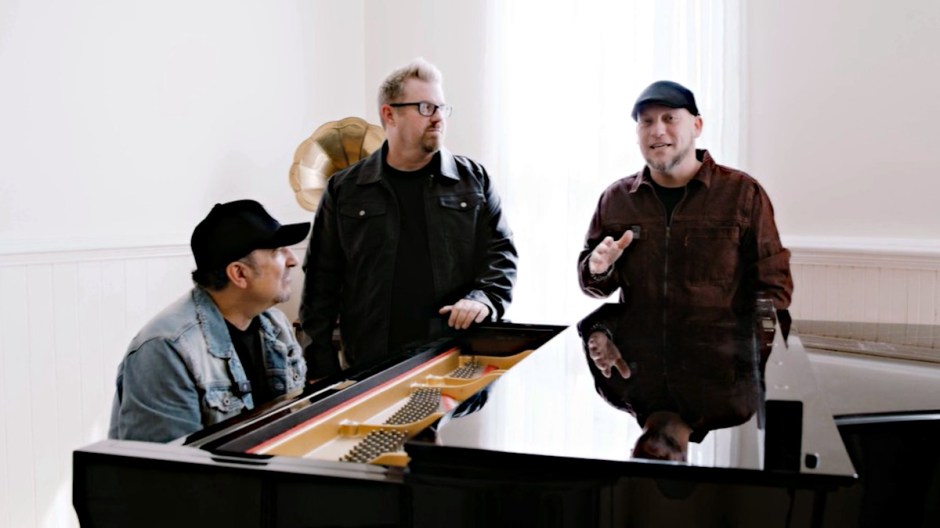
Lauren Talley’s new single traces a path from a viral stadium moment to a song she hopes becomes a church anthem

TEXAS GOSPEL VOLUNTEER

There is a particular kind of creative spark that catches people off guard, arriving not in a recording studio or at a songwriter’s desk but through a phone screen at some unremarkable hour. For Lauren Talley, that moment came about three years ago, while watching a video online.

“I saw a YouTube video that completely changed how I look at life and ministry,” she says. “The Passion Conference, held in Atlanta, showed a moment where the worship leaders stopped singing, fell on their faces before the Lord, and the entire stadium was overcome by the presence of God. That video taught me to pursue His presence above all else.”

It is the kind of moment that is difficult to quantify, the sort of spiritual disruption that either fades quickly or rearranges something fundamental in a person. For Talley, it clearly did the latter. She carried what she had witnessed to Nashville songwriter Tony Wood, a veteran collaborator with credits stretching across the Christian music landscape, and the two built something out of it together. The result is “Look at the Lamb,” her new single for Horizon Records, which arrives with no small amount of intention behind it.

“Out of inspiration from watching that,” Talley says, “I took ‘Look At The Lamb’ to my friend Tony Wood, and together wrote what I think will be an anthem for the church for many years to come.”

That is a confident claim, but Talley is not a newcomer making bold pronouncements from the margins. She has spent the better part of her life inside gospel music, having sung her first solo at age two when, as family lore has it, she wandered onto the stage during one of her family’s concerts and announced she wanted to “thing.” The malapropism stuck. So did the instinct.

As a member of The Talleys, the family group she grew up performing with, she earned a Dove Award in 2015 for “Hidden Heroes” and contributed lead vocals to eleven number one hits. Her solo catalogue spans seven albums, including a 2017 release, “The Gospel,” that reached the top of Billboard’s southern gospel chart, and a 2019 pairing in which she released two full-length projects simultaneously. She holds an honorary doctorate in Worship Arts from John Wesley University and is a recognisable face to the considerable audience that follows the Gaither Homecoming concert and video series.

All of which is to say that when Talley speaks about writing an anthem for the church, there is context behind the ambition.

“Look at the Lamb” opens quietly, with Talley’s voice given room to breathe before the arrangement expands into something more ceremonial. The lyric is straightforward in its theology, inviting the listener to fix their attention on Christ rather than their own circumstances:

Look at the lamb, Heaven’s King Here with us, light from his face His great heart full of love Eyes filled with grace He has come to seek and save Isn’t Jesus so amazing Isn’t Jesus glorious He’s Messiah He is mercy He’s the only worthy one

The Scripture reading embedded in the track is drawn from the same passage read aloud during the Atlanta gathering that first moved Talley, and it is narrated by Gloria Gaither, the songwriter and author whose voice carries its own particular weight in this tradition. Talley describes her as “the incomparable Gloria Gaither,” a characterisation that will resonate with anyone who knows the breadth of Gaither’s influence across decades of Christian music.

The song sits comfortably within the worship genre’s current interest in returning to a kind of reverent simplicity, favouring a direct encounter with the sacred over stylistic complexity. Whether it achieves the anthem status Talley envisions will depend, as it always does, on whether congregations make it their own.

“I pray all else disappears as you ‘Look At The Lamb,'” she says.

Beyond recording, Talley maintains a busy schedule of solo concerts, women’s conference appearances, and studio work as a background vocalist and producer for other artists. She also works as a voice and performance coach for emerging talent, a role that positions her as something of a bridge between generations in a genre that values lineage.

She is, by her own accounting, also a committed Tennessee Volunteers fan who drinks sweet tea and makes time for family. The details are offered without irony. In her world, they are not incidental to the person she is; they are part of what makes the music mean what it does.
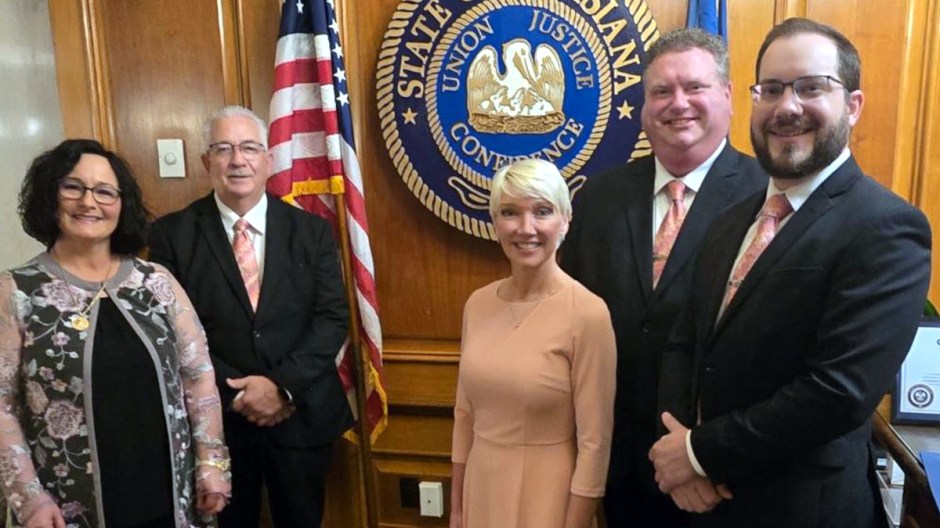

Chuck Wagon Gang Honoured by Louisiana on 90th Anniversary

AMY TURNER

May 20th proved to be a landmark day in the long story of The Chuck Wagon Gang, as the State of Louisiana formally recognised the country gospel group’s nine decades of contributions to American Gospel music and their enduring connection to the state.

The Chuck Wagon Gang has roots stretching back to 1935, when patriarch David P. Carter founded the group alongside his eldest son Ernest and two eldest daughters, Lola and Effie. Within a year, the family ensemble had secured their first radio opportunity, performing as sponsored singers for Bewley Flour in 1936, a modest beginning that would grow into one of the most sustained careers in gospel music history.

On May 20th, members of the group received commendations from Governor Jeff Landry and were honoured during a ceremony hosted by Lieutenant Governor Billy Nungesser, marking the occasion as a formal recognition of the group’s place in the state’s cultural memory.

The day’s most vivid moment came when The Chuck Wagon Gang was invited onto the floor of the Louisiana State Senate to perform. The group delivered a medley of “I’ll Fly Away” and “You Are My Sunshine” before receiving an official Senate Proclamation commemorating their 90th anniversary and musical legacy.

The celebrations did not end there. A few days later, while continuing on tour, the group received the Key to the City of Many, Louisiana , another formal tribute marking the same milestone anniversary.

Taken together, the recognitions amount to a rare moment of institutional acknowledgment for a group that has spent 90 years at the intersection of faith, family, and American folk tradition. For The Chuck Wagon Gang, Louisiana’s tribute was both a homecoming and a testament to the staying power of gospel music rooted in sincerity and simplicity.

A new voice from 8th Street has a message for anyone who has ever felt like giving up

AMY TURNER

Jonathan Thompson did not write “Here Comes the Promise” in a moment of inspiration. He wrote it out of need.

Thompson, a member of the group 8th Street, recently released the song as his debut single, and the backstory behind it is as personal as the music itself. He has spoken openly about the fact that the lyrics draw from his own experience of hitting a low point and finding, as he describes it, the peace of God moving in.

The song opens in a place many listeners will recognise: a desperate situation, no clear path forward, and a cry for help. “There was a time in my life when I was so low, in a desperate situation, didn’t know where to go,” the lyrics begin, “so I cried out, ‘Jesus help me, I can’t make it on my own.'” What follows is not a resolution wrapped in easy comfort, but a declaration: the promise is coming, the victory belongs to God, even if the reason is not yet visible.

Thompson has described the song as partly his testimony and partly a message he believes applies broadly. “This is partially my testimony, but it’s a message that we all can learn from,” he said. “It’s a message, again, that God has told us to put all of our cares on Him, to make sure that we don’t… we don’t worry ourselves to death because he’s got it all under control.”

He was careful, though, not to position himself above the struggle he is singing about. He acknowledged that knowing something in faith and living it out are two different things. “I know I’ve caught myself doing that,” he said, referring to the tendency to worry despite believing otherwise. “You do have concerns and things, but we just need to remember that the promises of God are yea and amen, and he is going to come through for us.”

The song’s second verse addresses the listener more directly, shifting from personal testimony to invitation: “Friend, if you are in a struggle, you don’t know what to do, you try to handle it on your own, you feel so tired, you’re through, cast your cares upon the master, for he cares so much for you, just give it all to him, for his strength will carry you.” The language is plain and the sentiment is familiar to anyone raised in or near a Pentecostal or evangelical tradition, but Thompson delivers it without the triumphalism that can sometimes hollow out that kind of message.

The song closes with a lyric drawn from Isaiah: “They that wait upon the Lord shall renew their strength, they shall take up wings and soar higher than they’ve ever been.” It is a fitting end for a song that does not promise ease so much as endurance.

Thompson’s framing of the release itself reflects a similar kind of deliberateness. He indicated he spent considerable time thinking through what he wanted the song to communicate before putting it out. “I’ve thought a lot about this song,” he said. “What am I trying to convey to get across to people about this song? Being my first song that I’ve actually completed and recorded and released out, I want to make sure that people understand.”

The central conviction he lands on is straightforward, even if living it is anything but: “It doesn’t matter if the entire world stands against us. If God gave you a promise, it’s going to happen.”

For listeners who have been carrying something heavy, that may be exactly the reminder they needed to hear.

Southbound takes stock of what’s ahead while a new song does the talking now

AMY TURNER

The Florida-based gospel quartet Southbound has been quietly productive of late, with new music taking shape in the studio even as the group’s current release continues to reach listeners. In a candid moment, vocalist Jody Braselton offered a look inside the recording process and the themes driving the work.

The group is currently laying down tracks for what Braselton describes as a brand new project, still in its early stages. Among the songs recorded so far, one stands out for him personally. “We’re in the studio recording a brand new project,” he said. “And out of all the songs that we’ve done so far, and we’ve only recorded a few of them, I think my favorite that Pastor Clint Brown wrote that we are recording right now is a song called Miracles.”

The song, penned by Pastor Clint Brown, carries a message that Braselton says speaks to something universal. “And it just talks about how as many miracles as God has done in my life, in their life, and maybe even in your life over the years, there is no shortage of miracles,” he explained. “Whatever it is you need in your life, God didn’t run out of miracles. He’s not done healing. He’s not done setting free. He’s not done saving people and changing their lives.”

While that project moves forward behind closed doors, Southbound’s current release is already in rotation on Texas Gospel. The song, titled “Nothing,” takes an unconditional view of God’s love, exploring what it would take to separate a person from His grace. The short answer, according to the lyrics: nothing.

The song poses a series of searching questions before arriving at its repeated refrain. “What could I do to forfeit and lose all of this grace you’ve given me,” the lyrics ask, “what could I say to push you away God what could make you ashamed of me.” From there, the song builds toward its central declaration: “there’s nothing there’s nothing there’s nothing I’ve been through there’s nothing I can do that could keep me from you that could break us apart or make you regret your scars.”

The writing leans into imagery of ransom, return, and redemption, with lines that frame God’s pursuit of humanity in strikingly relational terms: “what would you do be willing to lose to pay off my ransom everything where would you run so bring home your son when you hear me calling anywhere.” Later, the song turns to the limits of what can stand against grace: “the never strong enough the power of your blood what can you love what can stop amazing grace what’s left inside that grave there’s nothing there’s nothing.”

For a group whose catalogue has long centred on themes of faith and restoration, “Nothing” fits neatly into that tradition, even as “Miracles” promises to push that conversation forward once the new project finds its way to listeners.

He was a sweetheart of a man’: the gospel project that brings personal memories of Elvis to life

AMY TURNER

His voice sold millions of records, his name still sells out tribute concerts, and his gospel recordings remain some of the most emotionally raw performances in American music history. But to Billy Blackwood, Elvis Presley was something simpler, and more human, than any of that.

“He was just the kind of guy, honestly, it was hard not to love him,” Blackwood recalled. “He was just a sweet man, just a gentle, real, loving man.”

It is that personal dimension, the Elvis who existed in small rooms with a handful of people rather than on stadium stages, that gives a new collaborative recording project its particular weight. Ronnie Booth, one of gospel music’s most respected voices, has joined forces with the Blackwood Brothers Quartet for “Together: Gospel Tribute to the King,” a collection built around the sacred songs that shaped Elvis Presley’s faith and defined his spiritual identity.

Billy Blackwood, who sings baritone and has worked as a songwriter throughout his career, is one of the few people still active in gospel music who knew Presley personally. He was the younger son of James Blackwood, the quartet’s longtime leader and public face, and those family connections placed him in rooms where Elvis was simply himself.

“When you’re in a room this size and there’s eight or 10 people around, you get to know what somebody’s like when you have enough exposure,” Blackwood said. “I think his life and his thinking, maybe his heart got really corrupted by what the world had to offer. But my gosh, I just loved him. He was a sweetheart of a man.”

The Blackwood Brothers Quartet was not merely a successful singing group. For nearly a century, it has functioned as something closer to an institution. Founded in 1934 by brothers Roy, Doyle, and James, along with Roy’s son R.W., the quartet began building a following during an era when gospel music was still finding its place in the broader American cultural landscape.

The early decades were not without tragedy. In the late 1950s, Roy and Doyle retired from the road, and in 1954 R.W. was killed in a plane crash, a loss that shook the gospel world. James Blackwood, however, rebuilt. Under his leadership, the quartet assembled a new lineup of singers and took their music far beyond the American South. They performed in all fifty United States and every Canadian province. They carried their sound to Great Britain, across Europe, into the Middle East and Northern Africa, south to South Africa, and across Asia to Japan, Taiwan, Thailand, South Korea, Hong Kong, and the Philippines. By almost any measure, they became the best-known name in gospel music history.

James Blackwood died in 2002, but the tradition he built did not end with him. His sons, Jimmy (James Jr.) and Billy, carried the work forward. More recently, Jimmy retired after 49 years on the road, leaving Billy as the keeper of a legacy that now spans more than eight decades.

Elvis Presley’s relationship with gospel music was not a publicity exercise. He grew up in Assembly of God churches in Mississippi and Tennessee, singing hymns long before he ever walked into a recording studio. The Blackwood Brothers were part of that world, and young Elvis was part of their audience. That connection eventually grew into something more personal, and Billy Blackwood’s recollections of Presley carry the kind of detail that only comes from genuine proximity; not the carefully managed image of a superstar, but a man who could sit comfortably in a small group and show his actual nature.

Blackwood’s tenderness in describing Presley is matched by an honesty about the pressures that made his later life so complicated. The faith, he suggests, was always real, even when everything around it was not.

One track from the project, “Put your hand in the hand,” is currently in rotation on Texas Gospel now. For Ronnie Booth and the Blackwood Brothers, the album represents something beyond a conventional tribute; it is a recording made by people who carry a direct connection to gospel music’s most storied era, honouring a performer whose faith, whatever its complications, was entirely genuine. For Billy Blackwood, that faith was the truest thing he ever saw in Elvis Presley, and it is clearly the part of him he remembers best.