
Roy Knight of the Roy Knight Singers has passed away.
The Gold City Quartet posted news of his passing on Facebook Sunday.
Roy has been battling health issues for some time.
Funeral arrangements are pending.
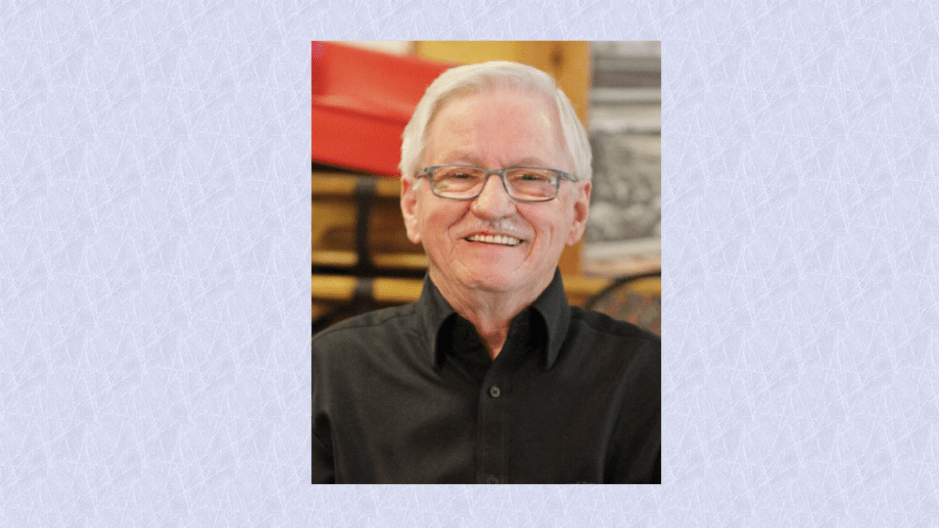
Roy Knight of the Roy Knight Singers has passed away.
The Gold City Quartet posted news of his passing on Facebook Sunday.
Roy has been battling health issues for some time.
Funeral arrangements are pending.

Officials in the US are offering a $50,000 reward for information that leads to the arrest and conviction of the person (or persons) who burned a church building.
A press release from the Federal Bureau of Investigation says the arson attack happened Sept. 17, 2020 at St. Gregory the Illuminator Armenian Apostolic Church in San Francisco.
“This act of violence was not just an attack on a building, but on a congregation. This was an attack on a community,” said FBI Special Agent in Charge Craig Fair. “We are counting on assistance from members of the community to keep our city safe. Every lead will be thoroughly investigated. Regardless of how insignificant you think your information might be, we strongly encourage you to come forward and we welcome your information and assistance.”
The FBI has jurisdiction to investigate fires set at houses of worship under the Church Arson Prevention Act of 1996.
A GoFundMe page has been set up for those who wish to donate to the church.

Jeff Turner – Music Reporter
Southern Gospel artists are not immune to imposters who set up Facebook pages. It recently happened to the Hoppers who said in a post (on their real Facebook page) that they have been receiving messages from fans reporting the phony pages.
It’s important to know the real addresses of your favorite group’s social media sites so you don’t fall prey to hucksters who hijack someone else’s good name for nefarious use. Some imposters ask for cash. Some ask personal questions to get information they can use for identity fraud. There are many reasons why you should be on guard against scammers who stoop to this.
Look to see if a page is verified. A blue checkmark should appear next to the name of the individual (or Gospel group) if Facebook has confirmed they are who they say they are. Look at the screen shot of the real Hoppers Facebook page at the top of this article. Notice the blue check? Examine the name of any Facebook page closely; it’s not uncommon for a fake profile to have a wrong spelling or a name that is close but not exactly that of the page they are impersonating. Lastly, and probably most importantly, there’s nothing wrong with asking your kids or grandkids if they can tell if the page is legitimate. The Canadian Centre for Cyber Security reports seniors are often targeted. The younger generations live on the internet and can often spot the hucksters faster than we. There’s no shame in asking your son or daughter to look at a page especially if you are planning on buying a CD or make a donation.
It’s important to know that an artist or Gospel Group is a victim too when their name is used by a scammer who is trying to dupe you. The Gospel Group probably isn’t even aware the fraud is happening in their name. Do some googling and find an artist’s website if you suspect a fake Facebook has set up in their name. Most websites have links to their actual social media pages where you can check for the blue verification checkmark. If a Facebook page turns out to be fake, let the real artist know so they can take appropriate action. Facebook also has instructions on how to report a fake page. Here is the link.

A short video posted to the Amundrud’s Facebook page is just the kind of thing that makes Gospel music one of our favorite kinds of music. The video is Glen Amundrud’s testimony as it appears on The Amundruds LIVE CD.
(This video is presented as a link to the Amundrud's YouTube channel. This video is not the property of Texas Gospel Canada)
According to the Facebook post, Glen is describing the early 1970’s and his journey of surrender.
Please send us links of videos or Facebook posts you feel would be of encouragement to our website videos. Our email address is office@texasgospel.net

A church building that was constructed in the United States when the country was still a British colony has been damaged by vandals.
Mission San Juan Capistrano, located in California, was built in 1776 by Spanish Catholic missionaries. It was the 7th of 21 Spanish missions built in California according to the Mission’s website. Church officials Friday said someone had tagged the historic structure with graffiti. Officials have not yet said if the vandalism was a random act or if the mission was targeted.
The mission has been temporarily closed until further notice.
“Mission San Juan Capistrano remains committed to preserving the religious and historical significance of the site,” says a post on the mission’s Facebook page.
 Texas Gospel Canada Southern Gospel Radio