On January 4, 2025, Sarnia police responded to an assault report at a church near Christina Street and London Road shortly before 7 p.m.
A media release from the Sarina Police Service says officers spoke with a 23-year-old man who said he had been praying alone in the church when an unknown individual attacked him. According to the victim, the suspect approached from behind and placed a ligature around his neck in an attempt to strangle him. A struggle followed, during which the victim managed to escape and seek help. He was later treated in hospital for injuries that were not life-threatening.
Police searched the area for the suspect and determined that he had also tried to tamper with a security camera at the church before leaving the scene. Through further investigation, officers identified the suspect as Nicholas Ritonja, a 38-year-old Sarnia resident.
The search for Ritonja extended to surrounding police agencies. Later that evening, at 11:55 p.m., the suspect attempted to surrender at the Ontario Provincial Police station in Point Edward. He was arrested there and transferred to the custody of Sarnia police.
Ritonja has been charged with several offences, including:
Assault Causing Bodily Harm – Choke, Suffocate, or Strangle Assault with a Weapon Mischief Under $5,000 Uttering Threats
Police have stated that the motive for this unprovoked attack remains unclear. However, investigators believe that the suspect’s possible use of illegal substances may have contributed to the incident.
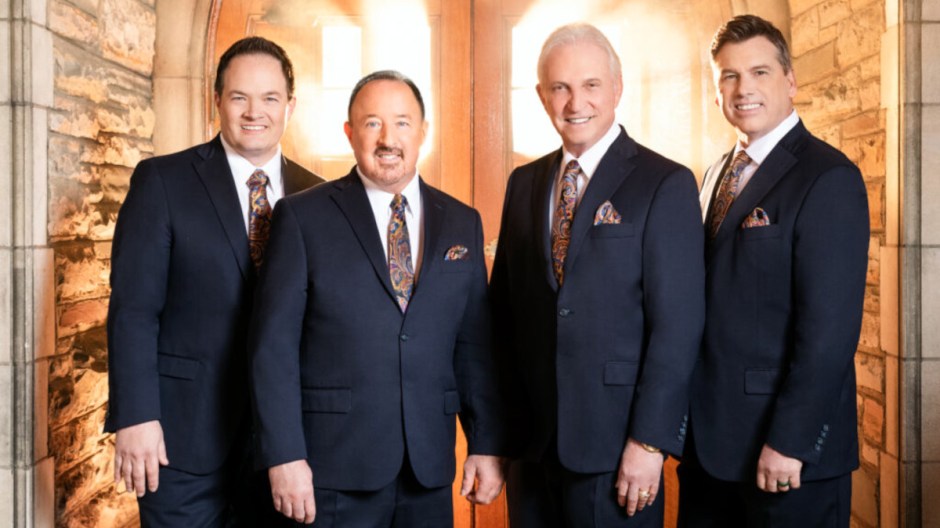
Welcome to the Texas Gospel Canada Top 30 Songs of January 2025! This list is meticulously compiled based on the actual number of plays each song received in the previous month (December.) The Texas Gospel Top 30 is proudly submitted to top Southern Gospel publications including The Singing News and SGNScoops.
1 Collingsworth Family – Praise The Lord 2 Gold City – When it’s gone for good 3 LeFevre Quartet – The Things We Cannot Change 4 Brian Free & Assurance – Grateful For the Gospel 5 Lee Park Worship – Why Wouldn’t I Run 6 Red Words – The Erwins 7 Justified Quartet – The Good, Bad and the Ugly 8 Earnie Haase & Signature Sound – You’ll find Him there 9 Triumphant Quartet – Big old stone 10 Tim Livingston – More Than You Know 11 Tim Menzies with The Isaacs – What Are You Waiting For 12 Scotty Inman – Man On The Middle Cross 13 The Sound – Jeans and Jesus 14 The Browns – No one greater 15 Jim And Melissa Brady – Covered 16 The Taylors – He is good to me 17 Susan Whisnant – Faith In Place 18 Heart 2 Heart – When The Saints Begin To Pray 19 Nelons – There’s a Hole in the Heart 20 The Hoppers – Glory Up Ahead 21 Darin & Brooke Aldridge – Dear Lord 22 Down East Boys – Something to shout about 23 Kristy Cox – God Never Made A Mountain 24 Legacy Five – Bigger on the Inside 25 Poet Voices – I Remember Lost 26 The Inspirations – My Name’s Already There 27 2nd Chance Ministries – Find My Hallelujah 28 REAL Southern Gospel Quartet – Here I’ll stand 29 Sound Street – Through the furnace fire 30 Kingdom Heirs – Until prayer changes me
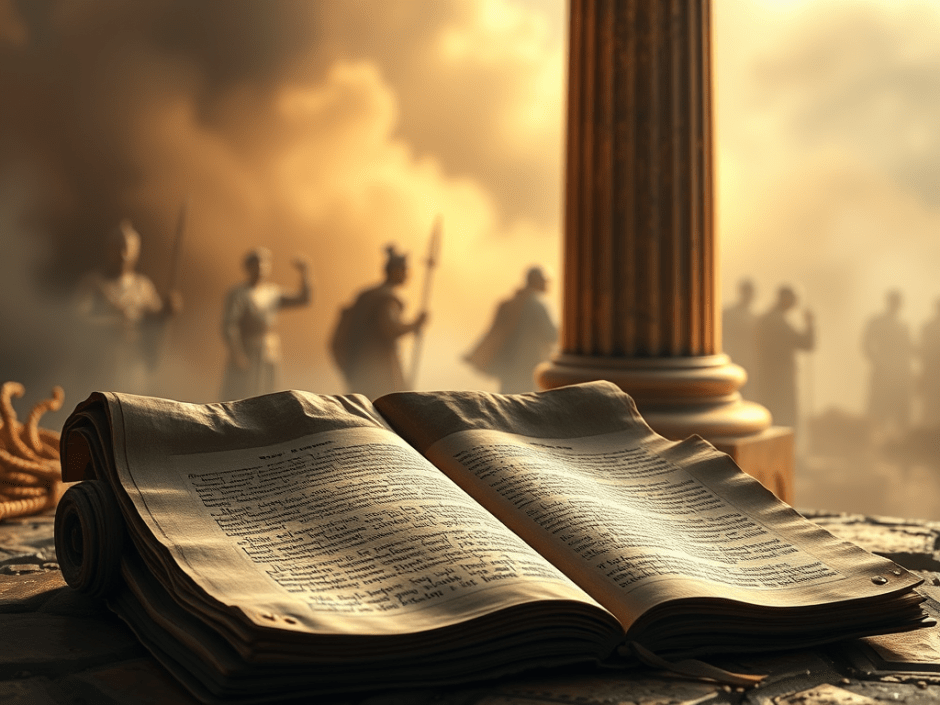
In recent years, society has experienced a significant spiritual shift. This change mirrors the pattern described in the Bible, particularly in the book of Romans. As evolution becomes the prevailing worldview and people live as if God doesn’t exist, society has embraced behaviours that the Bible considers sinful.
The apostle Paul’s words in Romans 1 seem eerily relevant to our current situation. He describes a society where God “gave them over” to their sinful desires. This phrase, originally a legal term, signifies divine judgment on nations that reject God’s truth.
The progression of this judgment follows a clear pattern:
Sexual immorality becomes widespread
Immorality is embraced and celebrated
A “reprobate mind” takes hold, where people can no longer discern right from wrong
Sadly, these stages are evident in society today. From the normalization of sexual promiscuity to the widespread acceptance of immorality, and the celebration of increasingly depraved behaviours, the parallels are striking.
Romans 1:28 states, “And since they did not see fit to acknowledge God, God gave them up to a debased mind to do what ought not to be done.” This verse encapsulates the current state of affairs, where moral relativism reigns and biblical values are scorned.
In light of this sobering reality, Christians are called to pray fervently for a spiritual revival. Only through a return to the gospel can the nation hope to reverse this downward spiral and experience God’s grace once more.
The audio on this video is the property of Thru the Bible. It is offered free of charge. If you wish to make a donation, do not send it to us. Visit http://www.ttb.org for information. The audio is attributed to Dr. J. Vernon McGee and Thru the Bible. Intellectual property rights are those of Thru the Bible. Please contact us if you feel our understanding of the terms of use are in error. Copyright information obtained from https://ttb.org/about/copyright-policy
Dr. J. Vernon McGee in his exposition of Matthew 5-7, known as the Sermon on the Mount, emphasizes its significance while clarifying its proper interpretation. He notes that while excerpts appear in other gospels, Matthew provides the most extensive account. McGee believes Jesus likely repeated these teachings on multiple occasions. He highlights two contrasting and erroneous viewpoints on the Sermon: the “far left” liberal theologians who consider it the entirety of the gospel and the only crucial part of Scripture, sometimes even reducing it to the Golden Rule, and the “far right” hyper-dispensationalists who dismiss it as irrelevant to believers today.
McGee firmly states that the Sermon on the Mount is not the Christian Gospel. He contrasts it with Paul’s declaration of the gospel in Corinthians, which centers on Christ’s death for our sins, His burial, and His resurrection according to the Scriptures. These foundational elements of the Christian faith are absent from the Sermon on the Mount. Treating the Sermon as the gospel leads to hypocrisy because its ethical standards are impossibly high for unregenerate individuals to achieve. McGee argues that proclaiming to live by the Sermon while failing to do so creates hypocrites within the church.
He explains that the ermon on the Mount presents law lifted to its highest degree, even exceeding the demands of the Old Testament law. For instance, Jesus redefines murder as including anger towards a brother and adultery as including lustful looking. According to McGee, if one honestly examines the Sermon, they will realize their inability to measure up to its standards and recognize their need for a savior.
Furthermore, McGee clarifies that the modus operandi for Christian living in the present age is not found within the Sermon on the Mount. While it provides high ethical standards that are not contrary to Christian living and indeed express the mind of Christ, it lacks the dynamic power of the indwelling Holy Spirit, which is essential for believers to live righteously. The Sermon offers the ethic, but the Holy Spirit provides the power to live it out.
McGee posits that the primary purpose of the Sermon on the Mount is to set forth the law of the Kingdom of Heaven. He identifies Matthew’s Gospel as presenting Jesus as the King, and the Sermon as the King’s manifesto or the platform of the Prince of Peace. He believes this law will find its full fruition during the Millennium when Christ returns to Earth to rule, enforcing every word of it. While it is for us to learn and understand today, it is not fully in effect in the current age.
Despite this, McGee emphasizes that Christians who acknowledge Jesus as Lord should not despise the Sermon but seek to understand and apply its principles in light of other Scriptures, recognizing they can only obey through the power of the Holy Spirit. He notes that the Sermon on the Mount can bring conviction to the hearts of men, revealing their sinfulness and their falling short of God’s glory. It reveals Christ’s deeper definitions of sin, like murder and adultery of the heart.
McGee then delves into specific aspects of the Sermon. The Beatitudes describe the characteristics of the citizens of the Kingdom, such as being poor in spirit, mourning, and meek. He stresses that these are states of being, not achieved through human effort but produced by the Spirit of God. He points out that some of these promises, like the meek inheriting the earth, are not currently being fulfilled, indicating their future application in the Kingdom.
In chapters 6, McGee discusses the externalities of religion – giving of alms, prayer, and fasting – emphasizing that these should be done sincerely and privately as acts of devotion to God, not for public recognition or praise. He criticizes ostentatious displays of piety, noting that those who seek human glory have already received their reward. He considers the Lord’s Prayer a model prayer, offering guidance on how to pray with sincerity and simplicity, but cautions against its rote recitation, especially when its specific petitions don’t align with one’s present circumstances. He also addresses the topic of money, urging believers to invest in eternal treasures by supporting the Lord’s work. He touches on anxiety about material needs, encouraging trust in God’s provision while still exercising wisdom.
Chapter 7 addresses judging others, cautioning against harsh and condemning judgment of inward motives. However, McGee clarifies that this doesn’t forbid discerning fruits and judging wrong actions. He uses the analogy of a speck in a brother’s eye versus a log in one’s own to illustrate the hypocrisy of focusing on others’ minor faults while ignoring one’s own significant shortcomings. He also discusses the principle of not casting pearls before swine, implying a need for discernment in sharing spiritual truths. McGee highlights the importance of prayer in understanding how to interact with others and emphasizes the Golden Rule as a principle to operate by, within the broader context of seeking God’s will. He contrasts the straight and narrow way to life with the wide path to destruction and warns against false prophets, who are to be known by their fruits. He concludes by reiterating that not everyone who claims to follow Jesus will enter the Kingdom, but only those who do the will of the Father. True discipleship involves building one’s life on the rock foundation of Christ.
In a concluding summary, McGee explains that God governs mankind through three great systems: the Mosaic Law, which revealed sin; the present age of Grace, where salvation is by faith in Christ and believers live by the power of the Holy Spirit; and the future Kingdom, where the law of the Sermon on the Mount will be enforced by Christ. He stresses that salvation today is solely through faith in Christ’s death and resurrection not by adherence to any law, including the Sermon on the Mount. The human heart is the fundamental problem, requiring regeneration by God. The Christian life in this age is characterized by the fruit of the Spirit, not by striving to keep a code of conduct through human effort. The Sermon on the Mount, therefore, serves to highlight our spiritual inadequacy and drive us to seek salvation and the enabling power of the Holy Spirit in Jesus Christ.
The Bible’s description of God’s Word as a living, active force surpasses any earthly tool in its power and precision. In Hebrews 4:12, we find a striking comparison between divine utterances and the sharpest of blades. This passage invites us to reconsider our relationship with Scripture.
Consider the various knives in your kitchen, each designed for a specific task. You wouldn’t use a small paring knife to carve a roast, just as you wouldn’t employ a bread knife to peel an apple. We learn to use these tools effectively, mastering the techniques required for each.
However, imagine if these utensils were alive, possessing their own will and purpose. The largest, keenest blade in your home would no longer be a mere instrument under your control. Similarly, God’s Word is not a passive tool we manipulate, but an active force that shapes us.
The Bible’s power lies in its ability to penetrate our innermost being, discerning our thoughts and intentions. Unlike our kitchen knives, which we wield at our discretion, Scripture wields its influence over us. It’s not something we master, but rather something to which we submit.
In essence, our approach to God’s Word should be one of surrender, not control. We don’t bend Scripture to our will; instead, we allow it to transform us. This living Word has the power to cut through our defences and reveal our true selves, guiding us towards spiritual growth and maturity.