Living in the Blessings of God’s Love

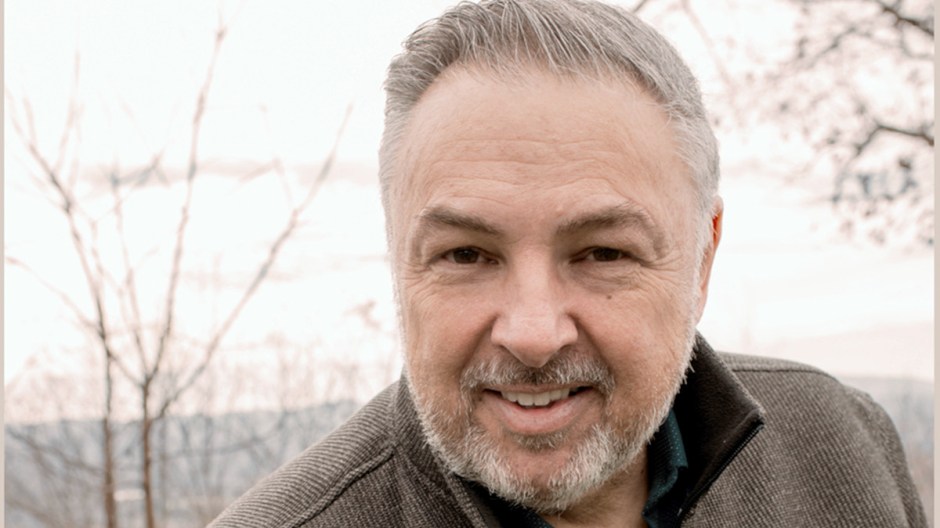
JEFF TURNER

Romans 8 assures Christians that nothing can ever separate them from the love of God, a truth that brings great comfort. However, Jude 21 tells believers to “keep yourselves in the love of God,” which may seem to present a conflict. These passages, though, address different aspects of the Christian life.

Romans 8 speaks about the security of salvation. Once a person is saved, nothing can remove them from God’s love. Jude, on the other hand, is speaking to those who are already secure in Christ. He is urging believers to remain in a place where they can experience the blessings that come through living faithfully. Jude even encourages them to “build yourselves up in your most holy faith” Jude 20 points to growing in biblical truth and obedience.

The call is not about earning salvation but about living in a way that allows the love of God to be fully experienced.

If you keep My commandments, you will remain in My love; just as I have kept My Father’s commandments and remain in His love.

John 15:10

Christians in Pakistan: A Crisis of Persecution and Protection

(Photo credit: Francis Hannaway/ St. Mary’s Catholic Church, Sukkur, Pakistan, July 31, 1992. Creative Commons.)

WILLIAM DESJARDINS

Pakistan’s 4.5 million Christians and other religious minorities face an unprecedented crisis of persecution, systemic discrimination, and legal vulnerability that has reached alarming new heights in recent years. Ranked eighth on the Open Doors World Watch List, Pakistan represents one of the most dangerous places in the world to be a Christian, with minorities comprising less than 4% of the population yet bearing a disproportionate burden of violence and injustice.
At the heart of the persecution lies Pakistan’s controversial blasphemy laws, which carry the death penalty and have become weaponized tools of exploitation and intimidation. A groundbreaking confidential police report titled “The Blasphemy Business” has exposed the dark reality behind many blasphemy accusations: criminal networks systematically targeting young people for financial gain.

These sophisticated scams involve fake social media accounts that lure young men into conversations containing blasphemous content, creating elaborate traps that have ensnared over 450 victims since 2021, according to Pakistan’s Human Rights Commission. Once trapped, families face devastating choices—pay substantial bribes to police to drop charges or watch their loved ones face potential death sentences. Lawyers representing affected families have documented not only arrests and disappearances but also evidence of torture in police custody.

The blasphemy laws serve purposes far beyond their stated religious protection mandate. They have become instruments for land grabs, targeting business rivals, and criminal extortion. Though death sentences are rarely carried out, accusations frequently trigger mob violence and extrajudicial killings that claim lives with disturbing regularity.

A rare glimmer of hope emerged when Justice Ishaq Khan of Islamabad’s High Court ordered the government to investigate the abuse of blasphemy laws, prompted by the revealing police report. However, this hope was swiftly crushed by intense backlash from religious extremist groups. Members of the Tehreek-e-Labbaik Pakistan party publicly attacked the court ruling, while lawyers from the Jamiat Ulema-e-Islam party challenged the order in court. By July 24, Justice Khan’s order was suspended amid fears that hostility could turn violent.

This pattern reflects Pakistan’s troubled history with blasphemy law reform. Historically, any attempt to modify or investigate these laws has been quickly shut down by violent protests from radical Islamic groups, creating a climate where even judicial review becomes impossible.
The situation deteriorated dramatically in 2024, with the Centre for Social Justice reporting a record 344 new blasphemy cases—the highest number in Pakistan’s history. At least 10 individuals accused of blasphemy were extrajudicially killed by individuals or violent mobs during the same year, highlighting the deadly consequences of these accusations.

Christians bear a particularly heavy burden under this system. Despite comprising only 1.8% of Pakistan’s population, roughly a quarter of all blasphemy accusations target Christians. This disproportionate targeting reflects deeper systemic discrimination that permeates Pakistani society and institutions.

The human cost of this persecution becomes clear through individual cases. In June 2024, an elderly man was killed by mob violence after being accused of desecrating the Quran, demonstrating how quickly accusations can turn fatal. The case of Anwar Kenneth illustrates the system’s cruel inefficiency: the 72-year-old Christian spent 23 years on death row after being sentenced to death in 2002 for sending allegedly blasphemous letters. Only in June 2025 did Pakistan’s Supreme Court finally acquit him, ruling that “a person of unsound mind could not be held liable for such a crime.”

The Jaranwala incident in August 2023 exemplifies how blasphemy accusations can trigger community-wide violence. When Pervaiz Masih was accused of writing blasphemous content, violent riots erupted that destroyed at least 20 churches and forcibly displaced hundreds of Christians. On April 18, 2025, Masih was sentenced to death, but the damage to the Christian community had already been done.

Perhaps most troubling is the impact on minority children, as documented in a new report by Pakistan’s National Commission on the Rights of the Child (NCRC). The report, titled “Situation Analysis of Children from Minority Religions in Pakistan,” reveals severe challenges including forced conversion, child marriages, and child labor affecting minority children, particularly from Christian and Hindu communities.

Between April 2023 and December 2024, the NCRC received 27 complaints related to the oppression of minority children, including abduction, murder, forced conversion, and underage marriages. Punjab province, Pakistan’s most populous region, reported the highest number of violence cases against minority children (40%) from January 2022 to September 2024, with 547 Christian victims, 32 Hindus, two Ahmadis, two Sikhs, and 99 others.

The discrimination extends into Pakistan’s educational system, where minority children face multiple forms of marginalization. The Single National Curriculum mandates Islamic religious education with no alternatives for minority students to study their own faiths, effectively infringing on religious freedom and hindering academic progress. Minority students report feeling uncomfortable sharing their religious identities, viewing them as inferior markers that lead to mockery from majority-religion classmates and even encouragement to convert.

Economic exploitation compounds these educational challenges. Many minority households remain trapped in cycles of bonded labor, particularly in brick kilns and agriculture, where entire families, including children, work under cruel conditions. This economic vulnerability makes families more susceptible to various forms of exploitation and abuse.

Forced religious conversions and marriages of Christian and Hindu girls to older Muslim men persist as major human rights violations. Despite legal protections on paper, institutional biases, public pressure, and inadequate law enforcement allow these practices to continue unchecked. These forced conversions often serve to legitimize what would otherwise be recognized as kidnapping and sexual assault.

The persecution occurs within a constitutional framework that explicitly limits religious freedom. Pakistan’s constitution restricts the right to free speech to maintain “the glory of Islam,” creating a legal environment where minority rights are subordinated to religious considerations from the outset.

NCRC Chairperson Ayesha Raza Farooq, working in collaboration with UNICEF, emphasizes that millions of children continue to fall through protection gaps due to fragmented efforts, lack of coordination, and limited political will. The NCRC has urged the government to strengthen legal protections, expand social safety nets, create inclusive education policies, and adopt specific measures to counter child and bonded labor, as well as forced religious conversions.

NCRC Minorities Member Pirbhu Lal Satyani states bluntly that children from religious minorities are among the most marginalized in Pakistani society, facing stigma, stereotyping, and structural exclusion that begins in childhood and continues throughout their lives.

The police report exposing “The Blasphemy Business” has opened new territory in Pakistan’s debate over blasphemy laws, revealing uncomfortable truths for the political establishment about the country’s human rights crisis and the extreme vulnerability of its minorities. However, the swift suspension of judicial review attempts demonstrates the powerful forces aligned against reform.

For Pakistan’s minorities, particularly its 4.5 million Christians, each day brings fresh uncertainty. The combination of weaponized blasphemy laws, systematic discrimination, economic exploitation, and social marginalization creates an environment where basic human dignity remains elusive. Without significant political will to confront extremist groups and implement meaningful reforms, Pakistan’s minorities will continue to live under the shadow of persecution, their children growing up in a society that treats their very existence as somehow lesser and their faith as inherently suspect.
The international community watches as Pakistan struggles with this fundamental test of its commitment to human rights and religious freedom. The outcome will determine not only the fate of millions of vulnerable citizens but also Pakistan’s standing as a nation capable of protecting all its people, regardless of their faith.

The Cross as the Lasting Proof of God’s Love

FLOYD ROGERS

The depth of God’s love was made clear when He sent His Son, Jesus, to die for humanity’s sins. No request a person makes in prayer, no matter how important it seems, will ever require a greater act of love than what God has already shown through the sacrifice at Calvary. The offering of Jesus was a selfless and unmatched gift, showing the extent of God’s care for people.

Since God has already given His greatest gift, every other blessing or need we bring to Him is smaller in comparison. This truth makes it difficult to doubt His love. When faced with uncertainty about God’s care or goodness, one need only reflect on the cross to see undeniable evidence of His love.

“For God so loved the world, that He gave His only Son, so that everyone who believes in Him will not perish, but have eternal life.

John 3:16

The Fear of Change

AMY TURNER

In Luke 8:37, we read about a moment when the people of the Gerasenes asked Jesus to leave their area because they were filled with fear. Jesus had just freed a man possessed by many demons. These evil spirits entered a herd of pigs, which then ran off a cliff and drowned. Word of this spread quickly, and people came from nearby towns to see for themselves.

When they arrived, they saw the man — once wild and dangerous — now calm and in his right mind. You might expect them to celebrate this miracle, but instead, fear gripped them. They couldn’t deny what had happened, yet the power that made it possible unsettled them.

Some people are frightened by what they cannot control, even when it brings good. The idea of a God who holds such power can feel threatening because it means lives might change in unexpected ways. Not everyone welcomes goodness when it challenges the world they know.

Taste and see that the Lord is good;
How blessed is the man who takes refuge in Him!

Psalm 34:8

Genocide Against Christians Escalates Across Africa

WILLIAM DESJARDINS

In the shadows of international headlines, an escalating campaign of violence is unfolding across several African nations, where radical Islamic groups are targeting Christian communities. In Mozambique’s northern Cabo Delgado province, the Islamic State Mozambique Province (ISMP), an ISIS affiliate, has taken responsibility for a series of attacks, including beheadings, village raids, and the burning of churches and homes. Between July 20 and 28, ISMP militants reportedly killed at least nine Christians, beheaded others, and displaced over 46,000 people. Nearly 60% of the victims were children according to the U.N. Office for the Coordination of Humanitarian Affairs.

On July 24, ISMP fighters attacked a Christian village in Chiure district, killing one and setting multiple homes ablaze. Four days later, they claimed responsibility for the capture and beheading of two Christians, releasing 20 propaganda photos through jihadist channels boasting of their attacks. The images, verified by the Middle East Media Research Institute (MEMRI), reveal scenes of mutilated victims, torched churches, and militants standing triumphantly over the corpses of what they call “infidel militias.” MEMRI Vice President Alberto Miguel Fernandez described the unfolding crisis as a “silent genocide” driven by deep anti-Christian hatred, lamenting the lack of attention from the international community.

Mozambique isn’t alone. The Democratic Republic of Congo (DRC) has seen similarly heinous violence at the hands of the ISIS-aligned Allied Democratic Forces (ADF). On July 27, ADF operatives opened fire at a Catholic church in the Christian village of Komanda, killing 45 people, including nine children, and setting fire to homes and businesses. Earlier in the month, the same group slaughtered 43 worshipers during a church service. These acts of terror are part of a broader ISIS strategy to establish a caliphate across Africa through decentralized, cell-based warfare—a shift from the group’s earlier land-occupying tactics in Iraq and Syria.

Despite mounting death tolls and mass displacements, global leaders have remained largely silent. Fernandez warns that ISIS-aligned groups are now in a position to destabilize multiple African nations simultaneously, posing a long-term threat not only to regional security but to global interests. While countries like Rwanda have deployed forces to assist Mozambique, the international response remains fragmented and insufficient. As ISIS continues to expand its ideological and operational reach, Christian communities across Mozambique, the DRC, and Nigeria live under the constant threat of slaughter, their suffering too often overlooked in a world consumed by other headlines.