
Please contact us if you feel our understanding of the terms of use are in error.
Copyright information obtained from https://ttb.org/about/copyright-policy
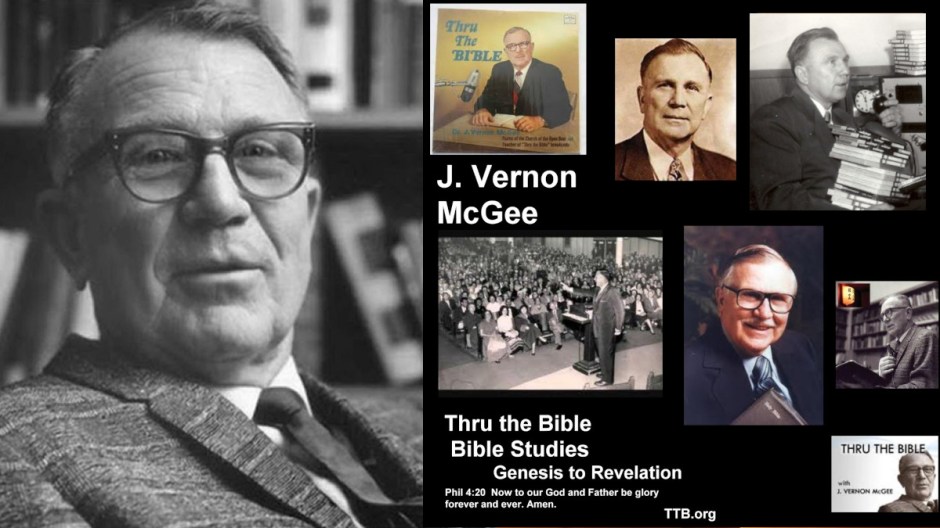
Dr. J. Vernon McGee introduces the Gospel of Mark as chronologically the first Gospel written and emphasizes that its author, John Mark, was not an apostle but had close associations with key figures like Paul, Barnabas (his uncle), and Peter (his spiritual son). Mark’s Jewish name was John, and Mark was his Latin surname. His mother, Mary, was a prominent Christian in Jerusalem whose home served as a meeting place for the church. Mark initially accompanied Paul and Barnabas on their first missionary journey but turned back, causing a disagreement between Paul and Barnabas, with Barnabas later taking Mark to Cyprus. However, Mark eventually redeemed himself, becoming profitable for the ministry later in Paul’s life. Dr. McGee also notes the early church tradition, supported by figures like Papias, that Mark’s Gospel is essentially Peter’s account.
Dr. McGee explains that the Gospel of Mark was specifically written for the Romans, catering to the Roman mind which valued strength and action. He contrasts this with Matthew, written for the nation of Israel and the religious man; Luke, for the thinking man; and John, for the wretched man. The Romans, while bringing peace, justice, and order, did so through force, representing active human power and a tendency towards dictatorship. Mark presents Jesus not as the king (like in Matthew) but as God’s servant, a man of action, with “Flaming headlines” like “Jesus came” and “He is risen”. The style of Mark is described as brief, blunt, pertinent, pithy, and action-oriented, evident in the frequent use of the connective “and”. Unlike Matthew, Mark does not include a genealogy because Romans were more concerned with a servant’s ability to do the job than their lineage.
Moving into Mark chapter 1, Dr. McGee highlights the beginning of the Gospel, which focuses on Jesus’ coming into the world, his public ministry, death, and resurrection. He discusses John the Baptist as the messenger preparing the way for the Lord, baptizing not for the remission of sins but “unto the remission of sins,” preparing people for Jesus’ arrival. Jesus’ baptism by John in the Jordan River marked his identification with mankind, accompanied by the Trinity appearing with the Spirit descending like a dove and the Father’s voice declaring, “Thou art my beloved Son”. Immediately after, the Spirit drove Jesus into the wilderness for 40 days where he was tempted by Satan, alongside wild beasts, while angels ministered to him. Following John’s imprisonment, Jesus began his ministry in Galilee, preaching the gospel of God, calling his first disciples (Simon, Andrew, James, and John) to become “fishers of men”.
Dr. McGee describes a typical busy day in Jesus’ ministry in Capernaum, starting on the Sabbath where he taught with authority, astonishing the people. The first recorded miracle in Mark is the casting out of an unclean spirit in the synagogue, demonstrating Jesus’ power in the spiritual realm. This was followed by the healing of Simon’s mother-in-law who had a fever. That evening, the entire city gathered, and Jesus healed many who were sick and cast out demons, who recognized him. Despite his busy schedule, Jesus made time to pray early in the morning and then decided to move on to other towns to preach. The chapter concludes with the healing of a leper, emphasizing Jesus’ compassion as he touched and cleansed him. Jesus instructed the man to remain silent but to show himself to the priest according to Mosaic law; however, the man disobeyed and publicized his healing widely.
 Texas Gospel Canada Southern Gospel Radio