
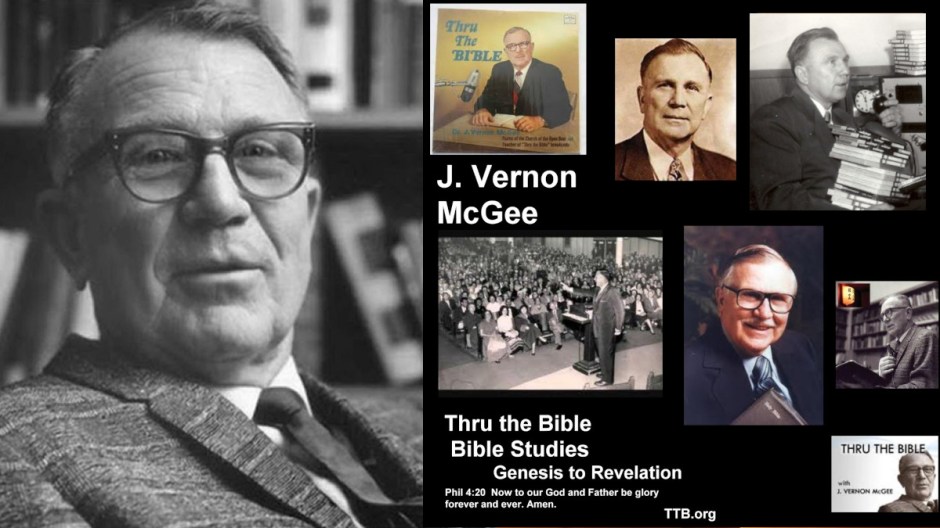
Dr. McGee’s sermon covers Matthew chapters 25 through 28, focusing on his interpretations of the parables, the events leading to the crucifixion, the crucifixion itself, and the resurrection of Jesus Christ.
In chapter 25, Dr. McGee discusses the parable of the ten virgins. He refutes the idea of a partial Rapture based on this parable, stating that he believes every believer will be taken in the Rapture by God’s grace, not merit. He argues that the ten virgins refer to the nation of Israel, not the church. He also touches upon the parable of the talents, emphasizing the principle of using whatever gifts God has given until Christ’s return. Dr. McGee then interprets the Judgment of the Nations in Matthew 25 as occurring during the Great Tribulation, where nations will be judged based on their treatment of Christ’s brethren (the 144,000 sealed messengers). He believes the terms “sheep” and “goats” refer to ethnic groups or nations, not individual lost or saved people.
Moving into chapter 26, Dr. McGee narrates the events leading up to Jesus’s crucifixion. He highlights Jesus’s repeated predictions of his death during the Passover. He describes the anointing of Jesus at Bethany by a woman (identified as Mary in John’s Gospel), emphasizing the significance of her act as an anticipation of his burial. He recounts Judas’s betrayal for 30 pieces of silver and the institution of the Lord’s Supper during the Passover meal. Dr. McGee also discusses Jesus’s prediction of Peter’s denial and the events in the Garden of Gethsemane, where he believes Jesus won the victory over the horror of bearing the sins of the world. He continues with the betrayal by Judas, the arrest of Jesus, and his trial before Caiaphas and the Sanhedrin, including Peter’s denial.
Chapter 27 details the crucifixion of Jesus. Dr. McGee mentions Judas’s remorse and suicide after Jesus’s condemnation. He recounts Jesus’s trial before Pontius Pilate, the crowd’s choice of Barabbas over Jesus, and Pilate’s reluctant decision to have Jesus crucified. He describes the mockery and suffering Jesus endured at the hands of the Roman soldiers before his crucifixion. Dr. McGee notes that the Gospel writers do not give graphic details of the crucifixion itself, suggesting a divine reverence for this event. He highlights the supernatural events that occurred at Jesus’s death, including the tearing of the temple veil from top to bottom (symbolizing open access to God) and the earthquake. He also mentions the burial of Jesus by Joseph of Arimathea and Nicodemus. The chapter concludes with the sealing of the tomb and the setting of a guard by the chief priests and Pharisees who remembered Jesus’s prediction of his resurrection.
Finally, chapter 28 focuses on the resurrection of Jesus and the Great Commission. Dr. McGee emphasizes that the death and resurrection of Christ are the two great pillars of the Gospel. He describes the women coming to the tomb, the earthquake, the angel rolling back the stone, and the angel’s announcement that Jesus had risen. He recounts Jesus’s appearances to the women and later to the eleven disciples in Galilee. Dr. McGee then discusses the Great Commission in Matthew 28:19-20, seeing it as having an application for today, as well as a future fulfillment during the Great Tribulation and the Millennium. He notes the omission of the Ascension in Matthew’s Gospel, suggesting it is because Matthew focuses on the kingdom being upon the Earth and the King remaining. Dr. McGee concludes by affirming that Jesus was born a king, lived as a king, died a king, rose again a king, and will return as the King of Kings and Lord of Lords.
 Texas Gospel Canada Southern Gospel Radio