
Please contact us if you feel our understanding of the terms of use are in error.
Copyright information obtained from https://ttb.org/about/copyright-policy
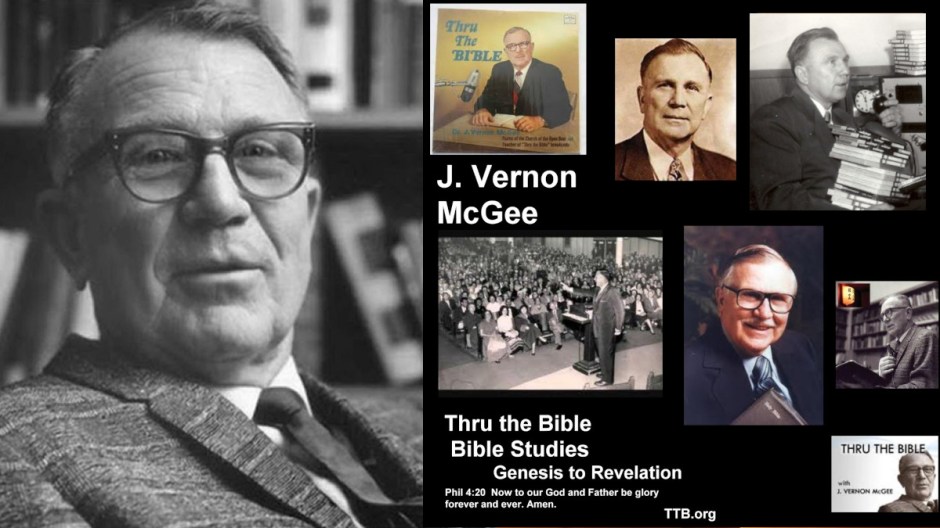
Dr. J. Vernon McGee in his exposition of Matthew 5-7, known as the Sermon on the Mount, emphasizes its significance while clarifying its proper interpretation. He notes that while excerpts appear in other gospels, Matthew provides the most extensive account. McGee believes Jesus likely repeated these teachings on multiple occasions. He highlights two contrasting and erroneous viewpoints on the Sermon: the “far left” liberal theologians who consider it the entirety of the gospel and the only crucial part of Scripture, sometimes even reducing it to the Golden Rule, and the “far right” hyper-dispensationalists who dismiss it as irrelevant to believers today.
McGee firmly states that the Sermon on the Mount is not the Christian Gospel. He contrasts it with Paul’s declaration of the gospel in Corinthians, which centers on Christ’s death for our sins, His burial, and His resurrection according to the Scriptures. These foundational elements of the Christian faith are absent from the Sermon on the Mount. Treating the Sermon as the gospel leads to hypocrisy because its ethical standards are impossibly high for unregenerate individuals to achieve. McGee argues that proclaiming to live by the Sermon while failing to do so creates hypocrites within the church.
He explains that the ermon on the Mount presents law lifted to its highest degree, even exceeding the demands of the Old Testament law. For instance, Jesus redefines murder as including anger towards a brother and adultery as including lustful looking. According to McGee, if one honestly examines the Sermon, they will realize their inability to measure up to its standards and recognize their need for a savior.
Furthermore, McGee clarifies that the modus operandi for Christian living in the present age is not found within the Sermon on the Mount. While it provides high ethical standards that are not contrary to Christian living and indeed express the mind of Christ, it lacks the dynamic power of the indwelling Holy Spirit, which is essential for believers to live righteously. The Sermon offers the ethic, but the Holy Spirit provides the power to live it out.
McGee posits that the primary purpose of the Sermon on the Mount is to set forth the law of the Kingdom of Heaven. He identifies Matthew’s Gospel as presenting Jesus as the King, and the Sermon as the King’s manifesto or the platform of the Prince of Peace. He believes this law will find its full fruition during the Millennium when Christ returns to Earth to rule, enforcing every word of it. While it is for us to learn and understand today, it is not fully in effect in the current age.
Despite this, McGee emphasizes that Christians who acknowledge Jesus as Lord should not despise the Sermon but seek to understand and apply its principles in light of other Scriptures, recognizing they can only obey through the power of the Holy Spirit. He notes that the Sermon on the Mount can bring conviction to the hearts of men, revealing their sinfulness and their falling short of God’s glory. It reveals Christ’s deeper definitions of sin, like murder and adultery of the heart.
McGee then delves into specific aspects of the Sermon. The Beatitudes describe the characteristics of the citizens of the Kingdom, such as being poor in spirit, mourning, and meek. He stresses that these are states of being, not achieved through human effort but produced by the Spirit of God. He points out that some of these promises, like the meek inheriting the earth, are not currently being fulfilled, indicating their future application in the Kingdom.
In chapters 6, McGee discusses the externalities of religion – giving of alms, prayer, and fasting – emphasizing that these should be done sincerely and privately as acts of devotion to God, not for public recognition or praise. He criticizes ostentatious displays of piety, noting that those who seek human glory have already received their reward. He considers the Lord’s Prayer a model prayer, offering guidance on how to pray with sincerity and simplicity, but cautions against its rote recitation, especially when its specific petitions don’t align with one’s present circumstances. He also addresses the topic of money, urging believers to invest in eternal treasures by supporting the Lord’s work. He touches on anxiety about material needs, encouraging trust in God’s provision while still exercising wisdom.
Chapter 7 addresses judging others, cautioning against harsh and condemning judgment of inward motives. However, McGee clarifies that this doesn’t forbid discerning fruits and judging wrong actions. He uses the analogy of a speck in a brother’s eye versus a log in one’s own to illustrate the hypocrisy of focusing on others’ minor faults while ignoring one’s own significant shortcomings. He also discusses the principle of not casting pearls before swine, implying a need for discernment in sharing spiritual truths. McGee highlights the importance of prayer in understanding how to interact with others and emphasizes the Golden Rule as a principle to operate by, within the broader context of seeking God’s will. He contrasts the straight and narrow way to life with the wide path to destruction and warns against false prophets, who are to be known by their fruits. He concludes by reiterating that not everyone who claims to follow Jesus will enter the Kingdom, but only those who do the will of the Father. True discipleship involves building one’s life on the rock foundation of Christ.
In a concluding summary, McGee explains that God governs mankind through three great systems: the Mosaic Law, which revealed sin; the present age of Grace, where salvation is by faith in Christ and believers live by the power of the Holy Spirit; and the future Kingdom, where the law of the Sermon on the Mount will be enforced by Christ. He stresses that salvation today is solely through faith in Christ’s death and resurrection not by adherence to any law, including the Sermon on the Mount. The human heart is the fundamental problem, requiring regeneration by God. The Christian life in this age is characterized by the fruit of the Spirit, not by striving to keep a code of conduct through human effort. The Sermon on the Mount, therefore, serves to highlight our spiritual inadequacy and drive us to seek salvation and the enabling power of the Holy Spirit in Jesus Christ.
 Texas Gospel Canada Southern Gospel Radio