Daywind Radio has a new group to introduce to Southern Gospel fans. Weeks Revival has arrived, and their debut single, “Breakin’ Loose,” was added to our airplay this week.
The trio is made up of JJ Weeks, Mark Clay, and Benjamin Scott, three men who bring decades of ministry experience and deep church roots to everything they do. Southern Gospel is not a new world for any of them. It is where they came from, and it is who they are.
Mark Clay’s story begins in a small town in Oklahoma, where music was not really part of the local scene. But it was in his blood. At just 19 years old, he received a call from the Nelons to begin travelling, singing, and performing bass with them. That early step led him to a long and faithful road. As JJ Weeks explains, Clay eventually found his way to a group called New Song, and has stayed with them for more than 30 years.
Benjamin Scott’s path was different but no less meaningful. He ended up travelling with JJ Weeks before that journey, too, led him to New Song.
As for Weeks himself, his roots go deep. “I grew up in church. Southern Gospel,” he says simply — words that carry a lifetime of meaning.
Now the three have come together under one name, and they are ready to share what they have. “We are so excited for you to hear our first single,” Weeks says. “We think it takes us right back to our roots, and we pray that it touches you the way it touches us.”
Daywind Radio has called Weeks Revival a natural addition to the Daywind family, a group that not only respects the Southern Gospel tradition, but is committed to honouring it and adding to it with genuine talent and hearts for ministry.
Throughout the book of Acts, we see patterns repeating themselves. The early church faced challenges that believers still encounter today. History moves in cycles and the struggles Christians experienced centuries ago continue in our time.
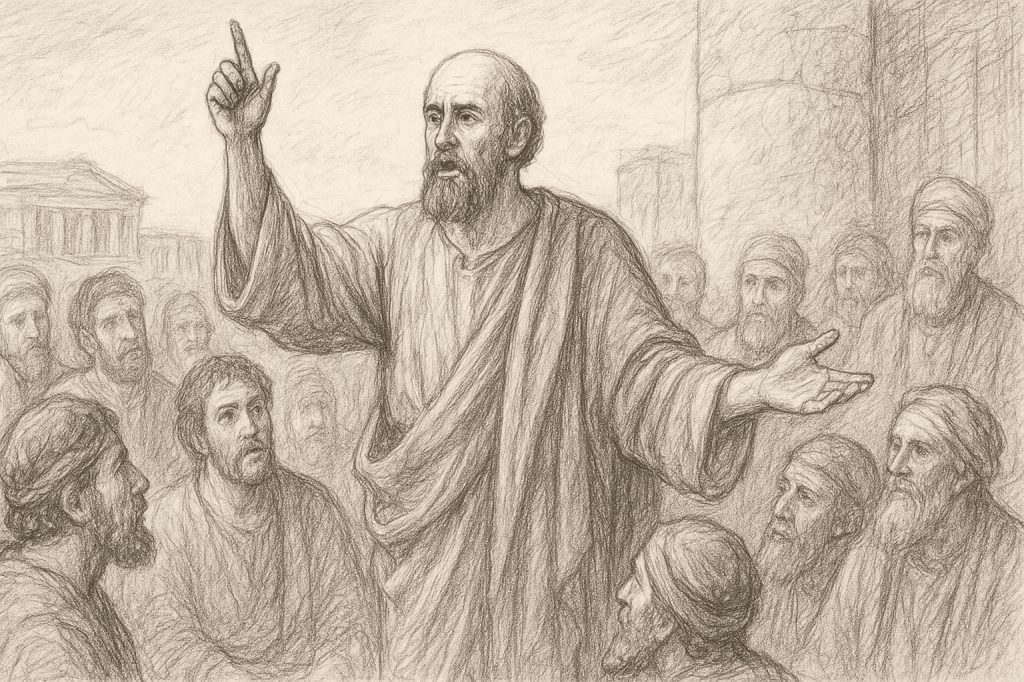
Apostle Paul, IRS Images, 2025
In Acts chapter 19, Paul performed remarkable miracles in Ephesus. Cloths that touched him brought healing to the sick and drove out evil spirits. Some traveling Jewish exorcists tried to copy this power. Seven sons of a chief priest named Sceva attempted to cast out demons using Jesus’s name. They said they commanded the evil spirit by the Jesus that Paul preached. The demon responded that it knew Jesus and recognized Paul, but asked who they were. The possessed man then attacked them with such strength that they ran away injured and without clothes.
This raises an important question for every believer. Do we truly know Jesus Christ, or do we only know about him? We might know facts about famous people or political leaders without having a personal relationship with them. Similarly, we can serve in church without actually knowing Christ? When our lives end and we stand before God, the critical question will be about our relationship with his Son. We might attend services, sing in worship teams, or teach children, yet still lack a real connection with Jesus. The knowledge of God’s Son brings freedom and allows miracles to work through us. Everyone must consider what Jesus Christ means to them personally.
The book of Daniel provides guidance for believers living in difficult circumstances. Rather than focusing on calculating which nations fit specific prophecies, the message examines practical applications for daily life. The opening chapter emphasizes that God controls history. Empires rise and fall according to his will. The key phrase appears in verse two: “the Lord gave.” God gave Jerusalem’s king and temple articles into Babylonian hands. This was not an accident but part of God’s plan.
Nebuchadnezzar took captives from Judah, including members of royal and noble families. He selected young men without physical defects who were handsome and intelligent. These young men needed to be capable of learning and qualified to serve in the palace. The king assigned them food and wine from his own table. They would study for three years before entering his service. Among them were Daniel, Hananiah, Mishael, and Azariah. The Babylonian officials gave them new names: Belteshazzar, Shadrach, Meshach, and Abednego.
Understanding Babylon requires looking at three appearances of this concept in scripture. Each represents a different stage in humanity’s rebellion against God.
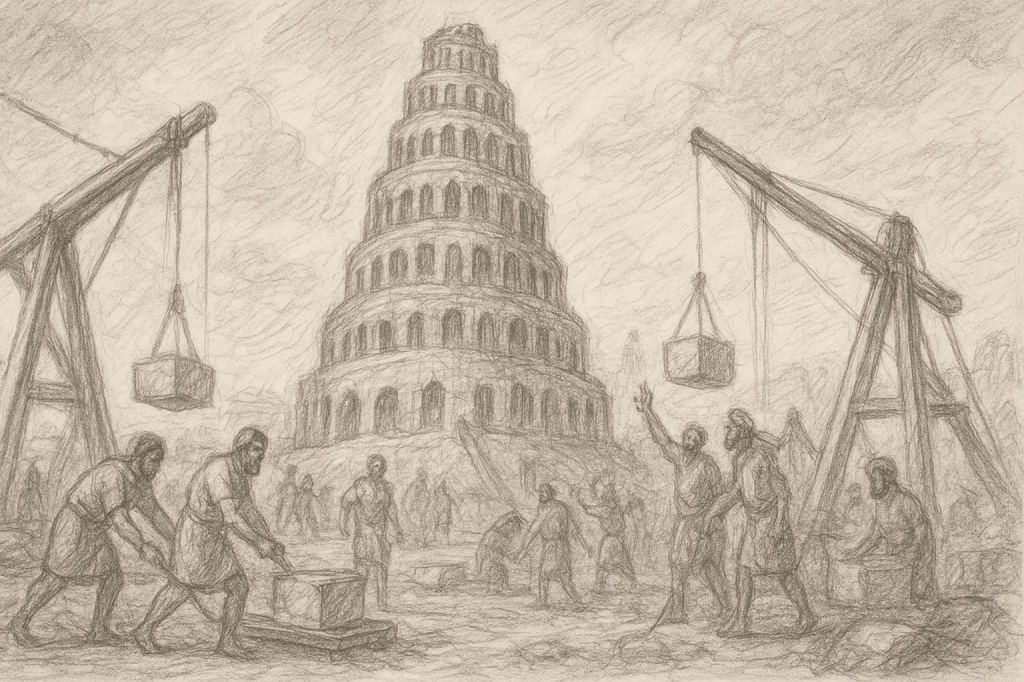
The Tower of Babel, IRS Images, 2025
The first Babylon appears in Genesis as the Tower of Babel. After the flood, all people spoke one language. They settled in a plain and decided to build a city with a tower reaching the heavens. Their stated purpose was to make a name for themselves and avoid being scattered across the earth. This directly opposed God’s command to spread throughout the world. God came down, confused their language, and scattered them anyway. This first Babylon shows human pride and the desire for glory apart from God. People united to create something impressive by their own power. They wanted to build high and become famous. This represents the beginning of civilizations built on human achievement rather than obedience to the Creator.
The second Babylon was Nebuchadnezzar’s empire described in Daniel. Here the desire to build a tower succeeded on a massive scale. This was not just pride but total control over people’s lives. The empire wanted to dominate not only outward actions but inner thoughts. It sought control over both body and soul. Nebuchadnezzar walked on his palace roof and declared that he built great Babylon through his mighty power for the glory of his majesty. This Babylon represents state power that seeks to unite peoples, conquer cultures, and force everyone into one system. God destroyed this kingdom in a single night. The pattern applies to any modern nation that tries to compete with God through its strength, culture, or science. These systems enslave and control people, creating feelings of helplessness. You can fight but cannot win. For believers, this creates even deeper distress because Babylon always fights against the heavenly kingdom.
The third Babylon appears in Revelation as a spiritual force at its peak. An angel showed John a woman called “the great prostitute” who sits by many waters. Kings committed adultery with her, and earth’s inhabitants became drunk on her wine. She wore purple and scarlet, covered in gold, precious stones, and pearls. She held a golden cup filled with terrible things. Her forehead bore the name “Babylon the Great, the Mother of Prostitutes and of the Abominations of the Earth.” The vision showed her drunk with the blood of God’s people who testified about Jesus.
Let’s reflect on this for a moment. The first Babylon wanted fame and power. The second created a great empire with control and forced assimilation. The third combines everything into complete corruption. Babylon always desires the blood of those who follow God. No nation offers a safe escape. Every country represents a form of Babylon. When any of these systems grows powerful enough, it will eventually want to harm God’s people. Believers should prepare for this reality rather than being surprised by it. The first Babylon sought glory. The second wanted empire. The third takes pleasure in bloodshed. Each version becomes worse than the one before. Humanity without God does not improve but degrades over time. This continues until Christ returns.
Every believer lives in Babylon by default. This is not about moving from one country to another. As citizens of heaven, we exist within these fallen systems. We need to understand how to survive in this environment. Any nation that forms a government carries characteristics of Babylon. When people create states, two elements appear. The good part copies God’s kingdom: order, justice, structure, protection of the weak, punishment of wrongdoing, hierarchy, and authority. These things often appear in national constitutions. The bad part comes from sin: pride, subjugation, tyranny, manipulation, control, desire for power, corruption, and violence. When Babylon fully develops, it becomes a beast. On the outside, it appears as a golden statue representing civilization and order. Inside, it devours people.
Daniel lived in Babylon for 70 years, spending his entire life there. He did not fall into depression, complain, or develop hatred. He did not break down, lose faith, or become absorbed into the culture. Instead, he influenced the empire. Nebuchadnezzar came to recognize God. Belshazzar heard prophecy. Darius issued a decree about God. Daniel remained strong throughout. The important question becomes: What is Babylon doing to us? How has it captured us? How is it using our mental capacity without our realizing it?
To survive in Babylon, believers must keep their minds pure, their hearts faithful, and their lives holy. Our true home is in heaven. God keeps our hearts and minds pure so we can stand firm without being absorbed into the culture or falling into despair. Daniel stood firm, and believers today can do the same with God’s help.
For our citizenship is in heaven, from which we also eagerly wait for a Savior, the Lord Jesus Christ;
I believe that Christian freedom represents one of the most misunderstood concepts in the life of faith. When believers receive salvation through Christ, they gain liberty from the burden of the Mosaic law, yet this freedom comes with responsibilities that many fail to recognize.
Living under law-based religion never brings lasting joy or satisfaction. Those who tried found only temporary gratification that quickly turned to disappointment when they failed again. This struggle appears clearly in Scripture, where one writer describes the internal battle of wanting to do right but doing wrong instead. The desire existed, but the ability to consistently follow through did not.
When someone turns to Christ, everything changes. Believers no longer try to obey an external set of rules. Instead, they receive an internal guide. The Holy Spirit dwells within them. This inner law provides direction and strength that external commandments never could. While the flesh still creates problems and causes stumbling, the Spirit offers power to live differently.
Once and for all The Savior came to give his life away To save the lost To fight and win the war of love and hate He paid the cost that only he himself could ever pay He bled and died upon a cross once and for all
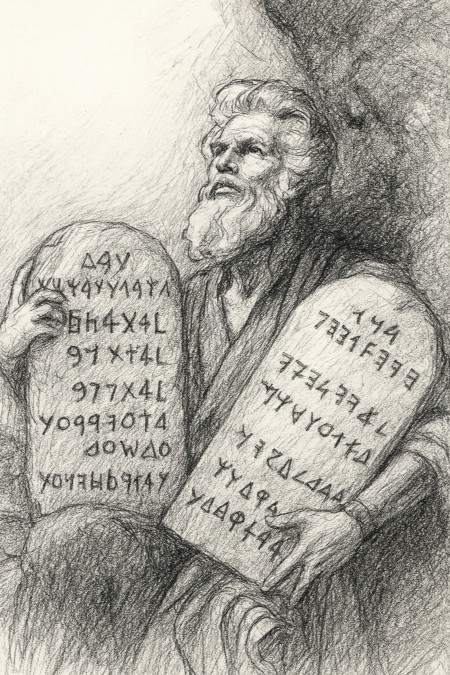
Freedom in Christ means liberation from several things. First, believers are freed from the penalty of sin, which is death. Second, they gain freedom from the power of sin through daily trust in Christ. Third, they no longer live under the Mosaic law, which could only expose sin but never forgive it. The law showed people God’s standards, but righteousness comes only through faith in Jesus.
This liberty creates a desire for holiness and a hatred of sin. True believers do not tolerate ongoing disobedience in their lives. When they fail, they repent quickly and turn away from wrongdoing. Christian maturity shows itself in how rapidly someone abandons sin after falling into it.
Yet Christian freedom involves more than just avoiding evil. Liberty in Christ means believers are now free to serve others. Salvation includes this purpose, to serve God and fellow believers. One key sign of spiritual maturity is how much a person serves in the church community. True spirituality shows itself not through impressive speaking or extensive Bible knowledge alone, but through practical service to others.
Sin makes serving impossible because it represents the ultimate selfish behaviour. Sin focuses entirely on personal satisfaction and desires, with no concern for other people. When Christ delivers someone from sin, this self-centred dynamic changes. Believers begin to think about others and look for ways to help them.
Jesus demonstrated this principle clearly with his disciples. He explained that true greatness comes through service, not through seeking position or recognition. Though he deserved to be served, he chose to serve others. His followers must do the same.
Christian love for one another serves as evidence to the world that believers belong to Christ. People watching the church should see a different way of relating. Christian liberty means freedom from the law’s condemnation and freedom to love and serve others through the Spirit’s power. The heart of what it means to follow Christ is not following endless rules, but living by an internal guide who empowers believers to love as they have been loved.
I am giving you a new commandment, that you love one another; just as I have loved you, that you also love one another. By this all people will know that you are My disciples: if you have love for one another.”
The message of the gospel reminds believers that Jesus Christ is both eternal and personal. He existed before creation, yet chose to live among humanity in love and humility. Before the world began, He knew the cost of redemption. He knew that He would give His life so others might be free from sin. His death on the cross and His resurrection are the foundation of Christian hope. Every act of worship and communion points back to this truth: salvation and forgiveness come only through Him.
The bread and the cup of communion serve as reminders of what Jesus did. His broken body and shed blood paid for every sin without exception. There are no limits to His forgiveness; nothing is beyond His power to cleanse. Because of His sacrifice, believers are protected and secure. The blood of Jesus acts as a covering over the soul, something even the enemy cannot touch without God’s permission. And salvation is not something we can earn or maintain on our own. It is a gift that continues by the strength of Christ’s blood until the day we see Him face to face.
The Bible teaches that while salvation is secure, many Christians still live in fear. Paul’s words to Timothy remind us that fear is not from God. “For God has not given us a spirit of fear, but of power, love, and a sound mind.” Paul wrote these words from prison to a young man struggling with anxiety and discouragement. Timothy needed to be reminded that fear weakens our faith, while confidence in God restores our strength.
Fear is one of the main tools Satan uses against believers. He cannot take away salvation, but he can steal the peace and joy that come with it. Fear clouds our judgment, fills our minds with “what if” questions, and causes us to focus on the negative. It often begins when we see others suffer and assume the same will happen to us. The enemy uses these comparisons to make us worry and doubt God’s care.
Another way fear grows is through constant exposure to negative information. Many people live attached to screens and news feeds that only increase anxiety. Fear spreads through what we hear and see, and before long, it becomes part of our thinking. God’s Spirit urges us to disconnect from what feeds fear and instead focus on what builds peace and faith.
If God is not the source of fear, then it must come from another place. Satan uses fear to confuse and deceive. It pushes us toward unwise decisions made out of panic rather than trust. Fear makes people act irrationally, doubt the truth of Scripture, and believe lies that contradict God’s Word. It can even paralyze us, keeping us from moving forward or doing what God has called us to do.
But fear also exposes what we trust most. If our confidence is in money, health, or reputation, those things can fail. Confidence built on God’s promises, however, remains steady because He never changes.
Paul reminded Timothy that true confidence does not come from our own strength but from knowing who God is. “I know whom I have believed,” Paul said, “and I am persuaded that He is able to keep what I have committed to Him until that day.” God is able. When we are unsure, He remains certain. When we are weak, His strength sustains us.
God’s purpose guides everything in a believer’s life. Even when His plans are unclear, He works all things for good for those who love Him. Trusting that purpose allows us to face uncertainty with peace. Faith does not remove all fear, but it gives courage to stand firm despite it. His promises are the believer’s anchor as the world changes constantly and His Word stays the same.
One day, every tear will be wiped away, and the struggles of this life will be forgotten in the presence of Christ. Until that day comes, followers of Jesus are called to live with faith and confidence, not anxiety. Each day is an opportunity to trust God’s power, rest in His purpose, and hold on to His promises.
For God has not given us a spirit of timidity, but of power and love and discipline.
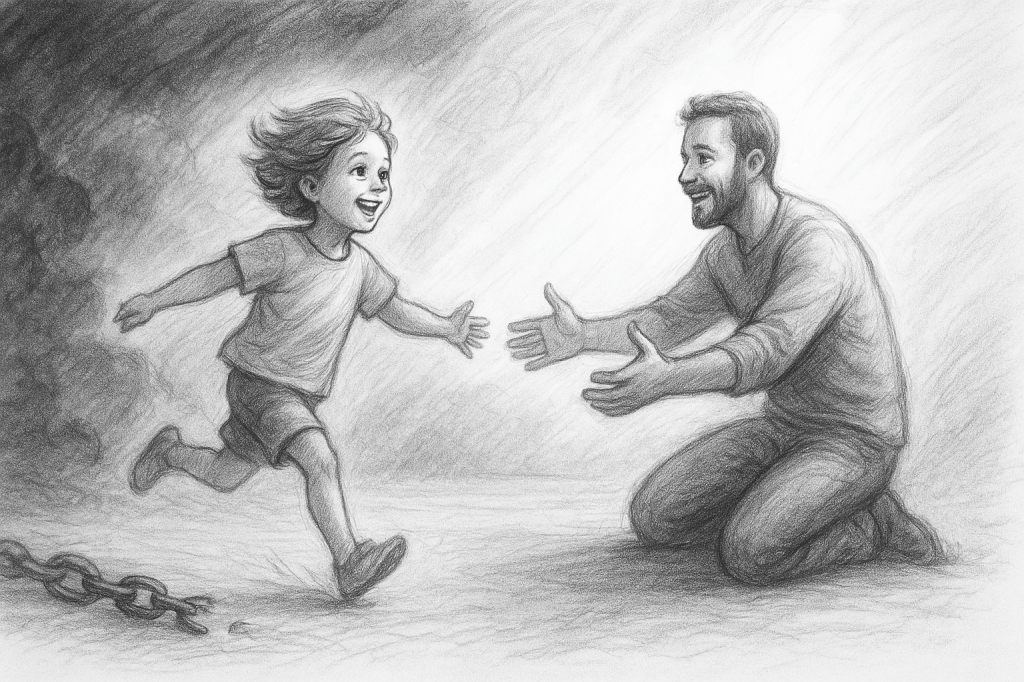
We can approach God like a child approaches his father. Our sins lie on the ground like a broken chain. IRS Images, 2025
Fear does not help love grow. If someone lived in fear that their partner might leave them for small mistakes, they could not feel close to them. They would be nervous all the time. In the same way, a person cannot feel close to God if they are always afraid He will push them away. The message of the Gospel gives a different picture. Those who trust in Jesus can know they are held safe by Him. This confidence does not encourage wrong behaviour. It encourages obedience because believers know God is a loving Father, not someone waiting for them to fail.
Jesus said that His followers belong to Him and that no one can pull them from His care. If a believer could still end up in hell after trusting Jesus, it would damage the honour of Christ. He promised eternal life, and He keeps His promises. Knowing this gives believers courage to face hardship. They can remember that they belong to God, and that He will not let them go.
Christians are no longer under the control of sin. Sometimes people hear that they are only human and must give in to anger, revenge, or sexual sin. Some even believe it is unhealthy to show restraint. But the Bible teaches that Christians do not have to obey these desires. God accepts people as they are when they come to Jesus, but He does not leave them unchanged. The Holy Spirit begins shaping them into a new person.
When we walk with the Lord in the light of his word, what a glory he sheds on our way! While we do his good will, he abides with us still, and with all who will trust and obey.
To stay strong, Christians must remember what God has said. Verses like those that promise eternal life can help when doubt appears. Other verses help when temptation comes. Believers can choose to use their lives to serve good instead of evil. Remember: When Jesus covered our sins with His blood, he knew every sin you ever committed. He also knew every sin you would commit from that time on.
When Jesus faced temptation in the desert, He quoted Scripture each time. Satan did not run away because the verses harmed him. He left because he saw that God’s word strengthened Jesus to keep following His Father. That is what the word of God does. It gives strength to keep choosing what is right.
At the centre of all of this is a simple question: Do you know you belong to Jesus?
Therefore, as you have received Christ Jesus the Lord, so walk in Him,



 Texas Gospel Canada Southern Gospel Radio