A mother’s grief inspires Amber Lynn’s ‘Till We’re Together

TEXAS GOSPEL VOLUNTEER

Amber Lynn has spent years writing songs that speak to faith, hope, and perseverance. But her latest release reaches into a place far more personal, inviting listeners into a chapter of grief that continues to shape her life.

The Sonlite Records artist, who also serves as the lead vocalist for Southern Gospel trio 11th Hour, wrote the song alongside Kenna West, Lauren Talley, and Michael Farren. At its heart is the loss of the child she and her husband, Garrett, lost in 2021, a story she says remains impossible to separate from her faith.

Provided to YouTube by Syntax Creative
Till We’re Together · Amber Lynn
Till We’re Together
â„— 2026 Sonlite Records
Released on: 2026-07-10

“This song was written by myself, Kenna West, Lauren Talley, and Michael Farren, in loving memory of the precious child my husband and I lost in 2021,” Amber Lynn says. “Losing a child is a heartbreak that never truly leaves you, it’s a grief we will carry in our hearts for the rest of our lives.”

Rather than masking that pain with elaborate production, the recording embraces simplicity. Built around Tim Parton’s piano with only subtle atmospheric accompaniment and produced by Roger Talley, the performance leaves room for every lyric to breathe. The result is an intimate meditation on loss, one that acknowledges the weight of unanswered questions while holding tightly to the promise of reunion.

“Yet even in the deepest sorrow,” she says, “we hold onto the hope of Heaven. The hope that one day we will finally say hello to our baby… and will never have to say goodbye again.”

That hope echoes throughout the song’s lyrics, which reflect on milestones that never came, a first smile, first steps, bedtime routines, and the lingering ache of a life imagined but never lived on earth. Rather than offering easy explanations, the song gives voice to emotions many grieving parents quietly carry.

For Amber Lynn, that honesty was essential.

“This song,” she says, “is for every mother and father who knows this pain, for every parent who carries both love and loss in the same breath. You are not alone.”

Her willingness to tell that story grows out of a lifetime shaped by faith and music. Raised in Sterlington, Louisiana, as the daughter of a pastor, Amber was surrounded by gospel music from an early age. As a teenager, she sensed a calling to write and minister through music, a journey that eventually led to the formation of 11th Hour.

She has since written more than 200 songs, with recordings by 11th Hour and artists including The Martins and The Whisnants. Along the way, she has earned recognition as both a vocalist and songwriter, while also completing a diploma in Christian counseling that allows her to minister at women’s conferences and concert events.

Today, Amber and Garrett are raising their son, Vinny, and daughter, Penny, while serving at their home church, Trinity Baptist in Asheville, North Carolina. Their family story now includes both profound joy and profound loss, realities that coexist in the message of her latest recording.

The song does not attempt to resolve grief. Instead, it offers something quieter: the assurance that sorrow can exist alongside hope, and that faith can sustain people through questions that may never be answered.

For Amber Lynn, that is the message she hopes listeners carry with them long after the final piano notes fade. “You are not alone.”


A song for the darkest night: how despair becomes prayer

WILLIAM KILLIAN

There is a particular kind of suffering that does not knock before it enters. It simply arrives, and suddenly the warmth you had known is gone. The church has not always been kind to such moments. There is a strain of Christian thinking, well-intentioned but deeply harmful, that treats joy as a spiritual obligation and sorrow as a symptom of weak faith. And so suffering people learn to perform a wellness they do not possess, pressing a smile over a wound that quietly festers in the dark. But the scriptures will not allow this. Tucked within the Psalms, that great songbook of God’s people, is a psalm so extraordinarily dark that it ends on the word darkness and simply stops. God put it there. He preserved it through the centuries and placed it in the worship book of his people, declaring something profound: there is no emotional territory so bleak that he refuses to meet us there.

To lament is not to despair without direction. It is to take your pain and aim it at God, to cry out rather than shut down, to bring the full weight of your suffering into the presence of the One who made you and has not, despite every feeling to the contrary, abandoned you. The psalmist in Psalm 88 is drowning, and he says so plainly. He feels buried, forsaken, cut off from companions and from light. And yet he is talking to God. His theology has not resolved his suffering. His faith has not produced relief. But his despair has become a prayer, and that prayer is enough. Silence, for the suffering soul, is a kind of death. But speech, even broken and anguished speech aimed at heaven, is a refusal to let go.

And here is the Word that changes everything: there was One who descended into that darkness fully and completely, not because of his own sin but because of ours. When Jesus cried out from the cross, asking why God had forsaken him, he was experiencing, in the most literal and devastating sense, everything this psalm describes. He went all the way to the bottom, and then he rose. Because he has been there, no suffering Christian descends to a place where Christ has not already walked.

When you are in a season of Psalm 88, if you have prayed and heard only silence, you still have one thing: a voice. Use it. Cry out. Grief given to God is never wasted, and the darkest songs, faithfully sung, are still songs of praise.

For I am convinced that neither death, nor life, nor angels, nor principalities, nor things present, nor things to come, nor powers, nor height, nor depth, nor any other created thing will be able to separate us from the love of God that is in Christ Jesus our Lord.

Romans 8:38-39

The Kingsmen blend tradition and new songs on anniversary album

TEXAS GOSPEL VOLUNTEER

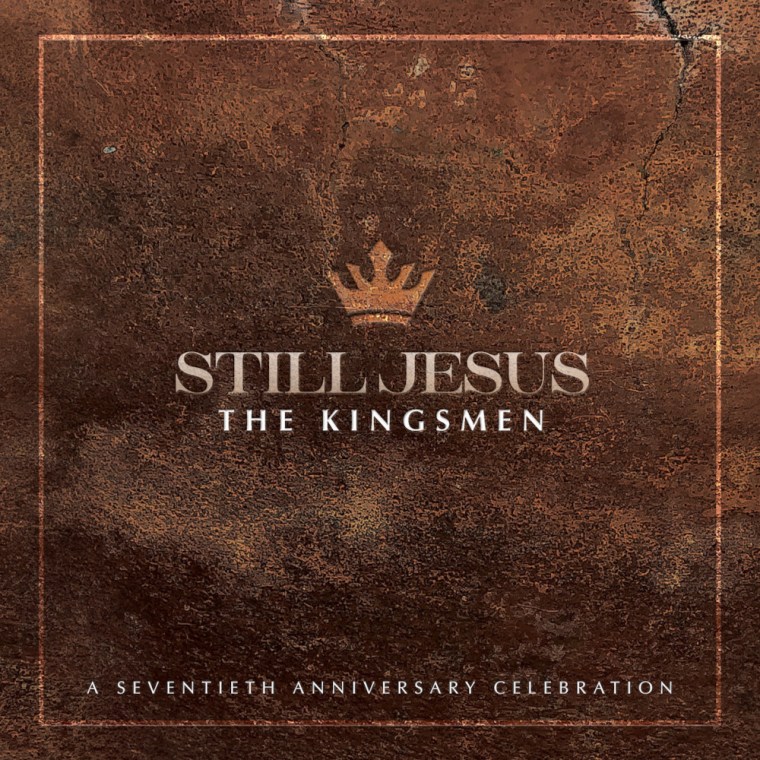
For seven decades, the Kingsmen have built a reputation by honoring Southern Gospel traditions while continuing to evolve. Their latest release, Still Jesus, reflects that balance, looking back at the group’s history while introducing new music that points toward its future.

The Horizon Records album, subtitled A Seventieth Anniversary Celebration, arrives as both a milestone and a statement of purpose. Rather than simply revisiting familiar material, the collection blends restored classics, previously unrecorded songs from the group’s archives, and brand-new recordings from some of gospel music’s most respected songwriters.

“For me,” says Kingsmen vocalist Alan Kendall, “this album is both a culmination and a beginning for the Kingsmen.”

That perspective shaped every decision behind the project. Kendall says the group wanted to celebrate its legacy without becoming confined by it.

“We have always been diligent to honor our Kingsmen roots,” he explains. “But those exact same roots also tell us that the Kingsmen have always been a forward-thinking group.”

That philosophy led the quartet to revisit classic arrangements while preserving the character longtime listeners have come to expect. The album also includes two older songs that had never been recorded by the Kingsmen, including one written by Squire Parsons in 1989, alongside five newly written selections from songwriters whose work has helped define the group’s modern catalog.

“Ronny Hinson, Kenna Turner West, Joseph Habedank, Lee Black, Rachel McCutcheon, and more, all sent us some of their finest material to date,” Kendall says.

The result is an album that moves comfortably between generations. Familiar harmonies anchor classics such as “I’ll Live Again,” while songs like “I Forgive Your Sin” and “When Sunday Morning Dawned” feature sweeping orchestration. Elsewhere, country influences shape tracks including “That Very Moment” and “I Stand Upon The Rock of Ages,” giving the collection a broader musical palette without losing its identity.

The closing track serves as the album’s emotional centerpiece. Nineteen former Kingsmen members reunite as an alumni choir to perform “Is That the Old Ship of Zion,” one of the group’s signature songs.

“I’ll advise our fans to listen to this album all the way through,” Kendall says. “It is quite a ride.”

For drummer Brandon Reese, whose father, Ray Dean Reese, helped establish the Kingsmen’s enduring legacy, the anniversary project carries both personal and spiritual significance. As the group’s manager and leader, he sees Still Jesus as more than a celebration of longevity.

“We tried to incorporate something that just about anybody would enjoy,” Reese says, pointing to the mix of new songs, re-recorded favorites, and appearances by more than 15 Kingsmen members spanning seven decades.

His hope, however, extends beyond the music itself.

“Most importantly,” Reese says, “it is my prayer that you hear something in this album that helps you in your every day walk, because no matter the issue, the answer is Still Jesus. And with the Kingsmen, even after 70 years, the answer will always be Still Jesus.”

The purifying fire of the trial you cannot handle

JEFF TURNER

There is a moment in certain trials when you come to the end of what you can manage. You have brought everything you have, every resource, every strategy, every reserve of strength and patience and faith, and none of it is sufficient. You cannot handle what you are in the middle of. And it is precisely at that moment, when the self-sufficiency runs out, that something God has been waiting for becomes possible.

Because what happens when you face something you cannot handle? You go to your knees. And on your knees, something shifts. The heart that was perhaps moving through its days with a kind of spiritual self-confidence, checking its own boxes and keeping its own accounts, is now searching itself before God, asking hard questions, repenting of what the ordinary days allowed to accumulate, clearing the ground so that the voice of God can be heard without obstruction. This is the purifying process, and it is not incidental to the trial. It is the point of it. The fire does not destroy the believer. It refines them. This is why the psalmist, looking back across his own suffering with the clarity that only distance provides, arrived at what sounds like a startling conclusion: it was good for him. Not easy. Not painless. Good. The God who loves you enough to allow the fire is the same God who is standing in it with you, and he will not remove you until the work is done.

For it is time for judgment to begin with the household of God; and if it begins with us first, what will be the outcome for those who do not obey the gospel of God?

1 Peter 4:17

Carolina The Band loses a longtime voice as Mitchell Whisnant steps away

JEFF TURNER

Every band has a shape that shifts over time; new members arrive, others move on, and the sound bends around whoever’s left holding the songs. For Carolina The Band, that shape is changing again. Mitchell Whisnant, the North Carolina outfit’s lead guitarist and vocalist, has announced he’s leaving after five years of touring and recording with the group.

The news lands the way these things usually do in the music world: quietly, then all at once. Whisnant framed his exit not as a rupture but as the natural end of a chapter, saying the decision came after a season of reflection, gratitude, and anticipation for what lies ahead, both personally and professionally. It’s the kind of language that sounds diplomatic on paper but carries real weight when you consider what those five years actually looked like: van rides between towns, soundchecks in rooms that were half empty and then, eventually, full; the slow accumulation of a following built one night at a time.

That grind is where Carolina earned its reputation. The band has spent years crisscrossing the country, and the qualities that show up on any list of what makes a great live act, dynamic performances, exceptional songwriting, pristine vocals, and an enthusiasm for the audience that never reads as manufactured, are the qualities people keep coming back for. Carolina built that trust the old-fashioned way, night after night, and it’s part of why Whisnant’s departure feels significant rather than routine.

Bands survive lineup changes; the good ones almost always do. But there’s no pretending a five-year member walking away doesn’t leave a mark on the sound and the story. Whisnant’s guitar work and vocals have been part of Carolina’s identity since he joined, and whoever steps into that space next inherits not just a role but a relationship, the one between a band and the fans who’ve watched it evolve.

Carolina’s evolution has always been the story anyway. Each change has forced growth, and each new person has left a fingerprint on the collective style that defines the band. Whisnant’s exit is simply the latest chapter in that ongoing rewrite, and if the band’s history is any indication, they’ll keep moving, keep touring, and keep finding new ways to hold onto what made people fall for them in the first place.