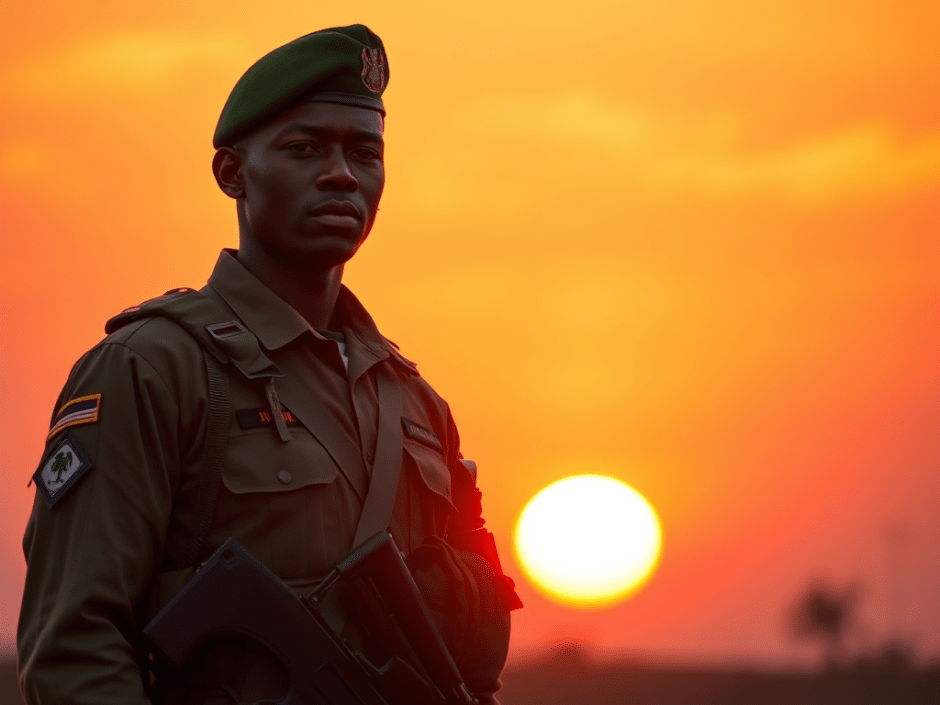
Islamist Terrorists Massacre Christians in Congo and Nigeria Amid Growing Wave of Violence

William Desjardins

On July 27, Islamist terrorists carried out a brutal massacre at a church in the Eastern Democratic Republic of Congo (DRC), killing at least 49 Christians who had gathered for worship. The attackers, jihadists allied with the Islamic State, struck during a Silver Jubilee celebration where worshipers had come from surrounding villages to pray for security and peace. Instead, the congregation faced unimaginable violence, as attackers stormed the church wielding machetes. Witnesses report that Christians who attempted to flee were hunted down and killed, while others were beheaded inside the sanctuary. Most of the victims were Catholic believers, cut down in the middle of a service meant to reaffirm their hope and faith.

The violence was carried out by members of the Islamist Allied Democratic Forces (ADF), a Uganda-rooted rebel group long recognized as one of the region’s deadliest militias. The ADF, which has pledged allegiance to the Islamic State, has intensified attacks on Christians in the DRC as part of its broader effort to establish a caliphate under strict Islamic law. In this latest massacre, nine children were reportedly decapitated, and several others were abducted, underlining the group’s deliberate targeting of the most vulnerable. Pope Leo XIV issued a strong condemnation of the killings, denouncing the atrocity as a brutal violation of human dignity and a direct assault on the Christian faithful.

The aftermath of the massacre in Komanda village was devastating. The U.N. peacekeeping mission, MONUSCO, was forced to deploy earth-digging machinery to create a mass grave for the victims, as the death toll overwhelmed local resources. Many of those buried had already sought refuge in Komanda after surviving attacks in other regions, only to be slaughtered once again. Henrietta Blyth, CEO of Open Doors UK and Ireland, described the situation as a “crisis of biblical proportions” and a “silent slaughter” where women and children are increasingly targeted. Reports from Open Doors further highlight that more than 80 villagers, mostly Christians, were killed in other attacks across the region in July alone. Despite the scale of violence, local sources revealed that no arrests have been made, leaving survivors fearful of another imminent attack.

The crisis in the DRC mirrors escalating Islamist violence against Christians in Nigeria. On August 4, Muslim Fulani herdsmen killed a Christian woman in Plateau state, part of a broader campaign that has seen entire Christian villages depopulated and repopulated by Fulani militants. Boko Haram, another militant Islamist sect, has long declared its intent to impose strict Muslim law in Nigeria and vowed to “cleanse the north of Christianity.” Despite these threats, the Nigerian government has urged Christians not to be alarmed, assuring them of protection. However, the persistent violence and the absence of adequate security responses have left many believers skeptical and fearful.

Leaders within Nigeria’s Christian community have begun urging believers to take responsibility for their own protection. Ayo Oritsejafor, leader of the Christian Association of Nigeria, called on Christians to take appropriate action in safeguarding themselves from further attacks. This comes against the backdrop of staggering losses: more than 4,000 Christians have been killed in Nigeria in the past year alone. With Islamist groups across central Africa pushing for control of Christian-majority regions, the plight of believers in both the DRC and Nigeria underscores a growing humanitarian and spiritual crisis—one where faith communities are caught in the crosshairs of violent extremism, with limited assurances of safety from the governments meant to protect them.

No one knows means no one knows…

AMY TURNER

Some people today wonder if we are living in the final days before Jesus returns. It’s a question that comes up often, especially when troubling events seem to match what the Bible calls the “signs of the times.” Some claim that these signs prove the end is near and that we can now be sure of the timing of Christ’s return.

However, it’s important to remember what the Bible actually teaches. In Matthew 24:36, Jesus himself says, “But concerning that day and hour no one knows, not even the angels of heaven, nor the Son, but the Father only.” This is a clear statement. No human being, no matter how wise or informed, can predict the exact moment of the Lord’s return.

While we may hope and even long for that day to come soon, claiming certainty about its timing goes beyond what Scripture allows.

But He said to them, “It is not for you to know periods of time or appointed times which the Father has set by His own authority;

Acts 1:7

Elevate Your Thoughts: Embracing God’s Standards

FLOYD ROGERS

The way a person thinks shapes the direction of their life. The mind acts like a guide, a warning light, and a decision-maker all at once. Every choice made and every action taken comes from thoughts formed in the heart and mind. Because of this, each person is responsible for what they allow themselves to think about.

God holds His people accountable for both their thoughts and the way those thoughts lead them to live. It is important to protect the mind by being careful about what is seen, heard, and accepted. Not everything the world offers is suitable for those who belong to God.

Since God’s Spirit lives within believers and Jesus is part of their lives, worldly ways and influences no longer fit with who they are. Believers are called to a different, higher standard of thinking and living.

And do not be conformed to this world, but be transformed by the renewing of your mind, so that you may prove what the will of God is, that which is good and acceptable and perfect.

Romans 12:2

Finding Strength in Burdens

FLOYD ROGERS

In life, everyone faces struggles and burdens that can feel too heavy to carry. But God offers a way to endure those difficulties without being crushed by them. This doesn’t mean the problems will vanish or that you’ll never think about them again. It means you’ll be able to live through them, reflect on them, and even speak about them without feeling overwhelmed by their weight.

God promises to give strength and peace in the middle of life’s hardest moments. He invites all who are weary and burdened to come to Him for rest. As Jesus said in Matthew 11:28, “Come to me, all you who are weary and burdened, and I will give you rest.” This rest is not the absence of trouble, but the presence of calmness, confidence, and quiet strength in the face of it.

Cast your burden upon the Lord and He will sustain you;
He will never allow the righteous to be shaken.

Psalm 55:22

Transforming Lives: The Impact of Faith in Christ

FLOYD ROGERS

The apostle Paul spoke of a powerful change that happened in his life when he met Jesus Christ. He explained it by saying that he had been “crucified with Christ.” I understand this to mean that when Christ entered his heart, Paul left behind his old way of living. His past life was gone, and he began a new journey.

In the book of Romans, Paul wrote that just as Christ was buried and rose again, he too rose to live a new life. Though his physical body stayed the same, everything inside him was made new — a new spirit, a new purpose, and a new relationship with God.

What truly changed was that Christ now lived within him. When a person allows Christ to work within them, it transforms every part of life. It affects how we think, how we feel, and how we understand right and wrong. Even our sense of God’s presence grows stronger. This inward change can even touch our physical well-being, showing how deeply connected we are in body, mind, and spirit.

Therefore if anyone is in Christ, this person is a new creation; the old things passed away; behold, new things have come.

2 Corinthians 5:17