JEFF TURNER
Strip away everything secondary from the Christian faith and you eventually arrive at the thing upon which the entire structure depends. That thing is the atoning death of Jesus Christ at Calvary and the forgiveness of sin made possible through his blood. This is not one doctrine among many; it is the load-bearing wall without which nothing else stands.
Your faith and mine rest on one central confidence: that Jesus Christ died as a substitutionary sacrifice, that his death was sufficient to satisfy the demands of divine justice, and that through his blood, genuine and permanent forgiveness of sin is available to all who come to the Father through him. If that death did not occur, if that blood was not shed, then on what basis could anyone approach God and expect to be received?
Jesus came in human flesh precisely because our condition required it. He entered our world at our level, clothed in the same humanity we wear, so that we could hear him, understand him, and through him, come to understand the nature of the God he came to reveal. The incarnation was not a theological abstraction; it was God making himself accessible to the people he came to save.
To live without this foundation is to live without a floor beneath your feet. Those who have not come to Christ through faith, given by God, have no settled basis for hope, no reason to believe that the weight of their sin has been addressed, no assurance that what awaits them beyond this life is anything other than the consequences of their own record.
But for those who have received what Christ accomplished, the ground is firm. Here is where we stand: on the cross, on the blood, on the risen Saviour who now intercedes for us. Nothing in this life or the next can remove that foundation from beneath us.
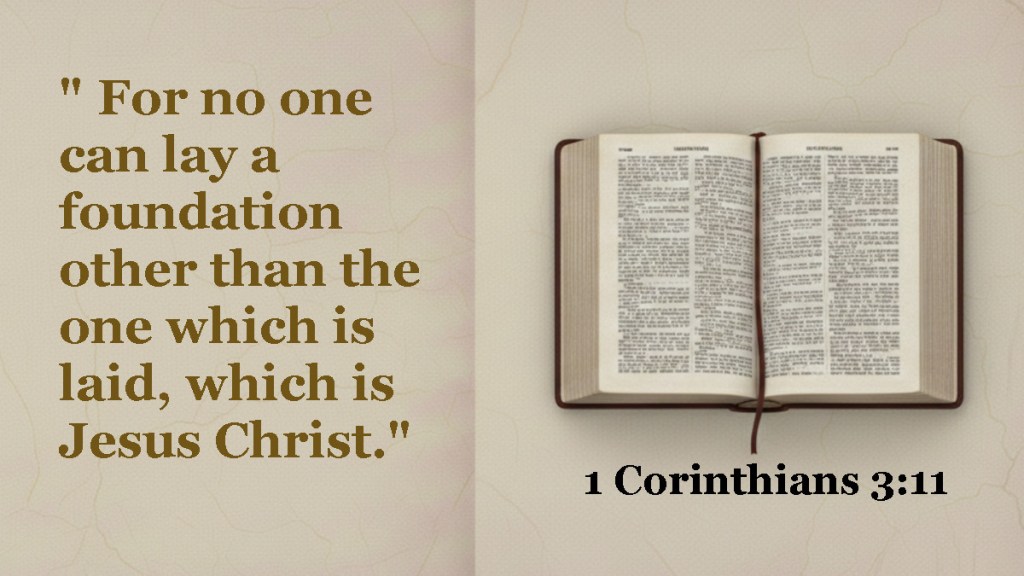
For no one can lay a foundation other than the one which is laid, which is Jesus Christ.
1 Corinthians 3:11