
Every new beginning calls us to worship

WILLIAM KILLIAN

The Christian life is filled with new beginnings. From the moment a person turns to Christ, life itself is made new. God, in His mercy, brings change through renewal by giving spiritual birth through His Spirit. In John 3 we see Jesus explaining to Nicodemus that entering God’s kingdom requires being “born again.” This new birth changes the heart, leading a person to turn from sin and trust in Christ.

The Bible often speaks of this newness. Paul wrote that anyone in Christ becomes a new creation, the old life is gone, and everything is made new. He also taught that believers must set aside their old ways and live as people renewed in spirit and truth. This renewal is not a one-time event; it continues throughout a believer’s life. God gives His people many fresh starts. Every new beginning is another chance to trust Him again.
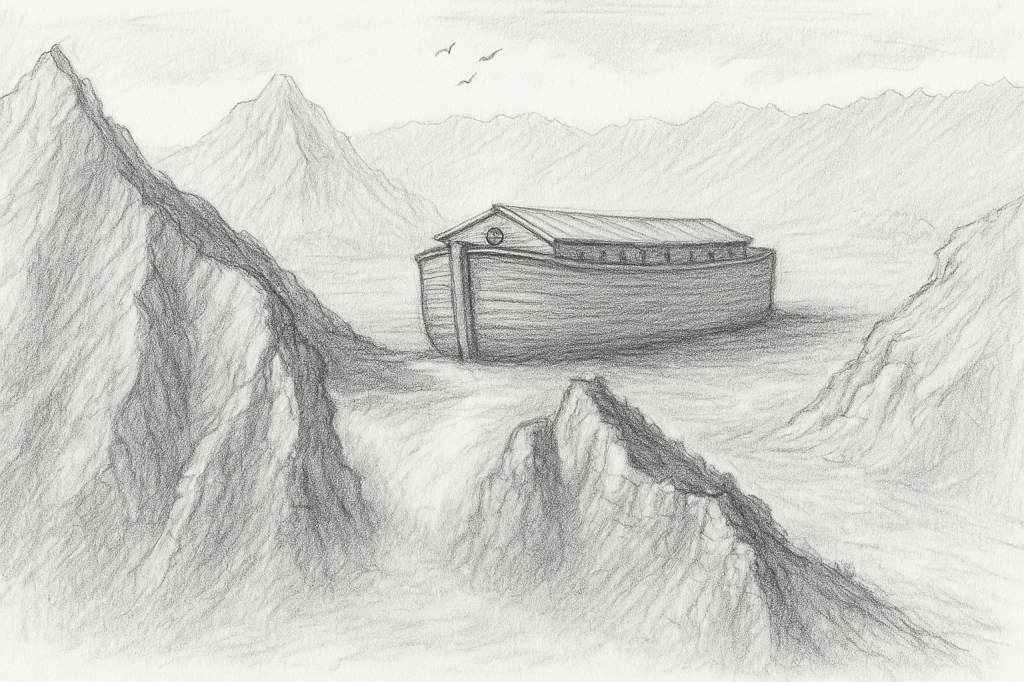
Noah’s Ark after the waters receded. IRS Images, 2025

The story of Noah offers a clear example of this truth. After the flood, when the waters finally receded, Noah and his family stepped onto a changed earth. Everything familiar was gone. Their home, neighbours, and community had vanished under the judgment of God. The first thing Noah did was not rebuild or plant crops. He built an altar and worshipped. His first act after surviving such destruction was to give thanks.

Noah’s worship showed deep gratitude. He recognized that he was alive only because of God’s mercy. While others perished, God preserved him and his family. Out of thankfulness, Noah offered clean animals as sacrifices. This was not a small gesture because it cost him something valuable. The animals he offered could have helped repopulate the earth or fed his family. Yet Noah gave them to God as a symbol of gratitude and dependence. True worship often requires giving up something precious.

Noah’s offering also showed his understanding of sin and forgiveness. Burnt offerings in the Old Testament represented atonement and complete dedication to God. The sacrifice was fully burned, symbolizing the worshipper’s total surrender. From the earliest days, these sacrifices pointed ahead to the perfect atonement that would come through Jesus Christ. Scripture tells us that without the shedding of blood, there is no forgiveness of sin. The blood of animals could not remove sin forever, they only pointed toward the cross, where Christ would give His life for humanity.

What can wash away my sin?
Nothing but the blood of Jesus.
What can make me whole again?
Nothing but the blood of Jesus.
O precious is the flow
that makes me white as snow;
no other fount I know;
nothing but the blood of Jesus.

Jesus is the final and perfect sacrifice. His death fully paid for sin and brought forgiveness to all who believe. Through faith in Him, we receive the same mercy that saved Noah, not from a flood of water, but from the judgment our sins deserve.

Noah’s worship also demonstrated consecration. He devoted himself completely to God, acknowledging his dependence and desire to live in obedience. Christians today are called to do the same. Paul urges believers to present their bodies as living sacrifices, lives set apart for God’s purpose, holy and pleasing to Him. Living this way means submitting our will to God, allowing His word to shape how we think and act.

Finally, Noah’s faith was expressed through trust. After his sacrifice, God promised never again to destroy the world by flood. Even though human hearts remained sinful, God declared that the natural order, seedtime and harvest, day and night, would continue as long as the earth remains. This was a promise of mercy, despite humanity’s continued weakness.

Noah did not hear God’s promise immediately. The Scripture says God spoke these words “in His heart.” Yet Noah still believed. His faith was shown through his obedience and worship. In the same way, believers today are called to live by faith, trusting God’s word even when His promises are not yet seen.

Therefore if anyone is in Christ, this person is a new creation; the old things passed away; behold, new things have come.

2 Corinthians 5:17
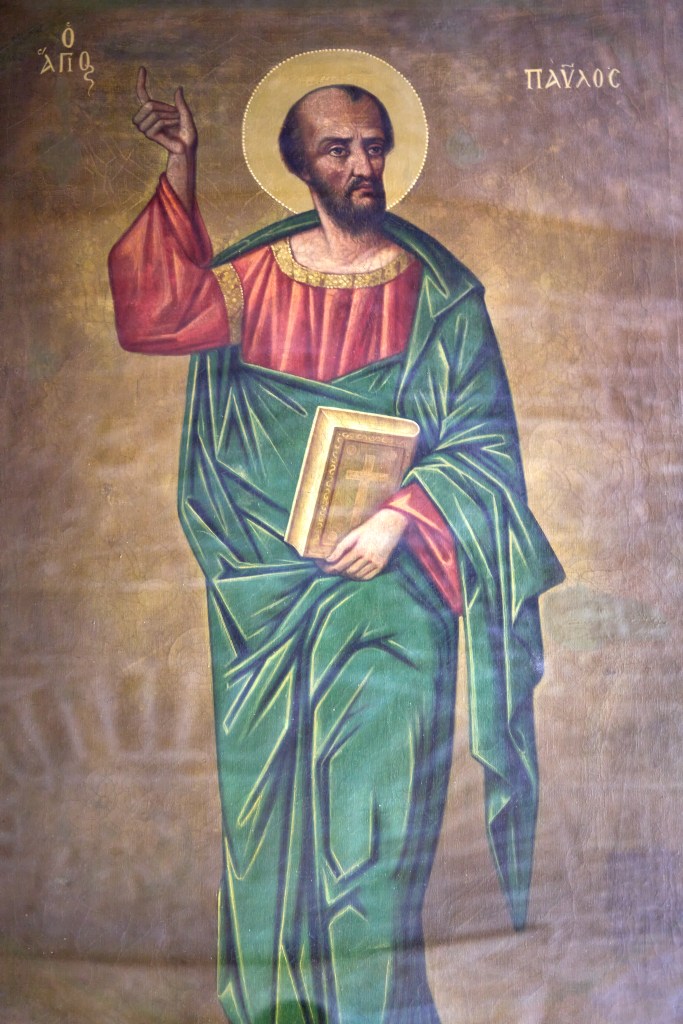
The Mountain of the Lord and the Hope of True Peace

JOHN COPIC

Isaiah chapter 2 describes a vision that looks beyond the troubles of Judah to a future time when God’s truth will reach the whole world. The prophet Isaiah first spoke about the sin and rebellion of his people, but he also gave a message of hope. In this new chapter, Isaiah turns to what he calls “the latter days,” when the “mountain of the Lord” would rise above all others. This is not about a physical mountain but a spiritual truth: God’s kingdom will be lifted up as the place where all nations find instruction and peace.

Isaiah says that people from every nation will say, “Let us go to the mountain of the Lord.” In other words, they will seek the knowledge of God and desire to walk in His ways. Christians understand this as a picture of the gospel spreading throughout the world. After Jesus came, the message of salvation began in Jerusalem and moved outward to all nations. The early church, first made up of Jewish believers, grew to include Gentiles from many lands. Men like Paul and Titus helped establish churches that carried on the mission of Christ, teaching others and raising new leaders. This fulfilled Isaiah’s image of people flowing toward God’s mountain, not in a physical sense, but by faith in Jesus Christ.

Isaiah also spoke about peace among nations. He wrote that people would beat their swords into plowshares and no longer train for war. The prophet’s words are carved on a wall at the United Nations, expressing humanity’s longing for peace. Yet history shows that human efforts alone cannot end conflict. Wars have filled every century, and peace treaties often fail. The problem lies in the human heart. The belief that people are naturally good ignores the truth of human sin. Real peace does not come from politics or power. Real truth comes from Christ, who brings peace between God and man.

Isaiah’s vision continues with a warning against pride and false gods. The people of Judah had filled their land with wealth, horses, and idols. They trusted in what their own hands had made. Isaiah mocked this foolishness: a man cuts down a tree, uses part of it for firewood, and with the rest makes an idol to worship. Such worship is empty and blind. The Bible teaches that idols are nothing, though evil spirits may stand behind them.

The prophet also spoke about the coming “day of the Lord.” This day will bring judgment on pride and idolatry. Those who exalt themselves will be brought low, and only the Lord will be lifted up. People will try to hide from His glory and throw away their idols, realizing too late how worthless they were. The “day of the Lord” will be a day of fear for those who reject God, but a day of rest and joy for those who belong to Him. For believers, it marks the beginning of eternal peace in the new heavens and the new earth.

Human pride cannot stand before God. Wealth, power, and idols, whether of gold or self, will all pass away. True security is found only in the Lord. Those who turn to Him find forgiveness and peace that no nation or ruler can give.

As Isaiah told us: The time will come when the Lord alone is worshipped, and all idols will vanish. Until then, believers are called to walk in His light, trust His Word, and share His message of salvation with the world.

For He Himself is our peace, who made both groups into one and broke down the barrier of the dividing wall,

Ephesians 2:14

When God Seems Silent He Still Remembers

ANDY ANDERSON

Life often leads us through times that cause us to look back and remember how God has worked to bring us to where we are. Reflection helps us see His steady hand through both joy and hardship. Even in the darkest times, God remains faithful to His people, though it may not always feel that way in the moment.

The story of Noah reminds us that God’s care never stops. Genesis 8 describes how Noah, his family, and the animals waited in the ark as the flood covered the earth. For months, they were surrounded by water, cut off from everything they had known. The silence must have been heavy, and Noah may have wondered if God had forgotten him. But Scripture begins that chapter with an important truth: “God remembered Noah.” When the time was right, the waters began to fall, the land dried, and life began again.

To say that God “remembered” does not mean He had once forgotten. Instead, it means He acted in faithfulness to His promise. God remembers His people by keeping His word and fulfilling His covenant. This truth appears throughout Scripture. When Rachel was unable to have a child, God “remembered” her and opened her womb. When the people of Israel suffered under slavery in Egypt, God “remembered” His covenant with Abraham and rescued them. God always acts according to His promises, even when His people cannot see how.

The Bible tells of two main covenants that shape all of history. The first, made with Adam, depended on perfect obedience. When Adam broke that covenant, sin and death entered the world. But God revealed another covenant soon after, the covenant of grace. In it, He promised that one of Eve’s descendants would overcome evil and restore what was broken. That descendant is Jesus Christ.

Jesus lived the life of perfect obedience that no one else could. He fulfilled every command of God and then willingly suffered death on the cross to pay for sin. His resurrection proved that His work was complete and that God’s promise was unbreakable. Because of Him, people can be saved not by earning it, but by trusting in what Jesus has already done. Faith, not human effort, brings people into God’s covenant of grace.

Throughout the Bible, we see God’s remembering in action. He remembered His people when they were lost, afraid, or silent before Him. He remembered them through exile, slavery, and hardship. After centuries of waiting, He remembered His promise and sent His Son into the world. Even when people thought He had forgotten them, He was preparing their deliverance.

God still remembers His people today. When believers go through times of suffering, loss, or confusion, He does not turn away. Like Noah waiting in the ark, they may feel forgotten, but God’s promise stands. His faithfulness does not depend on our strength but on His unchanging character.

One day, everything God has promised through Christ will be fully complete. Until then, His people can trust that they are never abandoned. His covenant is sealed by the blood of Jesus, and His love does not fail.

When life feels uncertain and prayers seem unanswered, we can remember that God has engraved His people on the palms of His hands. He cannot forget those He has called His own.

Make sure that your character is free from the love of money, being content with what you have; for He Himself has said, “I will never desert you, nor will I ever abandon you,”

Hebrews 13:5

Holding to the True Gospel

RICHARD CORDER

In his letter to the Galatians, the Apostle Paul warns believers not to be led away from the truth of the gospel. In Galatians 5:7–12, he expresses deep concern for Christians who had once walked faithfully but were being influenced by false teachers. These teachers, called Judaizers, were convincing the Galatians that faith in Christ was not enough for salvation. They taught that following the laws of Moses, including circumcision and certain rituals, was also necessary. Paul saw this as a serious threat to the purity of the gospel.

Paul reminds the believers that they began their spiritual journey well. They had accepted the message of salvation through faith in Christ alone. Yet someone had come among them and persuaded them to believe a different message. Paul makes it clear that this persuasion did not come from God. To add human works to the message of grace is to change the gospel completely. The message of salvation through Jesus Christ cannot be mixed with rules and rituals. Christ’s death and resurrection are sufficient for forgiveness and eternal life.

I think it’s important to mention here: I am speaking about salvation through works. There are Messianic Christians today who believe that to follow the law is to avoid sin, but not something that leads to salvation. To be clear, avoiding sin doesn’t save. Faith as a gift from God saves. But this doesn’t mean we should go ahead and sin. I don’t want to get off topic, but I want to be very clear what the Messianic Christians believe. Is this what Paul was talking about?

Paul’s concern is not only for the Galatians but for all believers. He knows that small errors can grow into serious problems. He warns that “a little leaven leavens the whole lump.” Just as a small amount of yeast spreads through dough, even a small distortion of the gospel can corrupt the entire message. History shows that this has often happened when people have questioned or altered the truth of God’s word. For that reason, Paul calls for faithfulness to Scripture and careful study so that believers will not be deceived.

Nothing But The Blood – HeartCry Worship

Even though Paul speaks firmly, he does not lose hope. He tells the Galatians that he trusts the Lord will help them return to the truth. His confidence is not based on their strength but on God’s ability to guide those who truly belong to Him. However, Paul also warns that the person leading them astray will face judgment. False teachers, motivated by pride or sin, will one day answer for their actions before God.

Paul also addresses accusations made against him. Some claimed that he preached one message to Jews and another to Gentiles. He denies this, explaining that he never taught that the law could save anyone. For Jewish believers, keeping certain customs was a matter of culture, not salvation. For Gentiles, such practices were never required. Paul’s message was the same for all: salvation comes by grace through faith in Christ alone. The cross is offensive because it tells people they cannot save themselves, but Paul refuses to soften that truth.

Finally, Paul expresses a strong wish against the false teachers who were disturbing the Galatian churches. His words are sharp, showing how seriously he viewed their actions. These men were spreading lies that could destroy the faith of many. Paul’s language may sound severe, but it reflects his passion for the gospel’s purity. He saw that false teaching was not just an error, it was an attack on the truth that saves.

Paul’s warning remains important today. Many still try to add human effort to God’s grace or twist the message of salvation to fit their own ideas. Believers are called to guard the truth carefully and to know Scripture well so they are not easily misled. The gospel of Christ does not need improvement or addition. It stands complete as the good news that brings freedom from sin and peace with God.

For by grace you have been saved through faith; and this is not of yourselves, it is the gift of God;

Ephesians 2:8

Living with a Clear Purpose

CONNIE WILLIAMS

A well-defined purpose brings clarity to every decision we make. If a business’s goal is to always have the lowest price, then every choice would be measured against that purpose. If something did not help the company stay the lowest-priced company, it would be rejected.

The same principle applies to every area of life, especially our spiritual lives. A clear sense of purpose gives direction and stability, just as light cuts through darkness. The Bible teaches that followers of Christ are engaged in a spiritual battle, not against people, but against evil forces that seek to destroy faith and purpose. In Ephesians 6, Paul describes six spiritual tools that help believers stand strong. One of them is “having your feet fitted with the readiness that comes from the gospel of peace.” Like sturdy shoes for a soldier, this readiness helps believers stand firm and move forward with confidence.

In Paul’s time, Roman soldiers wore thick boots with metal studs on the soles. These gave them firm footing during battle and protected them from sharp objects hidden on the ground. Paul used this image to show that Christians need spiritual stability too. Our “boots” are not made of leather. They are made of a willingness to share the good news of Jesus Christ. This readiness to share the gospel strengthens us and keeps us steady when life becomes difficult.

Paul’s teaching in Ephesians connects directly to Isaiah 52:7, which speaks of those who bring good news: “How beautiful are the feet of those who bring good news, who proclaim peace, who bring good tidings.” The same verse appears again in Romans 10, where Paul reminds believers that people cannot believe in Jesus unless someone tells them about Him. Sharing the message of salvation is not the job of pastors alone. It is the responsibility of every believer. Our readiness to share Christ’s peace is both a weapon in spiritual warfare and a core part of our purpose on earth.

Every person was created by God for a reason. Many people, both religious and non-religious, sense that life must have meaning, yet they search endlessly for what it is. The Bible says we are not accidents or products of chance. God told Jeremiah, “Before I formed you in the womb I knew you.” God had a plan for Jeremiah before his birth and He has a plan for each of us too. Every life is intentional, designed by God for a purpose.

That purpose is not simply to live comfortably or to achieve personal goals. Our purpose is to take part in God’s plan and to help others come to know Him. God “desires all people to be saved and to come to the knowledge of the truth.” He is patient, “not wanting anyone to perish but everyone to come to repentance.” Jesus Himself said, “The Son of Man came to seek and to save the lost.” If that is God’s purpose, then our purpose must be to help fulfill it.

God’s work often involves partnership. While He could act alone, He chooses to work through people. He told Noah to build an ark, Nehemiah to rebuild the wall, and the disciples to spread the gospel. Before returning to heaven, Jesus told His followers, “Go and make disciples of all nations.” The central mission for every believer is to share the good news with others wherever they are.

Sadly, some Christians make careful plans for their careers, families, and finances but give little thought to God’s mission. Yet this is the very reason we remain on earth. Just as a soldier focuses on completing his commander’s orders, followers of Christ are called to expand God’s kingdom and free those trapped in spiritual darkness. This calling is not a burden but a source of true fulfillment.

People often look for meaning in work, success, pleasure, or wealth, but these things cannot fill the emptiness inside. Many who seem to “have it all” still feel deeply unsatisfied. The writer of Ecclesiastes learned that achievements and possessions bring only temporary joy. Lasting fulfillment comes only through knowing God and living out His purpose.

When we live for God’s purpose, we find the meaning and stability our hearts long for. Sharing His message gives us direction, strengthens our faith, and protects us from the enemy’s attempts to distract and discourage us. Our lives gain eternal value when we dedicate ourselves to the mission God has given: To bring His peace to others.

For we are His workmanship, created in Christ Jesus for good works, which God prepared beforehand so that we would walk in them.

Ephesians 2:10