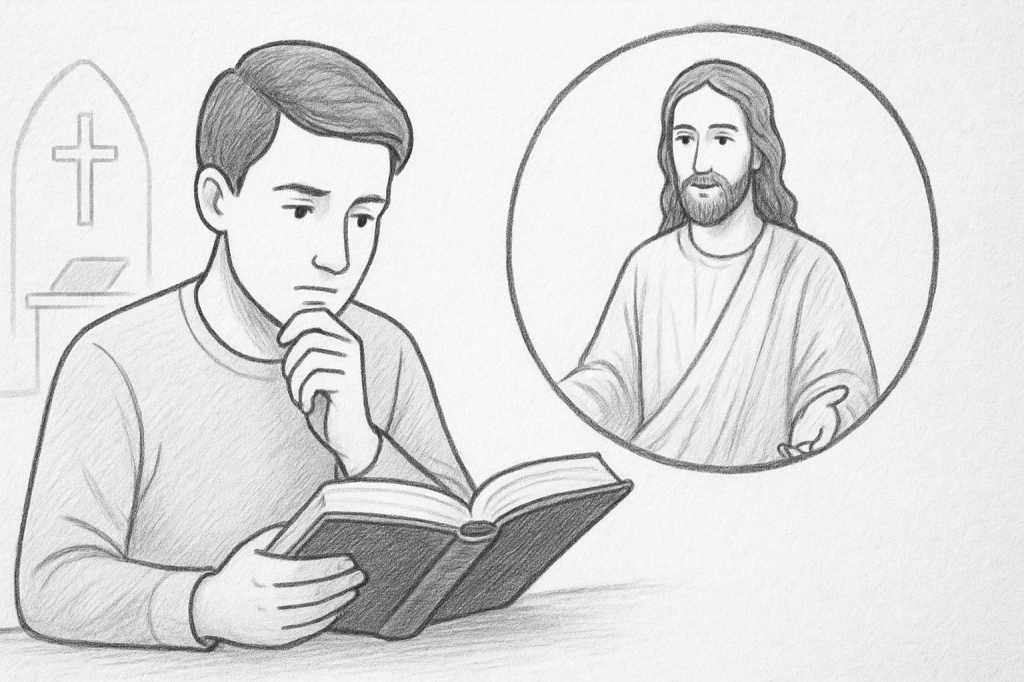
Many people grow up learning about Jesus with their minds. They may know Bible stories, go to church, and speak about faith. Yet knowing facts about Jesus is not the same as trusting Him. Faith is more than information. It is a gift from God leading to salvation. It results in a relationship with the One who gave His life for us.
Faith is a Gift, understanding comes from God. IRS Images, 2025.
Faith cannot rest in religion, a church, or a leader. It must be placed in the suffering and resurrection of Jesus. He said He is the only way to the Father. A person must turn from sin and trust the Saviour. Without that, even a faithful marriage on earth does not guarantee life with God in heaven. We are not saved by works.
The way a couple treats each other can show the message of Jesus to others. Marriage should reflect grace, not bitterness. If Christ has forgiven us so much, we should not hold anger against our spouse or others in the church. We are called the bride of Christ, loved and bought by His sacrifice. We are to show that same spirit of forgiveness.
Faith is not only a Sunday activity. It should fill every day. Work, sports, and hobbies can become more important than spiritual life if families are not careful. Children learn what matters most by watching their parents. If they only see Jesus mentioned once a week, they may think faith has little value. Following Jesus takes effort, but it is always worthwhile.
Bind us together, Lord Bind us together With cords that cannot be broken Bind us together, Lord Bind us together Bind us together in Love
Marriage also serves as an example. When others look at a couple, they may see unity or conflict. They may see a love that gives or a love that demands. God’s design is for one man and one woman to share life together and remain faithful. Unity in marriage can help others believe that Jesus is real. Division can push them away.
A strong marriage does not mean life is easy. People do not stay together only when they feel happy. Commitment means staying faithful, just as Jesus never gave up on us. Marriage asks us to grow in holiness, not simply in comfort.
Every person must ask: does my life show the message of Jesus? Does my marriage help my spouse trust God more? Do I follow Jesus only on certain days or in every part of life? Some may be married but have never placed their trust in the Lord. Faith must be real and personal. Only those who belong to Him will share eternity with Him.
A marriage built on God’s purpose can bless many others.
In his letter to the Galatians, the Apostle Paul reminds believers that faith in Jesus Christ alone brings true freedom. He warns against returning to the bondage of the law, explaining that anyone who tries to earn salvation through religious rules loses sight of the grace that Christ freely gives. The message of Galatians chapter five is a call to remain steadfast in faith and not to be misled by teachings that add human effort to God’s gift of salvation.
Paul had once established the churches in Galatia and taught them the gospel he received directly from Christ. Over time, however, false teachers known as Judaizers began spreading the idea that faith in Jesus was not enough. They claimed believers must also follow the laws of Moses, including circumcision, dietary restrictions, and Sabbath rules, to be fully accepted by God. Paul writes to correct this misunderstanding. The law, he explains, was never meant to save. It was given to show people their need for a Saviour because no one can keep it perfectly. The law points to Christ, the only one who fulfilled it completely.
Paul reminds the Galatians that salvation is a gift, not a reward for good behaviour. No matter how hard someone tries to follow God’s commands, even one failure shows that human effort cannot make anyone righteous. Christ’s death on the cross paid for humanity’s failure to keep the law. Through repentance and faith in Him, believers are forgiven and set free from sin’s power and the weight of trying to earn God’s approval.
The danger of mixing law with faith is that it shifts trust away from Christ and back to human performance. Paul tells the Galatians that if they rely on circumcision or any other law to be saved, then Christ’s sacrifice means nothing to them. Salvation through works is impossible because anyone who chooses to follow the law must obey all of it perfectly. The moment they fail in one command, they are guilty of breaking it all.
Paul teaches that life in the Spirit is very different from life under the law. The Holy Spirit gives believers freedom and leads them to live in love and obedience, not out of fear or duty, but out of gratitude. Where the Spirit of the Lord is, there is liberty. By contrast, living under strict rules only leads to frustration and disappointment because no one can live up to them.
The apostle urges the Galatians to stand firm in the freedom Christ has given them. Faith in Him alone is enough for salvation and for growth in holiness. To think of the law as a way to salvation would only lead to spiritual stagnation. Instead, believers should hold fast to what they have learned and live out their faith through love, prayer, worship, and fellowship.
Paul also warns of the danger of falling from grace. When people try to justify themselves through good works, they drift away from the truth that salvation is by grace through faith. Good works are evidence of genuine faith, but they cannot save. Even the best human actions are imperfect before a holy God. The prophet Isaiah said that all human righteousness is like unclean rags before Him. Humanity’s sinful heart, as described in Jeremiah, is deceitful and desperately wicked. For that reason, God sent His Son to do what no person could do. Jesus met the full demands of the law and bear the punishment for sin.
Paul’s deep concern for the Galatians comes from his love for the truth of the gospel. He is grieved that those who once received the message of salvation by faith are now turning to a distorted gospel that has no power to save. He reminds them that in Christ, outward rituals like circumcision have no value. What matters is faith that expresses itself through love.
For believers today, Paul’s message remains vital. Many still believe that good deeds or religious rituals can earn God’s favour. But salvation is not about doing; it is about trusting. The Christian life is not lived by rule-keeping but by walking in the Spirit, who gives strength, wisdom, and peace.
When challenges or confusion arise, Paul’s instruction is clear: stand firm in faith. Do not waver between trusting in Christ and depending on works. James reminds believers to ask God for wisdom and to believe without doubting. A double-minded person, unstable in faith, receives nothing from the Lord. Paul calls believers to be steadfast, grounded in truth, and unshaken by false teaching.
Faith in Christ gives freedom, peace, and hope. Through Him, believers wait eagerly for the full realization of righteousness that has already been given to them by grace. This hope is not built on law but on the finished work of Jesus, who said, “It is finished.”
For by grace you have been saved through faith; and this is not of yourselves, it is the gift of God; not a result of works, so that no one may boast.
Psalm 2 reminds believers that God’s purpose reaches far beyond individual lives. His desire is not only to save one person at a time, but to bring people from every nation, tribe, and language into His kingdom. The passage shows both humanity’s rebellion and God’s patient plan for redemption through His Son.
The psalm opens by describing how nations and rulers resist God’s authority. People often choose independence, refusing to be guided by anyone, even their Creator. From the earliest stories in Scripture, Adam and Eve’s disobedience, the tower of Babel, and even the crucifixion, humanity has struggled with pride and self-rule. Yet, despite our rebellion, God’s response is not fear or weakness. The psalm says that He laughs, not out of joy, but because human pride cannot stand against His eternal power.
God’s laughter is followed by a declaration. He has placed His King, His Son, on Zion, the holy mountain. This King will rule over the nations, and through Him, the world will know justice and peace. The psalm points directly to Jesus Christ, who fulfills God’s promise by offering salvation to all who turn to Him. Through Christ’s death and resurrection, the rule of God extends not through force, but through grace and redemption.
God’s heart has always been for the world to know Him. Verses from Micah and Jeremiah show us that what He desires most is not empty religious acts, but lives marked by justice, mercy, and humility. To walk with God means to live with integrity, to love others faithfully, and to depend fully on Him. External acts of worship mean little if they are not matched by obedience and compassion. True worship flows from a heart that seeks to reflect God’s character in everyday life.
Throughout the Bible, God contrasts human rebellion with His unchanging love. While people turn away, He continues to offer forgiveness and calls everyone to repentance. His goal is not punishment but restoration. Jesus perfectly obeyed the Father and gave Himself as the ultimate sacrifice, proving that obedience born from love is worth more than ritual offerings.
Psalm 2:8 is a good illustration. It says, “Ask of me, and I will make the nations your inheritance and the ends of the earth your possession.” This is not only a promise to the Messiah but a call to believers to share in God’s mission. His will is that every person has the chance to hear and accept the good news.
This vision of global worship appears again in Revelation, where a great crowd from every nation stands before God, praising Him together. There is a fulfillment of God’s promise. We can look forward to a future where the divisions of race, language, and culture disappear in unified worship. But today, our faith cannot remain private. God’s love is not meant to be hidden or hoarded. It must be shared in families, workplaces, communities, and across the world. The church’s role is to help others find the same hope and forgiveness found in Christ.
Isn’t the message of Psalm 2 is both a warning and an invitation. It reminds us that human rebellion is foolish, but it also shows that God’s mercy is wide. He calls people to turn from pride and to find peace under the rule of His Son. When we live with hearts of obedience and humility, we reflect His character and join in His work to make His name known everywhere.
For the grace of God has appeared, bringing salvation to all people,
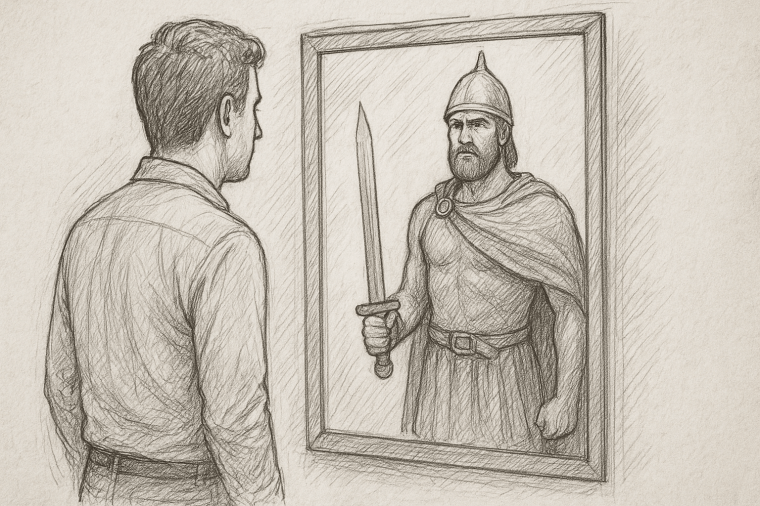
Each day brings a war that every follower of Jesus Christ must face. This is not a physical conflict with weapons and armies, but a spiritual battle that takes place in the realm of thought and belief. Understanding this fight and how to win it makes the difference between living in defeat or walking in victory.
The Christian life involves constant struggle. From the moment we are born, we fight just to breathe. Throughout life, we battle illness, obstacles, discouragement, and countless other challenges. God designed humans to be fighters, and when someone gives up the fight, it signals something has gone wrong. For believers, recognizing this spiritual warfare means grasping what following Christ truly requires.
Some may wonder why Christians engage in battle when we follow the Prince of Peace, the one who promised peace that surpasses understanding. The answer is that both realities exist together. Yes, we follow Jesus who brings peace, but we also face enemies determined to destroy us. These enemies make spiritual combat unavoidable.
Three main enemies wage war against believers. First, the devil himself opposes every Christian. He prowls like a hungry lion, seeking victims to devour. While he cannot steal salvation from those who truly belong to Christ, he can rob believers of joy and vitality. He works to ensure that saved people live in constant defeat rather than experiencing the victory God desires for them.
Second, demon forces serve under Satan’s command. These fallen angels operate as invisible spiritual entities that we cannot see with our eyes but can only discern spiritually. They work as evil rulers and authorities in the unseen world, wielding power in dark places. Though some churches rarely discuss demonic activity, it remains very real. Anyone who walks closely with God recognizes evidence of demonic influence in our world and sometimes even within families.
Third, the world system stands against believers. This does not mean the planet itself, but rather the philosophy and thought patterns that govern those who do not know Christ. Satan, described as the prince of the power of the air, currently holds temporary control over this system. Jesus warned that the world hated him first, so it will also hate his followers. When the world applauds Christians, we should ask why, since they never celebrated Jesus. Our response should be to love people even while recognizing that the system they inhabit opposes God’s truth.
Yet the greatest enemy may not be external at all. Our own sinful nature presents the most difficult challenge. Even after salvation, believers retain a fallen nature that resists serving God. This internal conflict never ends during earthly life. The Holy Spirit living inside Christians produces desires opposite to what the sinful nature wants, creating constant internal warfare. Every believer experiences this struggle regardless of age or spiritual maturity. The battle continues until death, when we finally leave the corrupted flesh behind.
This means every Christian faces an internal tug-of-war each day. The Holy Spirit and the fallen nature both fight for control over our choices. We cast the deciding vote to determine which force wins each moment. Even choosing not to decide represents a choice. This daily reality explains why spiritual combat language appears throughout Scripture.
The encouraging news is that God provides weapons for this fight. Spiritual battles require spiritual weapons, not natural strategies or human resources. God equips believers with mighty tools to knock down strongholds of false reasoning and destroy arguments that oppose truth.
The Bible itself serves as the primary weapon. Scripture functions as the sword of the Spirit, the only offensive weapon in the armor of God. Jesus demonstrated this when Satan tempted him in the wilderness. Three times the devil attacked, and three times Jesus responded by quoting Scripture, saying “It is written.” He drew his sword and used God’s Word to defeat each temptation. If Jesus needed Scripture to fight spiritual battles, how much more do his followers need it?
Using this weapon effectively requires knowing what the Bible says. The Holy Spirit can only bring to mind verses that we have previously learned. Believers who want victory must spend time studying Scripture, memorizing key passages, and becoming familiar with biblical truth. This means turning off news programs and social media to make time for reading God’s Word. The battle cannot be won with ignorance of Scripture.
Prayer functions as another powerful weapon. When believers pray according to God’s will, their prayers move the hand of Almighty God. Though we may feel insignificant, prayer connects us to the one who holds all power. Prayer unleashes supernatural intervention in impossible situations. It allows us to call down God’s strength into any circumstance.
Prayer works not only to ask for things but also to pray against things. Believers can pray for God to block evil plans, protect loved ones from temptation, and bind the work of the enemy. When we approach God in prayer, we access power that the devil cannot match. Though we cannot defeat Satan on our own, God defeats him on our behalf when we pray.
Praise also serves as a weapon in spiritual warfare. When we praise God, we shift our focus from circumstances to the character of God himself. Worship aligns us with what happens constantly in heaven, where created beings endlessly declare God’s holiness and worthiness. By praising God on earth, we fulfill Jesus’ prayer that God’s will would be done here as it is in heaven.
Praise demonstrates power in Scripture. The walls of Jericho fell when the Israelites shouted praises to God. Paul and Silas sang hymns at midnight while imprisoned, and God sent an earthquake that broke their chains and opened prison doors. Their worship in suffering so impressed the jailer that he asked how to be saved. Even when circumstances seem darkest, praising God becomes a weapon that silences the enemy and opens doors to freedom.
Many believers find praise difficult during trials. When walking through valleys, the last thing we feel like doing is singing. Yet those are precisely the moments when we most need to praise God. We can actually praise our way out of dark places by choosing to worship despite our feelings. When we put praise on our lips, our hearts can follow, but we must begin praising anyway. All these battles center on one location: the human mind. Our minds serve as the battlefield where spiritual warfare occurs. Strongholds get built in our thinking. Every addiction, every destructive pattern, every wrong belief system begins with thoughts that were never brought under control. The mind is where we must fight.
Taking thoughts captive to Christ means examining each thought to determine whether it represents obedience to God. Renegade thoughts must be lassoed and brought under Jesus’ control. When someone says “My life has no meaning” or “God doesn’t love me,” those thoughts need to be captured and submitted to biblical truth. Our thoughts determine how we view ourselves, others, relationships, money, and every area of life.
If we do not take our thoughts captive, our thoughts will take us captive. Undisciplined thinking leads to strongholds that keep believers in defeat. But God has provided everything necessary for victory. The war has already been won through Jesus Christ. Believers simply need to fight the daily battle using the weapons God supplies.
This fight never ends until we reach heaven. But each day presents a fresh opportunity to choose victory.
For though we walk in the flesh, we do not wage battle according to the flesh, for the weapons of our warfare are not of the flesh, but divinely powerful for the destruction of fortresses. We are destroying arguments and all arrogance raised against the knowledge of God, and we are taking every thought captive to the obedience of Christ,
Many Christians know the hymn Come Thou Fount of Every Blessing. Its words still reach the heart because they speak of grace that never ends. For many believers, it is more than a song, it is a prayer, a story, and a reminder of God’s mercy. The hymn asks God to “tune my heart to sing thy grace.” We often need our hearts adjusted to hear and praise God again.
The message of the hymn connects closely with the themes of Psalm 90, a prayer written by Moses. This psalm gives us a way to see life clearly and to find our spiritual footing when we feel distant from God. It reminds us that real security does not come from this world, which is always changing, but from the eternal God who never changes.
God Is Our True Home
The psalm begins by declaring that God has been our dwelling place through every generation. No matter the time or place, He remains our shelter. Even when life feels unstable or uncertain, believers can rest in God’s steady presence. Moses reminds us that before the mountains were formed, before the earth existed, God was already there. He is from everlasting to everlasting. Everything we know was created by Him and depends on Him.
For those who trust in God, this truth gives comfort. Though life may feel like wandering, God is a permanent home. He is the one who holds us together when the world feels fragile. Many of us search for safety in money, relationships, or plans, but these things fade. Only God offers a lasting refuge.
The Shortness of Life
Psalm 90 also teaches that human life is brief. Moses says that God returns people to dust. Doesn’t this give the impression that our lives are fragile and short? From God’s view, a thousand years pass like a single day. Our time on earth is like grass in that it can be green in the morning, withered by night. Don’t think we’re in control. Our days are few and uncertain.
Thinking about life’s brevity should not cause despair but wisdom. It helps us value our time and live with purpose. As Moses prayed, “Teach us to number our days that we may get a heart of wisdom.” When we realize how short life is, we are moved to live it well and to seek God, to love others, and to use our time for what truly matters.
The Reality of Sin and the Hope of Grace
Moses also speaks about sin and its results. Humanity’s mortality began with disobedience. Death entered the world because of sin, and every generation feels its effects. Yet for believers, the story does not end there. Through Jesus Christ, God’s wrath against our sin has been fully satisfied. Because of Christ’s sacrifice, we are no longer under judgment but under grace.
Finding Satisfaction in God’s Love
Later in the psalm, Moses prays, “Satisfy us in the morning with your steadfast love.” Only God can fill the emptiness we often try to satisfy with other things. Some people try to escape worry or loneliness through distraction, but such efforts never bring lasting peace. True satisfaction comes from knowing and resting in God’s faithful love.
When we focus our hearts on His grace, our spirits are renewed. Even in hardship, we can rejoice because His mercy is constant. As morning light replaces darkness, God’s love renews those who seek Him.
Making Our Days Count
The psalm ends with a request: “Let the favor of the Lord our God be upon us, and establish the work of our hands.” Moses asks that God would make their brief lives meaningful and their work lasting. This is also our prayer today. Our time is short, but when we serve God, our efforts are not wasted. As the New Testament says, “Therefore, my beloved brothers and sisters, be firm, immovable, always excelling in the work of the Lord, knowing that your labor is not in vain in the Lord.”
We are called to a deeper awareness of God’s greatness and our dependence on Him. The Psalm teaches that life is fleeting, sin is serious, but God’s mercy is sure.
Set your minds on the things that are above, not on the things that are on earth. For you have died, and your life is hidden with Christ in God.



 Texas Gospel Canada Southern Gospel Radio