The Bible warns in 2 Corinthians 11:4 that some will present “another Jesus,” not the true one that was first proclaimed. This is not the Jesus found in history and Scripture but a version shaped to fit the spirit of the times. The idea is that if Jesus can be reshaped to match popular thought, then more people will accept him and follow the faith.
But this approach does not introduce anyone to the real Jesus. Instead, it creates a false image, one that has no power to save or transform. What may seem easier to accept is actually empty and misleading.
Followers of Christ do not accept or support any version of Jesus that is not faithful to who he truly is. The world may prefer a softer or altered picture, but Christians are called to stand firm in the truth that has already been given.
But even if we, or an angel from heaven, should preach to you a gospel contrary to what we have preached to you, he is to be accursed!
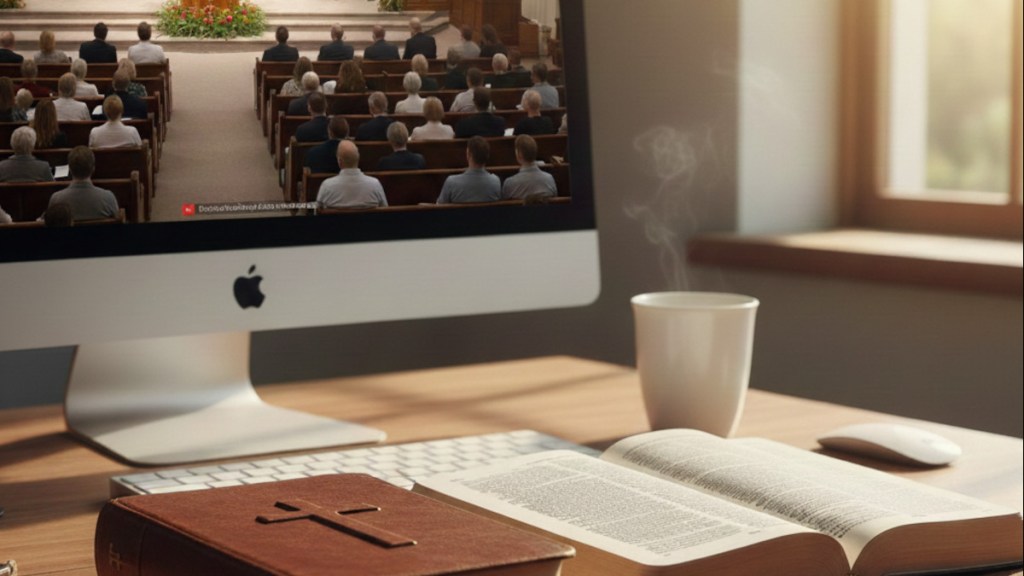
Technology has made religious content easier to access than at any point in history. Television programs, internet streams, and radio broadcasts bring teaching into homes across the country. This convenience has led some people to believe they can get everything they need spiritually without attending a church in their community. They watch online services and listen to podcasts, thinking this replaces gathering with other believers.
(IRS Images, 2025)
This approach misses something important that Scripture addresses. The Bible speaks about communities of real people who meet together in person. These are groups with shepherds who know their members, leaders who serve face-to-face, and individuals who care for each other in tangible ways. The concept of receiving spiritual input only through screens finds no support in biblical teaching.
Some recent publications (as I am writing this) have even suggested that consuming religious media is better than participating in a physical congregation. This idea contradicts what the New Testament teaches. A church consists of people who have been saved coming together for specific purposes. They pray as a group, share meals that remember Christ’s sacrifice, demonstrate their faith through baptism, and support one another in their spiritual growth.
The New Testament contains many instructions about how believers should interact. They are told to pray for each other, show love to one another, build each other up, encourage one another, and even correct each other when needed. These actions require personal interaction. They cannot happen through a screen. Only when people gather in person can they fulfill what Christ established for His followers. Every believer needs to commit to being an active, consistent member of a local gathering.
One of the most puzzling questions Christians encounter is this: if Jesus is God, why did he need to pray? It seems contradictory at first. Why would God pray to God? The answer reveals something beautiful about who Jesus is and how God works.
To understand Jesus’ prayer life, we need to start with who he has always been. Jesus is the eternal Son of God, existing in a loving relationship with the Father and the Holy Spirit from before time began. He is described as one God in three persons: Father, Son, and Holy Spirit. This is what Christians call the Trinity. Jesus didn’t become the Son of God when he was born in Bethlehem. He has always been the Son, sharing the same divine nature as the Father. His prayers don’t reflect inferiority or suggest he’s somehow less than God. Rather, they reveal the beautiful communication and fellowship that has always existed within the Trinity.
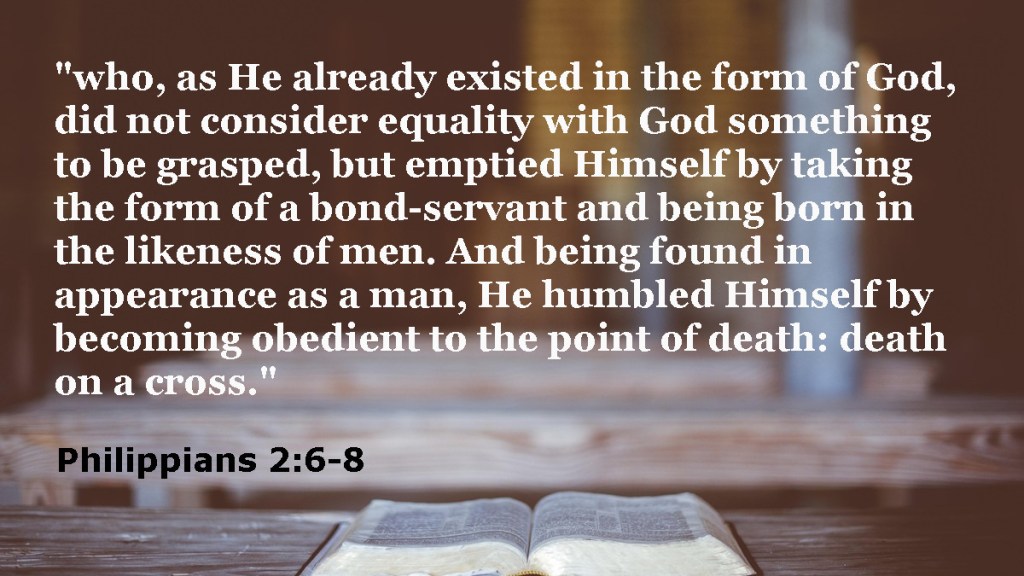
When Jesus came to earth, something remarkable happened. The eternal Son of God became fully human while remaining fully God. He didn’t stop being God, but he took on human nature completely, except for sin. By becoming the God-man, Jesus lived in a way that was appropriate to his humanity. He experienced hunger, tiredness, joy, and sorrow. And like any human being, he related to the Father through prayer. This is one of the great mysteries of the Christian faith: Jesus demonstrated his perfect humanity and dependence on God through prayer. Although he is fully God, in his incarnation he embraced every aspect of what it means to be human. As the perfect man, he lived in complete reliance on the Father’s will, using prayer as the primary way to express this dependence. This is in sharp contrast to Adam, who failed by seeking independence from God.
Yet Jesus was no less God when he prayed. His prayers didn’t deny his divinity. They showed us what perfect fellowship with God looks like from a human perspective.
Throughout his earthly ministry, Jesus depended on the Father for power and wisdom. He prayed to receive divine guidance in carrying out his work. Before he raised Lazarus from the dead, he prayed aloud, thanking the Father. He regularly withdrew to lonely places to pray, especially early in the morning or late at night. This wasn’t because his divine nature was somehow depleted, but because in his humanity, he relied completely on the Father for strength and direction.
Provided to YouTube by Universal Music Group In The Garden · Alan Jackson Precious Memories ℗ 2005 ACR Records, LLC, under exclusive license to EMI Records Nashville
Prayer is how he submitted himself to the Father’s will, especially in the Garden of Gethsemane when he faced the horror of the cross. There, he prayed, “Not my will, but yours be done.” This prayer demonstrated his willing submission to the Father’s redemptive plan, even though it meant unimaginable suffering.
Jesus’ continual prayer life kept him perfectly aligned with the Father’s purpose to redeem humanity. Prayer gave him focus and empowerment for his mission. Before making significant decisions, he sought divine guidance rather than relying on human wisdom alone. When he chose the twelve apostles, he spent the entire night in prayer. This modeled for us that important decisions, especially those related to God’s kingdom, should be made through prayer and divine guidance.
Perhaps most importantly for us, Jesus prayed to provide a model and example for believers. He prioritized prayer, often rising early or withdrawing to solitary places, to show his followers that communion with God is central to the life of faith. Christ’s prayers teach us that strength, wisdom, obedience, and faithfulness all flow from ongoing communion with God.
So when we ask why Jesus prayed if he was God, we discover that his prayers reveal the heart of the gospel itself.
At the end of a parable about a wedding feast, Jesus made a statement that can seem troubling at first. He said that many people are called, but only a few are chosen. This brief comment reveals something important about salvation.
When Jesus spoke these words, he was explaining that more people will hear the good news about him than will actually accept it. Christians are told to share the gospel message with everyone in the world. Believers proclaim this message and invite people to put their trust in Jesus Christ as their savior. This work of sharing the gospel happens because God has commanded it. (Another perspective here.)
However, only some people respond to this invitation. According to this teaching, those who do respond are the ones God has chosen and prepared for salvation. Before someone can truly believe, God’s Spirit must work in their heart to bring them to life spiritually. This inner work leads them to turn away from sin, place their faith in Christ, and call out to be saved.
This idea is sometimes called sovereign election. It means that salvation does not begin with human choice alone. Instead, it starts with God’s purpose and his decision to choose certain people. While this can be difficult to understand, it shows that salvation depends on God’s grace rather than human effort. The difference between those who believe and those who do not comes down to God’s choosing work in the heart.
When Paul tells believers to pray without ceasing, some people respond by feeling discouraged. They wonder how anyone could possibly pray all the time. The answer is simpler than it seems.
This command does not mean we need to walk around praying out loud every moment of the day. Some religious groups in ancient times tried to do exactly that, but they missed the point entirely. They spent so much time with their heads bowed in prayer that they kept bumping into things around them.
What Paul meant was something different. He was telling us to keep an attitude of prayer at all times. Think of prayer like breathing. You cannot live without breathing, and if you are alive, you breathe automatically. The air pressure around you fills your lungs without you thinking about it.
Prayer works the same way in our spiritual lives. It means living every moment aware that God is with you. When something happens during your day, you naturally turn it into a conversation with God. Good things become reasons to thank him. Difficult situations become requests for help. The needs of others become chances to pray on their behalf.
Praying without ceasing simply means staying closely connected to God throughout everything you experience.







 Texas Gospel Canada Southern Gospel Radio