

JOHN COPIC
Luke wrote his gospel account with great care as a historian. God inspired him to record these events with accuracy and detail. The angel Gabriel appears in this narrative, the same heavenly messenger who spoke to the prophet Daniel in the Old Testament. Gabriel looked like a man in appearance, though he was clearly not human based on how he appeared and departed.
The priest Zechariah and his wife Elizabeth were righteous people who followed God’s commandments. However, they had no children because Elizabeth could not bear children, and both were now advanced in years. The culture of that time wrongly believed that childlessness meant God was judging a person. This explains why Elizabeth felt shame about her situation. When she later became pregnant, she said God had taken away her disgrace among the people.

Elizabeth was likely in her sixties while Mary was probably only a teenager, around fourteen or fifteen years old. Girls were often promised in marriage at this young age in that culture. The age gap between these two women was significant, with Elizabeth old enough to be Mary’s grandmother. God was preparing to work two miracles through these women from very different stages of life.
Gabriel came to the city of Nazareth in Galilee to visit a virgin named Mary. She was promised to marry a man named Joseph, who came from the family line of King David. This detail matters because the promised rescuer had to come from David’s descendants. The promise period, called betrothal, was more binding than modern engagement. It lasted about a year, during which the couple could not live together or have relations. Joseph could already be called Mary’s husband even though the wedding had not yet occurred.
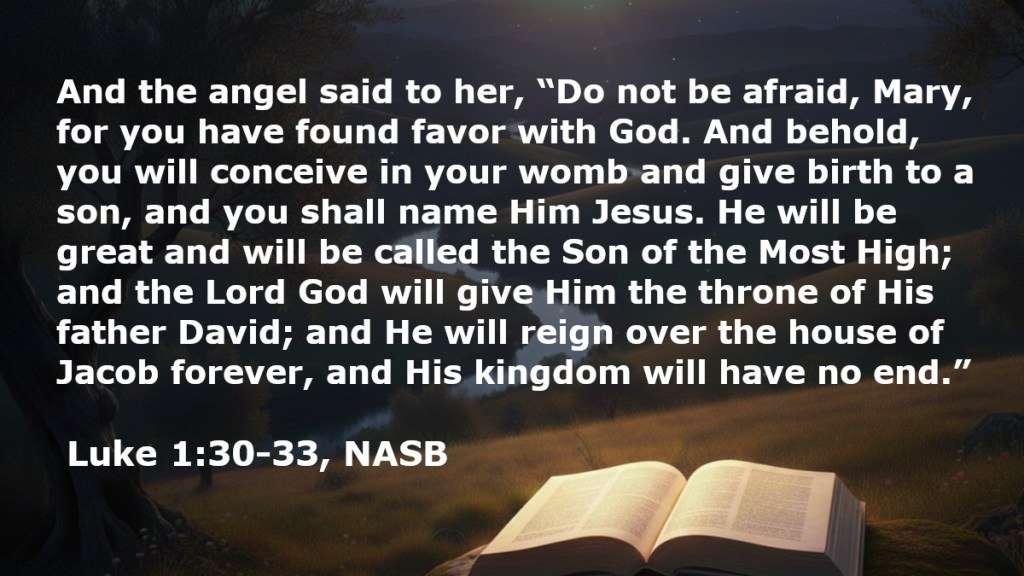
Gabriel told Mary to rejoice because she was highly favored. God was with her. Mary felt troubled by these words and wondered what this greeting meant. The angel told her not to fear because she had found favor with God. She would become pregnant and give birth to a son named Jesus. He would be great and called the Son of the Highest. God would give him the throne of his ancestor David, and his kingdom would never end.
Mary asked a logical question about how this could happen since she had not been with a man. Gabriel explained that the Holy Spirit would come upon her and the power of God would overshadow her. The child born would be holy and called the Son of God. As proof that nothing was impossible for God, Gabriel told Mary that her relative Elizabeth had also become pregnant in her old age. Elizabeth was now six months along, even though people had called her unable to have children.
Mary submitted to God’s plan. She called herself the servant of the Lord and said let it happen according to God’s word. The angel then left her. Mary’s response showed faith and courage. She accepted what seemed impossible.
Joseph had to receive his own message from an angel in a dream, as Matthew’s gospel records. Without this divine message, Joseph would have assumed the worst about Mary’s pregnancy. He was a just man who planned to end the betrothal quietly to avoid bringing shame on Mary. The angel told him not to fear taking Mary as his wife. Joseph was not royalty in appearance, but royal blood from David’s line flowed through him. Jesus became legally his firstborn son with all the rights that came with that position, even though Joseph’s blood did not flow in Jesus.
Mary traveled quickly from Nazareth to an unnamed city in the hill country of Judea, probably a journey of two or three days. She went to visit Elizabeth. When Elizabeth heard Mary’s greeting, the baby inside her moved suddenly. Elizabeth was filled with the Holy Spirit. She spoke loudly, saying Mary was blessed among women and the child in her womb was blessed. Elizabeth wondered why the mother of her Lord would come visit her. She said that when she heard Mary’s voice, the baby in her womb jumped for joy.
John was filled with the Holy Spirit even before birth. His movement in the womb was his first act of prophecy, recognizing the holy child that Mary carried. John’s entire purpose would be to point people toward Jesus as the promised rescuer. Even before his birth, he was already doing this work. His ministry began three months before he entered the world.
Elizabeth called Mary blessed because she believed what the Lord had told her. Both women carried miracle babies. Elizabeth gave birth to the last prophet of the old way, while Mary carried the one all those prophets had spoken about. The one who would bring in God’s kingdom. John would announce that people should turn from their sins because God’s kingdom was near. Jesus would declare that the kingdom of God had arrived and was among them.
These two women could encourage each other in what God had done for them and for all people. They shared faith in God’s promises. This same kind of mutual encouragement happens in churches today. Believers share common faith in what God has revealed, common experience of new life through Jesus, and common hope in God’s promises.
A blessed person is someone who knows God’s favor on their life. This favor only comes through trusting in Jesus and what he accomplished through his death. God is pleased with his son and pleased with all who trust in him for forgiveness of sins. Mary herself needed this savior, as she would later acknowledge. She was honored to bear the one who would save her and all who believe.
 Texas Gospel Canada Southern Gospel Radio