
The Life Shaped by the Spirit

RICHARD CORDER

Have you ever seen someone trying to build a life with God through rules or by trusting their own efforts? Their effort leads to pressure, fear, or a sense of never doing enough. The message of the gospel is different. It teaches that new life comes through the Spirit of God, not through human effort. The Spirit changes the heart, gives new desires, and leads a person into a way of living that the old nature cannot produce.

Relying on the law for salvation is a burden no one can carry. IRS Images, 2025

Some early believers struggled with this truth. They were taught that faith in Christ was not enough, and that they also needed to follow the laws of Moses to be accepted by God. They were told that salvation depended on certain rituals, dietary rules, and old covenant practices. These teachers believed that people needed to become Jewish before they could truly belong to Christ. But this idea weakened the message of the gospel and placed a heavy burden on those who were new in the faith.

The teaching of Scripture sheds light on this. No one is made right with God by following the law. The law shows the standard of God, but it also shows how far people fall short. No person has ever kept the law perfectly. Because of this, the law cannot save. Instead, it reveals the need for a Saviour.

Christ lived the life no one else could live. He fulfilled every requirement of the law. His obedience was complete, and his sacrifice was without fault. At the cross he paid for sin fully, taking the judgment that should have fallen on others. His obedience and his sacrifice together form the basis of salvation. When a person places faith in Christ, his righteousness is counted to them. Nothing needs to be added to it. To trust Christ and then add human effort as a safeguard takes away from the finished work he has already done.

At the cross, at the cross Where I first saw the light, And the burden of my heart rolled away, It was there by faith I received my sight, And now I am happy all the day!

Once a person trusts in Christ, the Holy Spirit enters that life. His presence is not noisy or dramatic, but his effect is real. The Spirit brings change in desires, change in direction, and a new hunger for the things of God. Old habits lose their appeal. Sin becomes heavier on the conscience. The heart begins to want what God wants. This is not something a person can create by force. It is the work of God within.

Walking in the Spirit means living in step with this new direction. It means letting the Spirit guide choices, attitudes, and daily actions. A person cannot do this if they ignore the word of God, because the Spirit uses the word to teach, correct, and shape the heart. To be filled with the Spirit is closely tied to being filled with Scripture. Time in the word, prayer, and disciplined devotion strengthens the inner life and helps the believer stay alert to God’s leading.
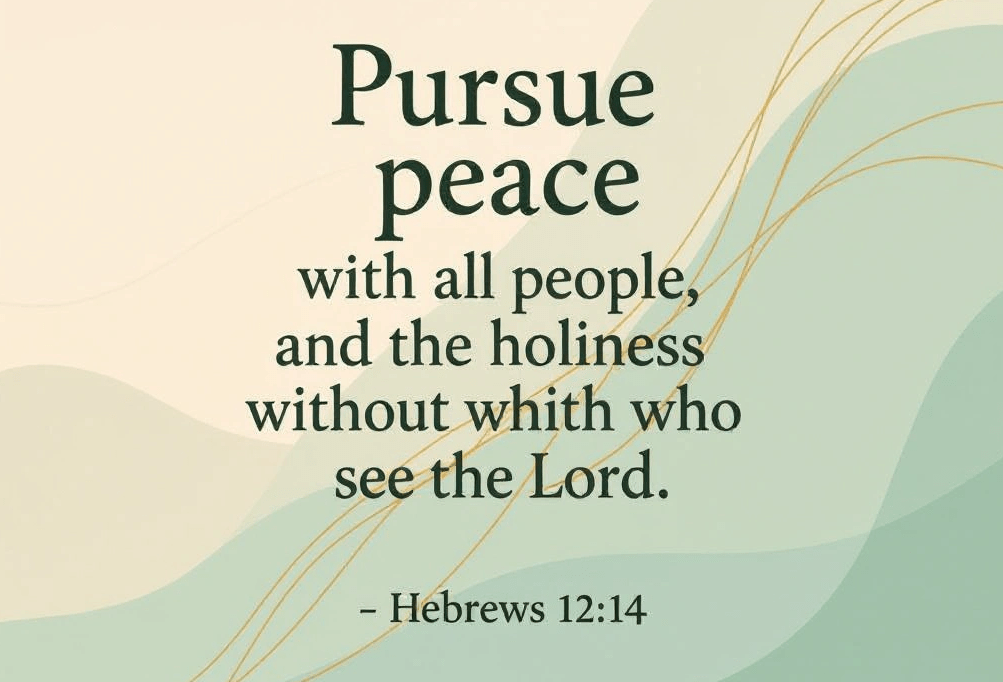
Holiness does not happen without effort. It grows as a person builds habits that point the heart toward God: steady reading of Scripture, faithful prayer, worship, time with other believers, and the practice of obedience in ordinary moments. The Spirit uses all of these things to form character and sharpen spiritual understanding. When mistakes or sins occur, the Spirit brings conviction, and repentance restores the heart again.

There is a constant tension between the old nature and the new work of the Spirit. The flesh pulls one way while the Spirit pulls another. This conflict is normal for the believer. It is a sign that the Spirit is present. The way to resist the pull of the flesh is not through rigid self-effort but through walking closely with the Spirit. When the Spirit leads, the power of the flesh weakens. When the flesh is ignored, the Spirit’s influence becomes stronger.

A life guided by the Spirit is not passive. It is a daily choice to give God the first place rather than the leftovers of time or energy. It is a life that seeks to please God not out of fear but out of gratitude for what Christ has already done. The Spirit makes this possible. He strengthens, comforts, teaches, and directs. He keeps the believer moving toward holiness and keeps the heart anchored in the truth that salvation rests on Christ alone.

If we live by the Spirit, let’s follow the Spirit as well.

Galatians 5:25

Pathways to Deeper Faith: Engaging in Action and Experiencing Divine Power

TEXAS GOSPEL VOLUNTEER

EDITOR’S NOTE: This article contains positions that are not fully agreed upon among the staff at Texas Gospel. While we agree God’s Word is the final Word, we believe that sometimes His Word is misunderstood. If you have Biblical input, please leave it in the comments below. Be civil, and post anything in a spirit of unity and a desire to understand God’s will.

The journey of spiritual growth is a deeply personal one, often involving introspection and the cultivation of inner virtues. However, throughout history, another powerful dimension of this journey has been the active participation in demonstrating one’s beliefs and extending care to others. This approach suggests that a profound deepening of faith occurs not only through contemplation but also by stepping into the world and engaging in actions that reflect the very heart of one’s spiritual convictions.

From the earliest accounts, foundational ministry was characterized by tangible expressions of God’s compassion and power. It was not only a matter of proclaiming His message but also of demonstrating it through acts of healing and liberation. Luke chapter 4 tells us the announcement of ministry included bringing good news to the poor, proclaiming release to the captives, recovery of sight to the blind, and letting the oppressed go free, drawing from the prophecy of Isaiah chapter 61: 1-4. This historical precedent highlights the significance of both word and deed in the expression of faith.

Furthermore, the empowering and sending out of followers to continue this work shows us the importance of active engagement. Disciples were not only taught but also given authority and power to heal the sick and cast out demons, as seen in the commissioning of the twelve in Luke 9:1-6, Matthew 10:1-8, and Mark 6:7. This was further extended when seventy others were commissioned and sent out with similar instructions to heal and proclaim the nearness of the kingdom of God in Luke 10:1-9. These accounts reveal a model where active participation in ministry was central to the development of those who followed.

This shows us that spiritual growth is intertwined with doing the work of ministry. Engaging in practices such as praying for the sick and sharing the core message are not simply tasks but opportunities to witness. The joy experienced upon seeing positive outcomes, such as healing, further reinforces faith and deepens one’s connection to the divine, as evidenced by the return of the seventy who rejoiced that even demons submitted to them in the name of Jesus (Luke 10:17.)

A vital component of this dynamic approach is the recognition and reliance on the Holy Spirit as an empowering presence. The initial announcement of ministry was linked to the Spirit of the Lord being upon the one sent (Luke 4:18 quoting Isaiah 61:1). This concept extends to the idea that the provision of the Spirit and its work is for all generations, as suggested in Isaiah 59:21, which speaks of the Spirit and the words put in one’s mouth not departing. This empowering presence is seen as essential for carrying out the works of ministry effectively.

Through this active engagement in ministry, a deeper and more intimate relationship with the divine is often reported. The shared experiences, the reliance on what is believed to be divine power, and the witnessing of transformative events contribute to a strengthened bond. It becomes a reciprocal process where doing the work of faith leads to a greater knowing and understanding of the divine’s love and power in one’s own life I Corinthians 11:1 encourages imitation based on this relationship.

While personal devotion and inner reflection are valuable aspects of spiritual growth, the path of active participation in ministry, empowered by the Holy Spirit, offers a powerful and transformative dimension. By stepping out in faith and engaging in actions that reflect core spiritual beliefs, individuals can experience a deeper connection with the divine and witness the impact of their faith in tangible ways, leading to profound personal and spiritual development.