It has been nearly two weeks since gospel music favorite Rhonda Nelon first fell ill, and her family is now sharing an encouraging update with fans and supporters.
Rhonda underwent gallbladder surgery last week, followed by a second procedure shortly after. Both surgeries were successful, though the road to recovery has not been easy. Despite the positive outcomes, Rhonda faced a significant amount of pain in the days that followed.
Her husband, Todd Nelon, spoke on her behalf to let well-wishers know how she is doing. “For those asking, Rhonda is doing well after the surgeries and improving more and more each day,” he said. “It’s been a tough week, but God has been faithful, and she’s looking forward to seeing everyone soon. Thank you for all the prayers.”
The outpouring of support from fans clearly means a great deal to the family during this difficult time. By all accounts, Rhonda is moving in the right direction, and those who love her music and ministry can take comfort in knowing she is on the mend.
Living as a Christian begins with trusting in Jesus Christ as Saviour. This means believing in His death on the cross, where He gave His life and shed His blood to make forgiveness possible. Through this sacrifice, sin is paid for, and those who believe are made right with God.
When someone accepts Christ through faith, the Holy Spirit comes to live within them. The Spirit’s role is to express the life and character of Jesus through that person. As long as there is unity between the believer and Christ, there is peace. But when someone disagrees with God’s truth or chooses their own way, that peace quickly fades.
If you are looking for lasting peace, it can only be found in Jesus. He is faithful and will not let you down. Peace is not just a feeling; it comes from staying close to the One who gives it.
And the peace of God, which surpasses all comprehension, will guard your hearts and minds in Christ Jesus.
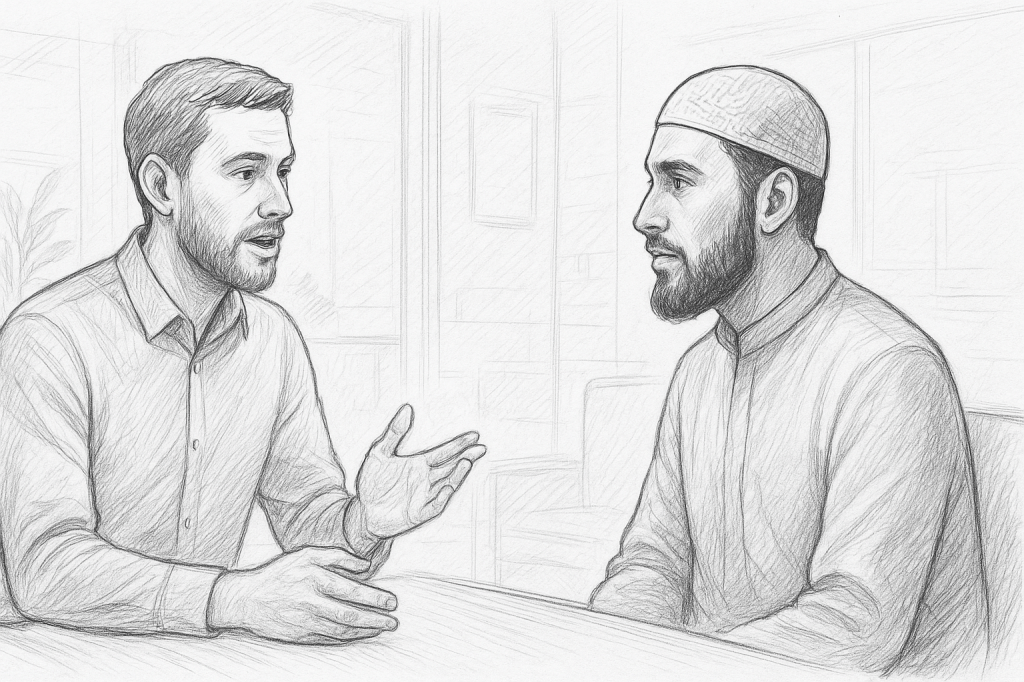
Before I get into this, let me state very clearly: I am a Christian and I do not promote hatred of Muslims. I also do not promote the teachings of the Qur’an. I am presenting this as something important to know when you witness to your Muslim friends who have been taught things that prevent them from listening to the Gospel.
IRS Images, 2025
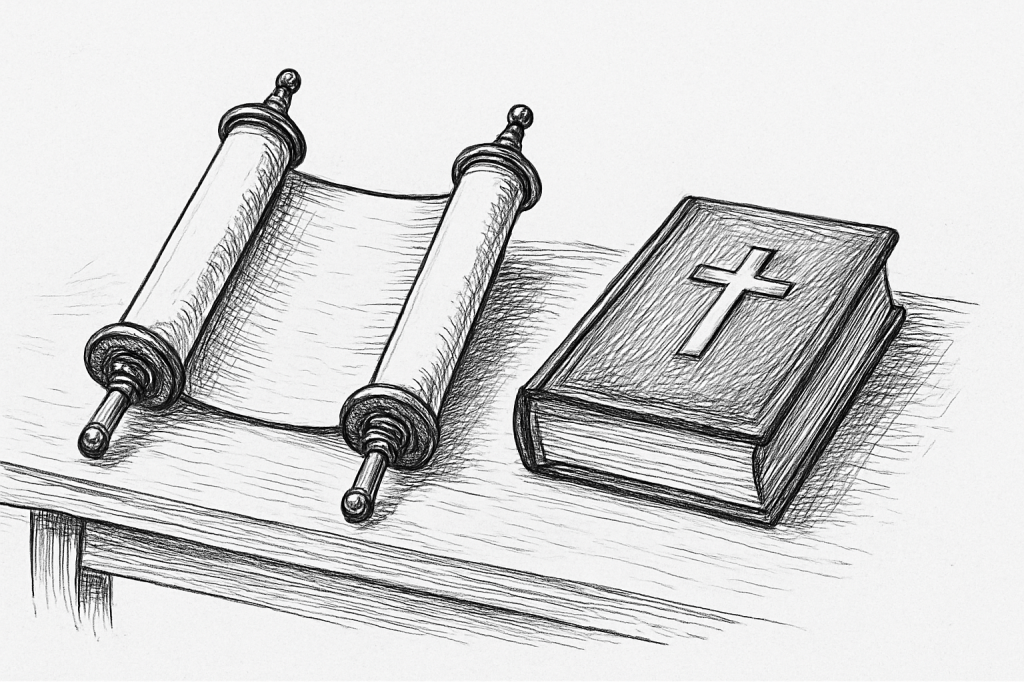
A recurring theme in discussions between Muslims and Christians concerns the Muslim accusation of revelations in the Torah (Tawrāt) and the Gospel (Injīl,) and Islamic claims about the integrity of those scriptures. The Qur’an repeatedly affirms the authority and reliability of the earlier books. Yet in later Islamic thought, it became increasingly common to claim that these scriptures had been textually corrupted.
1. The Qur’anic View of Previous Revelations: Every nation receives a revelation in its own language
The Qur’an teaches that God sent prophets to all peoples and that each group received its revelation in its own language. Arabs, according to this narrative, were simply the last to receive theirs.
Relevant passages include:
Qur’an 14:4 – “We did not send any messenger except in the language of his people, so that he might make things clear for them.”
Qur’an 16:36 – “We certainly sent a messenger to every nation…”
On this basis, Jews and Christians already possessed their divinely revealed scriptures, the Torah and the Gospel, while Arabs received the Qur’an as their own scripture.
The Qur’anic expectation that Jews and Christians should judge by their own books
Several passages instruct Jews and Christians to follow the revelation already in their hands:
Qur’an 5:43 – “Why do they come to you for judgment while they have the Torah, in which is God’s judgment?”
Qur’an 5:47 – “Let the People of the Gospel judge by what God has revealed in it.”
Qur’an 5:68 – “You have no ground to stand upon unless you uphold the Torah and the Gospel…”
These verses assume the authority and reliability of the Torah and Gospel available to these communities at the time.
Accusations of distortion refer to speech, not scripture
Christians had scriptures in Greek, Syriac, Latin, etc.
Most Arabs could not read these languages.
Thus, when disagreements arose, the charge was that Jews or Christians were misquoting or misinterpreting their scriptures, not altering the written text.
2. The Qur’an’s Argument to Jews and Christians
IRS Images, 2025
The Qur’an insists repeatedly that Jews and Christians must believe all of their scripture, not selectively, and that failure to do so leads to condemnation.
Examples include:
Qur’an 2:85 – “Do you believe in part of the Scripture and disbelieve in part? What then is the recompense for those among you who do so except disgrace in this life, and in the Hereafter…?”
Qur’an 2:89 – The Qur’an describes itself as confirming what the Jews already possessed.
Qur’an 2:91, 2:97, 2:101, 2:121 – These verses repeat the theme that the Qur’an confirms the earlier books and that the earlier books are to be believed in their entirety.
The Qur’anic reasoning is consistent:
Jews and Christians possess valid, divine scriptures.
The Qur’an agrees with these scriptures.
Therefore Jews and Christians should recognize the Qur’an’s prophet as legitimate because he affirms their books.
This argument depends on the assumption that the Torah and Gospel of the 7th century were intact, trustworthy revelations.
3. Why Later Muslim Thought Shifted: Expecting recognition that never came
The earliest Qur’anic passages present Jews and Christians as people who would recognize the prophet sent to the Arabs, since their books allegedly foretold him. According to this framework, they were expected to recognize him as the prophet mentioned in our scripture.
When Jewish and Christian communities in Medina did not recognize this prophetic claim, the Qur’an concludes that they were deliberately rejecting what they knew to be true, motivated by hostility rather than ignorance. This is important: The issue they claim was not presented as a problem with their scriptures, but with the people reading them.
Escalation of opposition
As Jewish and Christian groups increasingly rejected the new prophet, the Qur’anic perspective shifted:
In the Meccan period: Muslims, Jews, and Christians are grouped together as monotheists contrasted with pagans.
After encountering Jewish rejection in Medina: Qur’an 5:82 – Jews are described as the group most hostile to believers.
When Christians likewise mocked or rejected the new revelation: The Qur’an’s stance moves toward Muslims standing in opposition to all other groups unless they submit to Islamic governance (e.g., Qur’an 9:29).
The Later Doctrine of Textual Corruption
Because the Qur’an’s argument relies heavily on the authority of earlier scriptures, the persistent refusal of Jews and Christians to accept the “new prophet” became a theological problem. Over centuries, Islamic commentators increasingly adopted a different excuse: The Torah and Gospel must have been textually corrupted in the past. But surviving copies of both from Muhammad’s time do not support this.
to be clear, the Qur’an commands people to judge by the Torah and Gospel then present. There is no claim made during Muhammad’s time that the text had been corrupted. There are Qur’anic statements that earlier scriptures are “guidance and light” (e.g., Qur’an 5:44, 5:46). The Qur’an’s argument is that it “confirms what is with them (Qur’an 2:89, 3:3–4, 10:94).
The Qur’an never states that the Torah or Gospel have been corrupted as texts; it only accuses individuals of distorting with their tongues.
MY CONCLUSION
The Qur’an affirms the authority and integrity of the Jewish and Christian scriptures available in the 7th century.
Modern Islamic theology commonly claims that those scriptures had already been altered.
These two claims cannot both be true.
If the scriptures were intact in the 7th century, the Qur’anic affirmation poses a challenge to later Islamic claims of textual corruption. If the scriptures were corrupted before the 7th century, then the Qur’an’s commands to “judge by” them, and its argument that they support the new prophet lose their force.
I stress that I am not saying all this so people can “win” a debate. I’m saying this because God loves all people. This includes Christians, Muslims and Jews. His offer of redemption is made to all people and I hope my Muslim friends will one day accept redemption. Saving faith is a gift from God, not from anything I do or that you do. But hopefully, knowing this will help some remove the blocks they have to hearing His word.
People often struggle to understand why the world still feels heavy with pain, confusion, and injustice when Jesus accomplished so much. He lived among people, died for their sins, rose from the dead, and opened the way to salvation. So why do believers still face weakness and suffering? It can feel strange that after beginning such hope, Jesus then returned to the Father. Why didn’t he stay?
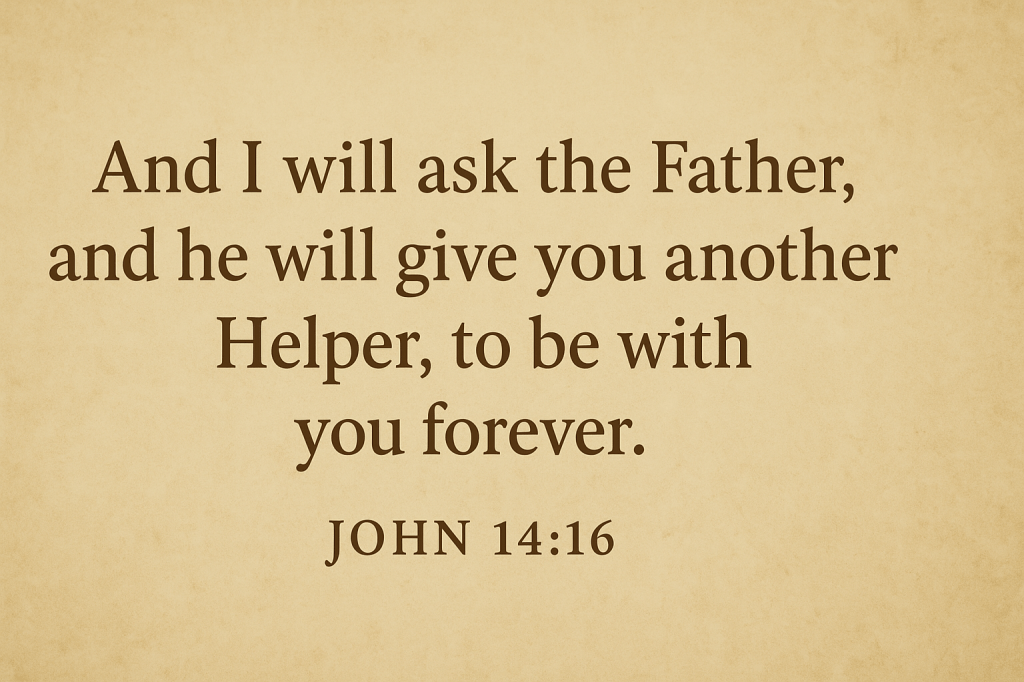
I think scripture gives a clear answer. Jesus said his departure was not a loss, but a benefit. He promised that when he left, the Holy Spirit would come. The Spirit’s presence is not small or secondary. It is the reason Christians today are able to hold on to hope.
The Spirit’s work is close and personal. Jesus walked beside people, but the Spirit lives within them. This means God is not only near but present in the deepest part of a believer’s life. Because of this, faith can grow even in hardship.
The Spirit is not limited by place or time. Jesus, in his human body, could be in only one place. The Spirit, however, is with believers across the world, at every moment. There is no waiting in line for God’s attention, no distance to travel, and no barrier of time. The Spirit strengthens, comforts, and prays for believers wherever they are.
God also had a larger plan in sending the Spirit. The Spirit filled the early followers of Jesus and empowered them to spread the good news far beyond the regions where Jesus walked. Today, millions believe because the Spirit continues this work. Through him, the message of Christ reached places and people it never could have if Jesus had stayed in one physical location on earth.
Holy Spirit, Truth divine, dawn upon this soul of mine. Voice of God, and inward Light, wake my spirit, clear my sight.
One of the Spirit’s most important works is conviction. Without this, people would remain unaware of their need for grace. The Spirit shows the heart its sin, reveals the emptiness of self-made goodness, and exposes false ideas about judgment. Though conviction can feel uncomfortable, it is actually a gift. It opens the way to forgiveness, healing, and life with Christ. Every believer who has turned to Jesus has done so because the Spirit first stirred their heart.
The Spirit also guides believers into truth. This guidance is not about secret predictions or hidden knowledge. It is about understanding God, seeing Jesus more clearly, and recognizing what is true in a world full of confusion. The Spirit guided the first followers of Jesus as they wrote the New Testament, and he continues to guide believers today through those same scriptures. When the Spirit teaches, the goal is always the same: to lift the heart toward Christ. His work does not draw attention to himself but points people to the beauty and goodness of Jesus.
All that the Father has belongs to the Son, and the Spirit makes these riches known to believers. Through him, people learn what it means to belong to God, to be secure in Christ, and to live with a future filled with hope. These truths shape ordinary days, days filled with errands, worries, and responsibilities. When life feels crowded or tiring, the Spirit reminds believers of what is real and eternal.
The Spirit’s presence is not a small comfort. It is a promise fulfilled.
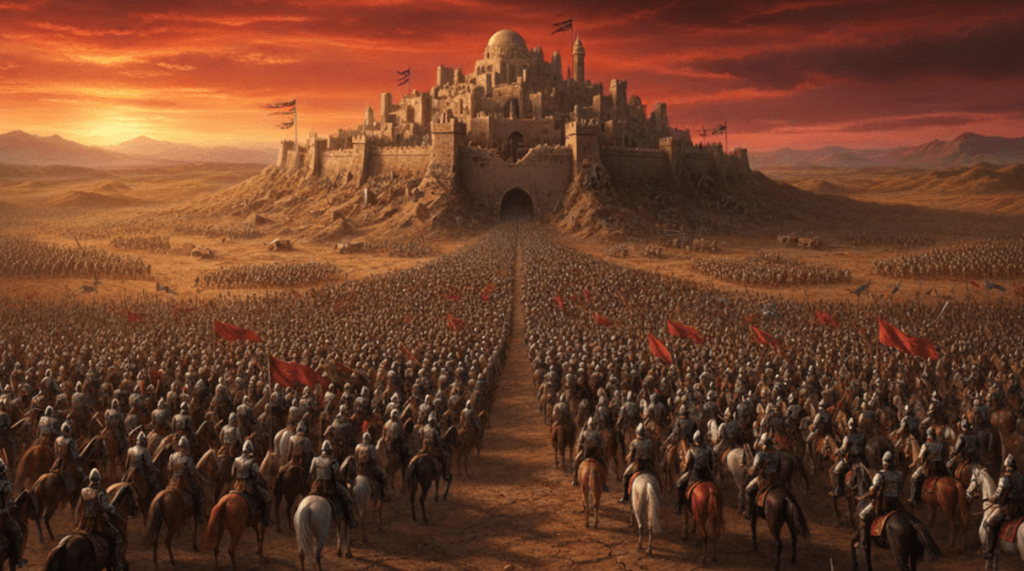
Megiddo sits in the Jezreel Valley and has been continuously inhabited since around 3000 BC. Archaeologists have discovered at least 20 cities built one on top of another at this site. By the first century, the accumulated ruins had raised the city about 70 feet above the surrounding valley. Winston Churchill remarked that never in human conflict have so many fought so often over so little space.
The location’s importance stems from geography. Anyone traveling between Egypt and the regions of Syria, Turkey, or Mesopotamia had to pass through this area. The Mediterranean Sea blocked passage to the west, and the Arabian desert to the east. The Mount Carmel range created a natural barrier, with Megiddo controlling the most direct pass through the mountains. Whoever controlled Megiddo controlled the entire region, leading to an ancient Egyptian inscription declaring that “the capture of Megiddo is the capture of a thousand towns.”
At least 34 major battles occurred at Megiddo over 4,000 years. The first recorded battle dates to 1469 BC, when Egyptian Pharaoh Thutmose III defeated Canaanite forces there. In 1918, British General Edmund Allenby studied ancient accounts of that Egyptian battle and replicated the same strategy, leading to a decisive victory over Ottoman forces in World War I.
Revelation uses symbolic language drawn from Old Testament imagery. The book contains over 400 allusions to earlier scriptures. The battle of Armageddon should be understood within this framework. Some say it is a prediction of a literal future conflict. Others say it is using familiar Old Testament battlefield imagery to communicate a message. I’ll not pretend to know which given that the Bible doesn’t say. Either way, Revelation describes a battle between good and evil.
This encouragement applies to believers facing persecution in any era. While the specific historical context addressed Rome, the principle remains constant: God ensures victory for those who stay faithful to Him, regardless of earthly opposition.




 Texas Gospel Canada Southern Gospel Radio