

JOHN COPIC
The opening words of Luke’s Gospel show a writer who wants his readers to be confident about the story of Jesus. People had already written accounts about what God had done, but Luke wanted to gather the most accurate information he could. He spoke with eyewitnesses, listened to those who had preached about Jesus from the beginning, and put the details together with great care. His goal was simple: he wanted believers to be sure that what they had been taught was true.
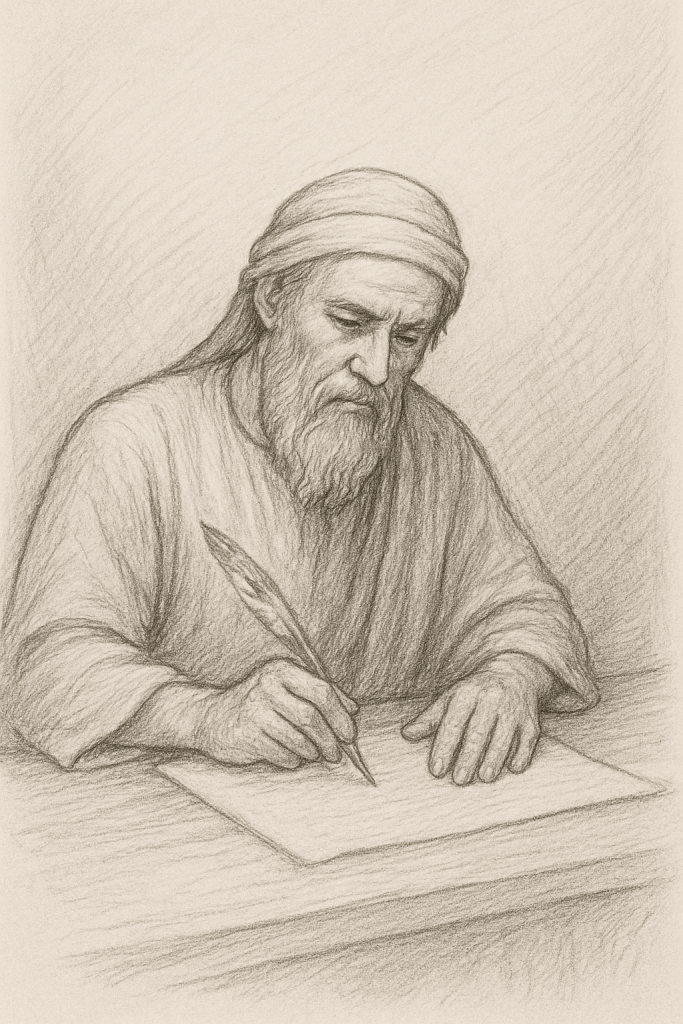
The person he wrote for was someone called Theophilus. The name may not belong to a specific individual but could have been a title for someone who supported Luke’s work. In the ancient world, writers often had patrons who helped them with money or resources. Luke may have been supported in this way as he travelled, spoke with witnesses, and gathered material not only for his Gospel but also for the book of Acts.
Luke reminds his readers that God used real people to write Scripture. They were not passive tools. Their minds, experiences, and personalities shaped how they wrote, yet the final result was still the word of God. The original writings were perfect, and through careful translation into common languages, the message continues to reach people everywhere. Luke’s approach shows that the Bible was not dictated word by word to silent writers; instead, God guided them as they worked.
The book of Acts helps us see Luke’s role more clearly. At several points, the story begins using the word “we,” showing that Luke travelled with Paul. He joined him on dangerous sea voyages, visited cities with him, and supported Paul when sickness or hardship came. Near the end of Paul’s life, when many had left, Paul wrote that “only Luke is with me.” He was speaking of the loyalty and care Luke offered as both a physician and a friend.
Luke also gives a careful account of the early lives of John the Baptist and Jesus. He may have spoken with family members or others who knew the events well. His writing connects the Old Testament promises to their fulfilment in Christ. Luke wants his readers to see that God did not discard the old covenant; instead, He completed it through Jesus.
The story of Zechariah and Elizabeth shows how Luke combines history, faith, and human experience. He begins by marking the moment in time, during the rule of Herod, a real political figure. Zechariah, a priest, and his wife Elizabeth were faithful people who followed God with sincere hearts. Yet they suffered deeply because they were unable to have children. In that culture, this brought emotional pain and sometimes unfair judgment from others.
The Bible often shows God giving a child where it seemed impossible, as with Sarah or the mothers of Samuel and Samson. Elizabeth’s situation follows this pattern. Luke pays close attention to these matters, perhaps because he was a doctor and understood both the physical and emotional weight of such struggles.
I have heard you calling in the night.
I will go, Lord, if you lead me.
I will hold your people in my heart.
Zechariah’s once-in-a-lifetime moment came when he was chosen by lot to offer incense in the temple. With thousands of priests divided into many groups, a man might never receive this honour. When he stepped inside the holy place, likely excited and humbled, he had no idea that centuries of silence would end there. An angel appeared, and fear came over him, as often happens in Scripture when heaven meets earth. The angel, Gabriel, brought a message that Zechariah and Elizabeth would have a son whose life would prepare the people for the Lord.
Luke shows that God works through ordinary people, often in difficult circumstances. Faithful individuals can still face sorrow, illness, and trials. Their struggles do not mean that God has turned away. Instead, God calls His people to trust Him even when His plans are hard to understand.
As believers today, we read Luke with great privilege. We have the full story of Jesus’ life, death, and resurrection. We have access to the completed Scriptures. The barrier between God and His people has been removed, and we are invited to come to Him with confidence. Luke wrote so that his readers, and we too, could know with certainty that the message about Jesus is reliable and life-giving.
but these have been written so that you may believe that Jesus is the Christ, the Son of God; and that by believing you may have life in His name.
John 20:31
 Texas Gospel Canada Southern Gospel Radio