

MATTHEW JONES
Some moments appear ordinary, yet they carry quiet meaning. These moments may come when we least expect them, and they give us the chance to see people to some point in the way God sees them. A story from Acts 3 shows how two men, on their way to a time of prayer, met a man who had been unable to walk since birth. He sat at a temple gate each day and asked for money from those passing by. On this day, he called out as usual, hoping for a small gift to help him get through another day.
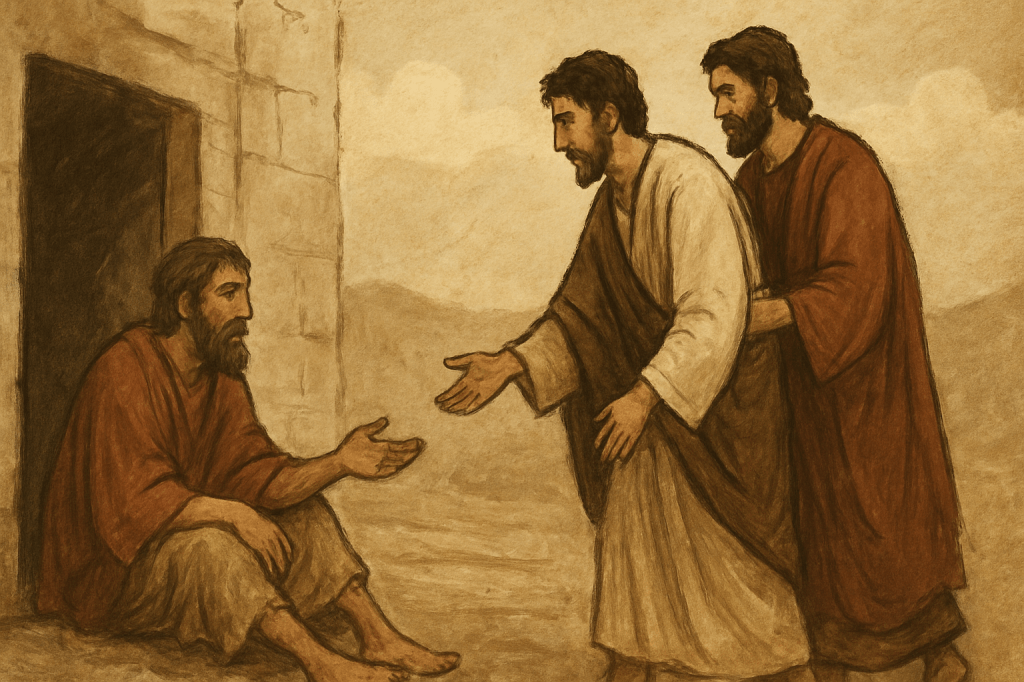
But something different happened. The two men stopped, looked at him closely, and asked him to look back at them. That simple act of eye contact mattered. It showed they did not see a category or a problem. They saw a person. Others likely passed quickly without noticing him, but they slowed down long enough to take him seriously. Seeing people in this way often requires us to move at a slower pace and look past surface details. It asks us to set aside frustration, fear, or assumptions, and to notice the deeper needs in front of us.
When the man asked for money, he asked for what he knew. He needed income because he could not work. The two men did not have what he requested, but they had something far more meaningful to give. They offered healing in the name of Jesus. They lifted him up by the hand, and strength returned to his feet and ankles. The man stood, walked, and then burst into joyful movement.
His physical healing was clear to everyone who had seen him begging for years. But the change ran deeper. The healing of his body pointed to a change of heart and faith. The man who once sat outside the gate now walked freely beside those who had helped him. His excitement drew a crowd, and he became living proof of what hope can do. His life showed that God steps toward people who cannot help themselves, and that faith brings new beginnings.
These events also remind us that help is not only about meeting physical needs. Meeting those needs matters, and sometimes it is the right place to start. But many people carry questions beneath their requests. A simple favour, a short conversation, or a small need can create space for something more. Our conversations at work, in the neighbourhood, or during errands can open a door to something deeper if we pay attention.
When people experience real care, trust forms. The man who was healed held tightly to the two who had helped him. In the same way, people often cling to those who offer kindness when life feels dark or confusing. These simple interactions can lead to healing of the heart and can spark faith that grows over time. Our ordinary moments can become places where God brings new life, healing, and hope.
Be kind to one another, compassionate, forgiving each other, just as God in Christ also has forgiven you.
Ephesians 4:32
 Texas Gospel Canada Southern Gospel Radio