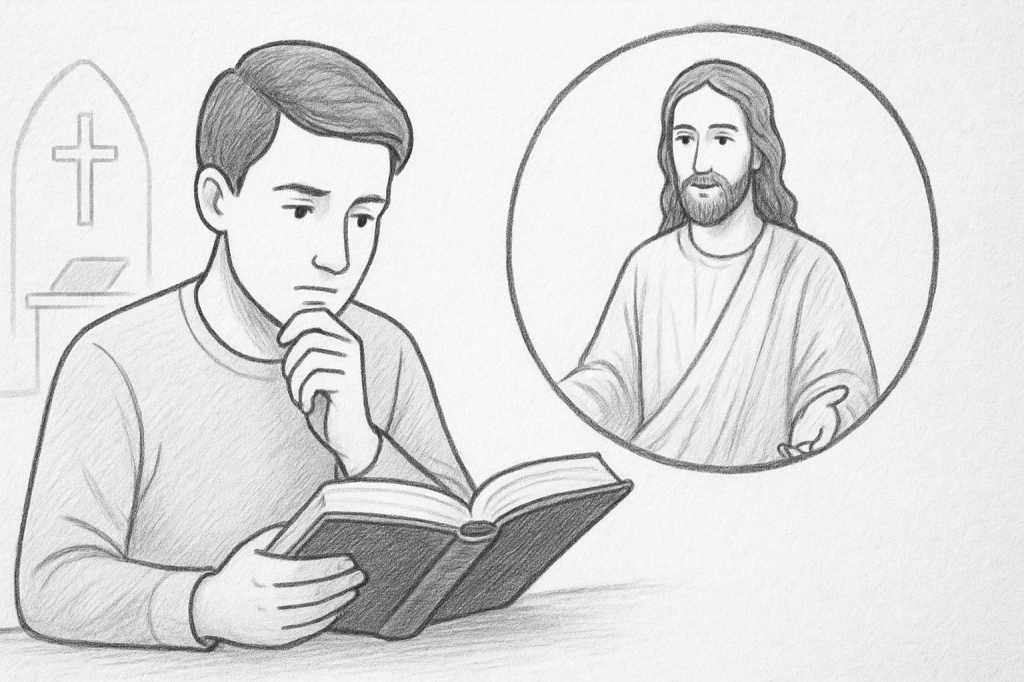
Living Beyond Fear Through the Power of Christ

STEVE MORGAN

The message of the gospel reminds believers that Jesus Christ is both eternal and personal. He existed before creation, yet chose to live among humanity in love and humility. Before the world began, He knew the cost of redemption. He knew that He would give His life so others might be free from sin. His death on the cross and His resurrection are the foundation of Christian hope. Every act of worship and communion points back to this truth: salvation and forgiveness come only through Him.

The bread and the cup of communion serve as reminders of what Jesus did. His broken body and shed blood paid for every sin without exception. There are no limits to His forgiveness; nothing is beyond His power to cleanse. Because of His sacrifice, believers are protected and secure. The blood of Jesus acts as a covering over the soul, something even the enemy cannot touch without God’s permission. And salvation is not something we can earn or maintain on our own. It is a gift that continues by the strength of Christ’s blood until the day we see Him face to face.

The Bible teaches that while salvation is secure, many Christians still live in fear. Paul’s words to Timothy remind us that fear is not from God. “For God has not given us a spirit of fear, but of power, love, and a sound mind.” Paul wrote these words from prison to a young man struggling with anxiety and discouragement. Timothy needed to be reminded that fear weakens our faith, while confidence in God restores our strength.

Fear is one of the main tools Satan uses against believers. He cannot take away salvation, but he can steal the peace and joy that come with it. Fear clouds our judgment, fills our minds with “what if” questions, and causes us to focus on the negative. It often begins when we see others suffer and assume the same will happen to us. The enemy uses these comparisons to make us worry and doubt God’s care.

Another way fear grows is through constant exposure to negative information. Many people live attached to screens and news feeds that only increase anxiety. Fear spreads through what we hear and see, and before long, it becomes part of our thinking. God’s Spirit urges us to disconnect from what feeds fear and instead focus on what builds peace and faith.

If God is not the source of fear, then it must come from another place. Satan uses fear to confuse and deceive. It pushes us toward unwise decisions made out of panic rather than trust. Fear makes people act irrationally, doubt the truth of Scripture, and believe lies that contradict God’s Word. It can even paralyze us, keeping us from moving forward or doing what God has called us to do.

But fear also exposes what we trust most. If our confidence is in money, health, or reputation, those things can fail. Confidence built on God’s promises, however, remains steady because He never changes.

Paul reminded Timothy that true confidence does not come from our own strength but from knowing who God is. “I know whom I have believed,” Paul said, “and I am persuaded that He is able to keep what I have committed to Him until that day.” God is able. When we are unsure, He remains certain. When we are weak, His strength sustains us.

God’s purpose guides everything in a believer’s life. Even when His plans are unclear, He works all things for good for those who love Him. Trusting that purpose allows us to face uncertainty with peace. Faith does not remove all fear, but it gives courage to stand firm despite it. His promises are the believer’s anchor as the world changes constantly and His Word stays the same.

One day, every tear will be wiped away, and the struggles of this life will be forgotten in the presence of Christ. Until that day comes, followers of Jesus are called to live with faith and confidence, not anxiety. Each day is an opportunity to trust God’s power, rest in His purpose, and hold on to His promises.

For God has not given us a spirit of timidity, but of power and love and discipline.

2 Timothy 1:7

Living with confidence in God’s promise

CONNIE WILLIAMS

We can approach God like a child approaches his father. Our sins lie on the ground like a broken chain. IRS Images, 2025

Fear does not help love grow. If someone lived in fear that their partner might leave them for small mistakes, they could not feel close to them. They would be nervous all the time. In the same way, a person cannot feel close to God if they are always afraid He will push them away. The message of the Gospel gives a different picture. Those who trust in Jesus can know they are held safe by Him. This confidence does not encourage wrong behaviour. It encourages obedience because believers know God is a loving Father, not someone waiting for them to fail.

Jesus said that His followers belong to Him and that no one can pull them from His care. If a believer could still end up in hell after trusting Jesus, it would damage the honour of Christ. He promised eternal life, and He keeps His promises. Knowing this gives believers courage to face hardship. They can remember that they belong to God, and that He will not let them go.

Christians are no longer under the control of sin. Sometimes people hear that they are only human and must give in to anger, revenge, or sexual sin. Some even believe it is unhealthy to show restraint. But the Bible teaches that Christians do not have to obey these desires. God accepts people as they are when they come to Jesus, but He does not leave them unchanged. The Holy Spirit begins shaping them into a new person.

When we walk with the Lord
in the light of his word,
what a glory he sheds on our way!
While we do his good will,
he abides with us still,
and with all who will trust and obey.

To stay strong, Christians must remember what God has said. Verses like those that promise eternal life can help when doubt appears. Other verses help when temptation comes. Believers can choose to use their lives to serve good instead of evil. Remember: When Jesus covered our sins with His blood, he knew every sin you ever committed. He also knew every sin you would commit from that time on.

When Jesus faced temptation in the desert, He quoted Scripture each time. Satan did not run away because the verses harmed him. He left because he saw that God’s word strengthened Jesus to keep following His Father. That is what the word of God does. It gives strength to keep choosing what is right.

At the centre of all of this is a simple question: Do you know you belong to Jesus?

Therefore, as you have received Christ Jesus the Lord, so walk in Him,

Colossians 2:6

Living in the righteousness of Christ and reaching the next generation

CHERYL QUIGG

The Psalms often speak about the difference between the righteous and the wicked. Psalm 1 says that the person who follows God’s ways is blessed, while those who reject His guidance face destruction. Psalm 112 describes what a righteous person looks like, saying he or she is someone who fears the Lord, delights in His commands, and lives with generosity, mercy, and justice. Yet Scripture also reminds us that no one is naturally righteous. Romans 3:10 says, “There is none righteous, not even one.”

This creates a problem. If no one is righteous, how can anyone live as Psalm 112 describes? The answer is found in Jesus Christ. He lived the perfect life that we could not, and He took upon Himself the punishment we deserved. Through His death, burial, and resurrection, our sins can be forgiven, and His righteousness is given to those who trust in Him. When we put our faith in Christ, we receive new life through the Holy Spirit, who helps us to live in obedience to God. Romans 5 explains that just as Adam’s sin brought death to all, Christ’s obedience brings righteousness and life to all who believe.

To live as God’s people is not simply about behaving well or attending church; it is about being transformed by Christ’s Spirit. The church exists to worship God, serve others, and bring His message to the world. Psalm 78 reminds us of the importance of teaching God’s truth to future generations. The psalmist calls the people to remember God’s mighty works and to tell their children, so they do not repeat the mistakes of the past. Faith is not passed down by accident; it must be taught intentionally.

The call to reach the next generation is not only for parents or youth leaders but for the entire church. Every believer has a part to play in guiding young people toward faith in Jesus. The next generation is not “the church of tomorrow”; they are part of the church today. Their voices, service, and faith matter now.

The Israelites often failed because they forgot what God had done for them. They grumbled, doubted, and rebelled. Their forgetfulness led to faithlessness. Psalm 78 shows how they tested God and offered only surface-level repentance. They would confess when punished but quickly returned to sin. Their biggest failure, however, was neglecting to teach their children about the Lord. When one generation remains silent about God’s truth, the next grows up without faith.

As Christians, we must not repeat this pattern. The teaching of Scripture should be central in our homes and churches. Worship and study should be grounded in God’s Word, not in personal preference. Families should remember and share stories of God’s faithfulness, both from Scripture and from their own lives. This strengthens faith and helps children understand that God is active and real.

For a church to reach the next generation effectively, it must be united. The New Testament teaches that unity is not sameness but harmony among diverse people with different gifts. When believers are divided. This ma by by opinion, tradition, or personal comfort and it weakens our witness. Paul urged the church in Ephesians 4 to make every effort to maintain unity through peace, reminding believers that there is one Lord, one faith, and one God. Unity helps the church focus on its true mission: making disciples and proclaiming Christ.

Sometimes churches lose sight of this mission by focusing on preferences instead of principles. Scripture must guide our every decision, not habit or comfort. When the church unites under God’s Word and His purpose, it can reach generations with lasting impact.

Reaching the next generation requires the whole church. Some may teach, some may mentor, others may pray or give, but everyone has a role. Even small acts like praying for a child, baking cookies for youth gatherings, or supporting a ministry, can help share Christ’s love. The goal is not simply to make good people but to lead them to salvation in Jesus.

The message of Psalm 78 is still relevant: remember what God has done, teach it faithfully, and pass it on. Faith does not continue automatically; it grows through intentional effort. The church must take this command seriously. If we fail to share the gospel, we risk raising a generation that does not know the Lord.

Go, therefore, and make disciples of all the nations, baptizing them in the name of the Father and the Son and the Holy Spirit, teaching them to follow all that I commanded you; and behold, I am with you [c]always, to the end of the age.”

Matthew 28:19–20

Giving Thanks Before Receiving

AMY TURNER

The Bible teaches us to give thanks to God even before we receive what we ask for. This idea comes from the Apostle Paul, who wrote in Philippians 4:6, “Do not be anxious about anything, but in every situation by prayer and petition with thanksgiving, present your request to God.” This might seem unusual, as it suggests being thankful before receiving an answer.

Paul explains that God is like a loving father who gives good gifts to His children. Whatever God chooses to give us is always for our benefit. By giving thanks in advance, we show our trust in God’s wisdom and goodness. It also helps us focus on God’s character rather than on our immediate needs or desires. Keep in mind that God’s plans are always better than our own.

Being thankful before receiving also helps us to be content in all situations. Giving thanks in advance is not just about feeling grateful; it’s about aligning our hearts with God’s will.

Do not be anxious about anything, but in everything by prayer and pleading with thanksgiving let your requests be made known to God. And the peace of God, which surpasses all comprehension, will guard your hearts and minds in Christ Jesus.

Philippians 4:6-7

Marriage that shows faith

CHERYL QUIGG

Many people grow up learning about Jesus with their minds. They may know Bible stories, go to church, and speak about faith. Yet knowing facts about Jesus is not the same as trusting Him. Faith is more than information. It is a gift from God leading to salvation. It results in a relationship with the One who gave His life for us.

Every person has done wrong. Whether it is lying, taking something that was not ours, or speaking harmful words, we have all broken God’s standard. Only Jesus lived a perfect life. The Bible teaches that the result of sin is death and separation from God. But God offers a gift that we do not earn. Through Jesus, there is forgiveness and eternal life.

Faith is a Gift, understanding comes from God. IRS Images, 2025.

Faith cannot rest in religion, a church, or a leader. It must be placed in the suffering and resurrection of Jesus. He said He is the only way to the Father. A person must turn from sin and trust the Saviour. Without that, even a faithful marriage on earth does not guarantee life with God in heaven. We are not saved by works.

The way a couple treats each other can show the message of Jesus to others. Marriage should reflect grace, not bitterness. If Christ has forgiven us so much, we should not hold anger against our spouse or others in the church. We are called the bride of Christ, loved and bought by His sacrifice. We are to show that same spirit of forgiveness.

Marriage can also help each partner grow closer to God. A husband should love his wife in a way that helps her walk with Christ, and a wife should support her husband in the same goal. Real spiritual leadership does not belong only to pastors. In the home, both husband and wife can help each other become stronger in faith. Talking about Scripture, praying for each other, and choosing God each day can bring spiritual health into the family.

Faith is not only a Sunday activity. It should fill every day. Work, sports, and hobbies can become more important than spiritual life if families are not careful. Children learn what matters most by watching their parents. If they only see Jesus mentioned once a week, they may think faith has little value. Following Jesus takes effort, but it is always worthwhile.

Bind us together, Lord
Bind us together
With cords that cannot be broken
Bind us together, Lord
Bind us together
Bind us together in Love

Marriage also serves as an example. When others look at a couple, they may see unity or conflict. They may see a love that gives or a love that demands. God’s design is for one man and one woman to share life together and remain faithful. Unity in marriage can help others believe that Jesus is real. Division can push them away.

A strong marriage does not mean life is easy. People do not stay together only when they feel happy. Commitment means staying faithful, just as Jesus never gave up on us. Marriage asks us to grow in holiness, not simply in comfort.

Every person must ask: does my life show the message of Jesus? Does my marriage help my spouse trust God more? Do I follow Jesus only on certain days or in every part of life? Some may be married but have never placed their trust in the Lord. Faith must be real and personal. Only those who belong to Him will share eternity with Him.

A marriage built on God’s purpose can bless many others.

We love, because He first loved us.

1 John 4:19